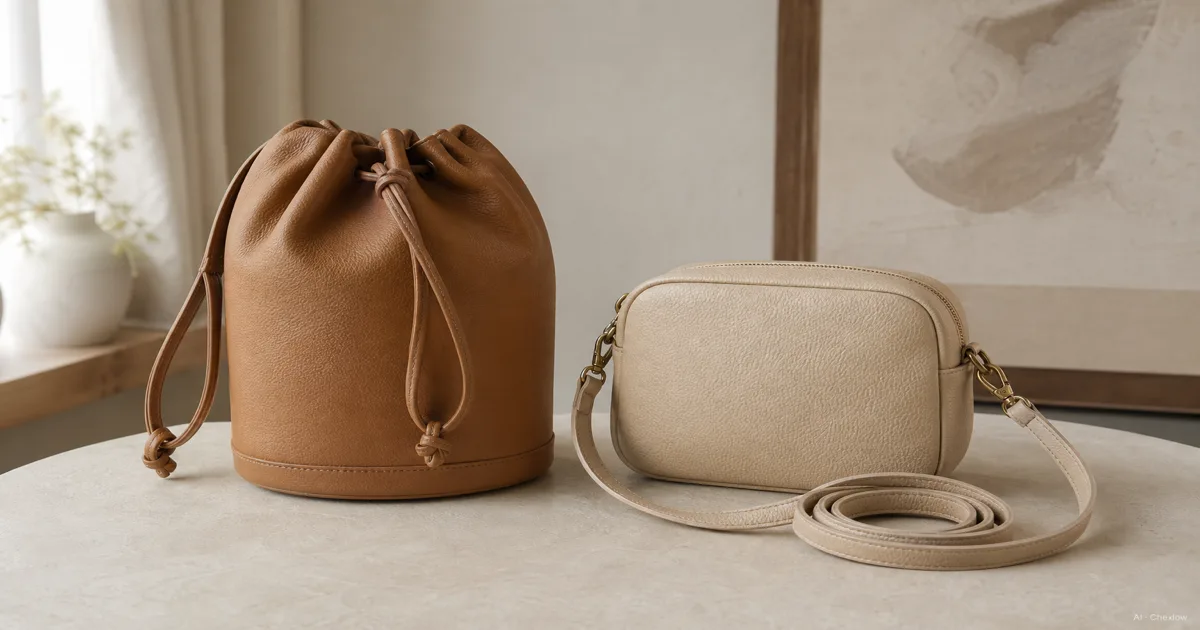
Produtos atuais para comparar
Estes produtos vêm dos resultados da Housnap para este tema.

Self-portrait
Satin Bucket Bag
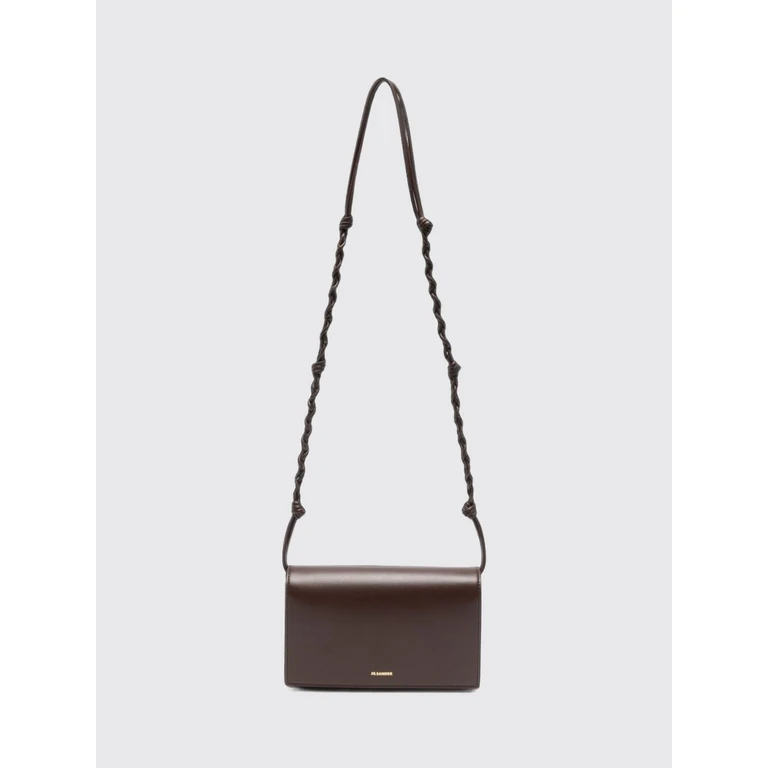
Jil Sander
Tangle Mini Bolsa Transversal de Couro com Alça Trançada

Ferragamo
Bolsa saco Ferragamo Hug com fivela
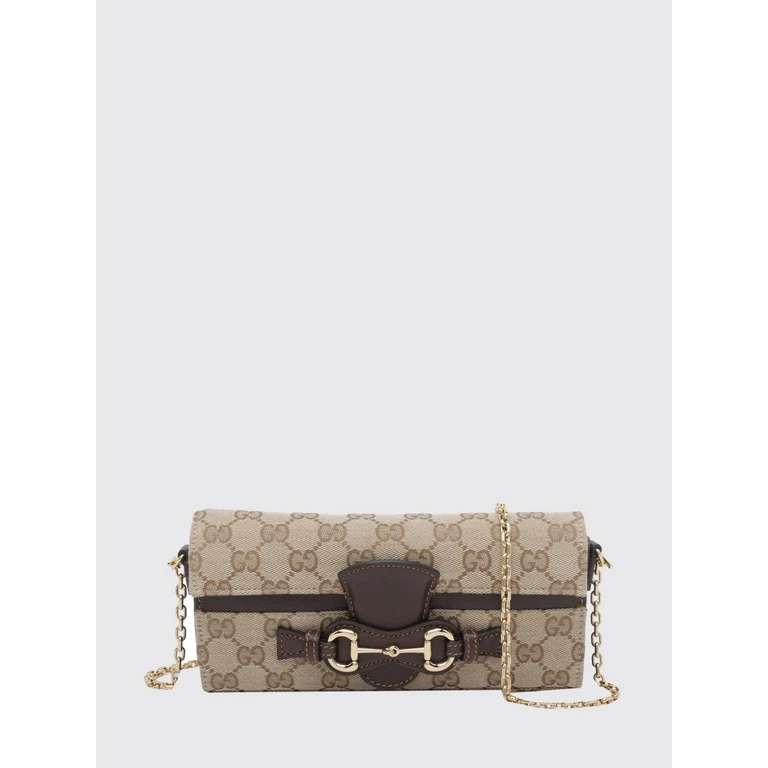
Gucci
Bolsa transversal Horsebit GG Supreme em tecido
Start with the shape and the way you want to carry it
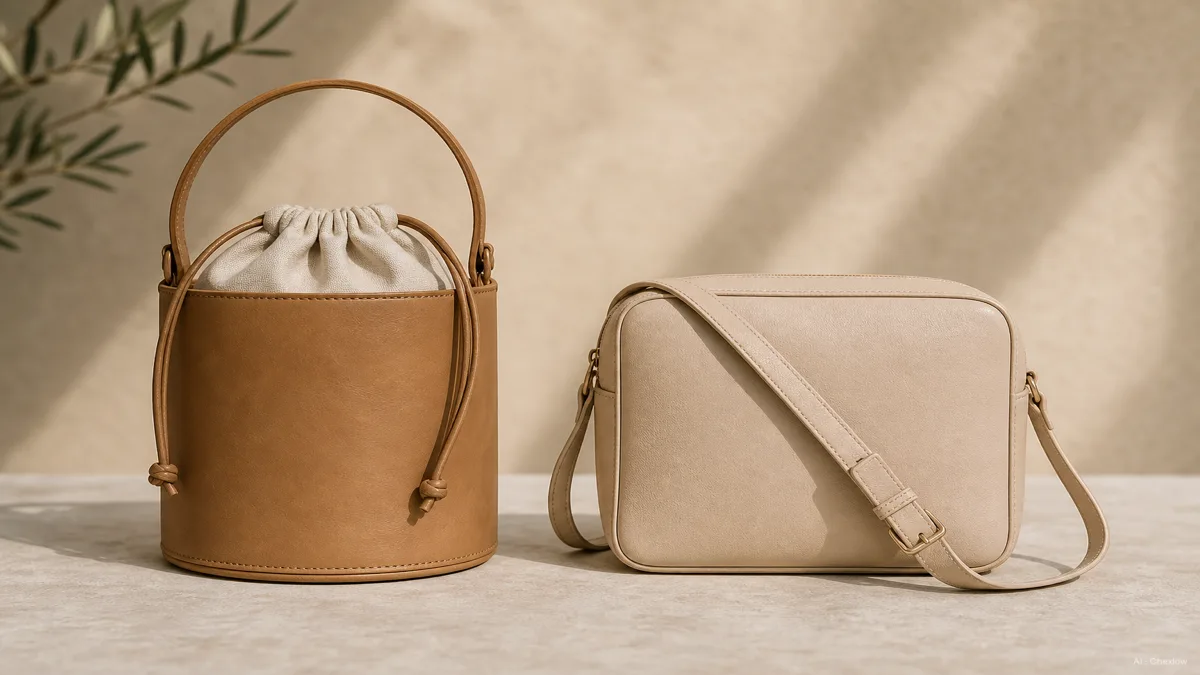
A bucket bag describes a shape, usually rounded or cylindrical with a flat base. Crossbody describes wearing a strap diagonally across your torso. These are overlapping choices, not fixed size categories. (Eric Javits, SENREVE)
Start your shortlist here:
- Phone, wallet and keys, with both hands free. Try a compact crossbody first.
- A bottle, book or bulky pouch as well. Compare the usable depth of a bucket bag with a larger crossbody.
- The bucket shape, worn diagonally. Look specifically for crossbody carry in the product description. Louis Vuitton’s Noé BB, for example, combines a drawstring opening with an adjustable crossbody strap. (Product details)
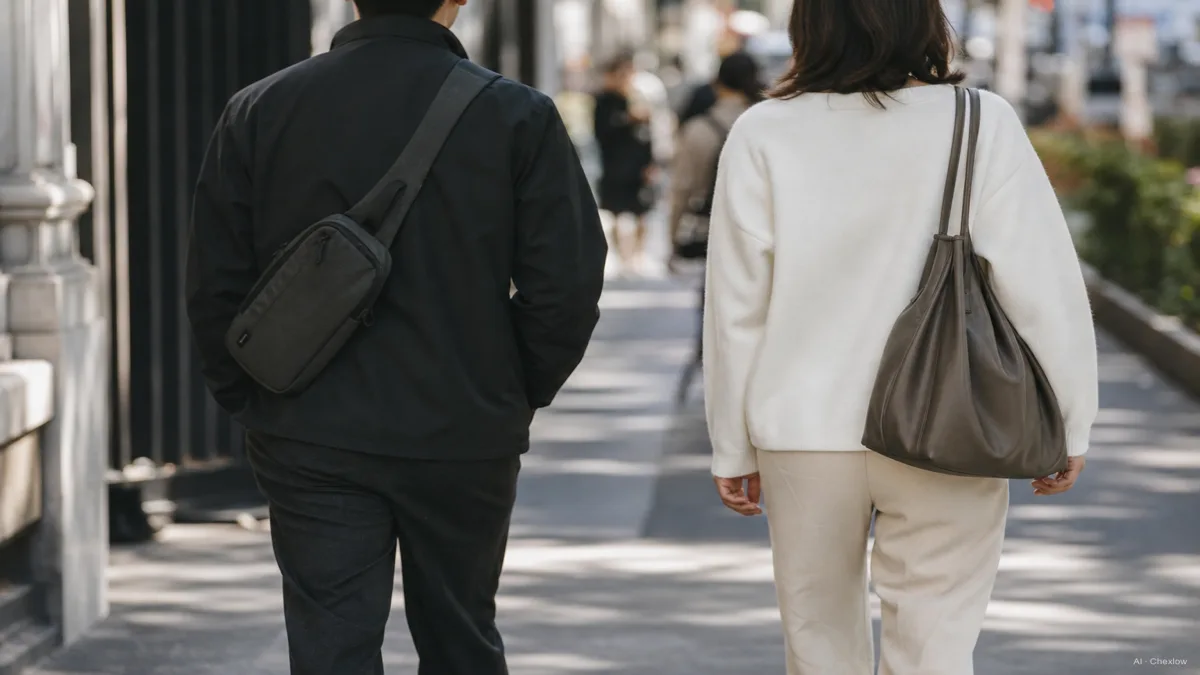
The illustrations show contrasting shapes and carrying positions, not a rule that every bucket holds more.
Check what fits with the bag closed
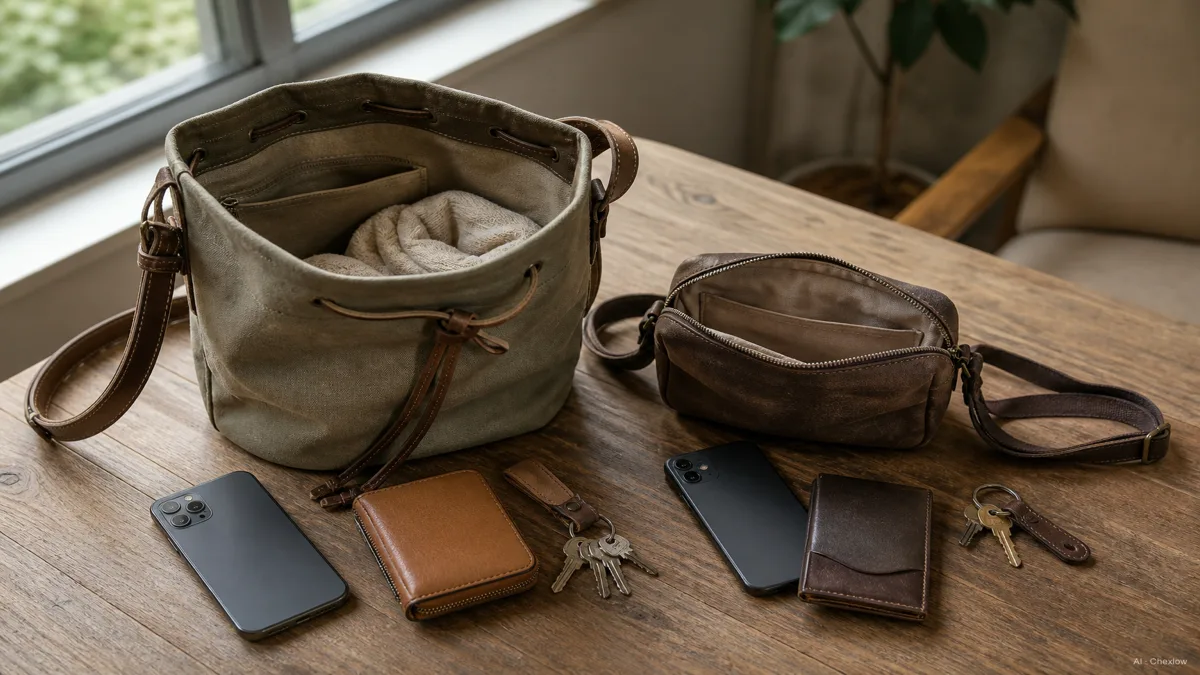
Lay out the things you take on an ordinary day, including your phone case and filled wallet. Keep occasional extras in a separate pile. Choose for the first pile unless the second genuinely belongs in your regular routine.
For each candidate, check three things:
- The largest item passes through the opening. Ask for the opening measurement if the listing gives only overall dimensions.
- Everything fits together and the bag still closes. Try your bottle beside your wallet, not in an otherwise empty bag.
- You can retrieve a small item without unloading the rest. Reach for your keys with the bag packed. Check where the pockets actually sit.
For reference, the Noé BB’s listed dimensions are 22 × 24 × 15 cm; those numbers are not a promise that your particular book or bottle fits. (Louis Vuitton)
If a laptop, charger and lunch are daily essentials, compare backpacks and messenger bags for commuting before squeezing that load into either shortlist.
Try the opening and strap as you would use them
Close the loaded bag and inspect the opening. With a drawstring, check the gap left after tightening; with a zip or flap, check that it closes without pulling against the contents. If you want the main compartment completely covered, reject a candidate that leaves a gap you dislike. Do not treat “crossbody” as a security feature.
Then wear it over your usual outer layer. Walk, sit and reach for your phone. Reject a setting that makes the bag hit your thigh, traps it under your arm or presses the strap uncomfortably against you. Crossbody carry can still feel uncomfortable on one side, as SENREVE notes.
If you only carry essentials and would rather wear them at your waist, the next useful comparison is a belt bag versus a crossbody.
Pick the candidate that passes your everyday checks
Keep one bucket and one compact crossbody in contention, or a convertible bucket if that suits you better. Compare them with the same belongings and the same coat.
- Choose the compact crossbody if everything fits, you can reach what you need and you prefer how it sits while moving.
- Choose the bucket if its depth suits your belongings and you are happy with its opening and carrying position.
- Choose the crossbody bucket if it passes both the packing and wearing checks. A long strap alone is not enough to decide.
- Keep looking if none of your shortlisted bags can hold all your daily essentials and feel comfortable when loaded.
For a tie, try each with your normal work outfit and weekend clothes. Pick the one you would use on both days, rather than buying extra capacity for an imagined occasion.
Once diagonal carry is your choice, use the crossbody size and strap guide to narrow the fit details before ordering.
Sources
Como este guia foi construído
Written by Housnap’s AI editor using Eric Javits and SENREVE’s explanations and Louis Vuitton’s published Noé BB specifications. The packing and wearing checks are editorial guidance for choosing a first bag, not results from hands-on product testing.