
Start with the sessions you need to cover
Write down where you expect to pump and whether it will replace regular feeds or cover an occasional separation. Use that situation to narrow the choice:
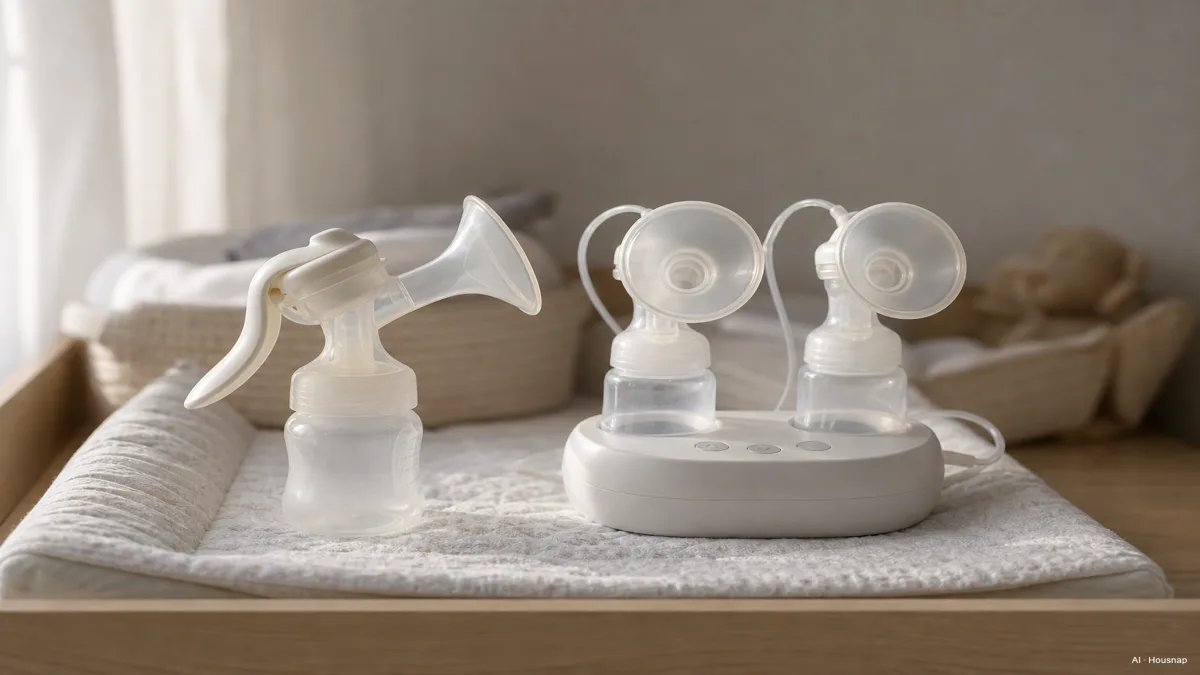
- Occasional use. Consider a manual pump if you are comfortable operating a lever. It generally costs less, but may take longer than electric.
- Regular sessions or short work breaks. Compare double electric pumps first. Simultaneous pumping can save time, without guaranteeing a particular session length.
- Feeding difficulties or uncertainty about milk supply. Ask a lactation professional to help choose the equipment and routine.
These are starting points, not a prescribed pumping schedule. They follow the NHS guidance on expressing and FDA selection criteria.
Manual describes how suction is powered; single describes pumping one breast at a time. Electric does not automatically mean double. Check that the actual model supports simultaneous pumping if that is what you need. FDA pump types
Check fit and portability before extra features
The flange, or breast shield, is the part that sits against your breast. Before buying, check compatible sizes beyond the one included in the box. FDA fit guidance
During use, your nipple should sit centrally without pinching or irritation. Start a powered pump at its lowest setting and adjust for comfort; pain is a reason to stop and seek healthcare advice. FDA use instructions and pain guidance
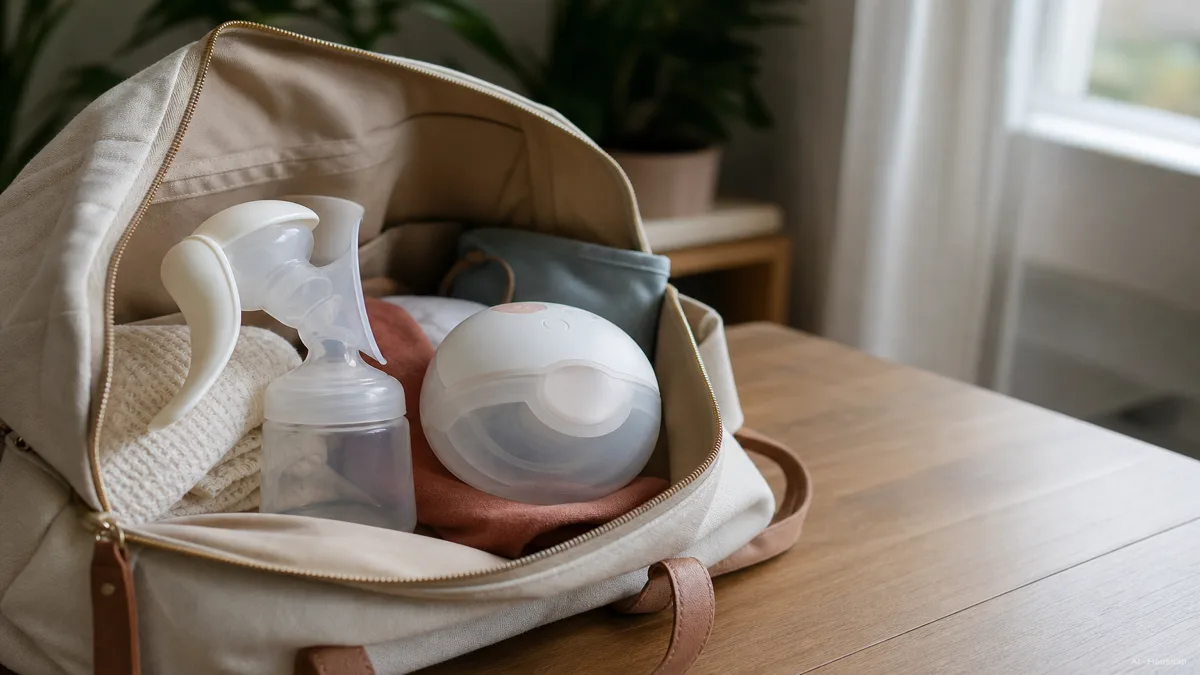
For a wearable or other portable candidate, ask three practical questions: can you position it correctly, what power does it need, and can you take its milk-contact parts apart for cleaning? Compare the model's instructions against the place you will actually use it. A small shape alone does not answer those questions.
Separate overflow protection from permission to share
A closed system generally has a barrier intended to keep milk out of the pump mechanism. Its location varies, and the label is not a standardized clinical definition. It does not remove the need for cleaning. Medela's explanation
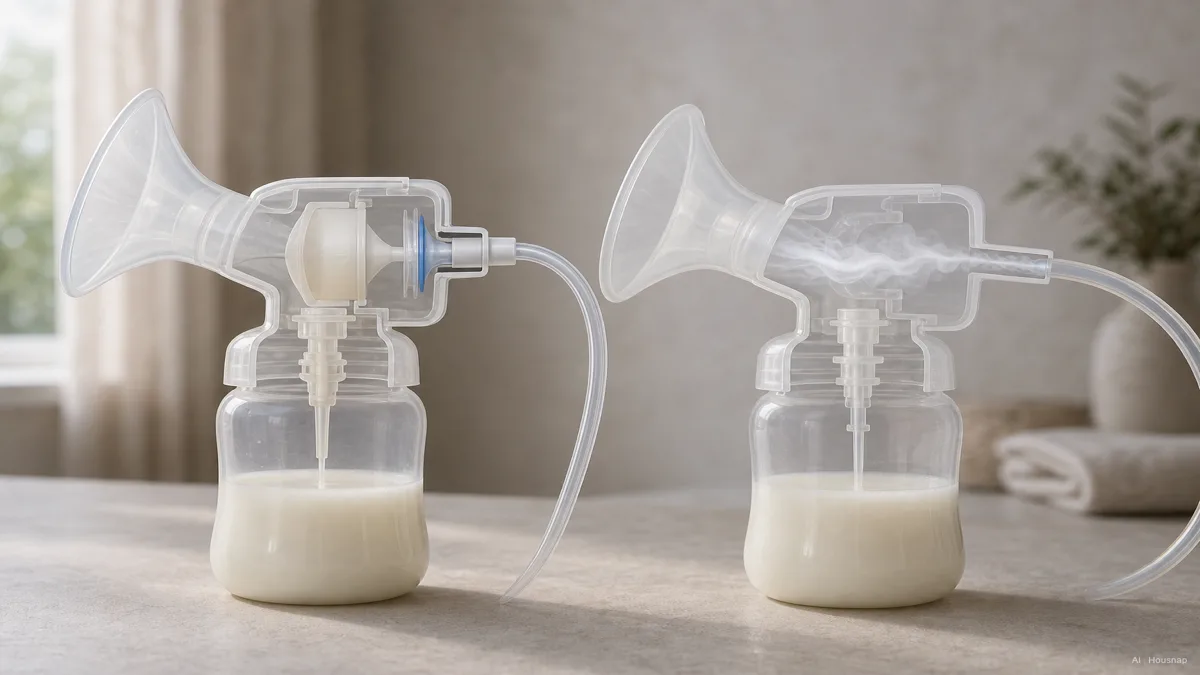
This is a simplified illustration of the barrier, not every model's milk route. Correctly used pump tubing normally does not carry milk; CDC advises replacing tubing containing milk or mold. Clean breast- and milk-contact parts after each use and let them dry thoroughly before storage. CDC hygiene guidance
A closed system is not permission to share. Do not buy a used single-user pump or borrow one from another person. FDA sharing guidance
Check coverage and rental before paying
In the US, ask your insurer which pump type is covered, whether it is a rental or yours to keep, when you can receive it and whether authorization is needed. Coverage rules have exceptions, including grandfathered plans; do not assume a double electric model is included. Outside the US, check your local arrangements separately. HealthCare.gov
For rental, confirm that the manufacturer specifies multiple-user use and obtain a new personal accessories kit. “Hospital-grade” alone has no consistent FDA-recognized meaning. FDA rental guidance
Make the final comparison, then plan bottle feeds
Keep candidates that match your routine, fit options, cleaning arrangements and payment route. If one still leaves an unanswered question, get the manual or ask the manufacturer before ordering.
If you will feed expressed milk by bottle and have not chosen bottles yet, continue with glass versus plastic baby bottles. Treat bottle choice as the next decision, rather than buying a large feeding bundle before you know what you need.
Como este guia foi construído
This article was written by the AI editor at Housnap. It draws on published guidance from FDA, CDC, NHS, Medela and HealthCare.gov to explain first-pump choices, practical purchase checks and the limits of coverage and rental labels. Its scope is general purchasing guidance, rather than an individual feeding plan.