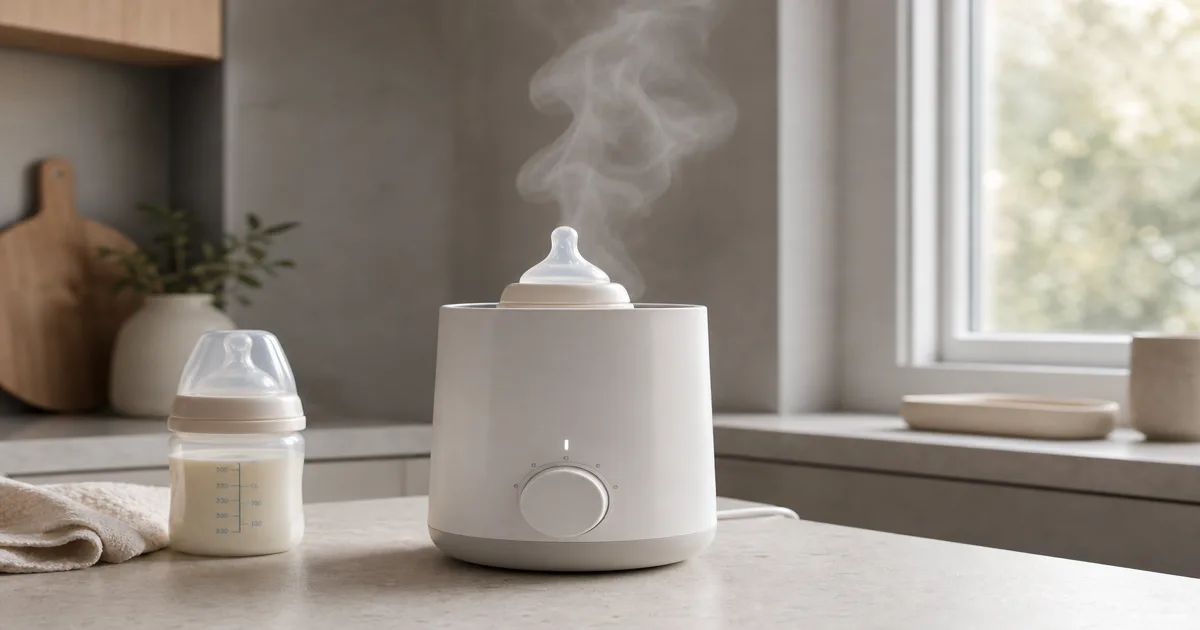
Decide whether warming needs an appliance
A warmer is optional. CDC says breast milk can be served cold or at room temperature, and formula does not need warming either.
If you only occasionally warm expressed milk, try the sealed bottle in a bowl of warm water. Consider an appliance when that routine becomes inconvenient. The useful question is which task it would simplify, not whether every feeding station should have one.
Warming is not formula preparation. Follow local health guidance and the formula label when mixing powder; a serving-temperature setting does not replace those instructions. CDC highlights additional precautions for babies under two months, born prematurely or with weakened immunity.
Check the bottle before choosing the warmer
Write down the bottle's exact model, material, outside diameter and height, plus the amount you usually feed. Check those against the warmer's instructions, including any required basket or adapter. “Fits most bottles” is not confirmation of your combination.
Shape matters as well as measurements: Baby Brezza warns that unusual shapes or wide bases may fit poorly even within its size limits. Ask the manufacturer about an unlisted bottle rather than assuming that fitting through the opening is enough.
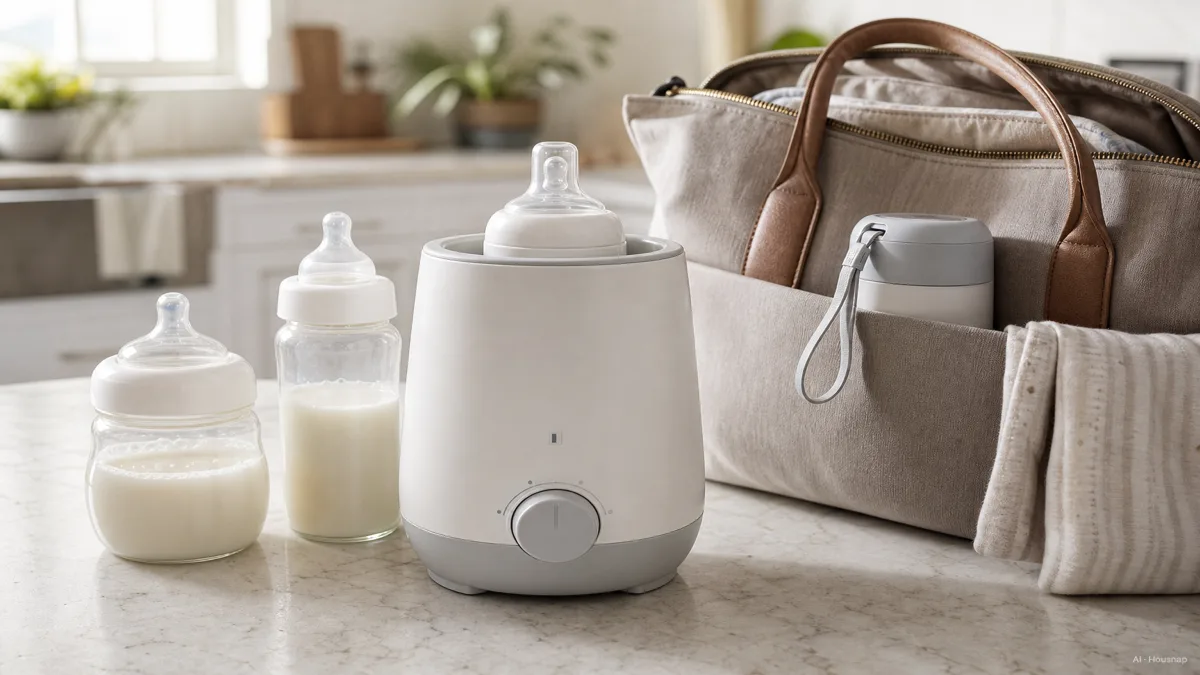
Still choosing the bottle itself? Start with glass versus plastic baby bottles, then return to warmer compatibility. You do not need to replace a suitable bottle just to suit an appliance.
Choose for home or outings, then compare heating methods
“Portable” describes where you use it, not how it heats. These are the distinctions worth checking:
- Water bath. The bottle warms in heated water. For example, Baby Brezza specifies its Steady Warm water-bath mode for breast milk.
- Steam. Steam heats the bottle. The same Baby Brezza guide assigns Quick Warm steam mode to formula and food. Follow the milk-specific mode instructions; this is not a universal ranking of steam versus water. Baby Brezza mode guidance.
- Insulated travel flask. You bring hot water with you. Tommee Tippee's travel flask needs no electricity; choose this approach if carrying and handling hot water suits the outing.
- Rechargeable travel warmer. You charge a heater beforehand. Check how its stated number of warming cycles relates to your feed volume and starting temperature; Baby Brezza identifies both as battery-use variables.
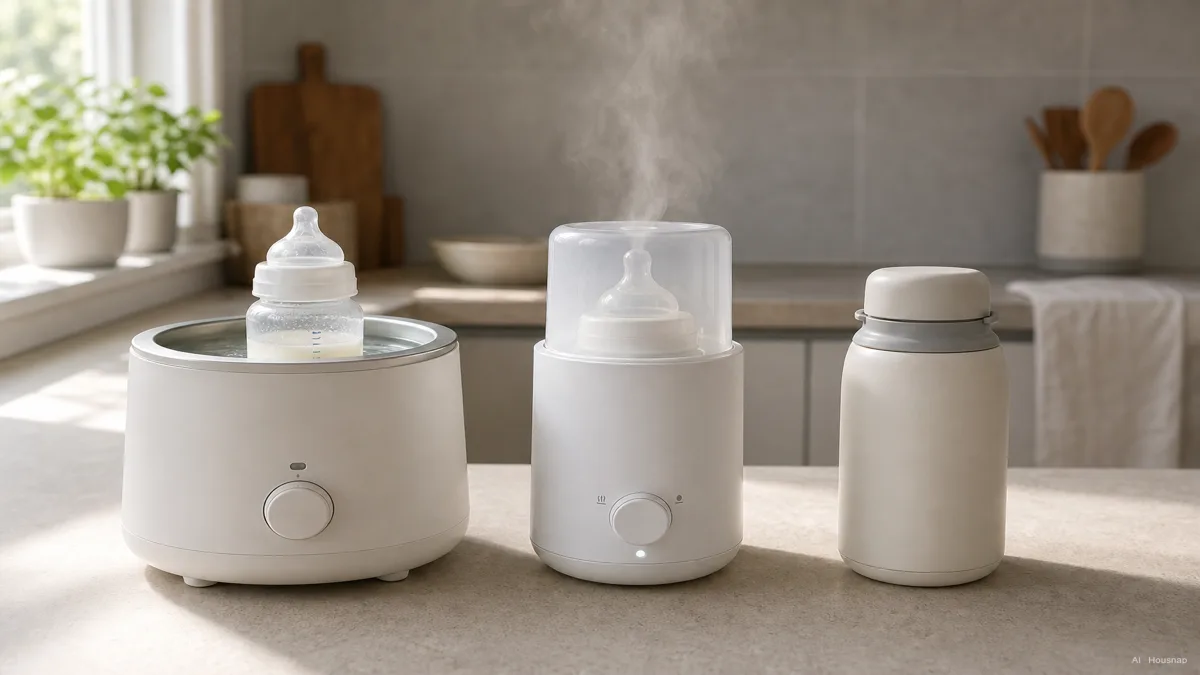
The illustration shows a water bath, steam unit and insulated flask, not every portable design. For regular home use, shortlist compatible countertop warmers with clear settings. For outings, choose between carrying hot water and managing charging. Use these distinctions to narrow your warmer shortlist; a second travel unit is not automatically necessary.
Read the operating routine before paying for speed
Ask three questions of each shortlisted model:
- What must I set? Milk volume, bottle material and starting temperature may require different instructions. Philips SCF358/00, for example, uses a volume setting and senses the initial temperature.
- What does “finished” mean? Check whether the unit stops heating, enters a keep-warm mode or needs the bottle removed. Do not treat those as interchangeable.
- What will I clean? Look up draining, descaling and dishwasher restrictions for individual parts before buying.
Philips' product information illustrates why controls matter; its warming footnote also specifies the milk amount, starting temperature and bottle. Compare claims under conditions that resemble your feeds, not just the headline minutes.
Cleaning rules can differ within one product. Tommee Tippee allows its travel beaker in the dishwasher but excludes the insulated flask. Choose a routine you can actually follow.
Keep temperature checks and milk deadlines separate
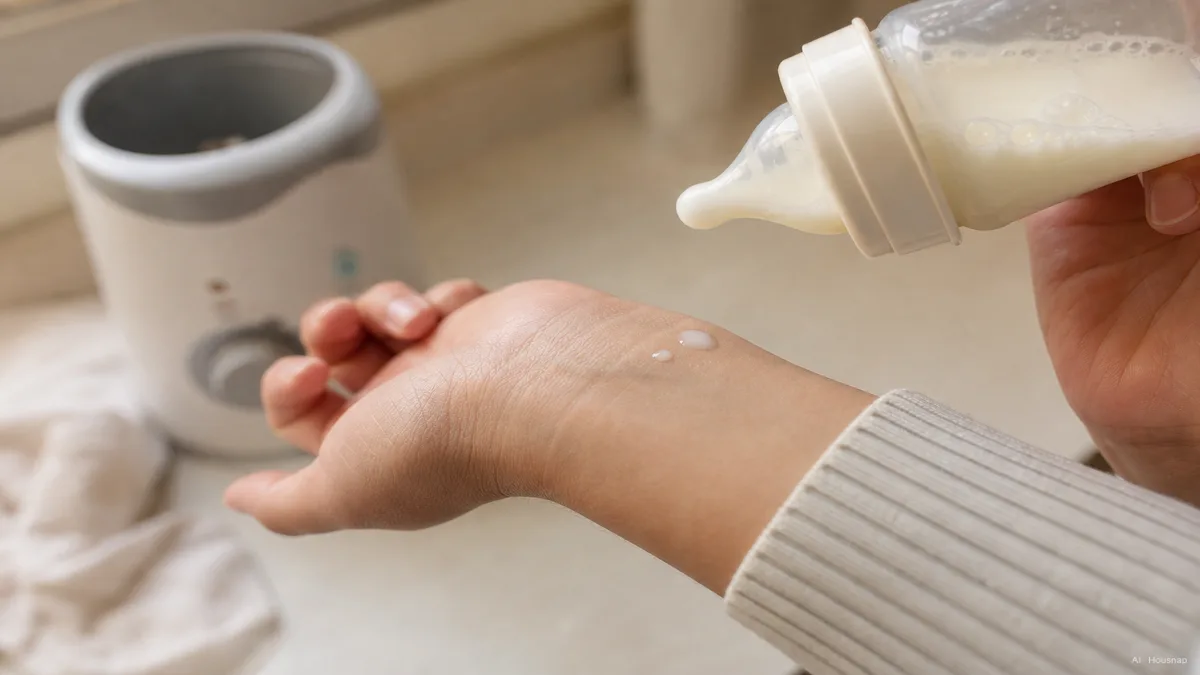
Before feeding, swirl warmed breast milk and put a few drops on your wrist. It should feel warm, not hot; let it cool if necessary. The Office on Women's Health also advises against microwave warming. A ready light does not replace this check.
- Breast milk from cold storage. Use within two hours of warming or bringing to room temperature. CDC storage guidance.
- Breast-milk leftovers. CDC allows up to two hours after feeding ends. For an already-warmed bottle, use the earlier applicable deadline rather than starting its clock again. CDC leftover guidance.
- Prepared formula. Use within two hours of preparation and one hour of starting a feed; discard feeding leftovers. CDC formula guidance.
Do not buy a long keep-warm feature as a way around these limits. For flask use, Tommee Tippee requires a flat, heat-resistant surface and says not to store milk warm in the flask. Plan the warming spot as well as the bag space.
Como este guia foi construído
AI wrote this guide for Housnap using CDC and Office on Women's Health guidance alongside manufacturer product and support pages. It separates feeding-safety guidance from editorial buying criteria; named products illustrate design differences, not hands-on tests or a ranked recommendation.