Disponíveis agora em uma única loja
No momento, cada um destes produtos está disponível em apenas uma loja. A comparação de preços abre com mais lojas.


Choose rear coverage separately from waist height
Start with the back view of the garment. Decide how much of your bottom you want covered before choosing where the waistband sits.
Rip Curl’s guide describes skimpy bottoms as minimal coverage, cheeky bottoms as narrower at the back, and full-coverage bottoms as having a fuller rear silhouette. Its full-coverage styles include both low and high rises. So “high-waisted” is not enough information to judge rear coverage: check the rear photo and the coverage description separately.
A concrete example is the Frankies Bikinis Amore in Black, which lists both cheeky coverage and a low-rise fit. Those describe two different parts of the cut; neither establishes how securely it will fit you while swimming.
If the back is already more exposed than you want while standing still, shortlist a fuller cut. Do not buy a larger size simply to turn a cheeky design into a full-coverage one.
Decide whether you want adjustable sides
Side ties give you an adjustment to make; fixed sides remove that particular adjustment. Check whether the bows actually open and adjust the sides or are decorative. Ask the seller if the description and photos do not make this clear.
- Choose functional side ties if you want to adjust the sides independently and are comfortable checking both fastenings. During fitting, confirm that a comfortable adjustment also leaves the front and back where you want them.
- Start with fixed sides if you do not want side knots to manage. The size and cut still have to work: an uninterrupted side panel is not proof of secure fit.
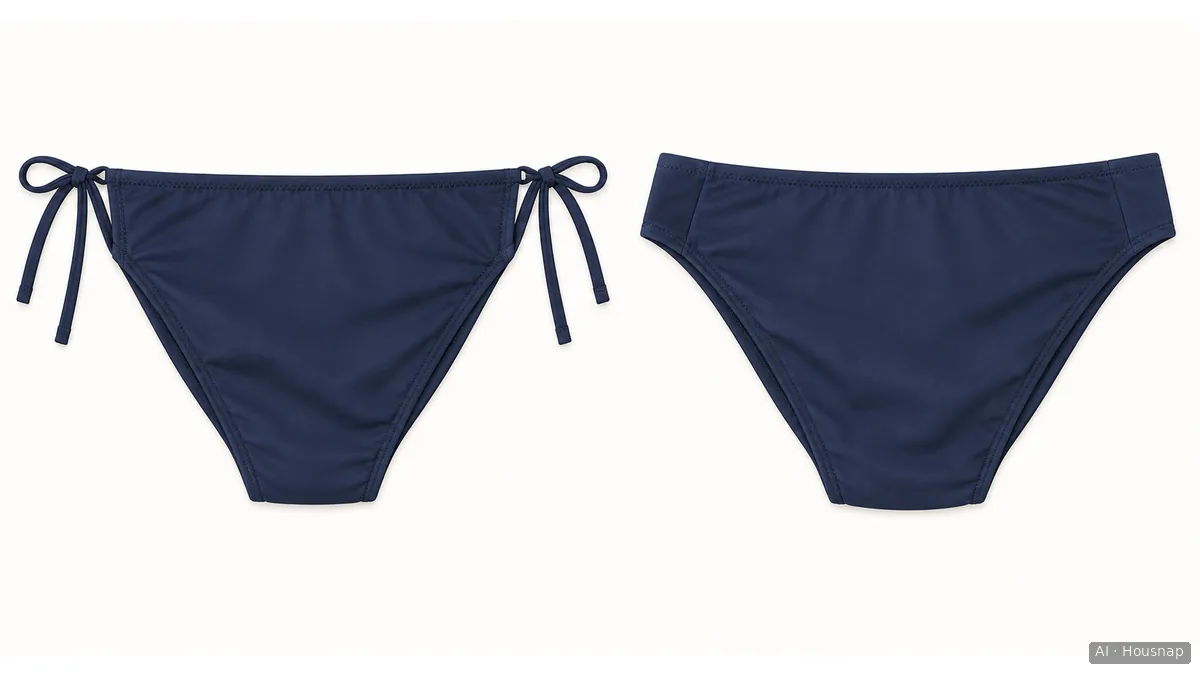
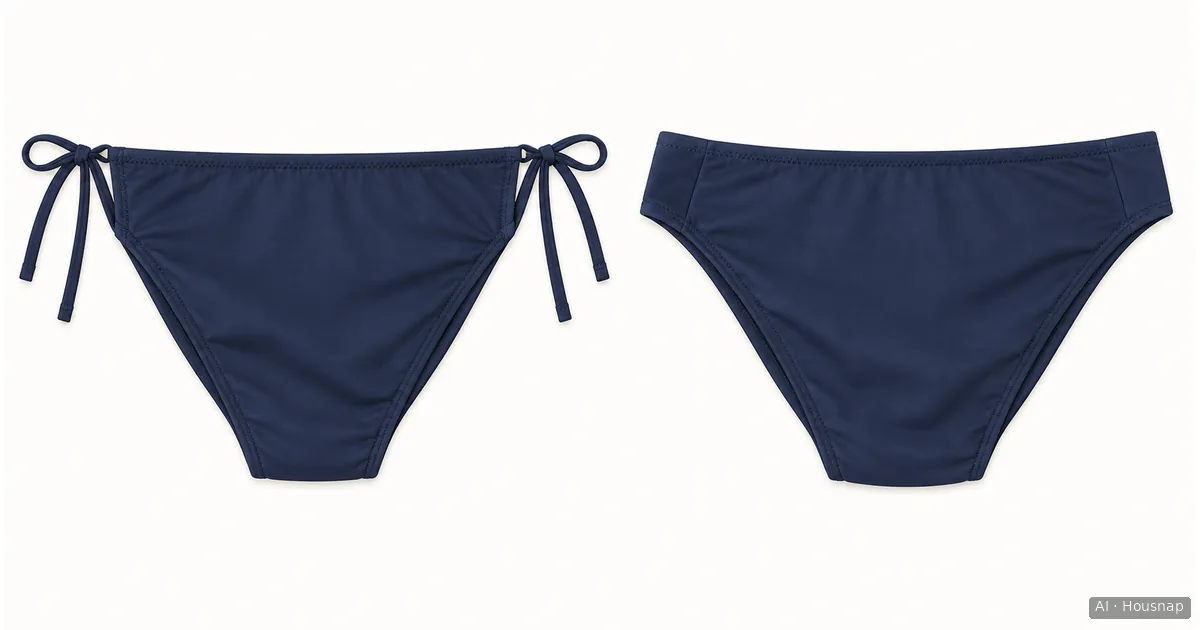
The left garment illustrates side ties; the right illustrates continuous sides. Their similar rear shapes help isolate that construction difference. This is an explanatory illustration, not a fit comparison or a demonstration of knot strength.
Rip Curl describes side ties as a way to customise fit and recommends thick side straps for surfing. That is a useful reason to examine the side construction, not evidence that every fixed-side bottom is suitable for waves. For surf or vigorous swimming, look for the particular garment’s intended use as well as checking its fit.
Use the bottom’s size chart, then move
Use the chart for the bottom you are buying, keeping the country label beside the size. For example, Lounge’s bikini-bottom chart lists S as US 4–6 and UK 8–10. This is Lounge’s conversion, not a rule for another brand or a reason to choose the same letter as your bikini top.
Check the seller’s hygiene, try-on and return conditions before ordering. Within those conditions, use this fitting routine:
- Set the position. Put the waistband where the design is meant to sit and adjust functional ties without digging into your skin.
- Move. Sit, bend your knees and gently turn your torso. Check the front and back again without first pulling the garment into place.
- Decide. Keep the candidate only if the coverage remains acceptable and you do not need repeated adjustments. If a tie loosens during this check, do not accept that fastening as it is.
Rip Curl identifies riding up or down, sagging and digging in as fit faults, and suggests considering a larger size when a bottom is too tight or restricts movement. Try another size or cut instead of tightening harder to overcome a mismatch. A dry fitting can reveal a poor fit; it cannot certify retention in waves.
Buy the cut that passes your checks
Keep a short list of bottoms that meet all three conditions: the coverage you want, a side construction you want to manage, and comfortable movement without repeated repositioning. Compare price and return conditions only among those candidates.
If the listing lacks a rear view, a clear explanation of the ties or guidance for your intended activity, ask for that information before buying. A product name such as “full” or “cheeky” cannot answer all three questions.
For regular pool sessions, fabric selection is a separate next decision. Continue with how to compare pool-swimsuit fabrics once you have narrowed down the cut.
Como este guia foi construído
This article was written by AI for Housnap, using Rip Curl’s coverage and fit guidance, the Amore product description and Lounge’s bikini-bottom size chart. The fitting sequence is an editorial shopping aid, not an original wear test or a guarantee of performance in water.