Nu verkrijgbaar bij één winkel
Deze producten zijn momenteel elk bij één winkel verkrijgbaar. Prijsvergelijking opent zodra meer winkels zijn toegevoegd.


Check SPF and UVA protection together
Start with a shortlist that offers SPF 30 or higher, UVA protection and water resistance, following the American Academy of Dermatology's selection guidance. Filter type comes next.
SPF mainly measures protection against UVB-related sunburn. PA describes UVA protection using a skin-darkening test; it is not a direct measurement of wrinkle prevention. These labels answer different questions, so read them together. JCIA explains both ratings.
For PA-labeled products, the tested UVA protection factor, or UVAPF, falls into these bands:
- PA+: 2 to less than 4.
- PA++: 4 to less than 8.
- PA+++: 8 to less than 16.
- PA++++: 16 or higher.
PA++++ is the highest grade in this system, not an exact score shared by every product carrying it. These boundaries come from the JCIA standard.
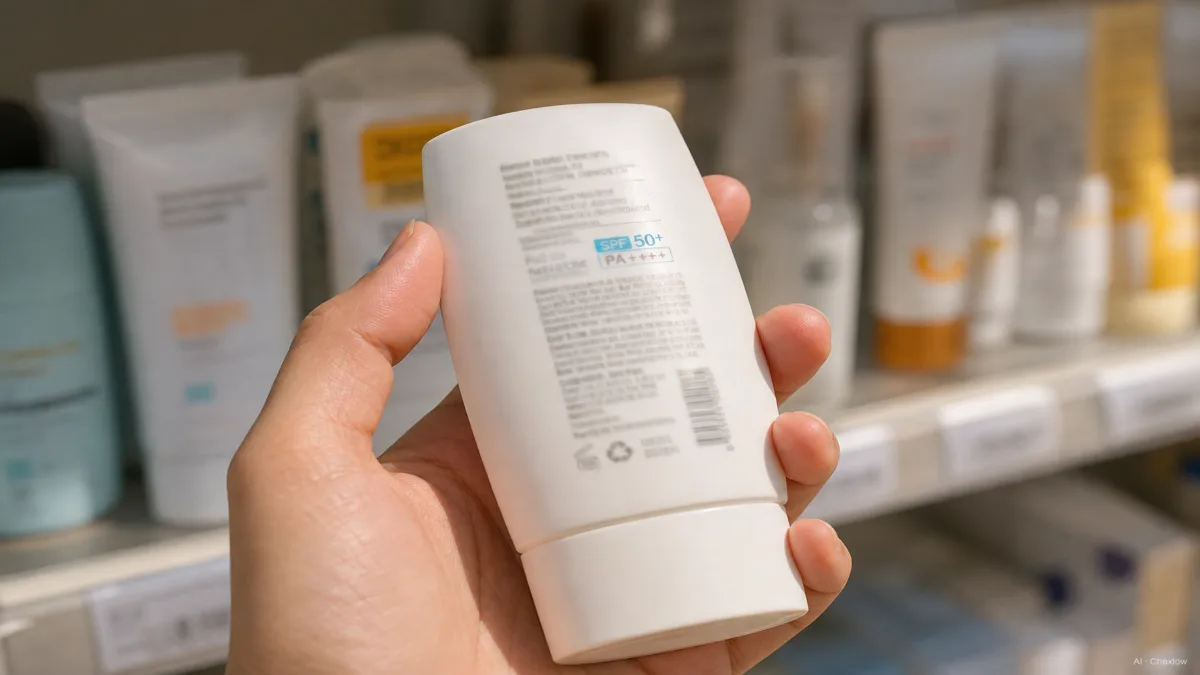
On a US label, broad spectrum means UVA and UVB protection. A product does not need a PA marking to communicate UVA coverage through that system. Check the protection statement instead of treating an unfamiliar label as a failure. AAD label guide.
Compare the filters without the shield myth
Mineral, also called physical, sunscreen uses zinc oxide, titanium dioxide or both. Chemical sunscreen uses other UV filters. Products combining the two are hybrids; check the full filter list rather than classifying a formula from one ingredient. AAD explains the categories.
Both types absorb UV. Mineral filters primarily absorb it and also reflect some; chemical filters absorb it. The illustration below simplifies that distinction: the mineral side also absorbs UV, even though its arrows emphasize reflection. Cancer Council Australia.
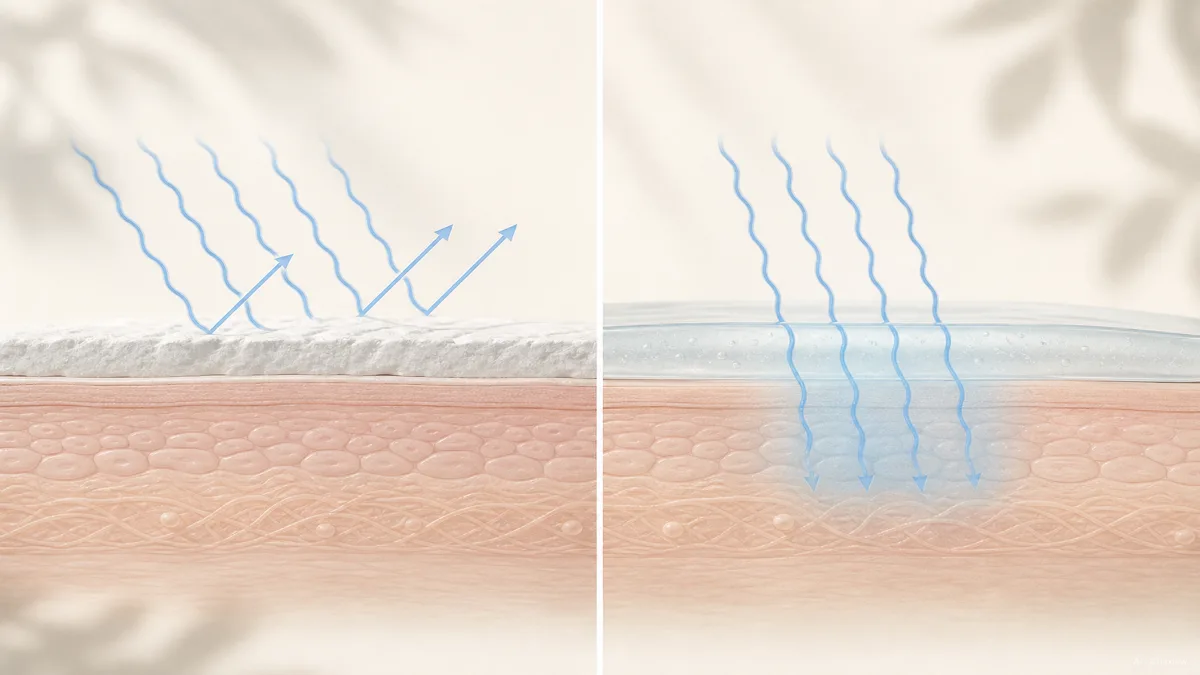
Mineral formulas can look white, while chemical formulas are usually less visible. But the lotion or cream carrying those filters also affects the feel. Use filter type to narrow your search, then judge the actual formula rather than assuming every chemical sunscreen is light or every mineral sunscreen is comfortable. Formulation explanation.
Choose around the problem you actually have
- Stinging or burning: consider a fragrance-free sunscreen whose UV filters are only zinc oxide and/or titanium dioxide.
- Acne-prone skin: look for non-comedogenic labeling, meaning formulated not to clog pores. Mineral versus chemical alone does not answer this question.
- White cast: compare a chemical formula with a tinted sunscreen that matches your skin tone.
These starting points follow the AAD's skin-specific advice. They help you choose what to try, not guarantee that a product will suit you.
Before applying a new sunscreen widely, try it on a small area. If it causes redness, itching or irritation, stop and ask a pharmacist or clinician about an alternative. A successful first try does not rule out a later reaction. Cancer Council's reaction guidance.
For your final comparison, ask whether you can comfortably apply the instructed amount and repeat it during your day. If the finish makes you want to use less, try another formula rather than making a thinner layer your solution.
Check water resistance and plan the first use
SPF is not a timer. Choosing SPF 50 instead of 30 does not give you a longer reapplication interval. US water-resistance labels specify 40 or 80 minutes of swimming or sweating; neither means waterproof. Follow the product's instructions. FDA sunscreen guidance.
- Before going out: apply generously to exposed skin, including ears and neck, about 15 minutes before exposure, following the label.
- While outdoors: reapply every two hours and after swimming or sweating, as advised by the AAD application guide.
- After toweling off: reapply. Keep shade and protective clothing in your plan too; sunscreen is only one part of protection. AAD label guide.
Once you have chosen a formula, the next question is when to use it again. For outdoor days and swimming, continue with the sunscreen reapplication guide.
Hoe deze gids is opgebouwd
This guide was written by AI for Housnap, using AAD, FDA, Japan Cosmetic Industry Association and Cancer Council Australia guidance. It separates protection labels from filter choice and practical use; it does not report product testing or provide an individual skin diagnosis.