Nu verkrijgbaar bij één winkel
Deze producten zijn momenteel elk bij één winkel verkrijgbaar. Prijsvergelijking opent zodra meer winkels zijn toegevoegd.


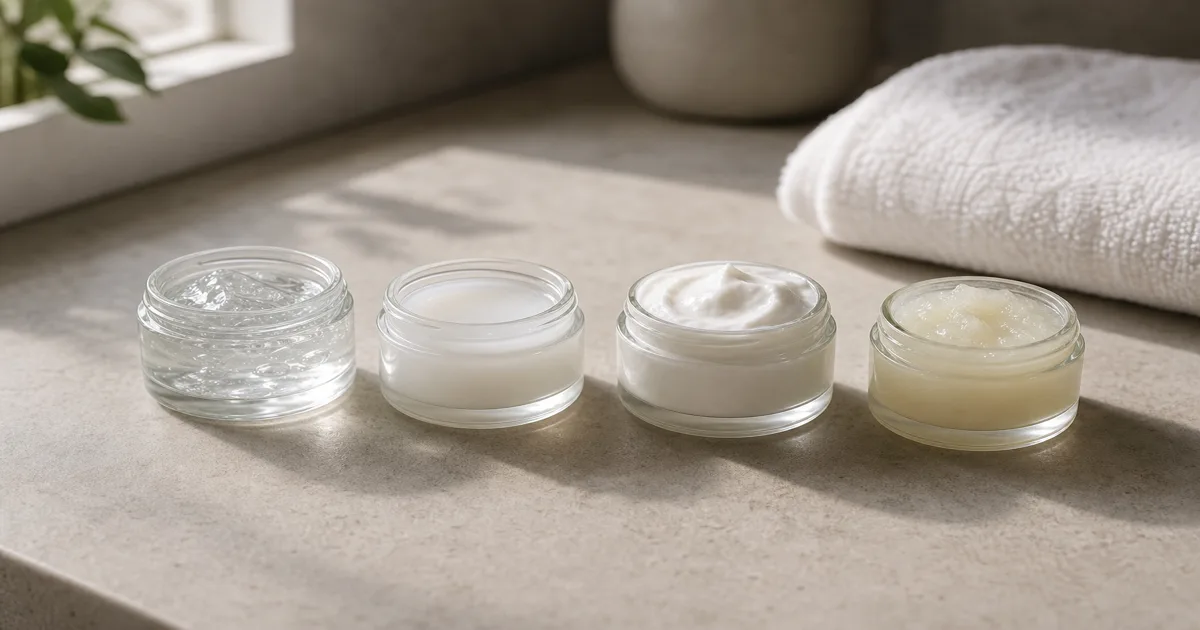
Choose your starting texture
You do not need a perfect skin-type label before narrowing the shelf. Start with the problem you want the moisturizer to solve.
- Shiny or greasy skin. Consider a light gel.
- Rough, flaky or tight skin. Start with a cream; an ointment is a richer option for pronounced dryness.
- Generally comfortable skin with mild dryness. A lotion is a reasonable starting point.
- Oily forehead, nose and chin but dry cheeks. Choose by area rather than coating every part equally.
These are starting choices based on the AAD’s moisturizer guidance, not a promise that every product in a texture category will suit you. For a first purchase, shortlist one face moisturizer rather than buying a complete set.
The illustration is a reminder to observe your skin, not a diagnostic deadline. Sensitivity can accompany oily or dry skin, so note reactions separately from shine or flaking. CeraVe’s skin-type explanation makes that distinction.
Use ingredients to understand the formula
A texture tells you where to start; ingredient functions help explain what you are buying. CeraVe describes three overlapping moisturizing roles: humectants such as glycerin attract and retain water, emollients soften the surface, and occlusives such as petrolatum reduce water loss.
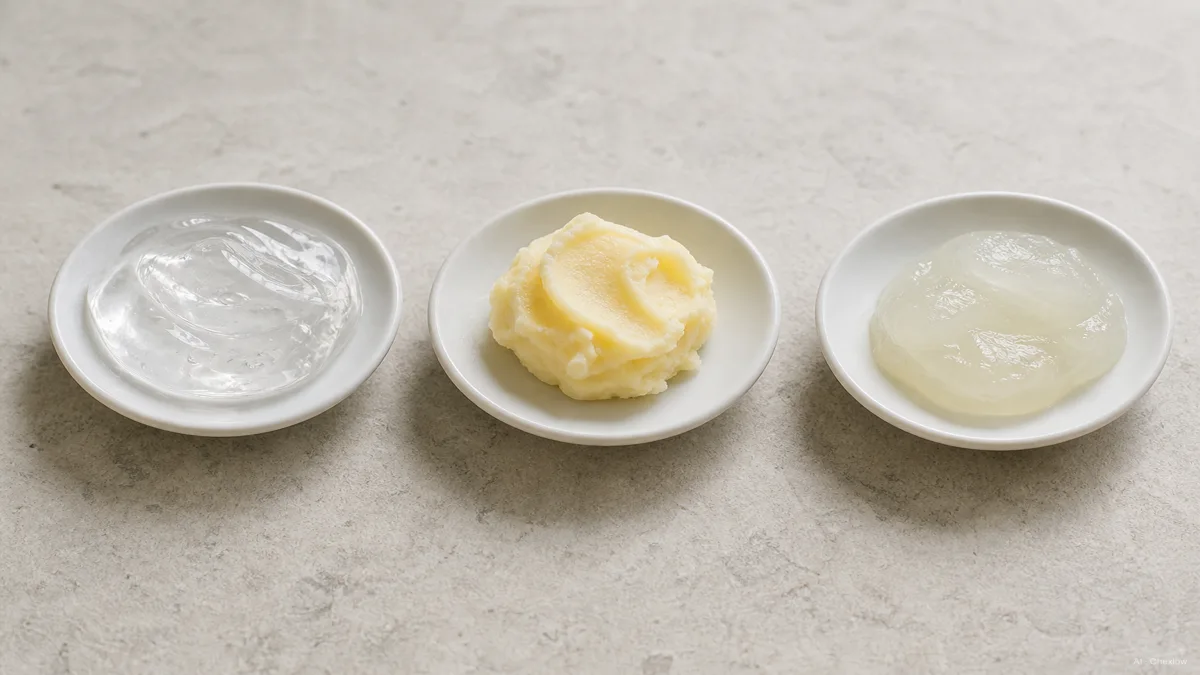
The dishes illustrate functions, not three products you need to buy. Use this vocabulary to compare complete moisturizers; do not turn the first purchase into a shopping list of separate ingredients.
Check sensitivity and breakout labels
For oily or breakout-prone skin, look for oil-free and non-comedogenic, meaning formulated to avoid clogging pores. Oily skin still needs hydration; the AAD recommends moisturizing after cleansing.
For dry, sensitive skin, prioritize fragrance-free. “Unscented” can still mean a product contains ingredients that mask smells, as the AAD’s dry-skin advice explains.
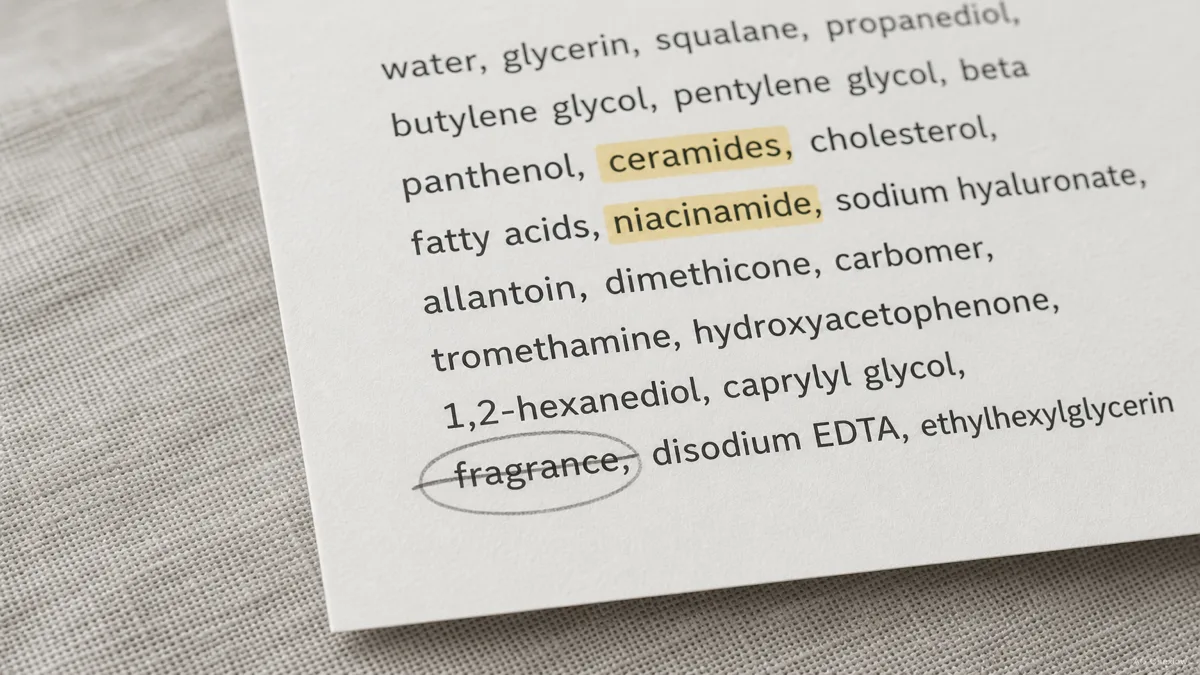
The highlighted ingredients are examples, not a mandatory checklist. For this first buy, give your texture choice and known sensitivities more weight than collecting named actives. Label checks narrow the candidates; trying the actual formula is the next decision.
Try one candidate before using it widely
Follow the AAD’s home product-testing method: apply your usual amount to a small area on the inner arm or elbow twice daily for seven to ten days. Leave a moisturizer on as directed. If redness, itching or swelling develops, wash it off and stop using it; seek dermatology advice for a severe or persistent reaction.
A comfortable trial is a reason to introduce the product, not a guarantee against every later reaction. Keep the first purchase manageable: choose one candidate before committing to backups or a matching range.
Decide whether to keep, adjust or seek help
Apply a basic moisturizer after cleansing while skin is slightly damp, following its directions. The AAD’s simple-routine guidance supports cleansing, moisturizing and sun protection without a crowded shelf.
- Keep it. Your chosen product feels comfortable and addresses the dryness you bought it for.
- Reconsider the texture or area. If cheeks still feel dry while the center feels coated, revisit the separate-area choice in the first section.
- Get advice. Persistent dryness or products that keep burning or stinging deserve a dermatologist’s assessment, rather than repeated purchases. See the AAD’s advice on when to seek help.
Once you have a comfortable moisturizer, the next buying question may be daytime protection. If you have not chosen it yet, read how to compare sunscreen types and SPF/PA labels.
Sources
Hoe deze gids is opgebouwd
AI wrote this guide for Housnap using American Academy of Dermatology advice and CeraVe’s educational explanations. The editorial scope is choosing and trying a first facial moisturizer, with texture, sensitivity and routine simplicity as the decision criteria. It does not report product testing or individual medical assessment.