Your First Paper Shredder, What the Security Levels and Cut Types Actually Mean
You search paper shredder and the spec sheets throw a wall of letters and numbers at you. P-4. Cross-cut. 12-sheet capacity. Continuous run time 30 minutes. None of it means much until you know what you are actually trying to protect. Here is the shortcut. A shredder's security level, P-1 through P-7, tells you how small the pieces end up and how hard they would be to reconstruct. Junk mail and old flyers barely need shredding at all. Anything with your name, address, account numbers, or a Social Security number on it needs real security, and that starts around P-4. The cut type is what actually delivers that security level. Strip-cut machines are fast and cheap but produce long, readable strips, fine for advertising mail, not fine for anything personal. Cross-cut machines chop paper both ways into small confetti-like pieces and cover most home and office needs. Micro-cut goes a step further, turning a page into something closer to dust, at the cost of a slower, pricier machine. This guide walks through what those security levels actually mean, how to pick between strip, cross, and micro-cut, how sheet capacity and run time trade off against price, and the basic maintenance that keeps a shredder from jamming or dying early.
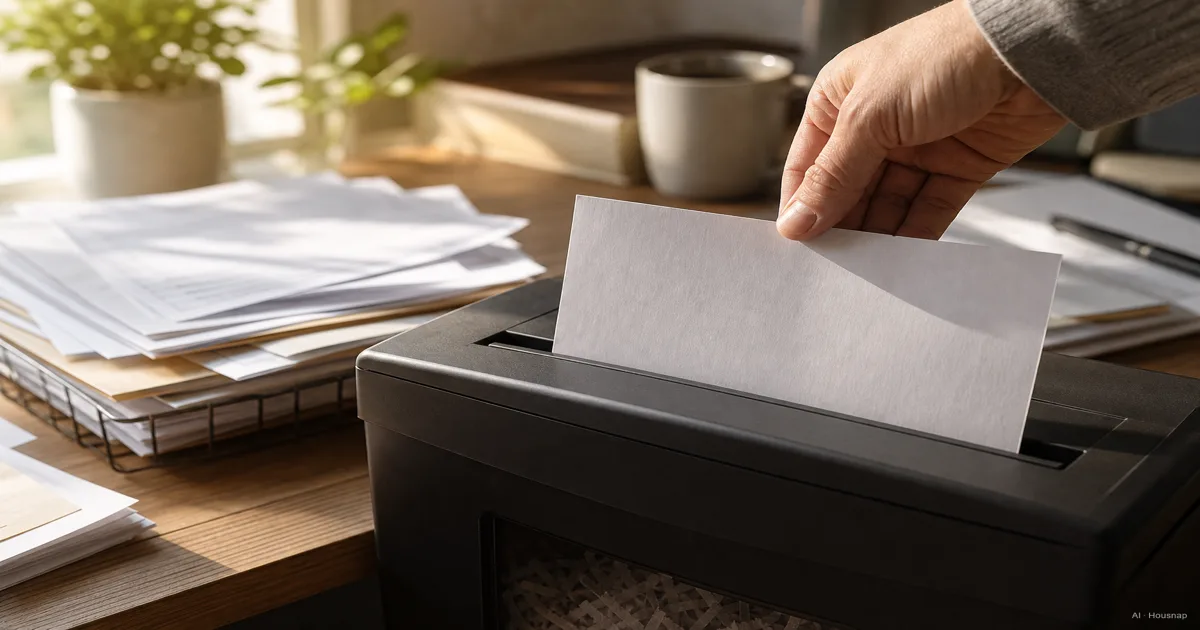
What Do Shredder Security Levels (P-1 to P-7) Actually Mean?
Every paper shredder sold today is rated against a standard called ISO/IEC 21964, the successor to the older German standard DIN 66399. The "P" stands for paper, and the scale runs from P-1, the loosest cut, to P-7, the finest. The number tells you two things at once, how small each shredded piece is and how much material a determined person would need to reassemble to read anything useful.
At the bottom, P-1 shreds paper into strips no wider than 12 millimeters, roughly the width of a highlighter tip. That is fine for junk mail and ad flyers you would toss in recycling anyway, but it is not remotely enough protection for anything with your name on it. At the top, P-7 requires particles under 5 square millimeters with a maximum width of 1 millimeter, a level built for classified government documents, not your kitchen desk.
Most first-time buyers never need either extreme. The useful range sits in the middle, and that middle is where the rest of this guide lives.
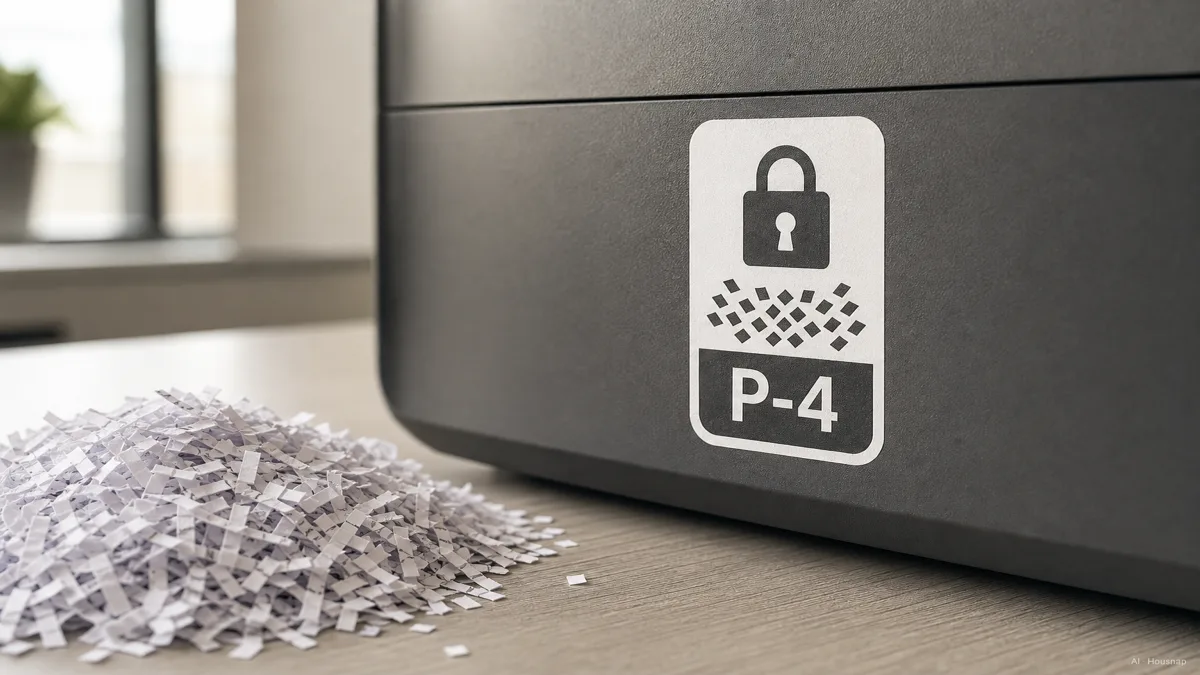
Strip-Cut vs Cross-Cut vs Micro-Cut: Which Cut Type Do You Need?
The security level number is really just a scorecard for what the cut type produces. Strip-cut shredders slice paper into long, thin strips running one direction only. They are fast, cheap, and easy on the blades, which is why entry-level shredders default here. The catch is that strip-cut sits at P-1 or P-2, and long strips can be taped back together well enough to read, which is exactly what you do not want for anything containing your address or an account number.
Cross-cut shredders run two crossed blade passes, cutting each strip again into short confetti-sized pieces, typically landing at P-3 or P-4. This is the practical baseline for everyday home and office paperwork, names, addresses, internal correspondence, old bank statements. Cross-cut is the most common type sold, and for good reason, it balances real security with a reasonable price and a shredder that does not bog down every time you use it.
Micro-cut shredders push the same idea further, producing particles closer to 2 to 5 millimeters, usually landing at P-5 or higher. A P-5 machine shreds paper into pieces under 30 square millimeters with a maximum width of 2 millimeters, a level often cited alongside HIPAA and FACTA-style compliance for sensitive personal documents like tax forms and medical records. Micro-cut is genuinely more secure than cross-cut, but it is not the same thing as the classified-document destruction the P-6 and P-7 tiers are built for, and most home buyers will never need to go that far.
How Much Paper Should Your Shredder Handle? (Sheet Capacity & Run Time)
Security level tells you how fine the cut is. It says nothing about how much paper you can actually feed the machine before it stalls, and that is where a lot of first-time buyers get surprised. Consumer Reports' 2026 testing of 19 shredder models found real tradeoffs between cut security and stamina. Their top-scoring machine used micro-cut blades rated P-5 with a 15-sheet capacity, but it needed a cooldown after 24 minutes of continuous running. A budget cross-cut model at around 60 dollars managed a full 30-minute run without stopping and handled 14 sheets at a time, but it only reached P-3 security, the lowest among the models Consumer Reports rated highly.
The pattern holds across the market. Finer cuts need more blade contact per sheet, so higher-security micro-cut units tend to run hotter and need to rest sooner than a cross-cut machine doing the same job. If you shred a thick stack of statements once a month, run time matters less. If you are clearing out a filing cabinet in one sitting, or shredding for an entire small office, sheet capacity and continuous run time become just as important as the security rating.
A practical way to shop: decide your security floor first, usually P-3 or P-4 for personal paperwork, then look at sheet capacity and run time as the tiebreaker between models that already meet that floor.
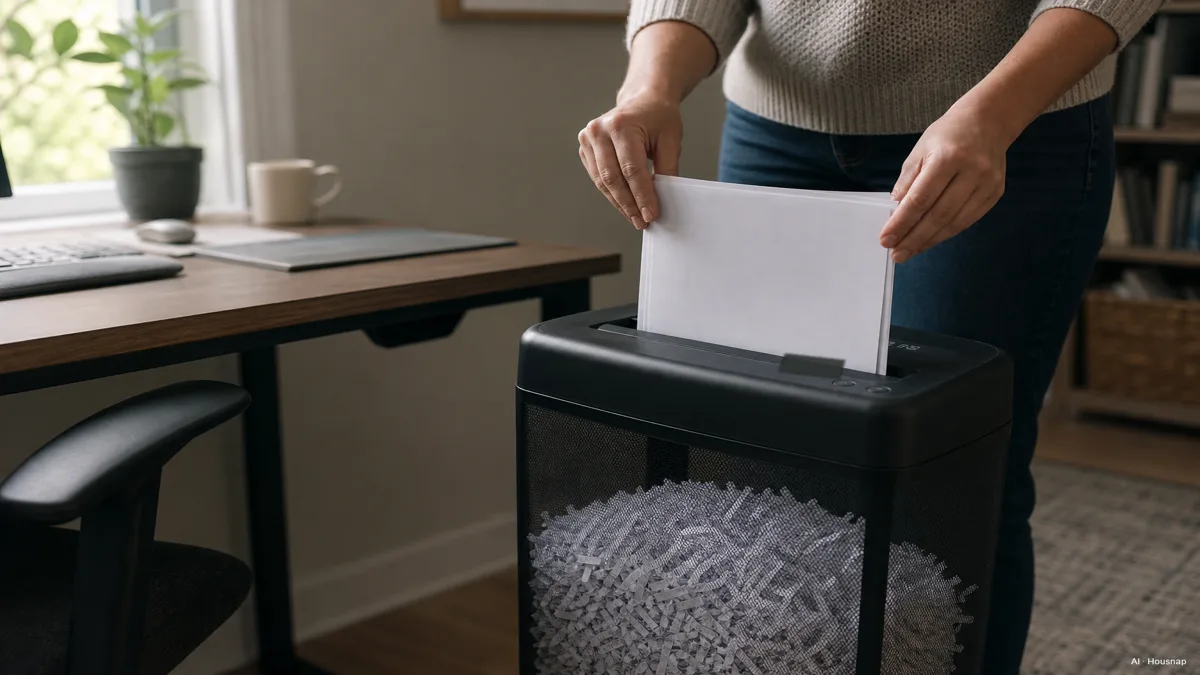
Shredder Maintenance: Oiling, Overheating, and Jam Prevention
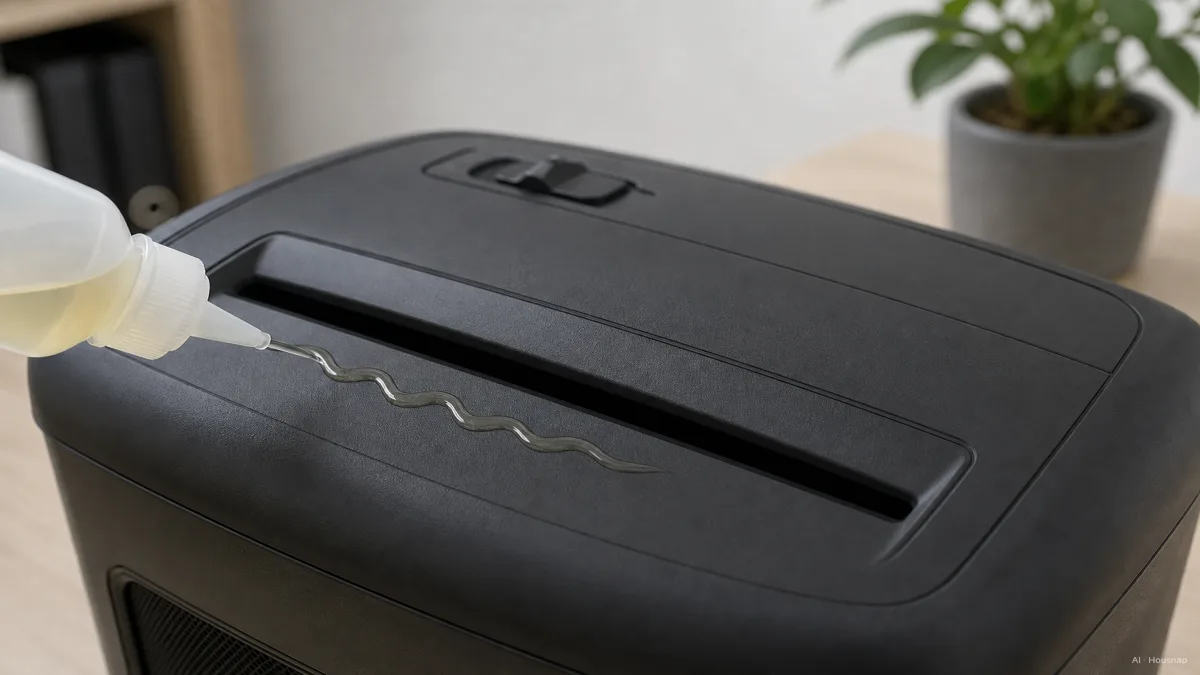
A shredder is one of the few office machines that actively dulls itself every time you use it, and a little oil goes a long way toward slowing that down. For cross-cut shredders, the rough guideline is to oil the blades roughly every time you empty the bin, or after about 30 minutes of cumulative use. The method is simple, run shredder oil in a zigzag pattern across the feed slot, then run the machine in reverse for about 10 seconds to work the oil through the blades. Micro-cut mechanisms have finer, more intricate blades and typically need oiling more often, closer to every 15 to 20 minutes of use.
Overheating is the other common failure point, and it is mostly preventable. Give the shredder at least 4 inches of clearance on all sides so air can actually move around the motor, and avoid running it at maximum sheet capacity back to back without a break. Most units will warn you or shut off automatically before real damage happens, but repeated overheating still shortens the motor's life.
Jams are the most common trigger for both overheating and blade damage, and they are almost always caused by feeding in something the shredder is not rated for, paper clips, staples, or too thick a stack at once. Fan the sheets slightly before feeding them in and remove obvious metal fasteners first. A few extra seconds here saves a much longer reset-and-reverse cycle later.
Quick Buying Checklist: Matching Security Level to Your Documents
Before you buy, match the security level to what you actually shred.
Junk mail and ads only. P-1 or P-2 strip-cut is enough, though most buyers end up wanting cross-cut anyway for the small added cost.
Everyday personal and office paperwork. P-3 or P-4 cross-cut is the baseline most first-time buyers should land on, names, addresses, old statements, internal documents.
Tax forms, medical records, anything with a Social Security number. Step up to P-4 or P-5. This is roughly the level often referenced alongside HIPAA and FACTA-style handling of sensitive personal data, and it is worth the extra cost for documents that could enable identity theft if recovered.
High volume, low patience. Weigh sheet capacity and continuous run time as heavily as the security rating. A P-5 shredder that needs a cooldown every 15 minutes will frustrate you if you regularly clear out a full filing cabinet in one sitting.
Maintenance habit. Plan to oil the blades roughly every time you empty the bin, keep 4 inches of clearance around the machine, and remove staples and paper clips before feeding in a stack.
The stakes here are not abstract. The FTC reported more than 1.1 million identity theft cases in the United States in 2024, with an estimated 47 billion dollars in losses, making it the second most reported fraud category that year. The FTC's own guidance is straightforward, shred paid bills, receipts you no longer need for tax or warranty purposes, and pre-approved credit offers rather than tossing them in the trash whole. A P-3 or P-4 cross-cut shredder covers that recommendation for most households without overspending on capability you will not use.
Sources
- Shredder Security Levels Explained: How to Choose the Correct Protection — Whitaker Brothers; P-1 through P-7 particle sizes and which levels suit which documents
- Cross-cut vs Micro-cut Shredder, Which is Better? — recycling.com; cut-type mechanics and typical security levels for strip, cross, and micro-cut
- DIN 66399 Paper Shredder Security Levels — recycling.com; ISO/IEC 21964 standard background and the P-scale definition
- 5 Best Paper Shredders of 2026 — Consumer Reports; 19-model test results on sheet capacity, run time, and security tradeoffs
- How to Oil Your Paper Shredder for Optimal Performance — Shredder Warehouse; oiling frequency and method for cross-cut and micro-cut machines
- Protecting Your Personal Information: Which Documents to Keep and Which to Shred — FTC Consumer Advice; 2024 identity theft statistics and which documents to shred
How this piece was built
This piece is the second entry in the office-supplies cluster for Housnap, following the fountain pen vs rollerball guide. It starts from the moment a first-time buyer sees a P-4 or P-5 label on a shredder box with no idea what the number means or which level actually fits their own paperwork. The security-level definitions and cut-type mechanics were anchored on Whitaker Brothers' breakdown of the ISO/IEC 21964 scale and recycling.com's cross-cut-versus-micro-cut comparison, the capacity and run-time tradeoffs came from Consumer Reports' 2026 test of 19 shredder models, the maintenance guidance came from Shredder Warehouse's oiling guide, and the identity-theft framing came from the FTC's 2024 consumer advice on which documents to shred. Catalog depth for paper shredders in this vertical was not directly confirmed in this research pass, so the body stays comparative and standards-based rather than citing live offer counts, and this topic remains a draft pending that catalog fit check.