Nu verkrijgbaar bij één winkel
Deze producten zijn momenteel elk bij één winkel verkrijgbaar. Prijsvergelijking opent zodra meer winkels zijn toegevoegd.
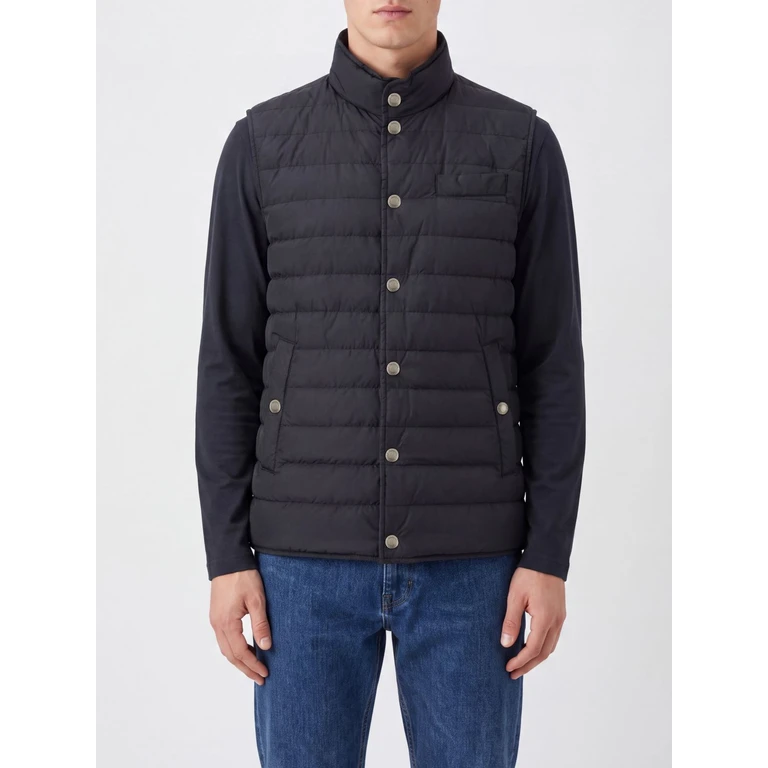
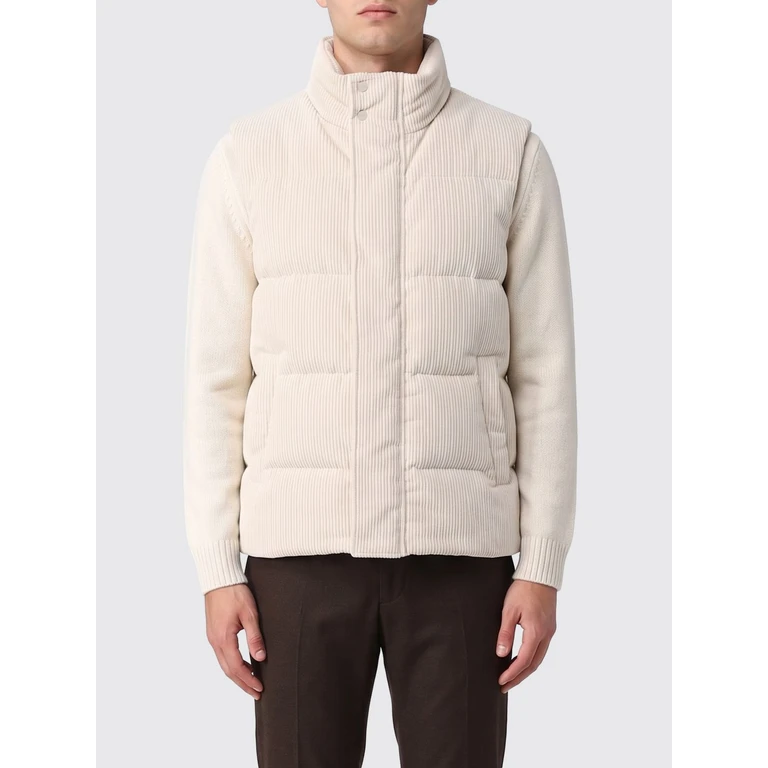
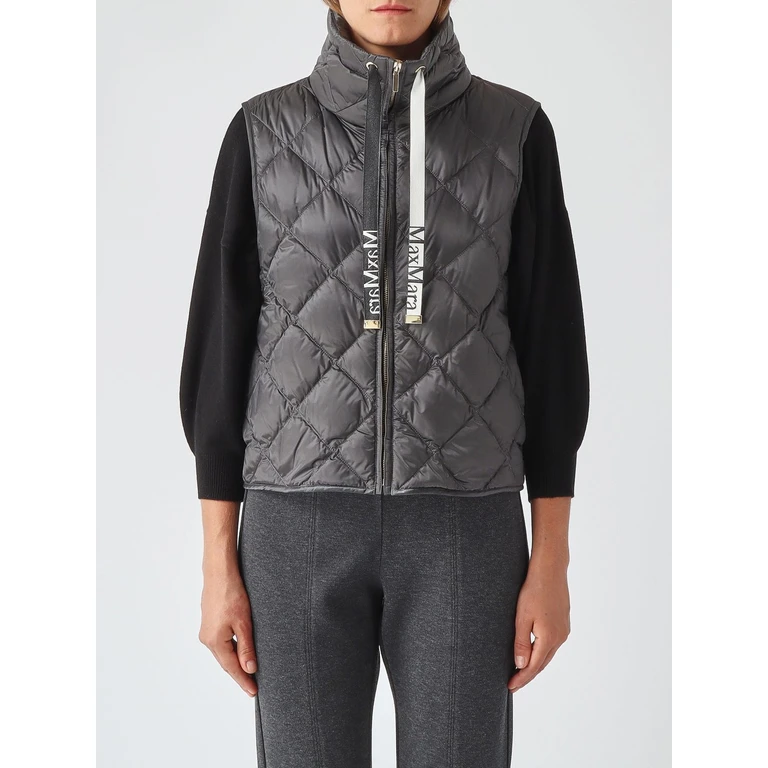
Start with your layers, then read the size chart
Bring the sweatshirt or jumper you expect to wear underneath, plus a thinner option if the gilet needs to work with both. Use the brand’s body-size chart to choose a starting size; use the clothes themselves for the fitting.
Do not add an invented layering allowance to every measurement. Rab’s sizing guide explicitly distinguishes body measurements from garment measurements and says some jackets already have a more generous cut for thicker midlayers. Its relaxed fit also allows additional layering. That does not establish a universal rule to buy one size larger.
Patagonia’s men’s guide measures the chest with arms relaxed, around its fullest part. It also advises considering the hip-indicated size when the hips are larger than the chest; check the chart relevant to your candidate rather than transferring this rule between brands. Patagonia describes slim fit as close with slight ease, so a fit label still needs a real try-on.
Buying online? Ask for the garment’s chest width, back length and armhole measurement, including how each was taken. Compare like measurements with a sleeveless outer layer that already fits over the same clothes. A body circumference and a flat garment width are different things.
Let the armholes decide whether the cut works
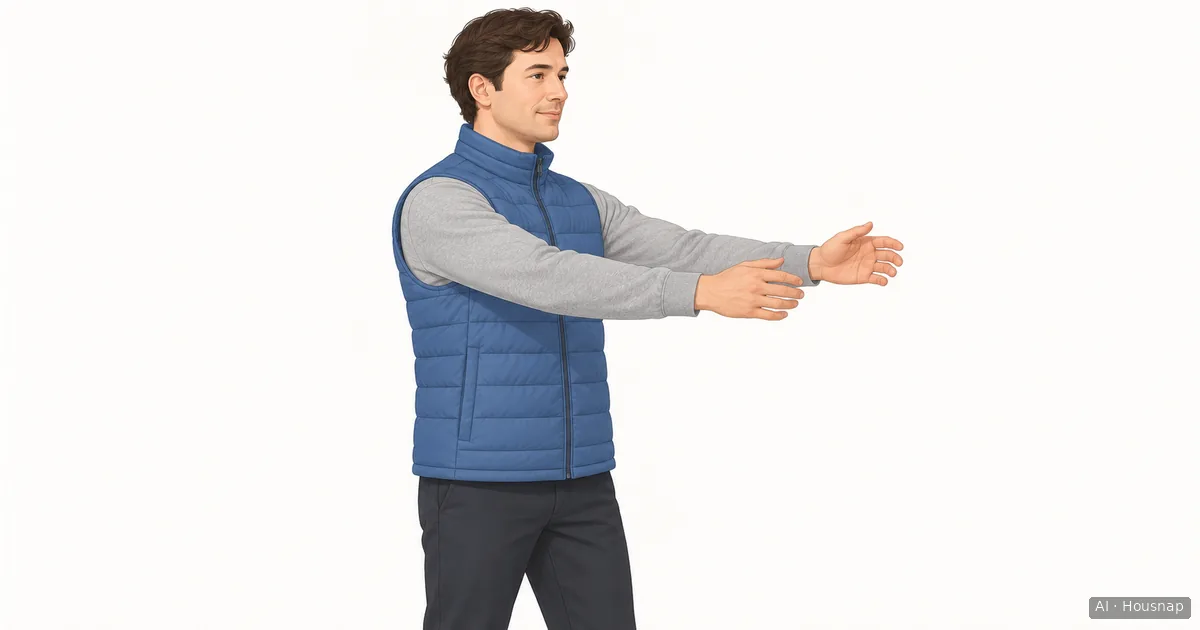
Zip the gilet, reach both arms forward, then lift and lower them. These are fitting checks, not a manufacturer-certified test.
- The chest and armholes both pull. Compare the next size, repeating the checks with the same underlayer.
- The body feels right, but an armhole digs in or traps the sweatshirt sleeve. Compare a different armhole shape or a roomier cut before enlarging the whole garment.
- A larger size clears the sleeve but leaves an opening you dislike. Try another cut. Extra body width has not necessarily solved the armhole problem.
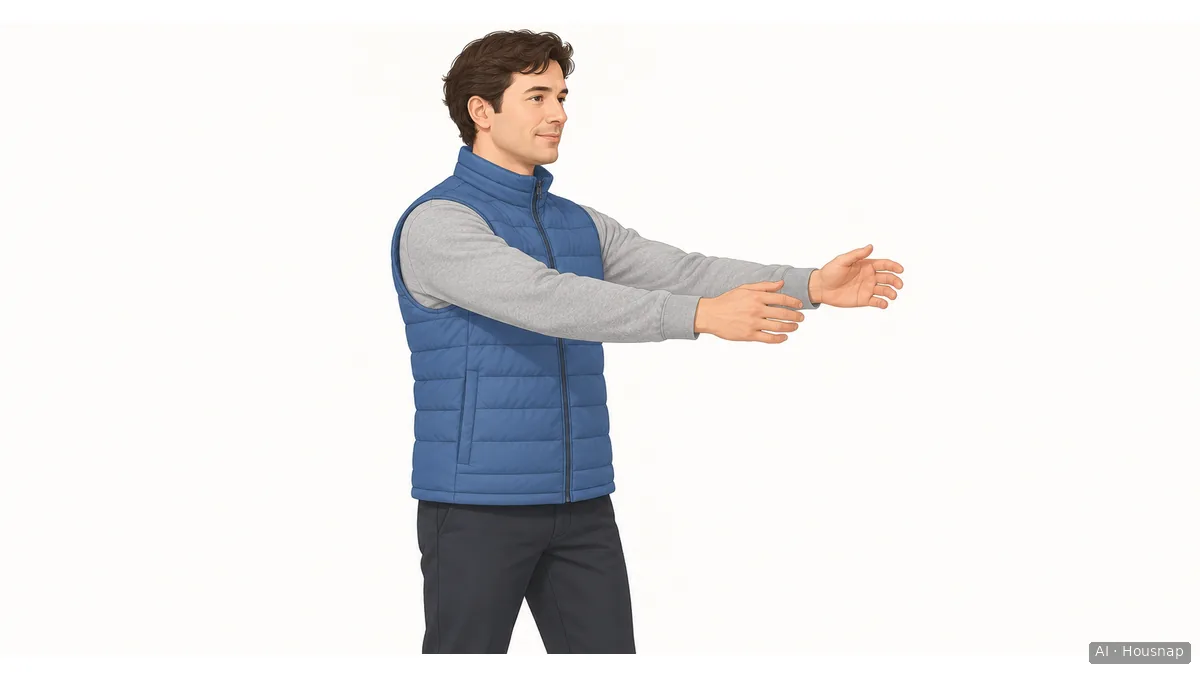
The illustration shows the movement to repeat, not an ideal gap or proof of a comfortable fit. Feel for pressure around the opening and watch whether the gilet pulls upward as you reach.
Construction gives you something more useful to compare than size letters alone. For example, Rab’s Cirrus Flex vest has elasticated armholes, fleece side panels described as reducing bulk and aiding movement, and a one-sided hem adjustment. Those are features of that model, not promises about every padded gilet or the candidates shown here.
Check the hem standing and sitting
Wear your usual trousers and check the back as well as the front. Reach forward again, then sit as you would on your commute. Does the hem leave the coverage you wanted? Does it catch at the hips, press into your lap or need pulling down afterward?
- Too short for your intended coverage. Compare a longer body rather than assuming a larger size will provide the right length.
- Long enough, but tight at the hips. Compare the lower-body cut and hem width. More length alone will not answer that fit problem.
- An unwanted opening at the bottom. If the candidate has a hem adjuster, try it gently and repeat the movement check. If closing the gap makes the body ride up or feel restrictive, compare another cut.
Check for an unwanted draft at the hem when you can try the garment in suitable conditions. A mirror can reveal an opening; it cannot establish how warm the complete outfit will feel. There is no single correct distance below the waistband for every body and outfit.
Make the choice with the complete outfit
If the gilet will sit under a coat or shell, put that layer on and close it too. Outdoor Research’s down-layering guidance recommends trying the shell for comfortable layering and leaving room for down to loft. For a down-filled gilet, a combination that only closes by squeezing the filling needs reconsideration.
Choose the candidate that passes the armhole, hem and outer-layer checks with the clothes you actually use. If one size binds and the next feels excessively loose, change the cut; buying more clothes to accommodate the gilet need not be the solution. When ordering without a fitting, resolve missing measurements and return conditions first.
Passing these checks establishes a workable fit, not a temperature rating. Sleeveless padding alone does not tell you whether the whole outfit suits your weather or time outdoors.
If the goal turns out to be a sleeveless layer for indoor outfits rather than padded outerwear, compare a sweater vest chosen around your existing clothes before buying.
Hoe deze gids is opgebouwd
This article was written by AI for Housnap, using manufacturer sizing, vest-construction and down-layering guidance. The movement and hem checks are editorial suggestions for comparing fit, not original wear tests or guarantees of warmth; individual model features are kept separate from general selection advice.