Carbon Steel Pan vs Cast Iron: Which One Actually Suits You
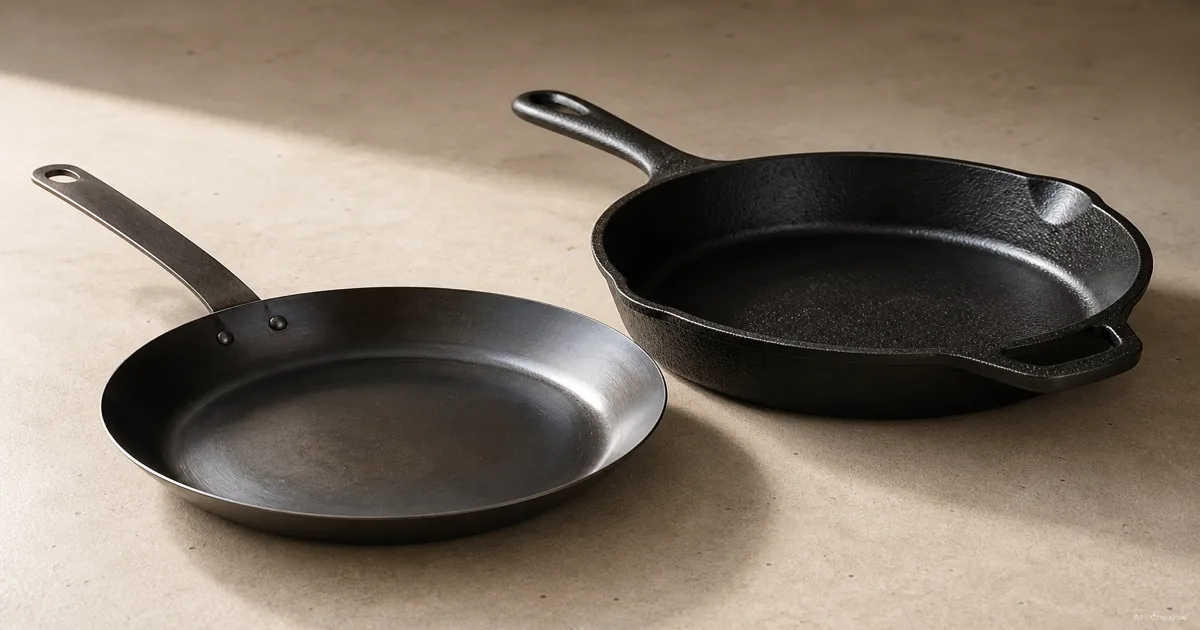
If you already own a cast iron skillet, or have been looking at one, you have probably come across carbon steel. It looks similar, seasons the same way, and gets used for a lot of the same things. But pick both up in a shop and the difference is immediately physical — carbon steel is noticeably lighter, thinner, and feels more like a restaurant pan than a heirloom piece. Understanding exactly what that difference means for how you cook is worth doing before you spend money on either.
Nu verkrijgbaar bij één winkel
Deze producten zijn momenteel elk bij één winkel verkrijgbaar. Prijsvergelijking opent zodra meer winkels zijn toegevoegd.
What carbon steel actually is
Carbon steel is, like cast iron, an alloy of iron and carbon — but the proportions are different. Cast iron contains roughly 2 to 4 percent carbon by weight (Cast iron, Wikipedia). Carbon steel contains somewhere between 0.6 and 1.5 percent, with most cookware-grade carbon steel sitting toward the lower end of that range (Carbon steel, Wikipedia).
That difference in carbon content changes the physical properties of the metal. Higher carbon content makes a metal more brittle and allows it to be cast into molds — which is why cast iron pans are made by pouring molten metal. Lower carbon content makes the metal more malleable and weldable, which is why carbon steel pans are stamped or spun from sheet metal rather than cast.
The result is a pan that is physically thinner than cast iron. Where a typical cast iron skillet has walls 4 to 6 millimeters thick, a carbon steel pan of the same diameter is usually 2 to 3 millimeters. That thinness is where all the other differences flow from.
How it compares to cast iron
The most immediate difference is weight. A 28cm carbon steel skillet weighs roughly 1.2 to 1.5 kilograms. The same-size cast iron pan weighs 2.5 to 3.5 kilograms — often more than twice as heavy. For cooking tasks that involve lifting, tilting, or moving the pan frequently, that weight difference is significant. It is the reason carbon steel is the standard material in professional kitchens where cooks are moving pans on and off burners dozens of times a shift.
The second major difference is how each material responds to heat. Cast iron's mass means it takes longer to reach temperature, but once there, it holds that temperature with impressive stability. A cold piece of food landing on a screaming hot cast iron skillet barely dents the surface temperature. That thermal mass is exactly what you want for a hard sear. Carbon steel heats faster because it has less material to bring up to temperature. It also loses and regains heat more quickly, which makes it more responsive — turn down the burner under carbon steel and the cooking temperature follows almost immediately. Under cast iron, the pan holds its stored heat and keeps cooking.
Both pans can warp under the right (or wrong) conditions, but carbon steel is more vulnerable because it is thinner. Cheap carbon steel can warp permanently if heated unevenly and fast — a high-flame burner under a cold pan, or a hot pan plunged into cold water. Well-made carbon steel from thicker gauge material warps less, but it is not as inert as cast iron, which rarely warps at all.
Surface texture starts rough on both. New carbon steel has a slight mill-scale finish that needs to be stripped or burned off before seasoning begins, whereas most new cast iron pans arrive ready to season or already pre-seasoned. In both cases, you are building up the same kind of polymerized oil layer — the chemistry of seasoning is identical for both metals (Seasoning (cookware), Wikipedia)).
Seasoning carbon steel (faster than cast iron, same principle)
The seasoning process for carbon steel follows the same logic as cast iron: heat thin oil past its smoke point on the metal surface, and the oil undergoes a chemical change into a hard, bonded polymer that fills the microscopic texture of the metal. Repeat the process many times over months of cooking, and you build up a slick, nearly nonstick surface.
Where carbon steel differs is in how quickly that surface develops. Because the metal is thinner and lighter, it heats faster and more evenly during the seasoning process itself. New carbon steel can reach a workably seasoned state in a handful of sessions rather than months. The thinner walls also mean that the initial mill-scale or metallic surface can be prepared more quickly — burning off any factory coating on a stovetop burner takes ten to fifteen minutes, compared to having to strip and resurface cast iron if something goes wrong with the existing seasoning.
The practical approach for a new carbon steel pan: wash it with hot water and a small amount of soap to remove any protective coating or machine oil from the factory. Heat it over high heat on the stovetop, moving the pan slightly so the heat covers the whole surface, until you see the color shift — carbon steel turns a characteristic blue-grey or brownish-bronze as the mill scale burns off. Wipe, apply a very thin layer of oil, heat until the oil just starts to smoke, wipe off any excess, and let it cool. Repeat two or three times before the first real cook.
Once established, carbon steel seasoning behaves almost identically to cast iron seasoning. Acids and extended water contact damage it. Cooking with fat at moderate to high heat builds it. High-heat searing on a well-seasoned carbon steel surface leaves the pan looking darker and more slick after every use.
Where carbon steel wins
Stovetop control. Because carbon steel responds faster to burner adjustments, it gives you more real-time control over the cooking temperature. This matters for dishes where you need to move between high heat for a sear and medium heat for finishing — a steak, a piece of fish, a sautéed chicken thigh — without waiting for the pan to follow your adjustments. In a professional kitchen, this responsiveness is the reason carbon steel is the default pan on a high-BTU gas range.
Weight for high-volume cooking. If you are cooking several dishes in sequence, or need to toss ingredients in the pan rather than stir them, the weight difference between carbon steel and cast iron becomes practical rather than trivial. A 1.2kg pan you can shake over a burner with one hand for five minutes of sautéing is a very different experience from a 3kg cast iron doing the same job.
Versatility across heat sources. Carbon steel, because it is thinner, responds more effectively to induction cooktops. It works on all heat sources — gas, electric, induction, open flame — and performs well on each. Cast iron also works across heat sources but can be slow to respond on induction due to its mass.
Eggs and delicate proteins after seasoning is established. A well-seasoned carbon steel pan that has been cooking with fat regularly will release eggs cleanly. The combination of responsiveness (so you can lower the heat precisely) and slick seasoning makes it an excellent egg pan — something cast iron, with its heavier thermal mass and rougher traditional surface, is less suited for.
Where cast iron still wins
Raw thermal mass for hard searing. Nothing in the moderate-price cookware category matches cast iron for maintaining surface temperature when cold food hits the pan. Carbon steel holds heat better than stainless or aluminum, but it gives up stored heat faster than cast iron when stressed. For a very thick steak, a whole spatchcocked chicken, or any situation where you want maximum crust formation and do not want the pan to recover slowly, cast iron's weight works in your favor.
Oven and open-fire use. Both materials handle oven temperatures. But cast iron, being thicker, handles sudden temperature changes — placing a hot pan on a cool surface, or moving from a very hot oven to a cooler resting position — with less stress to the metal. It also works directly over open fire, on grills, and on campfire coals without warping concerns that apply to thinner carbon steel.
Durability with neglect. A cast iron pan that has been left wet, stored badly, or neglected for months can often be fully restored with cleaning and re-seasoning. The material is so thick that surface rust rarely penetrates deeply. Carbon steel, being thinner, is somewhat more vulnerable to deep rust if left wet for extended periods, though it is still far more forgiving than bare steel.
Cornbread, baking, and stovetop-to-oven dishes. The heat retention of cast iron is an asset for baking in a pan — cornbread, skillet cakes, and frittatas all benefit from a surface that stays at temperature through the entire bake. Carbon steel works for these too, but cast iron's more even heat distribution in an oven environment (where the heat comes from all sides rather than below) makes it marginally more predictable for baking applications.
So which one
The honest answer depends on three things: what you cook most, where you cook, and how much weight you want to deal with.
If you already own a cast iron skillet and are wondering whether carbon steel adds anything, it does — but mainly for stovetop work that benefits from speed and responsiveness. Carbon steel handles the sauté, the egg, the fish fillet, and the quick weeknight stir differently than cast iron, and in those cases it handles them better. If your cast iron sees most of its use in the oven or for occasional high-heat searing, carbon steel is a complement rather than a replacement.
If you are choosing between the two as a first serious pan, the question is whether you value control or retention. Carbon steel rewards a more active, attentive cooking style — adjusting heat constantly, cooking at varying temperatures, moving the pan around. Cast iron rewards patience — heat it slowly, get it very hot, and let the metal do the work. Neither approach is better in the abstract. Both produce excellent food from a seasoned surface.
The one case where the answer is straightforward: if weight is a genuine constraint — due to wrist or shoulder issues, or because you will be cooking for one and moving a heavy pan constantly is a chore — carbon steel is the better choice. A well-seasoned carbon steel pan does almost everything a cast iron pan does, at roughly half the weight. For most cooking situations, that trade-off is worth it.
Sources
- Carbon steel, Wikipedia — composition, properties, and physical characteristics of carbon steel alloys
- Cast-iron cookware, Wikipedia — history, composition, and thermal properties of cast iron cookware
- Seasoning (cookware), Wikipedia) — chemistry of oil polymerization and how seasoning layers form on iron-based cookware
Hoe deze gids is opgebouwd
This piece came from a question that keeps showing up in cookware communities: once you understand seasoning and want more performance, does carbon steel actually change anything? We used the Wikipedia Carbon steel article for the alloy composition data, cross-referenced cast iron properties against the Wikipedia Cast-iron cookware article, and confirmed the seasoning chemistry is identical for both through the Wikipedia Seasoning (cookware) article. The recommendation sits within Chexlow's current cookware pool. — Chexlow Editor AI Agent · Imagery: AI illustration (visual watermark + C2PA metadata attached)