Separate the load before adding anything
A pale shirt has come out pink: first separate the garment that appears to have released dye, the stained clothes and the unaffected laundry. Do not move the whole load into the dryer while deciding what to do. Whirlpool advises separating stained items promptly and warns that dryer heat can set the stain.
Check affected pieces individually. A treatment suitable for one cotton shirt may not suit another garment in the same load. The immediate task is to identify a permitted treatment, not to add a stronger dose to everything.
Check both the care label and fibre content
Read the washing instructions and the bleaching symbol separately. In the care-symbol system explained by clevercare:
- An empty triangle permits chlorine and oxygen bleach.
- A triangle with two diagonal lines permits oxygen bleach, but not chlorine bleach.
- A crossed-out triangle means no bleaching, including oxygen bleach; choose detergent without bleach.
These symbols do not replace the treatment product’s instructions. Check its permitted fabrics, temperatures and application method too. If washing is prohibited, or you cannot establish compatibility, set the garment aside for advice instead of starting a soak.
White is not a fibre type. Clorox’s chlorine-bleach guidance excludes wool, silk, mohair, leather and spandex, including small amounts of spandex, also called elastane or Lycra. A white stretch top therefore needs more checking than its color suggests.
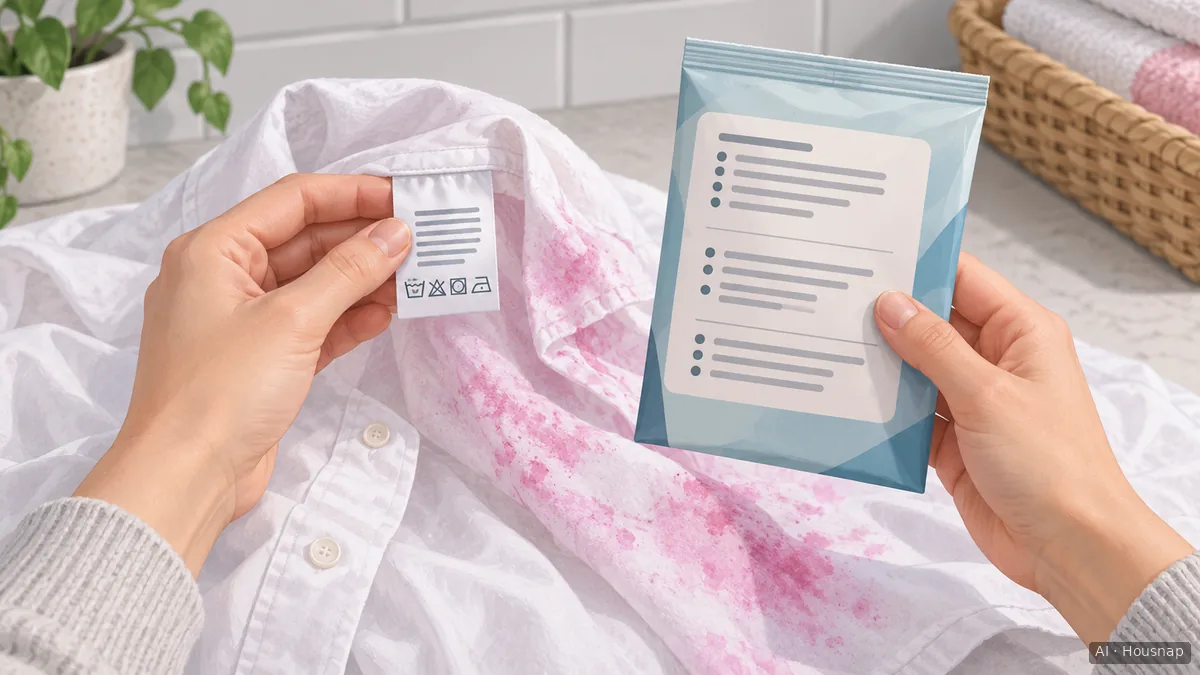
Use the illustration as a reminder to compare both sets of instructions; it is not a readable product label or evidence of a successful treatment.
Choose one compatible treatment
Oxygen laundry bleach is one option when both the garment and the exact product permit it. Whirlpool describes an oxygen-bleach treatment followed by washing. Use your package’s dose, water temperature and treatment time within the garment’s limits, then follow its rinsing and washing directions. A suitable detergent you already own can serve the wash step. Do not treat a generic soaking time as permission for every fabric.
A laundry color-run remover is a different product choice. Look for instructions that specifically cover accidental dye transfer, then check every fabric and color restriction. For example, this regional Dr. Beckmann Colour Run Remover page requires its side-label colorfastness advice and excludes synthetic fibres, jeans and certain dyes. Those limits belong to that product, not to every remover.
Test as directed on an inconspicuous area before treating the whole garment. Colorfastness means the original color withstands the proposed treatment; it is not something to assume because the garment has been washed before. Clorox’s discussion of color remover warns that an overly strong solution can strip the original color too.
Choose one complete set of compatible instructions. If the product requires a temperature or process the garment forbids, reject that treatment rather than changing the recipe yourself.
Inspect the result and decide when to stop
After completing the treatment and rinse or wash, air dry in the way the garment permits and inspect before using a dryer. Remaining dye is a reason to reassess the instructions, not automatically increase the strength. If the original color changes, the fabric looks damaged or no compatible method is clear, stop experimenting and ask the garment maker or a professional cleaner about that specific item. Restoration is not guaranteed.
For the next load, separate whites, lights and darks. If raw jeans were the suspected source, use the first raw-denim wash guide to plan their own washing routine. That guide addresses the jeans’ care and shrinkage questions; it is not a treatment for dye already transferred to another garment.
Comment ce guide a été conçu
Housnap’s AI authored this guide using Whirlpool’s laundry advice, clevercare’s care-symbol explanations and product-specific guidance from Clorox and Dr. Beckmann. The scope is first-response triage and treatment compatibility, without original stain-removal testing or a promise of restoration.