Read the whole label before choosing a cycle
A temperature number is only part of the decision. GINETEX groups care instructions into washing, bleaching, drying, ironing and professional care. Check the relevant instructions separately instead of treating the washing symbol as permission for everything that follows.
For each garment, establish whether machine washing is allowed, what temperature and treatment limits apply, whether bleach is permitted and how it should dry. Use the linked references to identify unfamiliar symbols, and read any written instructions alongside them.
AEG's explanations distinguish hand washing from machine washing and include separate load and spin restrictions. A cooler setting does not resolve every difference. Do not put a hand-wash-only item into the machine simply because it has a gentle programme.
Set aside anything marked do not wash or dry-clean only. If the label is missing, unreadable or internally contradictory, ask the garment maker about that item before adding it to a load. If the item you have separated is a cashmere sweater, continue with choosing its washing, drying and storage method.
Build a load that shares a suitable wash
Whirlpool recommends the most conservative care instructions for a mixed load, while also sorting by colour, fabric and soil level. Apply that advice after removing items that cannot share the washing method.
For example, imagine two garments that both permit machine washing: one has a 30°C maximum and the other a 40°C maximum. A 30°C wash stays within both temperature limits. It is a possible shared setting only if the cycle, spin, load conditions and remaining garment instructions also agree.
- Same temperature, different fabrics. Keep heavy denim apart from delicate clothing. Whirlpool explains that heavier fabrics can abrade delicate items during washing.
- Same cycle, different colours. Keep colour groups separate; matching care labels do not settle the colour-transfer question.
- Same fabric, different soil levels. Set heavily soiled or stained pieces aside for an appropriate treatment rather than increasing the intensity of the whole load.
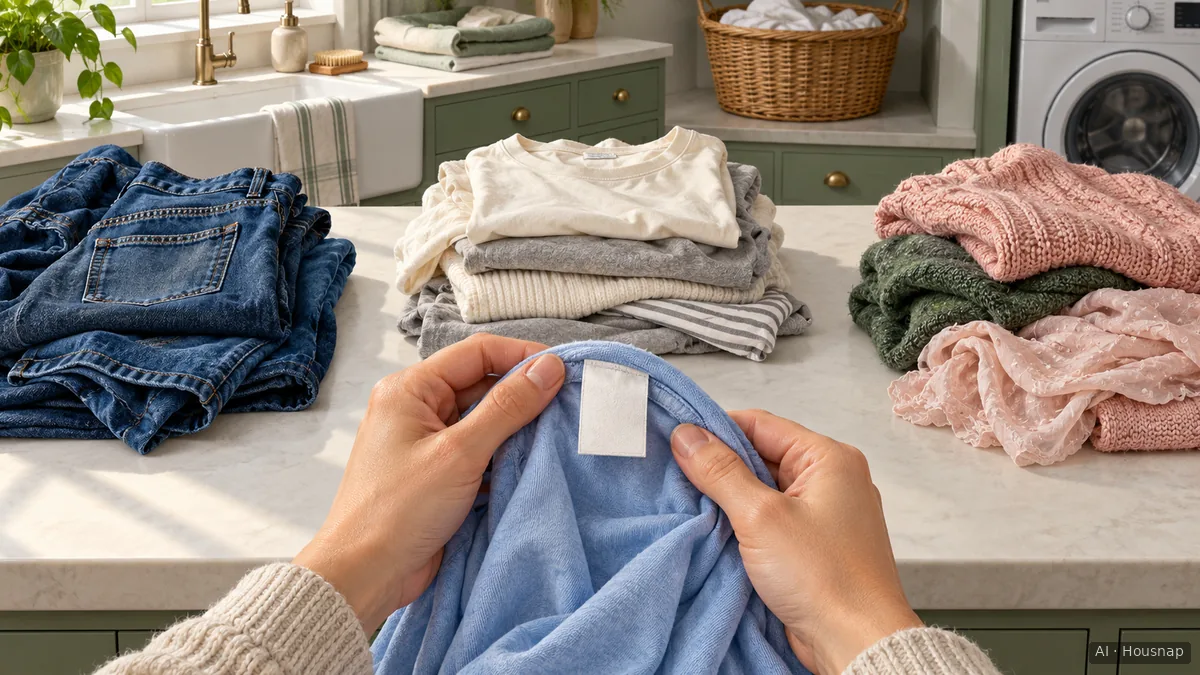
Decide about bleach separately too. A non-chlorine-only instruction does not permit chlorine bleach, and a do-not-bleach instruction rules out bleaching that garment. For a shared wash containing such an item, leave bleach out; if another garment needs a different permitted treatment, separate it.
Use a laundry bag only after the clothes are compatible
A mesh laundry bag is an optional aid for delicate items that already permit machine washing. Whirlpool includes it in its sorting guidance and recommends bags for delicates such as undergarments.
Use a suitable bag you already own. If you need one, look for a mesh laundry washing bag intended for delicate clothing, then follow the garment and bag instructions. A bag does not override a hand-wash-only label, change a temperature limit or make a heavy-denim load suitable for delicate fabric.
Choose the machine settings from the compatible garments' requirements and the appliance instructions. If you cannot establish that the available programme meets those requirements, keep the item out until you can confirm a suitable method. Buying a new washer is not the next step in interpreting a label.
Sort again before drying
Clothes that share a wash do not necessarily share a drying method. AEG lists low-temperature tumble drying, normal-temperature tumble drying and do not tumble dry as distinct instructions.
Before transferring the load, check each item again. Remove anything that prohibits tumble drying and follow its specified natural-drying method. For the remaining items, use only a dryer setting that meets every garment's limits; do not infer drying permission from a machine-wash instruction.
If drying instructions are unclear, keep that item out of the dryer and ask the maker. The useful end result is a wash group and a drying plan for each garment, not one programme imposed on the whole basket.
Comment ce guide a été conçu
This guide was written by AI for Housnap, using GINETEX's care categories and AEG and Whirlpool guidance on care instructions and laundry sorting. The mixed-load examples are editorial applications of that guidance, not original wash tests or approval for a particular garment or appliance.