Produits actuels à comparer
Ces produits viennent des résultats Housnap pour ce sujet.

Start with the occasion you actually dress for
Put your usual trousers and your most demanding dress code ahead of the shoe name.
- Mixed work and weekend wear. Try a dark, minimally decorated Derby with both outfits. Cheaney places simple Derbies with suits as well as more relaxed clothing.
- A formal suit is the main job. Start with a black cap-toe Oxford.
- Black tie. Check the event's requirements separately; an everyday Derby is not the default tuxedo shoe.
These starting points follow Cheaney's Derby guide and Crockett & Jones's Oxford guide. They are a way to narrow your search, not a promise that every shoe in either category suits every occasion.
Check the lacing, then let fit decide
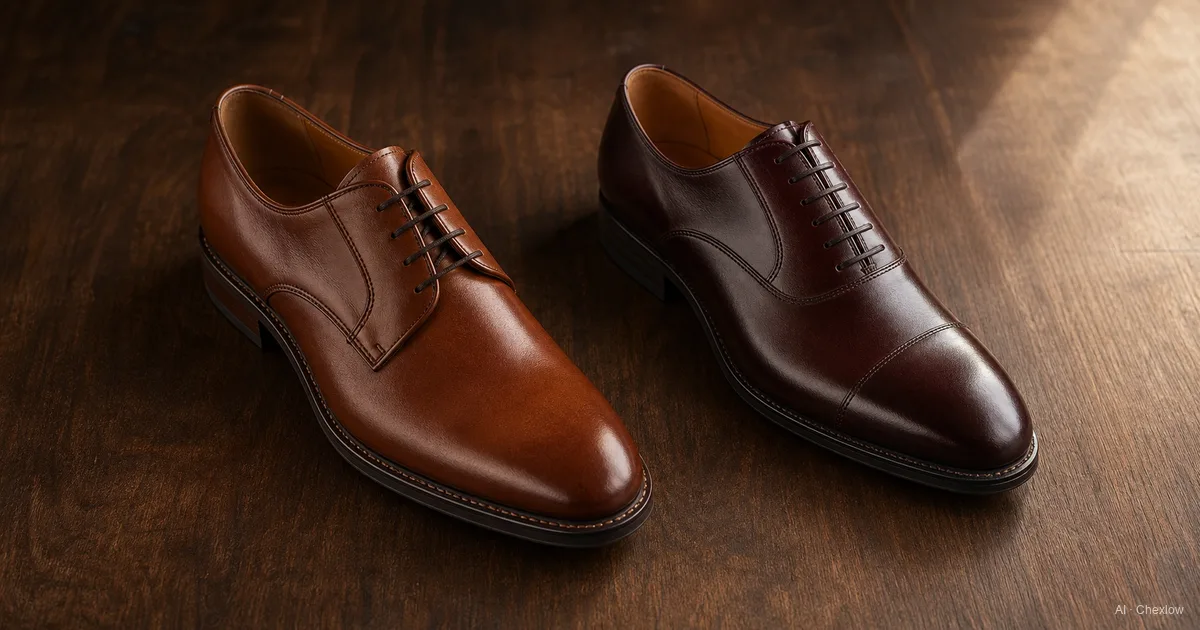
Look at where the eyelet panels meet the forefoot leather. On a Derby they sit above it and open out; on an Oxford they attach underneath. That is the open-versus-closed distinction shown by Crockett & Jones.
Open lacing is worth trying if your instep feels crowded, but do not buy a Derby on that feature alone. The last, the foot-shaped form used to make the shoe, affects its fit. Compare the model's last and width information, as Loake explains.
- Before ordering. Measure both feet in the socks you intend to wear.
- When trying on. Leave space ahead of your toes and reject painful pressure. Keep leather soles on carpet while deciding.
- If the heel moves. A little initial movement can occur; ask for fitting advice before automatically sizing down or adding pads.
These checks draw on the Crockett & Jones fitting guide. If neither candidate fits comfortably, try another width or last before compromising on comfort.
Choose decoration separately from construction
For a restrained first pair, compare a plain toe with an unperforated cap toe. The former has no toe-cap seam; the latter adds a seam across the front. Choose between them with your outfit in view, rather than treating the seam as a universal formality ranking.
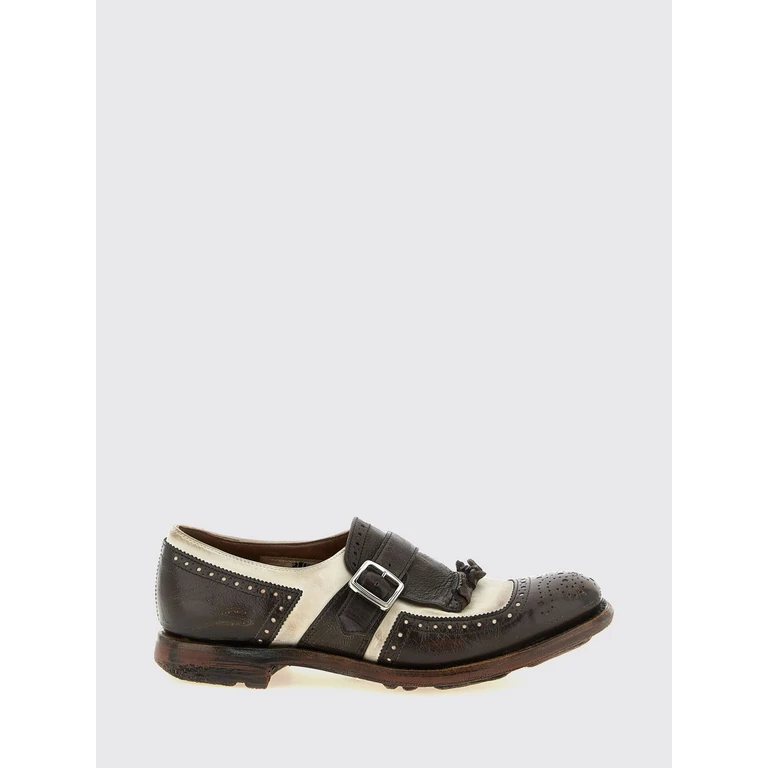
Brogue describes punched decoration, not lacing. Both Derbies and Oxfords can be brogues. A full brogue has a wing-shaped cap; a quarter brogue usually has no toe medallion. Cheaney's brogue guide distinguishes the patterns.
Cheaney's style guide describes punching as a more casual detail. If you want one pair for several settings, start with less decoration; choose a wingtip because you want that pattern, not because it is a better-built shoe.
Read the leather description before paying more
Full grain retains the original grain surface; corrected grain has some of that surface mechanically removed and then finished. Those are processing descriptions in the Leather Working Group glossary, not a guaranteed lifespan.
Ask what the upper is and how its finish should be maintained. Shine or a uniform texture cannot answer that alone: Crockett & Jones documents both surface-treated Cavalry Calf and embossed Scotch Grain in its material guide.
If the terminology is holding up your choice, explore leather types and finishes. Use the seller's specific material description when comparing your final candidates.
Compare the sole and the repair route
Do not discard a rubber-soled candidate just because you need a smart shoe. Crockett & Jones's City sole is a slim rubber option for business and casual wear; its sole guide also lists single and double leather soles. Compare the actual side profile and tread, then ask whether the model suits your walking conditions.
Repairability needs a separate check. Loake's refurbishment service renews components on its Goodyear-welted shoes, but its FAQ makes acceptance conditional on inspection and the condition of the uppers and insoles.
If two suitable pairs use different constructions, read the Goodyear welt versus Blake stitch comparison, then ask who can repair the exact model locally.
Before paying, keep only candidates that pass three checks: they suit your intended outfit, fit comfortably, and have clearly described soles and repair options. If the choice is still close, choose the pair you can try with your own trousers and return under the seller's conditions.
Comment ce guide a été conçu
AI wrote this guide for Housnap using Cheaney, Crockett & Jones, Loake and Leather Working Group documentation. The buying sequence is an editorial interpretation of those sources, covering style, fit and specifications rather than product testing or individual fitting.