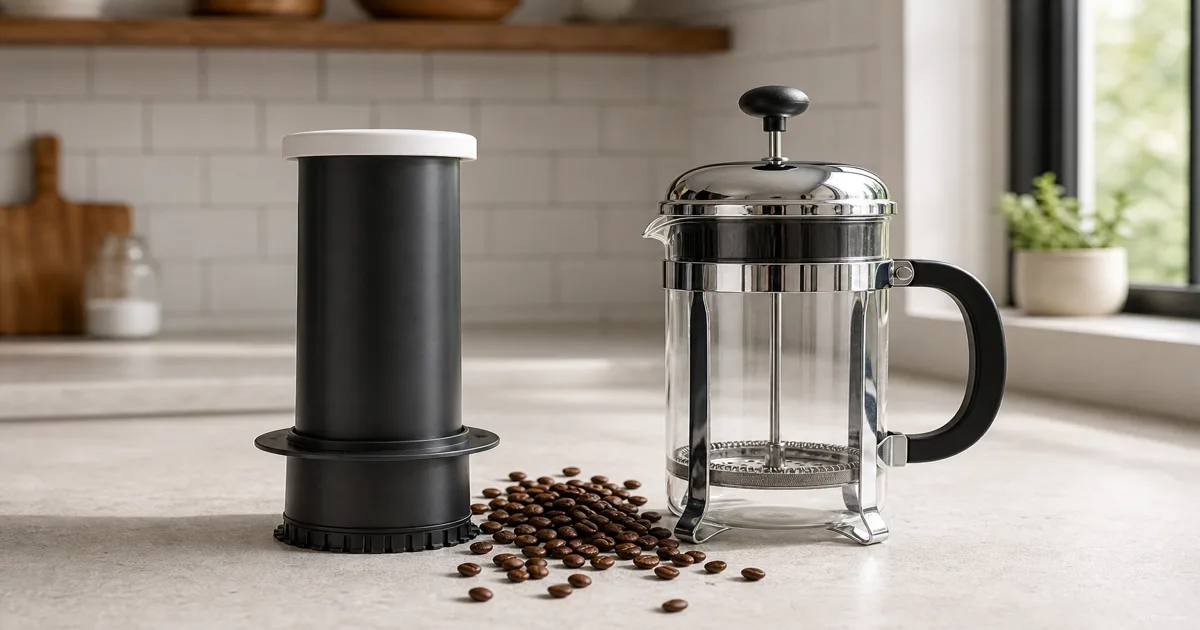
Start with how much coffee you actually drink
Measure your usual serving, then multiply it by the number of people drinking together. That gives you a more useful shopping requirement than the word “cups” on a box.
The AeroPress Original lists a 10 oz capacity, about 296 ml. Treat that as an individual-serving reference, not a promise of two full mugs. Other AeroPress models need their own capacity check.
For shared coffee, look for a French press with enough stated brew capacity. Check its minimum too: the ESPRO P7 lists 18 oz and 32 oz versions with minimum brews of 15 oz and 24 oz respectively. Those limits belong to that model, but they show why buying the largest pot can be awkward when you also brew alone.
Choose for the batch you make most often. If two people want coffee together every morning, repeated individual brews are a real part of the AeroPress decision.
Choose the filter before judging the flavour
Both methods let grounds sit in water. The useful distinction is what happens next: AeroPress pushes the brew through a filter into a separate cup; a French press lowers a filter inside its pot. The manufacturers’ AeroPress instructions and Bodum guide explain these different actions.
- Prefer less oil in the cup? Start with AeroPress paper filters. AeroPress explains that its metal filter passes oils and gives more body, meaning a fuller mouthfeel, than its paper filters. Filter comparison.
- Prefer an oil-rich brew without paper? Consider a conventional steel-filter French press. Bodum describes this approach.
Check the actual filter rather than assuming every French press behaves alike. The P7, for example, uses dual micro-filters and accepts optional paper filters. That is a model-specific exception, not the standard French press setup. ESPRO specifications.
For a first purchase, settle on your preferred filtration before adding an alternative filter to the basket.
Picture the brewing routine, including the grind
Bodum’s starting method uses coarse grounds and a four-minute steep before pressing. Bodum brewing guide.
For AeroPress, the manufacturer recommends medium-fine grounds, between drip and espresso grind. It also provides a medium pre-ground recipe with a 60-second wait before gentle pressing. These are starting recipes, not universal limits on brewing time. Grind guidance, brewing instructions.
Ask a coffee shop to grind for the brewer you choose if you do not want to buy a grinder yet. If you want to adjust the grind at home, the next useful decision is burr versus blade grinding.
Begin with the upright AeroPress method. The manufacturer strongly discourages inverted brewing because the less stable arrangement can spill hot liquid. AeroPress safety guidance.
Make the final choice with cleanup and setup in mind
AeroPress lets you remove the cap and push out the spent grounds as a puck. With a French press, include emptying the pot and washing its filter in your routine. Bodum notes that oil buildup can impede plunging. AeroPress cleanup steps, Bodum filter guidance.
Before buying, check three things:
- Serving size. Does the stated brewing range cover your normal batch?
- Complete setup. Check the included filter and its replacement size. For AeroPress, also check that your cup supports the brewer securely; the Original requires a sturdy mug or carafe. Original requirements.
- Daily handling. Picture filling, pressing, emptying and washing it where you will actually brew. For travel, check the selected model’s material and packed size rather than relying on the brewer category.
Choose AeroPress if individual brewing and puck disposal answer your main needs. Choose a French press if sharing one batch and using a reusable filter matter more, provided its capacity suits you.
If paper filtration appeals but pressing does not, compare what to check in a first pour-over dripper before committing.
Comment ce guide a été conçu
Written by Housnap’s AI editor using AeroPress instructions and help pages, Bodum brewing guidance and ESPRO specifications. The comparison focuses on first-purchase decisions about batch size, filtration and daily handling; it is a source-based guide, not a hands-on product test.