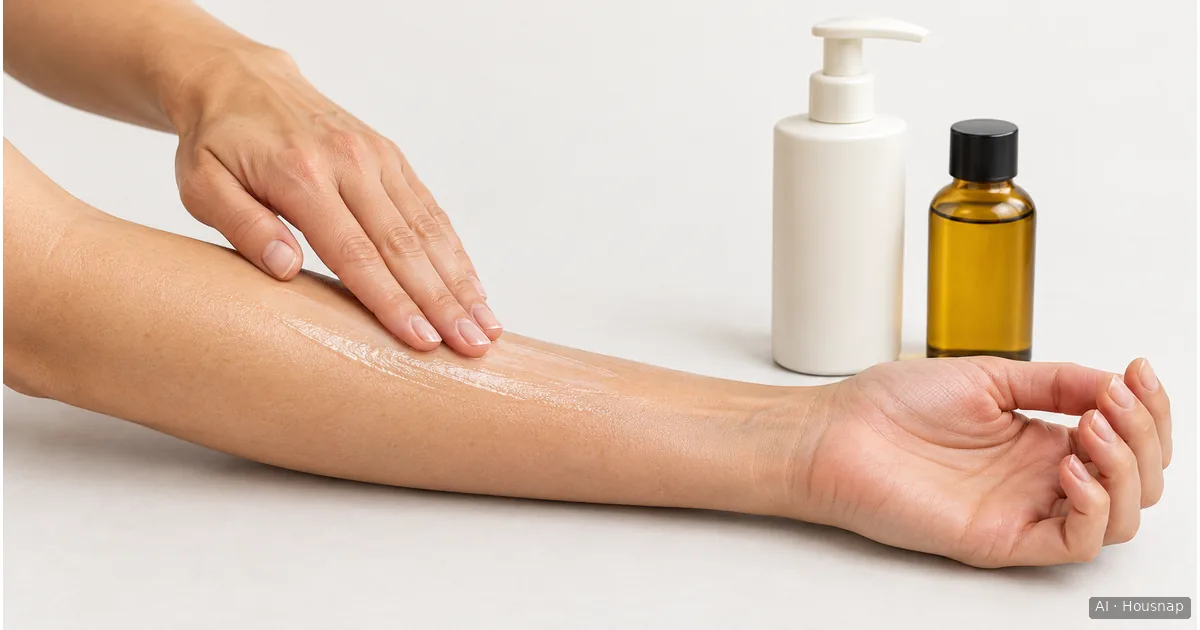
Read the directions before choosing the format
If you need to dress soon after applying body care, look for a product-specific description of absorption and finish. “Body oil” alone does not mean a heavy finish: Leonor Greyl describes Huile Secret de Beauté, its hair-and-body oil, as fast absorbing and non-greasy. That is the manufacturer's description, not a measured dressing time.
For a lotion example, Juliette Has a Gun's Not a Body Lotion is described as leaving skin soft and velvety, with instructions to apply morning or evening to clean, dry skin. Check that detail before assuming every body product belongs on damp skin immediately after a shower.
Shortlist one lotion or oil with directions you can realistically follow. Check whether it is intended to stay on the body, where it may be applied and whether you want its fragrance. The lotion above belongs to a scented collection; an appealing finish does not make it fragrance-free.
If you actually want a product to wash with and rinse away, start with the body wash and cleansing-bar comparison. This choice concerns the product you leave on afterward.
Assess the amount you would actually use
A tiny shop dab cannot settle how a product will feel over your usual application area. If a sample or small size is available, use it to assess one candidate before buying a large bottle. Follow its directions and note the amount you apply, rather than assuming one pump or a fixed number of drops suits every formula.
First allow time to check skin tolerance. The American Academy of Dermatology recommends a small-area trial twice daily for seven to ten days, using your normal amount and thickness and leaving the product on for its usual duration. That checks for a skin reaction; it does not establish when clothing can touch the product.
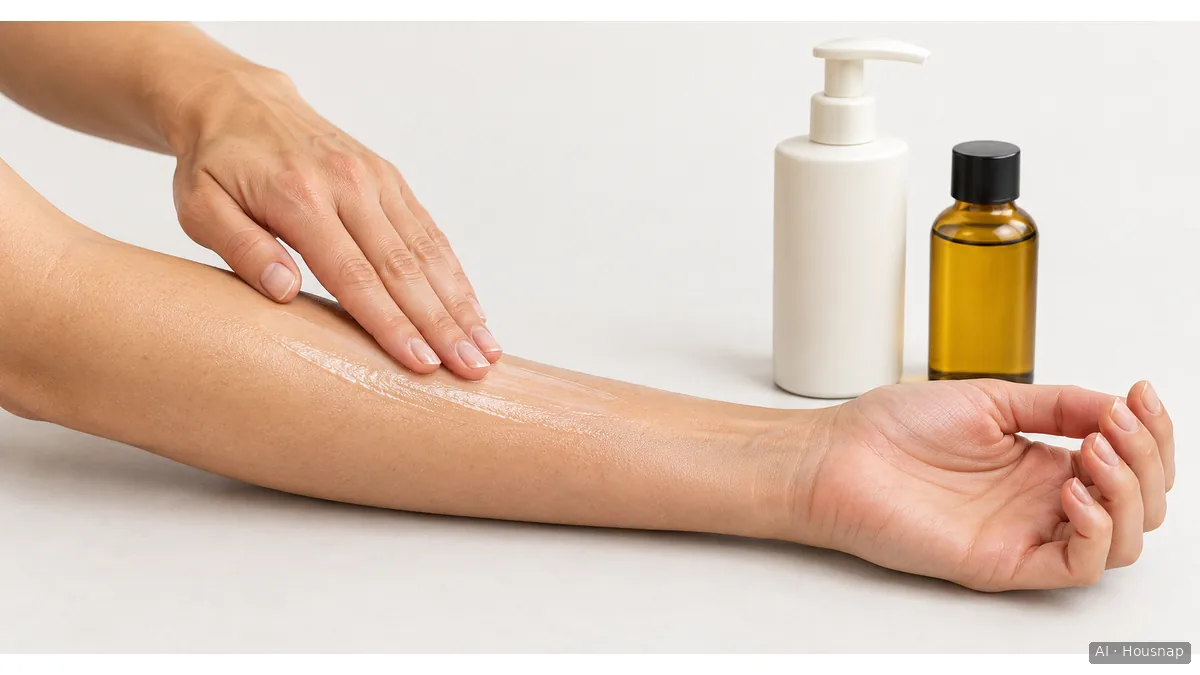
The illustration shows spreading a product, not a recommended dose or an absorption result. Once you can use the candidate comfortably, assess it during your ordinary routine:
- At application: use the skin condition and method specified on the label. Try one product at a time so you can judge its finish.
- When you would normally dress: check whether the area still feels slippery, sticky or coated in a way you dislike. If it does, give it more time or choose another formula for that routine.
- After getting dressed: notice unwanted residue on everyday washable clothing. A dry-feeling surface alone is not evidence that a product will leave every fabric unmarked; avoid using a delicate garment as your first experiment.
These are practical comparison criteria, not results from a clothing-transfer test. There is no verified universal waiting time in the sources used here.
Buy the finish that fits your morning
Choose the lotion if you prefer that particular product's feel and its application method fits your schedule. Choose the oil if its finish is comfortable at the amount you actually use. If neither works within your available time, try another formula rather than buying both to layer automatically.
Read precautions separately from finish claims. For example, Not a Body Oil is described as light and non-greasy, but its maker also says not to apply it to irritated or damaged skin. A pleasant texture does not cancel that instruction.
If a reaction develops, the AAD advises gently washing the product off promptly and not using it again; a severe reaction that does not settle with the measures described in its guidance may need a dermatologist. If fragrance is a known trigger, look for fragrance-free labeling: “unscented” and botanical ingredients do not establish the same thing.
Your first purchase only needs to answer one question: can you use this formula as directed and still feel comfortable when it is time to dress? A label claim helps you shortlist; your own normal-use experience determines whether you buy it again.
Cómo se elaboró esta guía
Housnap's AI wrote this comparison using manufacturer product pages and American Academy of Dermatology guidance. It separates product claims from practical buying criteria; no absorption-time, fabric-transfer or original product testing was performed.