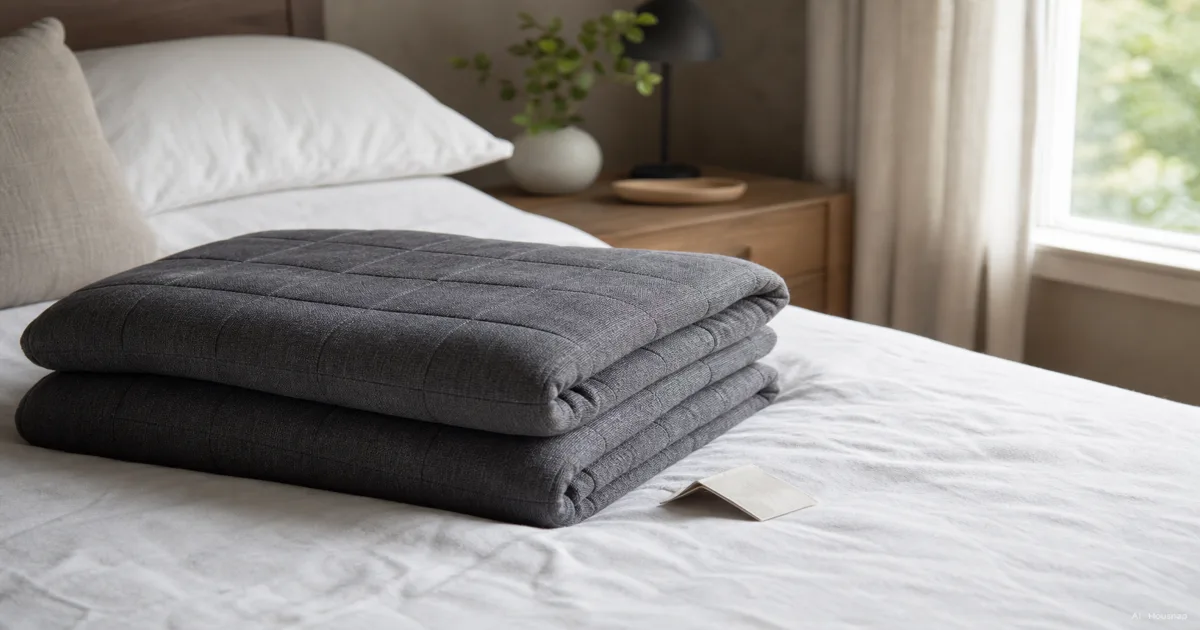
Decide whether added weight is what you want
Start with the sensation you want to try: a heavier covering while you settle down. Buying one as a guaranteed insomnia treatment sets the wrong expectation. A systematic review of trials in people with mental disorders found a small anxiety benefit, but its main pooled insomnia result was inconclusive. Those findings do not predict an individual buyer’s response. Read the review.
A separate trial involving 102 adults with insomnia found improved self-reported sleep quality, without a statistically significant difference in recorded awakenings. Feeling better and measurably sleeping differently are not interchangeable outcomes. Read the trial.
- You want added weight. Continue with the safety and sizing checks below.
- You mainly want ordinary bedding for warmth. Start with duvet versus comforter.
- Your mattress feels too firm. Explore how to choose a mattress topper before buying a heavier covering.
Check the user before choosing a weight
Do not use a weighted blanket for infant sleep. The American Academy of Pediatrics excludes weighted blankets and other weighted sleep products from its infant safe-sleep recommendations. AAP guidance.
For an older child, ask a clinician familiar with the child before buying; an age label alone is not an individual assessment. Somerset’s children’s therapy service advises supervision, independent removal and no overnight use. Children’s guidance.
For adults too, breathing difficulties, temperature regulation, reduced alertness or difficulty moving the blanket warrant individual advice before purchase. RCOT risk-assessment guidance.
The illustration is not evidence that a particular blanket is suitable for a child.
Compare weight and dimensions together
The familiar 10% calculation gives a reference, not a safety certificate: 60 kg × 0.10 = 6 kg. Bearaby describes this rule of thumb, but the chosen product’s instructions and the user’s circumstances still matter. Do not automatically round up to the next heavier option. Manufacturer’s weight guide.
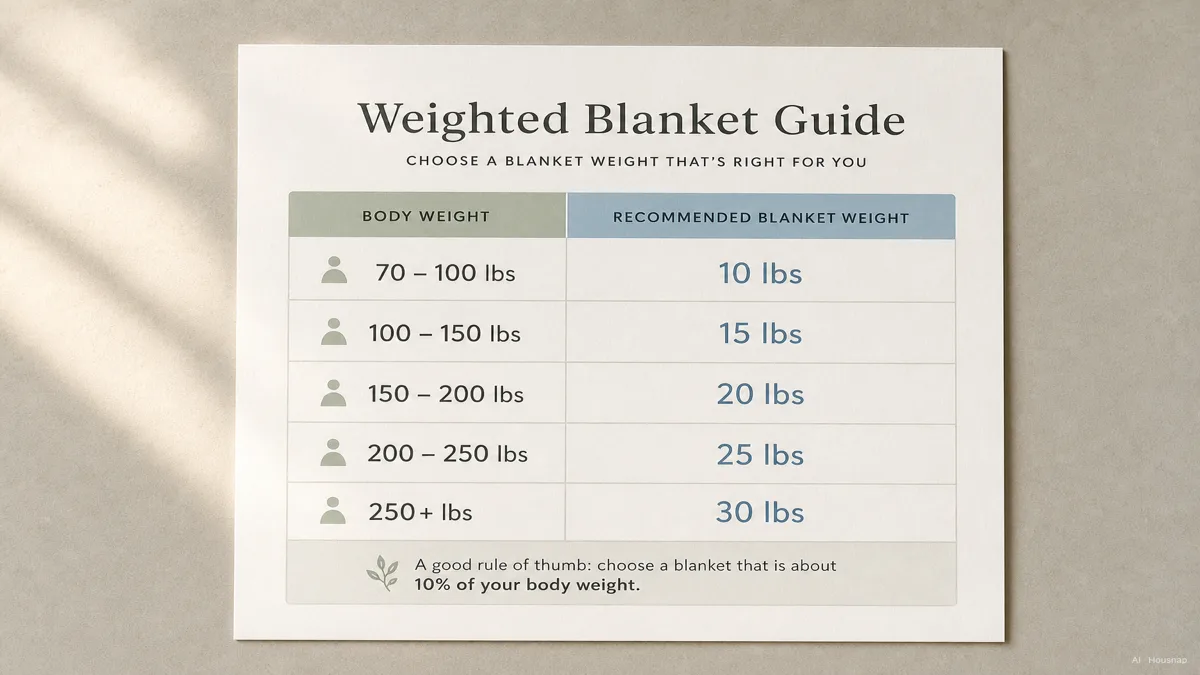
Treat the illustrated chart as a general comparison, not an individual prescription.
Record weight and width × length for each candidate. Weight alone misses how much blanket covers you: Baloo explains that its smaller throw concentrates weight over a smaller area than its larger blanket. Sizing explanation.
For a first purchase, an individually sized candidate makes each person’s preference easier to assess. Check its actual dimensions rather than assuming a bed-size label means a suitable fit.
Look beyond glass beads versus plastic pellets
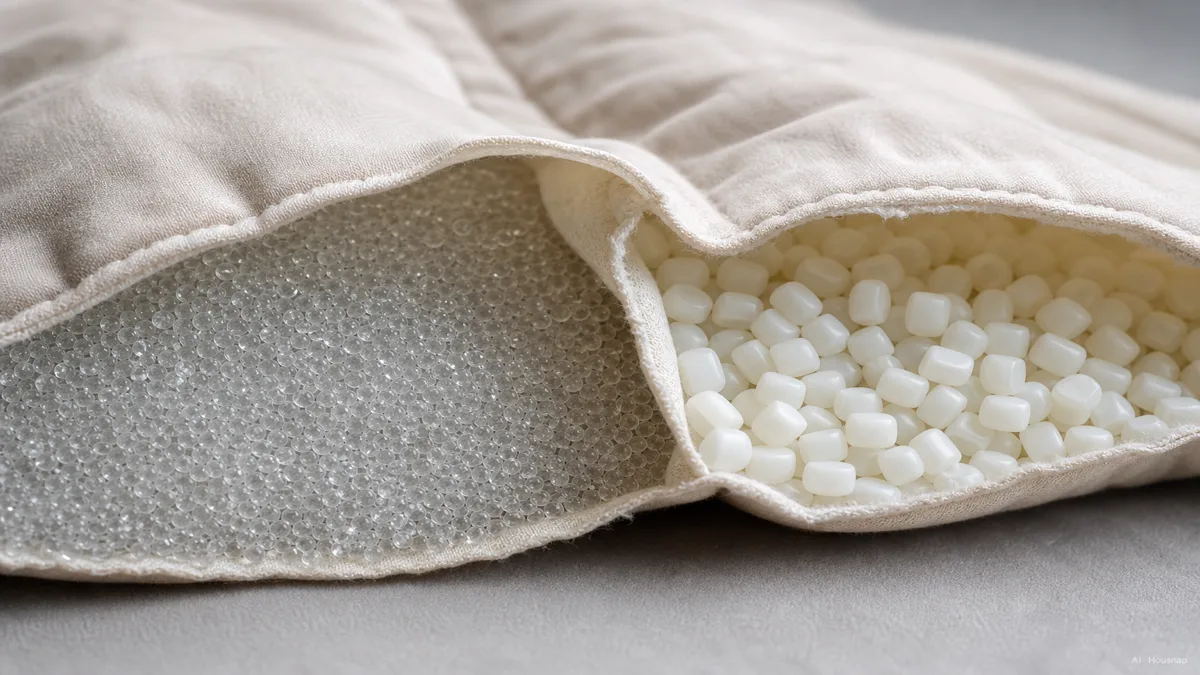
The filling is only one part of the blanket. Compare the outer fabric, internal layers and care label before deciding that “glass beads” means cooler or easier to wash.
For example, Baloo specifies glass beads with cotton fabric and lining; the referenced Next blanket combines glass beads with polyester filling. These are examples of different constructions, not recommendations for a particular model. Baloo construction, Next instructions.
Make a short candidate note: total weight, dimensions, fabric and lining, removable cover, and cleaning instructions for the weighted inner. If a listing leaves one of these unclear, ask the seller before ordering. Filling material alone is not enough to rank the candidates.
Check washing and returns before the first trial
A washable cover does not necessarily mean a washable inner. Next’s referenced instructions allow machine washing the cover but specify sponge cleaning the inner. Baloo permits machine washing its blanket, subject to machine capacity. Check the exact model and your appliance instructions. Next care instructions, Baloo care guidance.
Before paying, check whether an opened or tried blanket can be returned, who pays return shipping, and whether washing changes eligibility. Do not assume a comfort trial is included.
For your first trial, use it while awake and remove it before dozing; RCOT advises removal once asleep. Keep your head and neck clear and do not fold the blanket to increase its weight over you. RCOT guidance, Next instructions.
Stop if you feel breathing difficulty, overheating or distress. Discomfort is a reason to remove it, not a target to get used to. Safety guidance.
Wie dieser Guide entstand
This guide was written by AI for Housnap, using pediatric and occupational-therapy guidance, published research and manufacturer instructions. It separates general selection advice from product-specific examples; it does not report hands-on testing or determine whether a blanket is medically suitable for an individual.