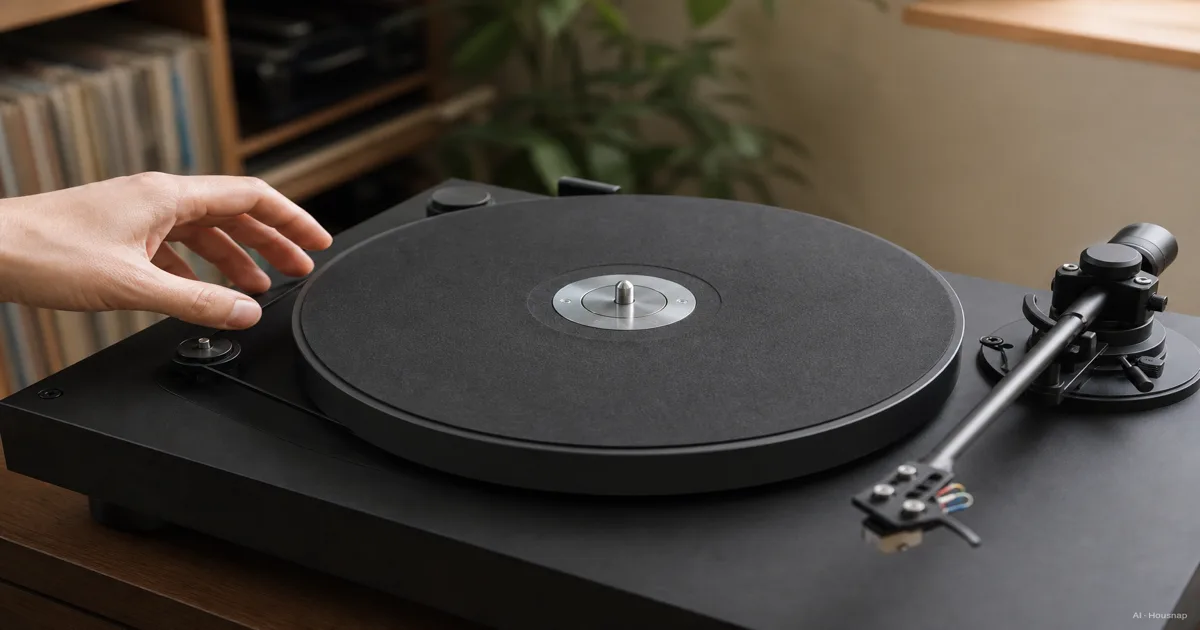
Choose for the way you will use the record
- Whole albums at home. Compare both types. Decide how much manual setup and operation you want before paying for DJ controls.
- Mixing or scratching. Narrow the search to purpose-built direct-drive DJ decks; a drive label alone is not a complete suitability check.
- Still undecided. Choose for the use you can describe today. “Maybe I’ll DJ someday” is a reason to investigate, not an automatic upgrade requirement.
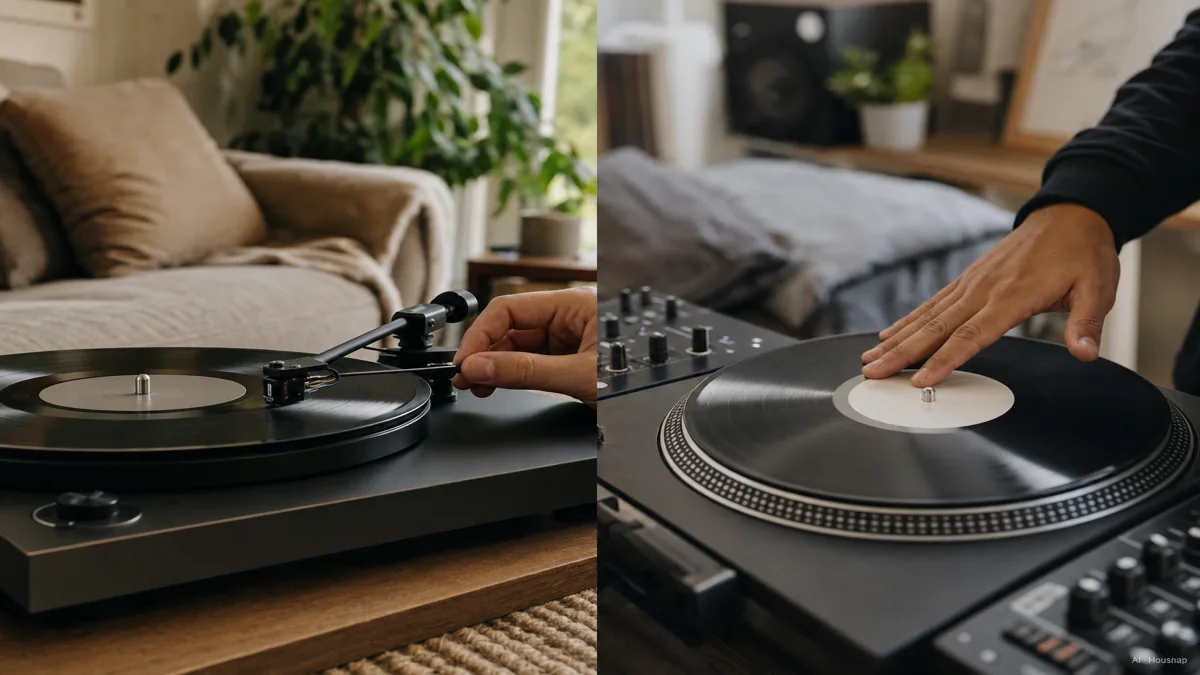
The two scenes show different uses, not a rule that home listeners must buy belt drive.
Understand the mechanism without predicting the sound
A belt-drive motor turns the record-supporting platter through a belt; direct drive couples the platter directly to the motor. Audio-Technica explains both arrangements.
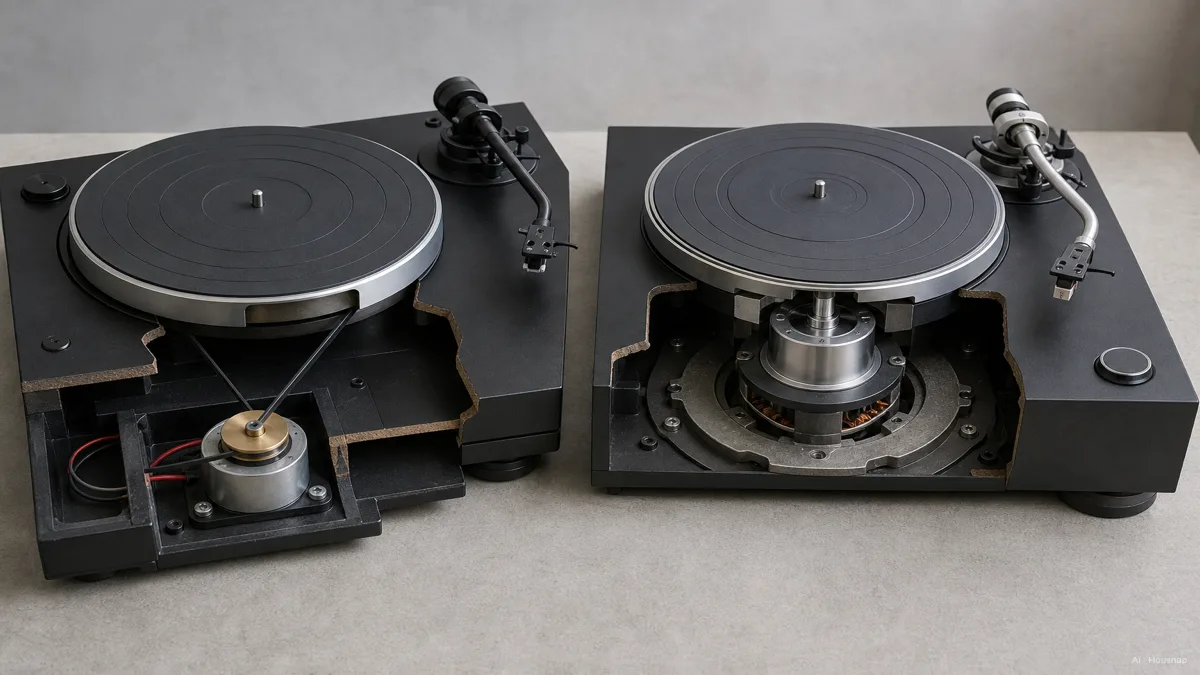
Motor isolation is one design consideration, not a listening verdict. For example, the direct-drive Technics SL-1500C combines a coreless motor with a damped platter and vibration-isolating feet. Its construction contradicts the idea that direct drive has no vibration control. Technics brochure
Buying judgment: keep a model in contention because its features suit you. Do not award it better sound just because the listing says “belt” or “direct.”
Check the controls you will actually use
Automatic operation is a separate question. The belt-drive AT-LP60X returns its arm after playback; the direct-drive SL-1500C lifts the arm at the end. Those are different conveniences, so read what happens when a side finishes. AT-LP60X manual; SL-1500C brochure
For switching between albums and singles, look for the actual speed-change procedure. The belt-drive Pro-Ject E1 Phono has electronic 33/45 selection: belt drive does not necessarily mean moving a belt by hand. E1 Phono specifications
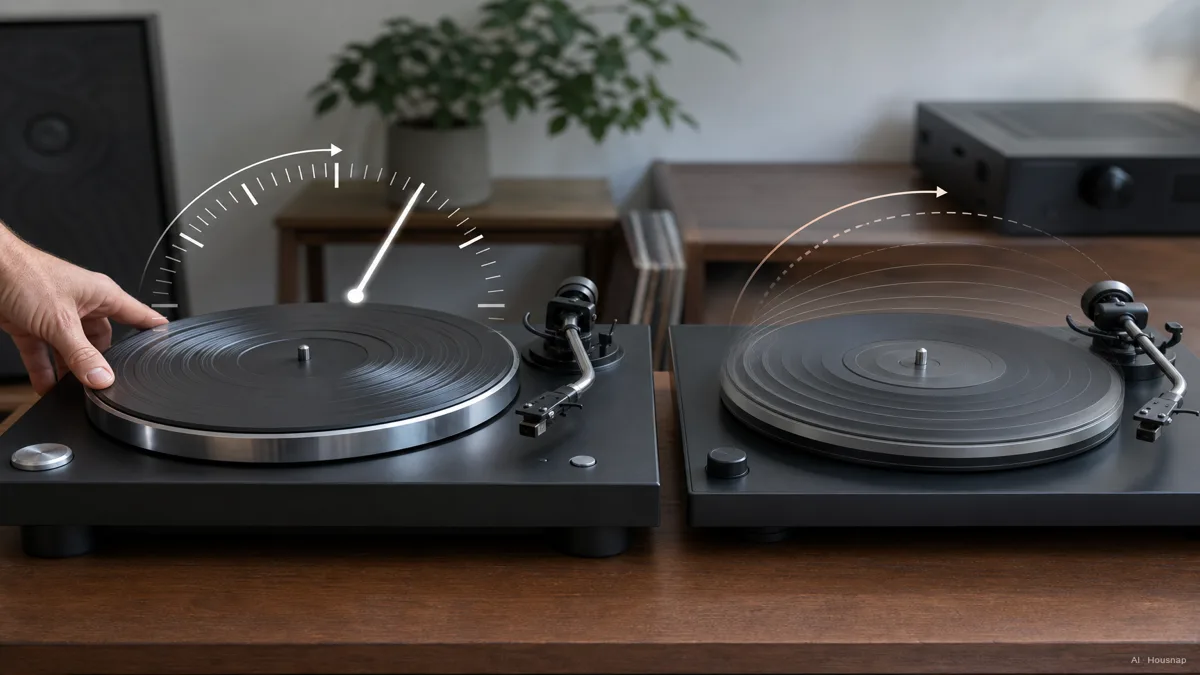
The illustration’s timings are explanatory, not measured results. Starting from rest and recovering after a hand stops the platter are different conditions; do not apply the pictured times to every model.
For scratching, check cartridge and stylus suitability too. The Technics SL-1200M7L manual requires DJ versions. Check whether suitable ones are included; do not assume a supplied listening cartridge is suitable. SL-1200M7L manual
Confirm how the turntable reaches your speakers
A phono preamp amplifies and equalizes the cartridge signal for a line input. If neither the turntable nor the receiving equipment provides that stage, budget for an external one compatible with your cartridge. The Pro-Ject Phono Box, for example, provides selectable MM/MC operation and a line output. Manufacturer information
With a switchable built-in preamp, match the output to the input: LINE to AUX/LINE; PHONO to a compatible PHONO input. The AT-LP120XUSB manual shows these connections. Connection instructions
Write down the turntable output and the receiving input before ordering. A matching plug shape is not the whole check.
If you still need a listening system, continue with bookshelf speakers versus a soundbar. Use that comparison to plan the system, then verify the chosen equipment’s inputs.
Compare ownership costs before making the final choice
A belt can dry out or become slippery from finger grease, affecting speed. Check the correct replacement part and the model’s maintenance instructions rather than assuming a universal replacement interval. Pro-Ject maintenance guidance
Direct drive removes the belt purchase, not all upkeep: the AT-LP120XUSB manual still covers stylus wear and replacement. Care instructions
For each finalist, note the full setup cost, included cartridge, automatic functions, connection requirements and replacement-part support. If both meet those needs for home listening, let those concrete differences settle the choice. For DJ use, keep the manufacturer’s intended use and cartridge requirements as the deciding filters.
Wie dieser Guide entstand
Written by Housnap’s AI editor using manufacturer manuals and technical information from Audio-Technica, Technics and Pro-Ject. The guide separates documented mechanisms and model-specific features from editorial buying advice; it does not report hands-on testing or current stock.