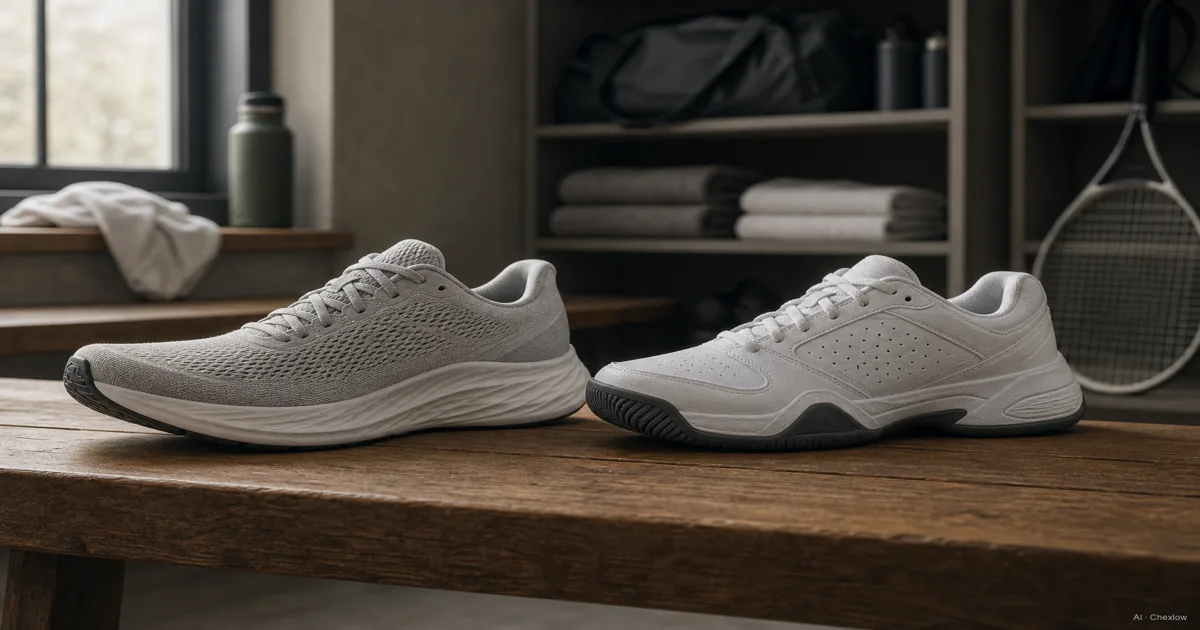
Aktuell bei einem Shop erhältlich
Diese Produkte sind derzeit jeweils nur bei einem Shop erhältlich. Der Preisvergleich öffnet sich mit weiteren Shops.

Decide which activity this purchase needs to cover
A booked tennis lesson and a plan to start jogging are two different shopping briefs. Before comparing brands, write down which activity you will begin and whether you already have suitable footwear for the other.
- Tennis comes first. Choose performance tennis shoes, then confirm the court surface with the venue before ordering.
- Running comes first. Choose running shoes for your route. On recommends running-specific footwear for regular runs (On).
- Both, but one-pair budget. Buy for the activity you can equip now; plan the second purchase before taking up the other. That is a budget decision, not a claim that one shoe is universally safer for both.
Already own running shoes? Keep them for running and put the tennis purchase toward court use. Already own tennis shoes? Apply the same logic when adding regular runs.
Compare what supports the movement
Running shoes prioritize forward movement; tennis shoes support changes of direction. Nike says running shoes are not a good substitute for regular tennis (Nike).
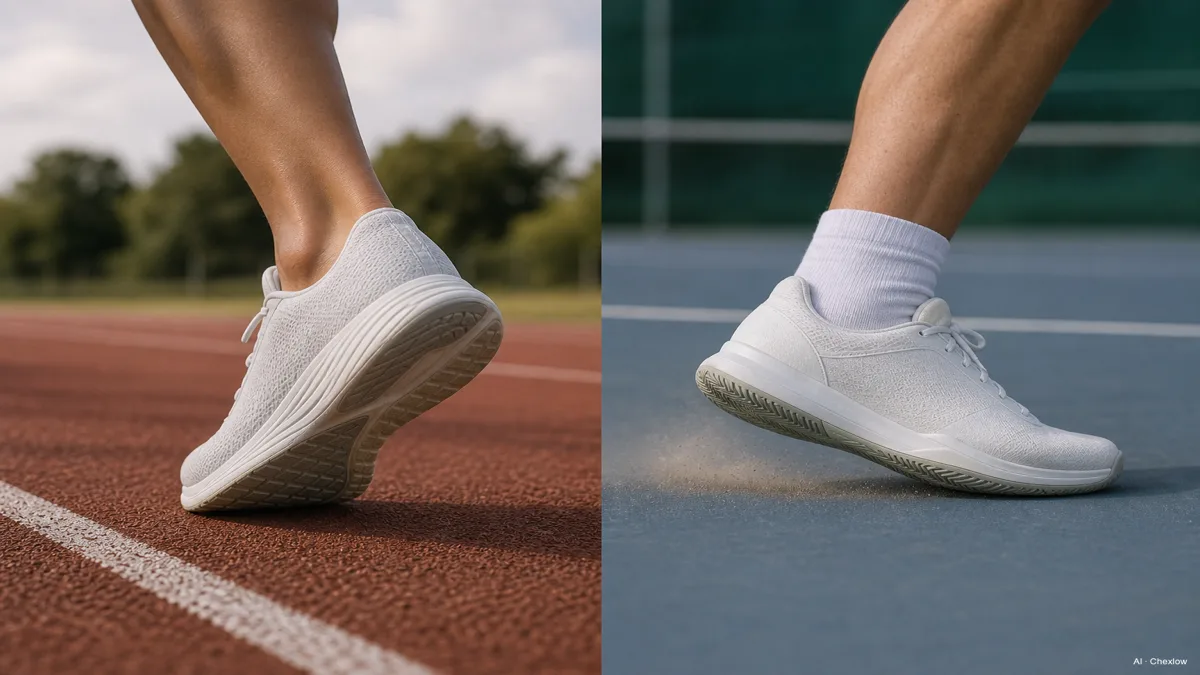
Use the illustration to picture the movement your purchase must serve, not to identify a model from its silhouette.
Tennis shoes also have cushioning alongside lateral support, meaning support for sideways movement (ASICS). So don't reduce the choice to “soft running shoe versus uncushioned tennis shoe.” When reading a listing, look for its intended sport before comparing how plush it sounds. Softness alone does not answer the tennis question.
Match the shoe to the ground
For tennis, ask the venue for the surface name, then check that name against the manufacturer's description of the exact version you are buying.
- Hard court. Prioritize the stated hard-court version; abrasion-resistant outsoles matter here (ASICS).
- Clay or grass. Clay shoes commonly have zigzag herringbone tread; grass shoes commonly have small pimples (ASICS). Use the surface label to confirm compatibility, rather than choosing from a sole photo alone.
- Unclear listing or venue requirement. Ask before buying. “Indoor” tells you where the court is, so request its actual surface and footwear rules too.
Check toe protection if you drag your toes: a toe guard addresses that wear (ASICS).
For running, name your usual route. Trail shoes use outsole lugs, raised rubber tread, for uneven or loose ground (On). If that describes your route, continue with choosing your first trail running shoes before narrowing the shortlist.
Try the right category, then decide
For tennis, aim for a secure fit with toe room, not squeezing (ASICS). For running, check toe space without excess looseness or pressure; foot measurement can help establish a starting size (Nike).
Treat those as reasons to try the actual pair. If the width feels wrong, compare a different width or model instead of approving it because the size number matches your old shoes. When buying online, check the try-on and return conditions before ordering.
If running is your choice but the remaining question is which type, read the beginner's guide to cushioning and stability. If tennis is your choice, take the confirmed court surface and your fit requirements into the comparison. You now have a shortlist brief: sport, surface, fit.
Sources
Wie dieser Guide entstand
Written by AI for Housnap, using public footwear guidance from On, Nike and ASICS. This comparison turns sport, surface and fit information into a first-purchase decision; the budget sequence is an editorial recommendation. It does not report product testing or predict an individual buyer's injury risk.