Decide whether you need a wake-up light
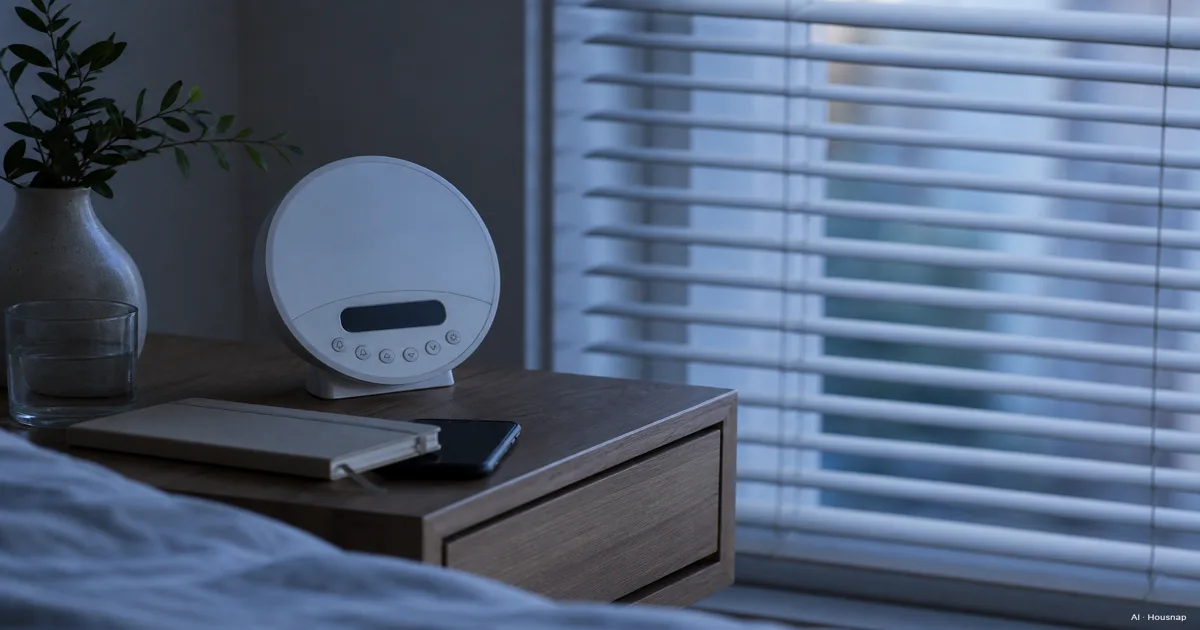
Consider one if you want light to build before your alarm instead of switching on a lamp after it rings. If your existing alarm already suits you, there is no need to add another device just for its sunrise effect.
The light and sound need not start together. On the Philips HF3520/60, the sunrise develops over 30 minutes and the sound begins at your chosen wake time. Check that sequence on any candidate, especially if you share a bed with someone who gets up later.
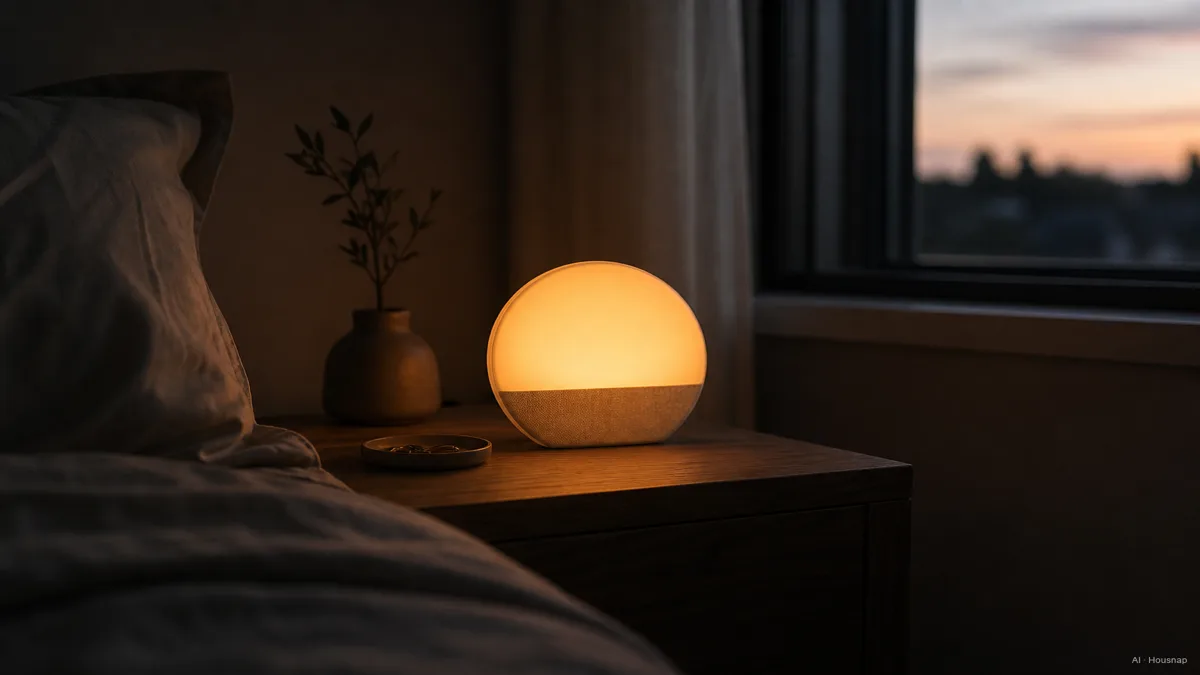
If your actual problem is finding the bathroom at night, start with choosing a motion-sensor night light. That is a different job from scheduling morning light.
Compare the light you can actually adjust
- Brightness and distance. Lux describes the light reaching a surface. Ask where the stated value was measured: the Philips HF3490/01 specification, for example, gives 0–300 lux at 40–50 cm. This is a model specification, not a minimum effective dose for everyone. Compare measurements at equivalent distances.
- Sunrise duration. This means the time spent gradually brightening. The Lumie Bodyclock Shine 300 offers 15–90 minutes and adjustable final intensity. Favor that flexibility if you want to experiment; the longest setting is not automatically the best.
- Color. The HF3520/60 moves from red through orange to yellow. A cold-white finish is therefore not a requirement. Judge the transition by whether you find it comfortable, rather than treating more colors as proof of better waking.
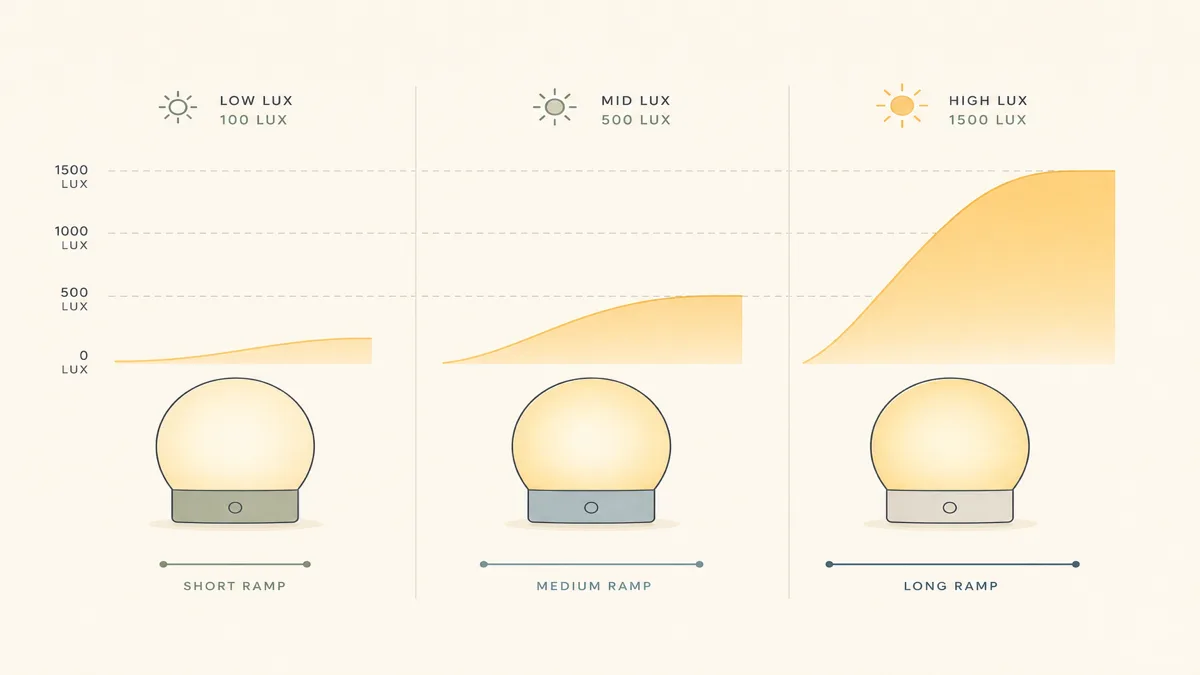
Use the illustration to separate brightness from duration; it is not a measured ranking of three products. Before buying, measure the available space beside your pillow and compare it with the manufacturer's placement instructions.
Choose controls before paying for extras
- Prefer setting everything on the clock? The Shine 300 manual shows on-device setup and alarm menus. Check how easily you can change tomorrow's alarm, not just how easily you can snooze it.
- Happy to configure an app? Restore 3 setup uses the Hatch Sleep app and requires the device to remain plugged in. Physical controls do not by themselves mean app-free setup.
Separate the purchase from ongoing content charges. Hatch's Restore 3 support page describes a subscription trial during setup, with basic features retained after cancellation. Check the renewal terms before starting it.
Pay extra for a feature only if you can name its use: a weekly schedule for different workdays, for example. Shine 300 supports daily and weekly alarms (Lumie). A long sound list is less useful if changing the alarm is a chore.
Set a realistic expectation of the benefit
A small study with eight participants found improved self-rated alertness after a 30-minute simulated dawn. Lumie funded the study. This supports trying the approach, not promising that every clock will work for every sleeper.

Read this as a schematic, not a measured hormone response. Its curves do not establish what will happen to your body. A separate four-person pilot of light after waking did not establish matching improvements in reaction time or mood from higher cortisol. It was not a sunrise-clock test.
Make easier waking your purchase goal. Do not use this guide to choose treatment for a sleep or mood disorder; that calls for an individual clinical discussion.
Make the purchase conditional on a usable trial
Before ordering, confirm the exact model's alarm sound, display dimming, power requirements and return terms. Check whether any backup feature keeps the clock's time, powers the alarm, or does both; do not infer one from the other.
- First setup. Follow the supplied placement instructions and keep your existing alarm as a backup. Use the specified power supply; Lumie's manual calls for its supplied adaptor and an uncovered lamp.
- During the trial. Keep a simple note of whether you woke too early, missed the alarm or disturbed your partner. Change one light setting at a time so you can judge it.
- Keep or return. Keep it if waking feels easier and the controls fit your routine. If the light repeatedly interrupts sleep or adds no useful benefit, use the return window rather than buying more features.
The setup precautions above follow the Lumie manual; the trial criteria are editorial suggestions, not a clinical protocol.
Wie dieser Guide entstand
Written by Housnap's AI editor using manufacturer specifications and instructions, a dawn-simulation study abstract and a light-response research paper. The guide focuses on choosing and trying a first wake-up light; it does not report hands-on testing or new human review.