Identify the valve before you turn it
Find the pad’s model name and valve instructions first. Note whether it is an air pad or a self-inflating model with foam inside; use that model’s setup instructions rather than borrowing the sequence from a similar-looking valve.
For a Therm-a-Rest WingLock valve, the manufacturer’s instructions give this inflation sequence:
- Unroll the pad and turn the valve cap counter-clockwise to open it.
- Inflate with a pump sack or your breath. The one-way valve keeps air from escaping while you fill it.
- Once fully inflated, turn the cap clockwise to close it.
That sequence is for WingLock. If you cannot identify your valve, resolve that before forcing a cap or copying the wing movement described below.
Stop at the intended inflation level
Follow your model’s specified inflation limit or firmness instructions. Do not invent a universal PSI target or keep pumping simply because more air will go in. EXPED warns that overinflation can cause irreparable damage; check that any powered pump is approved for your particular pad.
A sleeping-pad pump sack is a bag that pushes air into the pad. NEMO describes it as a way to reduce internal humidity, but not eliminate moisture completely. Check your existing kit first. If you need a sack, confirm compatibility with the exact valve before buying; a connector that looks close is not enough to establish a match.
Heat deserves a separate check. For its mats used in rooftop tents in warmer climates, EXPED recommends leaving the valve caps open during the daytime to prevent heat-related overinflation. Treat that as a specific use instruction, not permission to leave every pad inflated in the sun.
Open the air outlet before rolling, then dry at home
With WingLock, open the wings, then turn the cap counter-clockwise. Roll toward the valve to expel the remaining air. If air is not escaping, check the valve state before pushing harder; other valve systems need their own deflation sequence.
Packing for the journey home is not the end of care. Unpack the pad and follow its drying instructions. For ordinary care of NEMO pads, the manufacturer distinguishes these valve states:
- Keep valves closed while wiping the surface so water stays out.
- Open them for air drying, with the pad flat or on a clothesline and away from direct sunlight.
- Do not use a washing machine or tumble dryer.
If you find a damaged valve or the pad repeatedly loses air, stop this routine and ask the manufacturer about assessment. Patching, valve replacement and mold treatment need separate instructions.
Store it loose, with the specified valve position
Sea to Summit recommends open valves for both its Air Sprung Cell and Self-Inflating models, laid as flat as possible or draped over a closet rail. If space is limited, it recommends loose rolling or folding instead of tight compression.
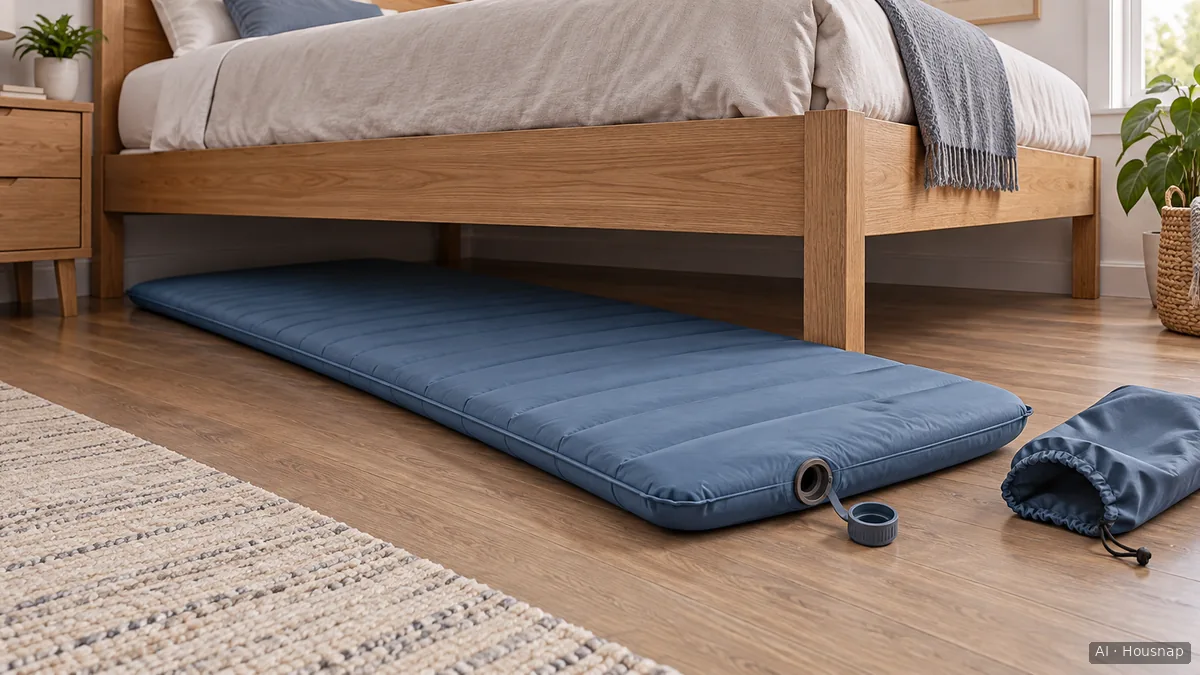
The illustration shows one flat-storage arrangement. Choose a place that meets your pad’s instructions: NEMO specifies fully dry storage, outside the stuff sack, flat or loosely rolled, somewhere cool and dry with valves open. You do not need a new storage accessory if you already have suitable space.
For foam-filled models, compression can also affect the next setup. EXPED explains that prolonged compression can slow self-inflation in MegaMat and DeepSleep mats. Do not assume sluggish expansion means you should use a stronger pump; consult the model’s setup guidance.
Before your next trip, if the remaining question is which sleeping bag provides suitable warmth, continue with choosing a sleeping bag by its comfort rating. That is a separate equipment decision from operating and storing the pad.
Wie dieser Guide entstand
This guide was written by AI for Housnap, using manufacturer instructions from Cascade Designs, Sea to Summit, NEMO and EXPED. It separates named valve procedures from drying and storage guidance; it does not report hands-on testing or cover puncture repair.