Aktuelle Produkte zum Vergleichen
Diese Produkte stammen aus den Housnap-Suchergebnissen zu diesem Thema.
Start with the shape you actually want to wear
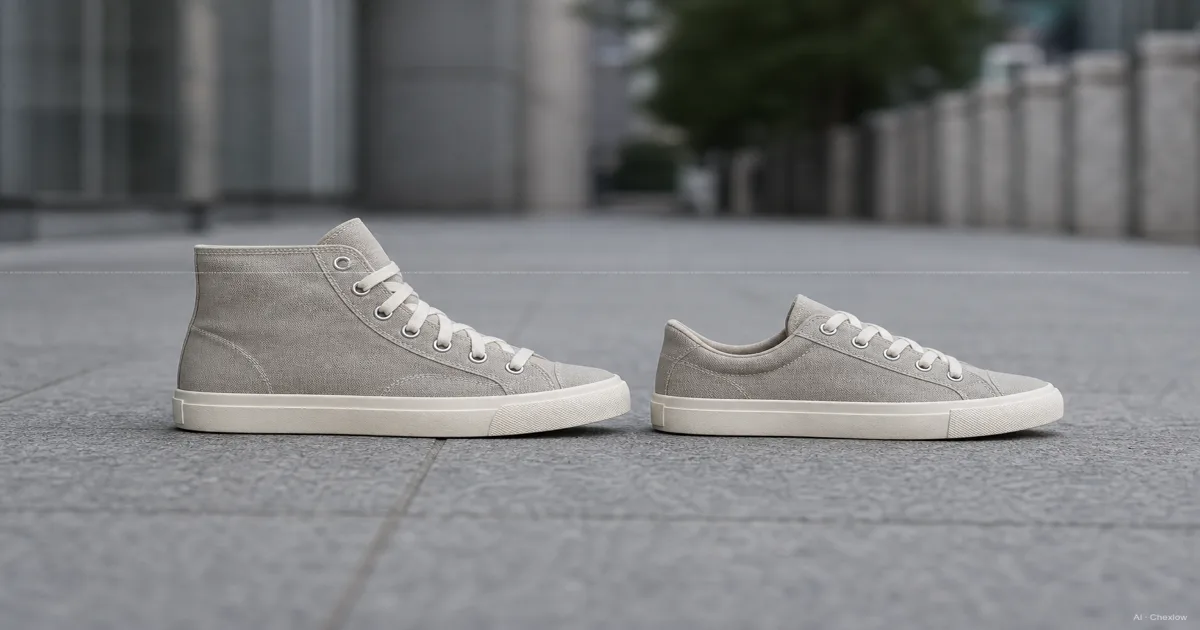
Pick one high-top and one low-top to try with your usual trousers. If possible, compare versions of the same design so colour and sole shape don’t distract you from the collar, the opening around your ankle. Nike’s Jordan 1 range, for example, distinguishes low, mid and high options within one family; that doesn’t mean every version has identical specifications.
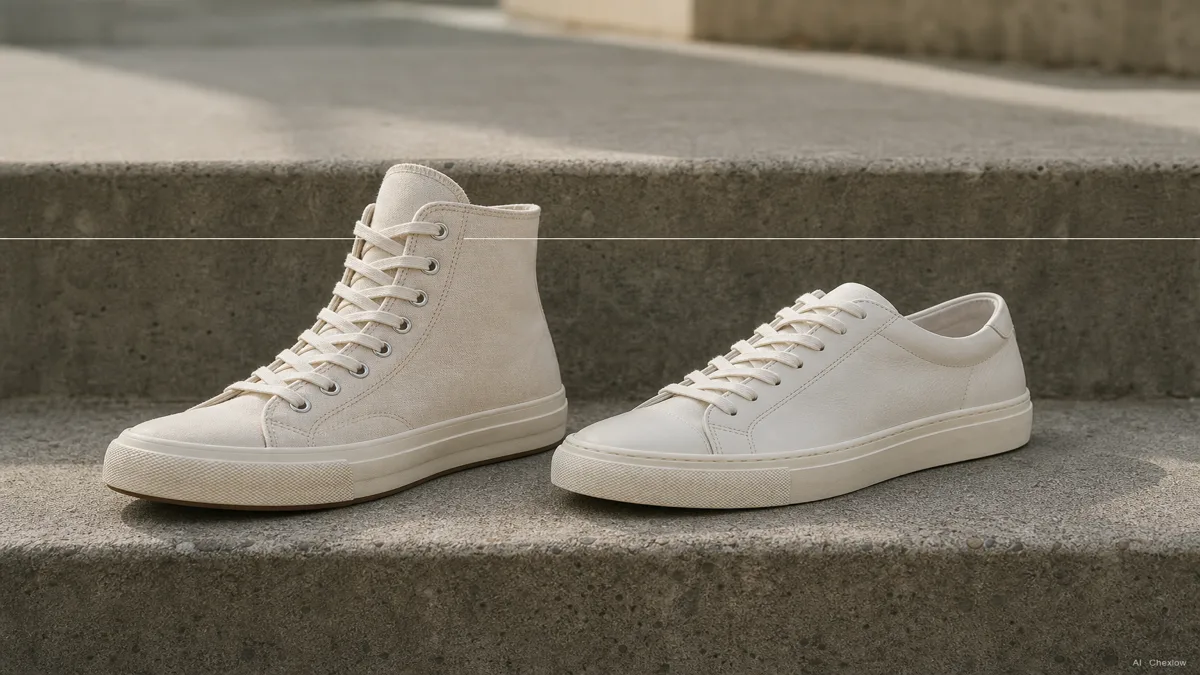
Use the illustration to compare coverage, then judge the actual shoes on your feet:
- Try low first if you want the ankle left open or dislike fabric around it.
- Try high first if the taller outline is what attracts you. Liking the shape is enough; you don’t need a sporting reason.
- Check the hem by standing, sitting and taking a few steps. Does it fall as you want, or catch on the shoe?
Showing a high-top’s collar is a styling choice, not a requirement. Try your trousers over it as well as rolled up. Choose the combination you would wear without repeatedly adjusting it.
Buying for basketball? Change the shortlist
For basketball, compare basketball shoes first, then their collar heights. AAOS describes court shoes in both low and high cuts. The everyday sneaker alternatives here are not a performance-shoe recommendation.
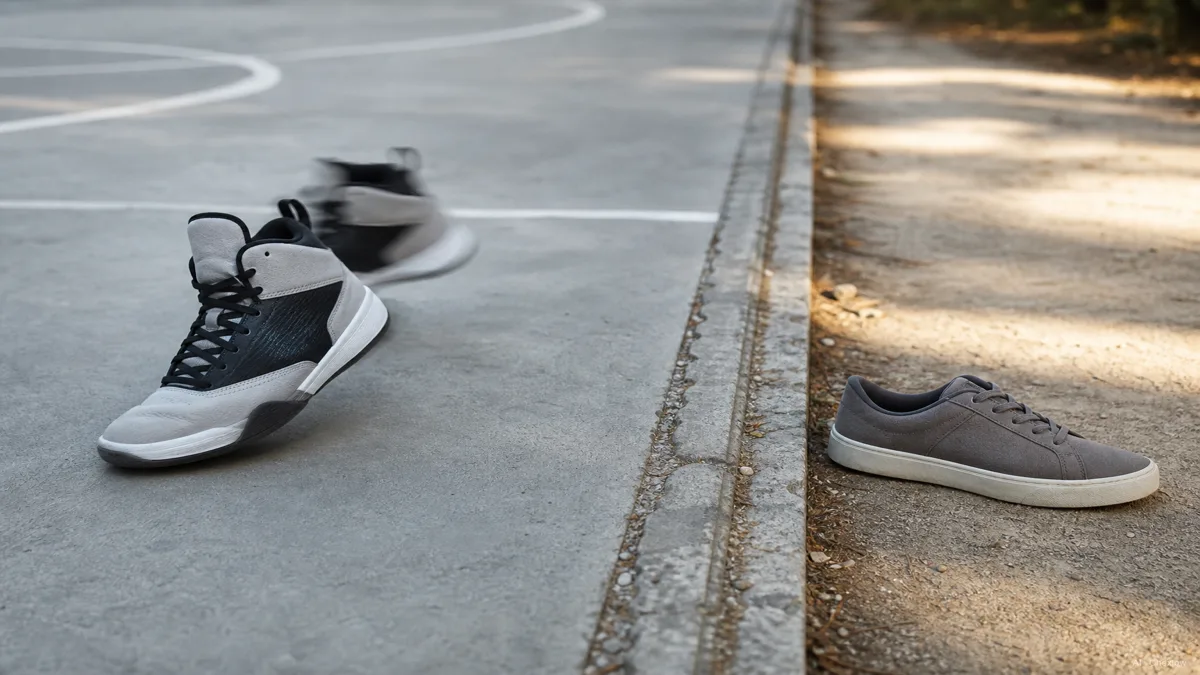
The court scene illustrates a different use, not proof that the taller shoe is safer. A randomized basketball trial found no significant ankle-sprain difference among three shoe groups. A laboratory study found that higher collars reduced rearfoot rolling angle and speed in a simulated inward roll.
Those findings measure different things. Restricting movement in an experiment is not the same as demonstrating fewer injuries during play. Don’t make injury prevention the deciding promise of an everyday high-top.
Let the fitting decide between your two candidates
Bring your usual socks and try both shoes of each pair, following AAOS fitting advice. For this comparison, pay particular attention to where the collar touches when you bend your ankle and how much loosening the laces takes to put each shoe on.
- At the toes and heel: look for toe room and a snug heel. Johns Hopkins Medicine advises choosing another pair if the initial fit is uncomfortable, rather than relying on break-in.
- Around the ankle: compare the actual contact. Does one collar press or rub where the other doesn’t?
- When choosing: reject the uncomfortable candidate even if it has your preferred outline. If neither works, try another model instead of forcing a high-versus-low verdict.
If the length seems right but the width or heel fit does not, look at how sneaker shape affects sizing before ordering another size.
Buy the pair that passes both checks
For this first everyday purchase, use fit as the requirement and your usual outfit as the tie-breaker. If both pairs feel right, favour low-tops when you prefer less ankle coverage; favour high-tops when you enjoy the taller shape and are happy with the way you put them on and lace them.
Before ordering, check the exact version’s material description, size guidance and return conditions. Don’t assume that a shared model name makes the high and low versions interchangeable, or use height as a shortcut for weight and cushioning. Compare any published measurements on the same basis, including size and whether the weight is for one shoe or a pair.
If you have chosen the height but are still deciding on the upper, continue with canvas versus leather sneakers. That answers the next material question without restarting the collar comparison.
Wie dieser Guide entstand
Written by Housnap’s AI editor using Nike’s collar classifications, AAOS and Johns Hopkins fitting guidance, and the linked research abstracts. The outfit comparison and purchase sequence are editorial suggestions for everyday sneaker buyers, not product testing or individual medical advice.