How to Buy Your First High Chair Without Regretting It in Six Months
You are standing in an aisle, or scrolling a page, looking at a wall of chairs that all promise the same thing. Safe. Easy to clean. Grows with your child. The words start to blur together, and none of them tell you which chair is actually right for your kitchen. Start with the part that is not a matter of taste. There is a federal safety standard for high chairs, and it exists because real chairs have been recalled for a specific, preventable failure, a missing or removable restraint that lets a baby slide out feet-first. That is the floor every chair has to clear before anything else about it matters. Once safety is settled, the rest is genuinely about fit. A traditional chair is simple and usually cheapest. A convertible chair straps to your dining chair and grows into a booster. A grow-with-me chair, wood or metal, follows your child from their first solid food into their teenage years at the family table. Wood and plastic split on weight, cleaning, and how you feel about what touches your baby's food. This guide walks through the standard to check, the three chair types and who each one suits, the material tradeoff, and the small-kitchen math that first-time buyers usually skip until the box is already in the hallway.
Aktuell bei einem Shop erhältlich
Diese Produkte sind derzeit jeweils nur bei einem Shop erhältlich. Der Preisvergleich öffnet sich mit weiteren Shops.

How Do You Know Your Baby Is Ready for a High Chair?
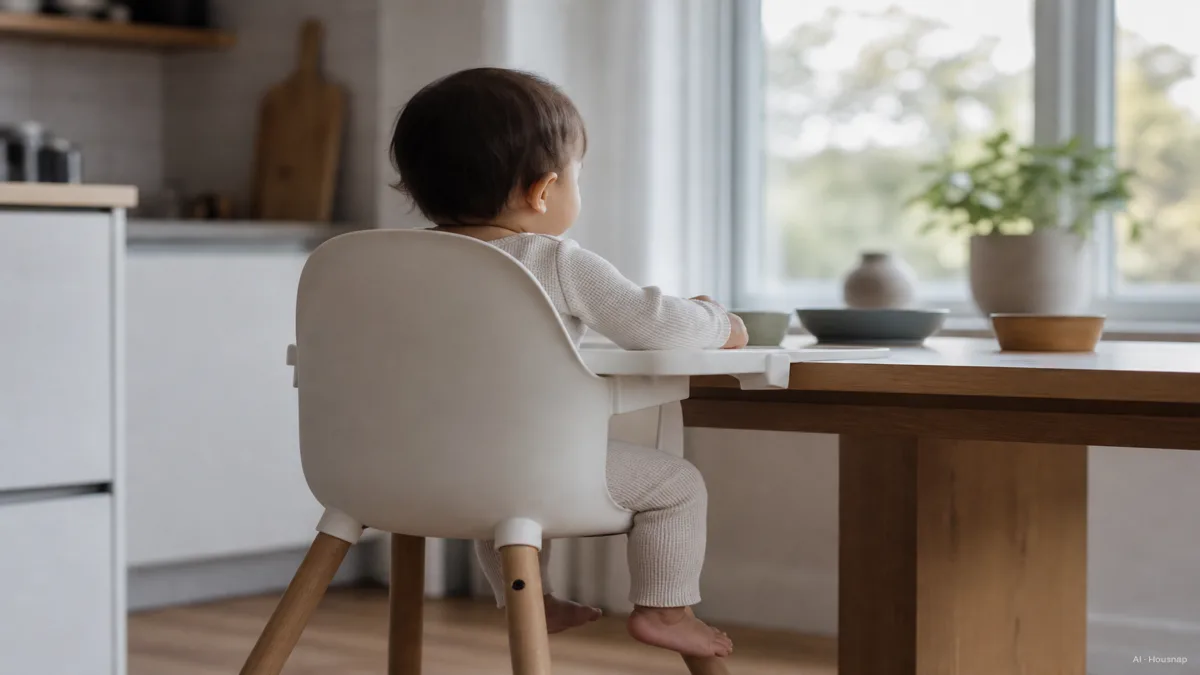
The signal is not an age on a calendar, it is a milestone in your baby's body. A high chair only does its job once your baby can sit up unassisted, because a proper seated feeding posture means hips, knees, and ankles resting at roughly 90-degree angles, and a baby who still needs to be propped cannot hold that shape on their own (Consumer Reports). For most babies that lands around the six-month mark, which also happens to line up with when solid foods typically start.
That 90-degree posture is not a nice-to-have. A baby slumped sideways or reclined too far is working harder to swallow and easier to choke, and it is also the posture that makes reaching for finger foods natural instead of awkward. If your baby is not sitting reliably yet, waiting a few more weeks costs you nothing and saves you from fighting the chair every meal.
Traditional vs. Convertible vs. Grow-With-Me: Which Type Fits Your Home?
Once you know your baby is ready, the type question comes down to how long you want one purchase to last and how your kitchen actually works.
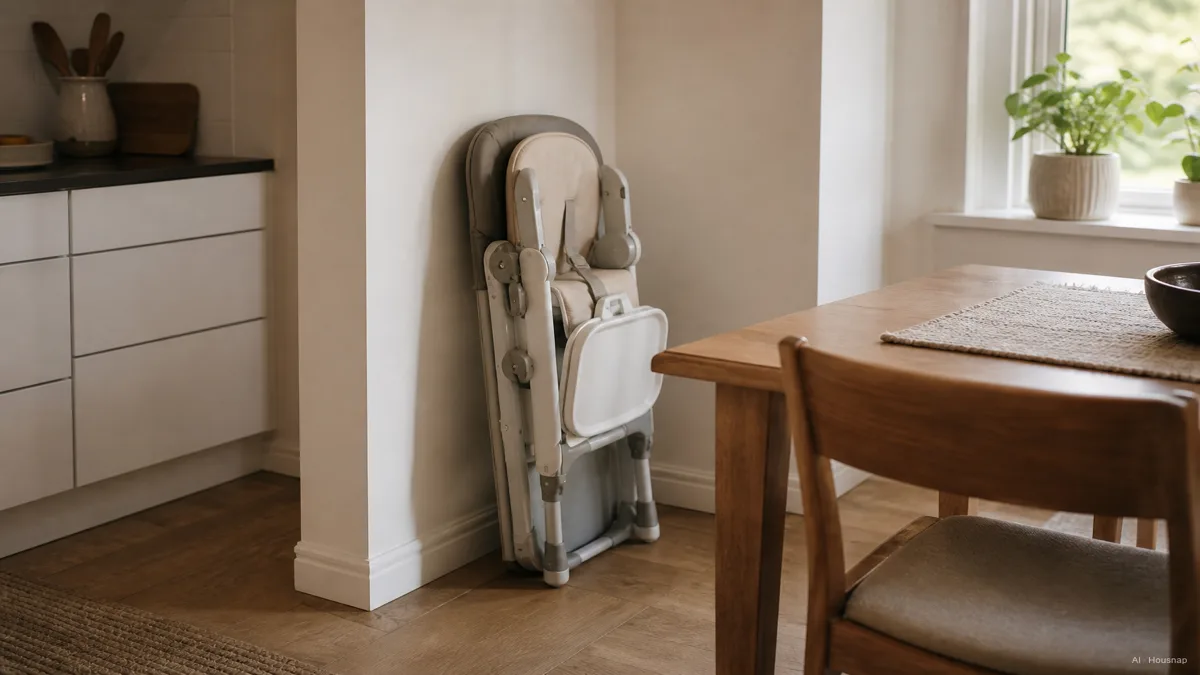
Traditional high chairs are free-standing, usually come with a tray, and are built for one job, feeding a baby up to about age 3. They are typically the simplest to clean and the least expensive entry point, and many fold flat for storage, which matters more than people expect in a small kitchen.
Convertible high chairs detach from their base and strap onto a regular dining chair as a booster once your child outgrows the standalone stage, moving the seat closer to the table as they grow. This is not a niche choice anymore. Convertible chairs made up nearly 40 percent of high chair sales in a recent market report, which tells you plenty of parents are choosing value-per-use over a single-purpose chair (Forbes).
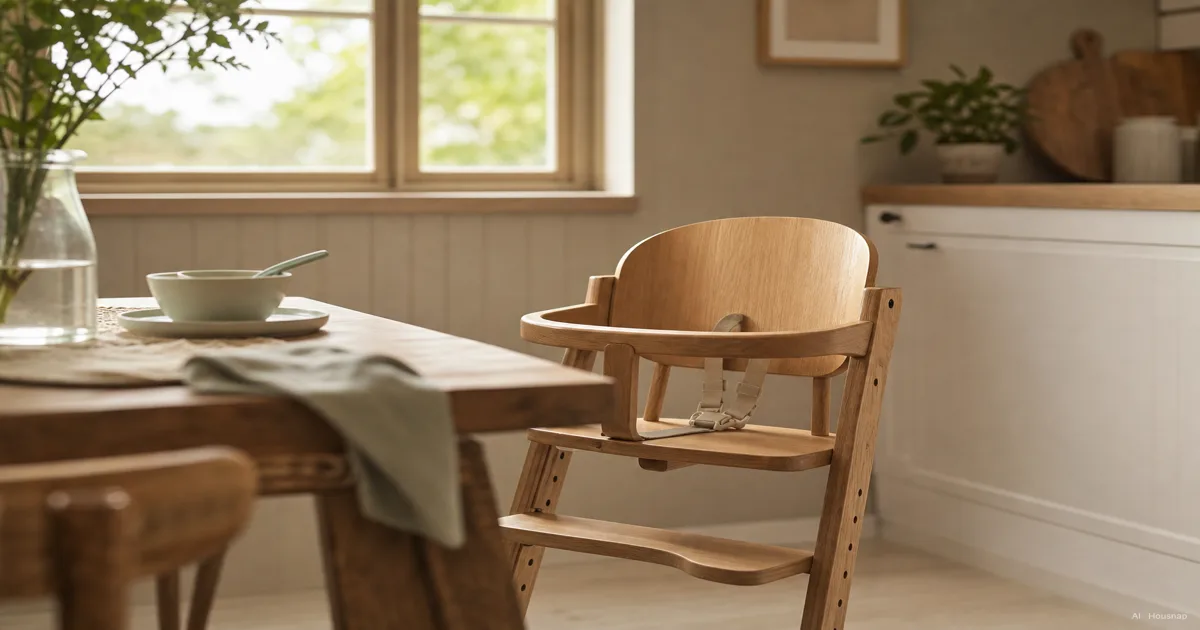
Grow-with-me chairs, usually wood or metal, go furthest. They start as a baby seat with a tray and harness, then shed those parts stage by stage until what is left is a full-size chair a much older child, sometimes a small adult, can sit in at the family table. The category's proof of concept is the Stokke Tripp Trapp, designed in Norway in 1972, with more than 12 million sold and pieces held in the permanent design collections of MoMA, the V&A, and the Vitra Design Museum. That is not a marketing claim, it is decades of families actually using the same chair for one child after another.
The honest way to choose between the three: traditional if you want the cheapest, simplest single-purpose chair and do not mind buying a booster later, convertible if you want one purchase to bridge baby to big-kid dining, grow-with-me if you want a chair that stays at your table for a decade and are willing to pay more upfront for it.
Safety Standards to Check Before You Buy (ASTM, JPMA, CPSC Recalls)
This is the section that matters most, because getting it wrong is not a comfort problem, it is a fall or entrapment problem.
In the United States, high chairs fall under ASTM F404-18, which defines a high chair as a free-standing seat for a child up to 3 years old with the seating surface more than 15 inches off the floor, whether it is sold with a tray, is height-adjustable, or reclines. The standard became a mandatory federal requirement in 2018, effective 2019, specifically to target fall and entrapment hazards.
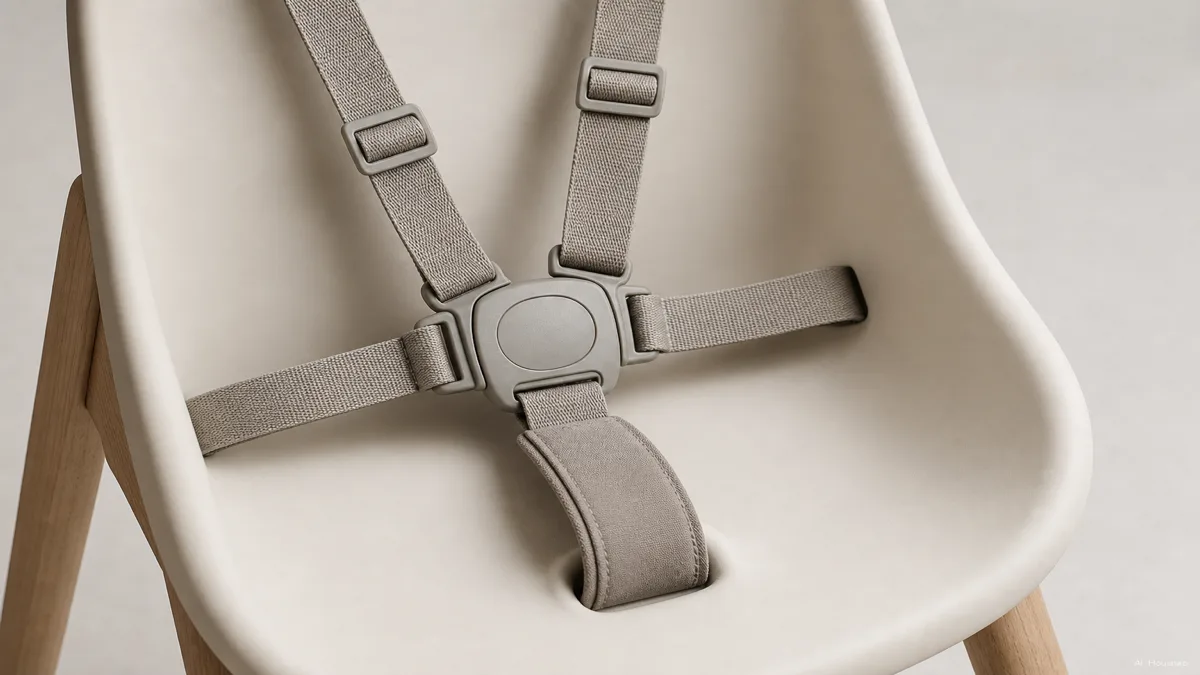
The single detail worth memorizing: every compliant chair must have a passive crotch restraint, meaning two separate, bounded leg openings a baby cannot slide out of feet-first, plus at minimum a three-point harness. This is not a theoretical requirement. Between 2024 and 2026, chairs from Bicystar, Harppa, Rotinyard, Boyro Baby, Funlio, Costway and Babyjoy, and Brandline HEAO were all recalled for missing or removable crotch restraints (CPSC), the exact failure the standard was written to prevent.
Look for the JPMA Certified seal on the chair itself, the box, or the manual. JPMA independently tests chairs against the ASTM standard, so the seal is a faster check than reading the fine print yourself. Premium chairs often go beyond the legal minimum with a rigid front torso support or a full five-point harness, which is worth the extra layer if your baby is an active wriggler.
Wood vs. Plastic: Material Tradeoffs for Cleaning, Weight, and Longevity
Neither material is unsafe once a chair clears the restraint standard above, so this comes down to how you live day to day.
Wood, often beechwood and frequently FSC-certified, is the heavier, harder-to-move option. It is also the one many parents reach for on feel: sturdier under an active toddler, no plastic off-gassing concerns, and it tends to look like furniture rather than baby gear, which matters if the chair is going to sit at your table for years. A cited survey found roughly 70 percent of parents in the US and Europe now prefer wood over plastic for exactly these reasons.
Plastic is lighter, cheaper, and comes in far more colors and styles, and a smooth plastic shell wipes clean in seconds. The tradeoff shows up at the seams. Cheaper trays with sectioned compartments trap crumbs in the grooves, and thin, non-removable seat padding is genuinely hard to deep clean once food works its way underneath.
The cleaning-friendly cues to look for regardless of material: a tray that is fully removable and dishwasher-safe, without deep sectioning that traps food, and a seat pad that is smooth, without piping or ruffles, and ideally machine-washable rather than only wipe-clean. Those two details predict how much you will dread cleanup more reliably than the material itself does.
Cleaning, Storage, and Small-Kitchen Considerations
The chair that looks perfect in a showroom can still be wrong for your kitchen, so measure before you fall for a design.
If counter and floor space is tight, weigh a fold-flat traditional or plastic chair over a bulkier wood convertible frame. Foldability keeps showing up as a differentiator in buying guides for exactly this reason, a chair you can lean against a wall between meals beats one that permanently claims a corner (Consumer Reports).
Weight cuts the other way once the chair is set up and staying put. A heavier wood or metal frame is more stable under a toddler who rocks, pushes off the table, or tries to climb, so if your kitchen has the room, the extra weight is a stability feature, not a downside.
Put the whole decision together in order: confirm your baby can sit unassisted, pick the type that matches how long you want this purchase to last, check for the JPMA seal and a real passive restraint, then let your kitchen's floor space and your patience for cleaning settle wood versus plastic. From there, the useful next step is to compare current high chairs side by side, across the types and materials above, so you can see which stores carry the specific model and price range you have landed on.
Sources
- High Chair Buying Guide: Types, Safety, Expert Tips — Consumer Reports; sitting-unassisted readiness, the 90-degree seated posture, and buying priorities
- Best High Chairs of 2026 — Consumer Reports; foldability and storage as a recurring differentiator
- ASTM's Revised Safety Standard for High Chairs — CPSC; the ASTM F404-18 definition, passive crotch restraint, and three-point harness minimum
- Safety Standard for High Chairs — Federal Register; the 2018 mandatory federal standard, effective 2019
- Bicystar High Chairs Recalled — CPSC; 2026 recall for missing/removable crotch restraints, one of several recent recalls for the same defect
- Tripp Trapp — Wikipedia; the 1972 Stokke design, 12+ million sold, and permanent museum collections
- The Best High Chairs Of 2026, After Extensive Testing — Forbes; the convertible category's roughly 40 percent share of high chair sales
- Understanding High Chair Safety Standards: The Ultimate Guide — Craft Child; JPMA certification and where to find the seal
Wie dieser Guide entstand
This piece started from a question that trips up a lot of first-time buyers: nearly every high chair claims to be safe, so what actually separates a compliant chair from one that gets recalled. We anchored the readiness and posture guidance on Consumer Reports, pulled the ASTM F404-18 definition and passive-restraint requirement directly from CPSC's own standard summary, and cross-checked the recall pattern, missing or removable crotch restraints, against CPSC's 2026 Bicystar recall notice. The convertible-share figure comes from Forbes, and the Tripp Trapp history is drawn from its own Wikipedia entry. Type and material selection maps to Housnap's baby-feeding pool, where traditional, convertible, and grow-with-me chairs in both wood and plastic appear across stores.