Your First Handheld Vacuum, What the Suction Numbers and Battery Life Actually Mean
You search handheld vacuum and land in front of dozens of near-identical models, each promising strong suction with a number attached to it that does not obviously compare to the one on the listing next to it. Some quote Air Watts, some quote plain watts, a few quote neither and just say powerful. None of that, by itself, tells you what actually matters for a first purchase. Here is what actually decides a handheld vacuum purchase. How long it holds real suction once you switch it on, how heavy it feels in your hand after a few minutes of holding it up at an angle, and whether the attachments in the box reach the specific mess you have, ground-in pet hair, a car seat seam, a stair runner, a couch cushion. A handheld is not a smaller version of your main floor vacuum. It is the tool you reach for everywhere your stick vacuum or robot never gets to. This guide walks through what a handheld vacuum is actually built to do, how to read a suction spec without being fooled by a big-looking wattage number, the weight-versus-battery tradeoff that decides whether you will actually pick it up again next week, and how the lab tests behind those best-of lists actually work.
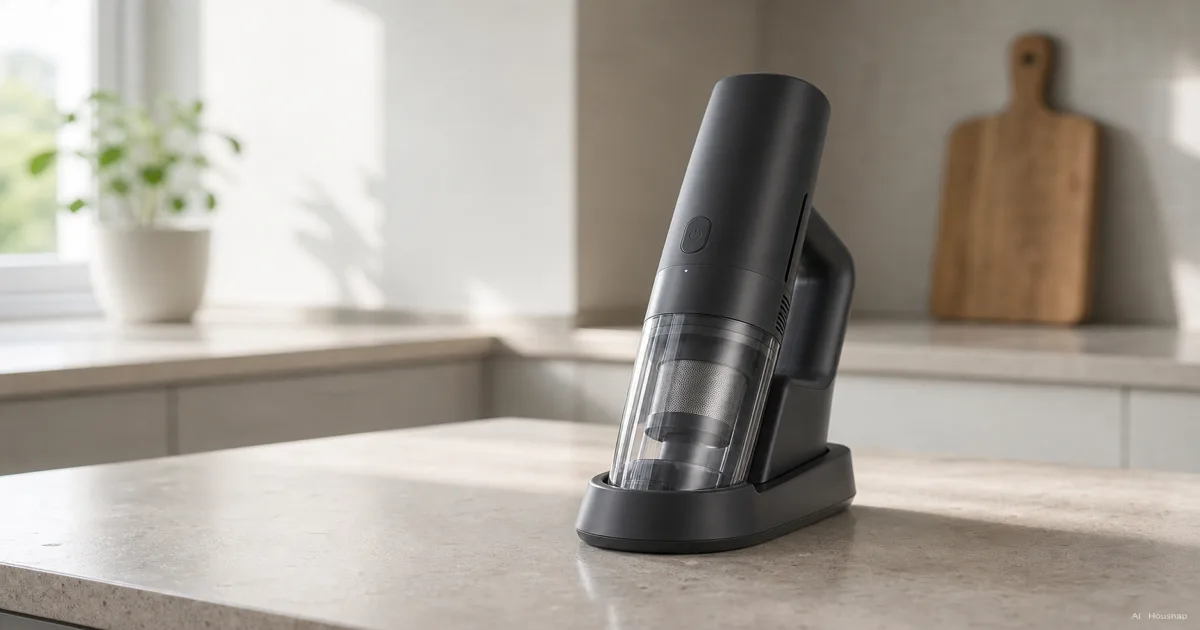
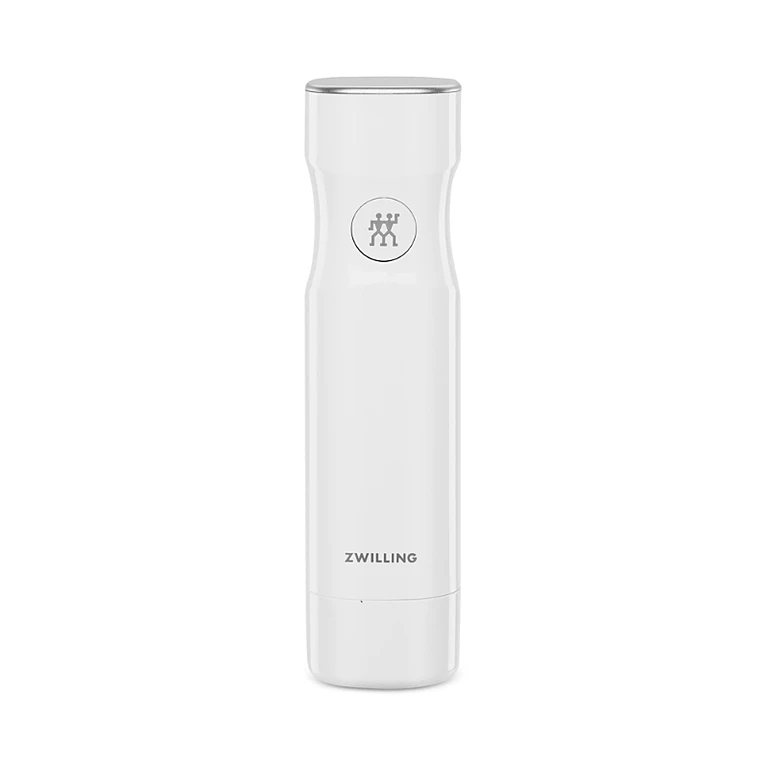
Aktuelle Produkte zum Vergleichen
Diese Produkte stammen aus den Housnap-Suchergebnissen zu diesem Thema.
What a Handheld Vacuum Is Actually Good For (and What It Isn't)
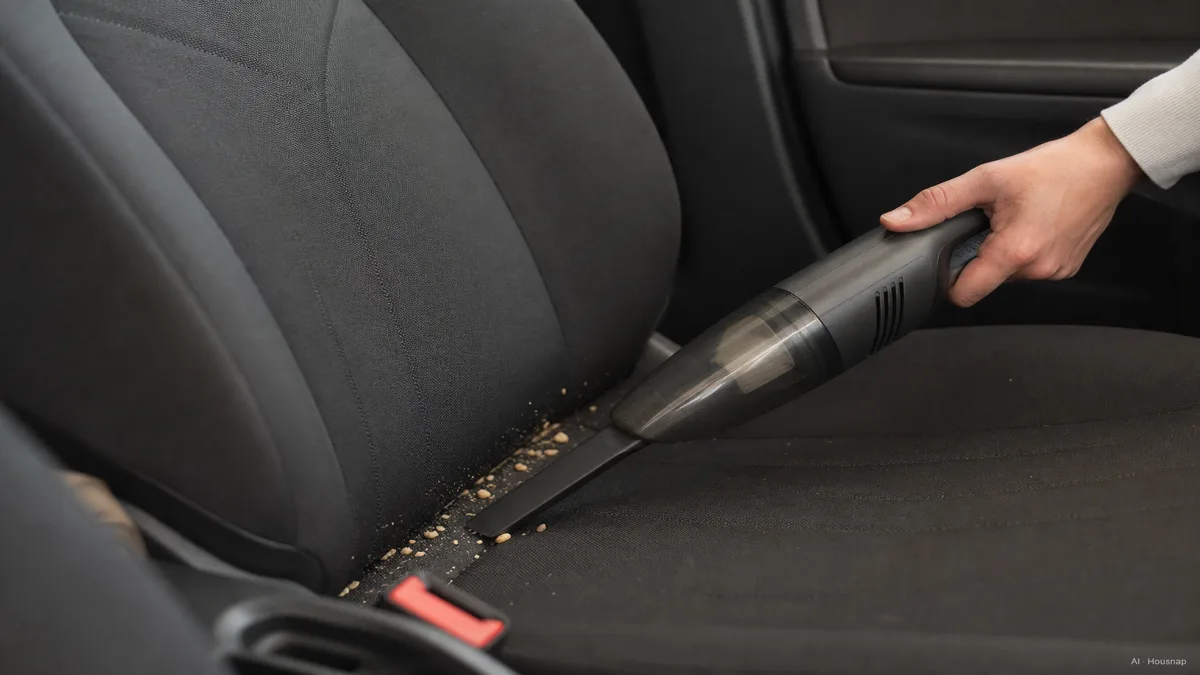
A handheld vacuum is a small, self-contained vacuum built to be picked up and used one-handed, not pushed across a floor. Reviewers are consistent on where the line sits. Consumer Reports' buying guide frames it as the right tool for a car interior, a set of stairs, upholstery, or a quick pass at crumbs, and RTINGS' handheld vacuum coverage draws the same line, testing handhelds specifically as a light-duty, spot-cleaning category rather than as a floor-care replacement.
That distinction matters more than it sounds. Buyers who expect a handheld to replace a stick vacuum or upright end up disappointed by a dustbin and a runtime that were never designed for a whole living room. Buyers who understand the actual job, car, stairs, couch, an odd spill, tend to be the ones who keep reaching for it a year in.
Suction Power Explained, Air Watts vs Motor Wattage
For handheld and cordless vacuums, suction is best compared in Air Watts (AW), a combined measure of airflow and suction, rather than raw motor wattage, which mostly tells you how much power the motor draws, not how effectively it turns that power into actual cleaning (TechGearLab's handheld vacuum testing).
That distinction explains why spec sheets look inconsistent at a glance across brands. One current cordless model lists around 150 AW, another lists around 210 AW, a separate listing quotes a 240-watt motor with a 60-minute runtime, and yet another quotes a 500-watt motor. None of these figures are directly comparable to each other unless you first check whether you are reading Air Watts or plain watts, since a bigger watt number on one unit and a bigger AW number on another are simply measuring two different things.
The practical takeaway is this. When you compare two handheld vacuums, check that both listings use the same unit before deciding one is stronger. If a listing only gives watts with no Air Watts figure at all, treat that number as a rough motor-size indicator rather than a real suction comparison.
Battery Life and Weight, the Real Tradeoff
It is easy to get overwhelmed staring at a wall of spec sheets, so here is the short version. Runtime and weight are the two numbers that decide whether a handheld actually gets used after the first week, and lab testing shows both vary more than most first-time buyers expect. Consumer Reports' lab testing found handheld vacuum runtimes ranging from 9 to 25 minutes per charge, depending on the model and the suction setting used, a wide enough spread that the number on the box is worth checking model by model rather than assumed.
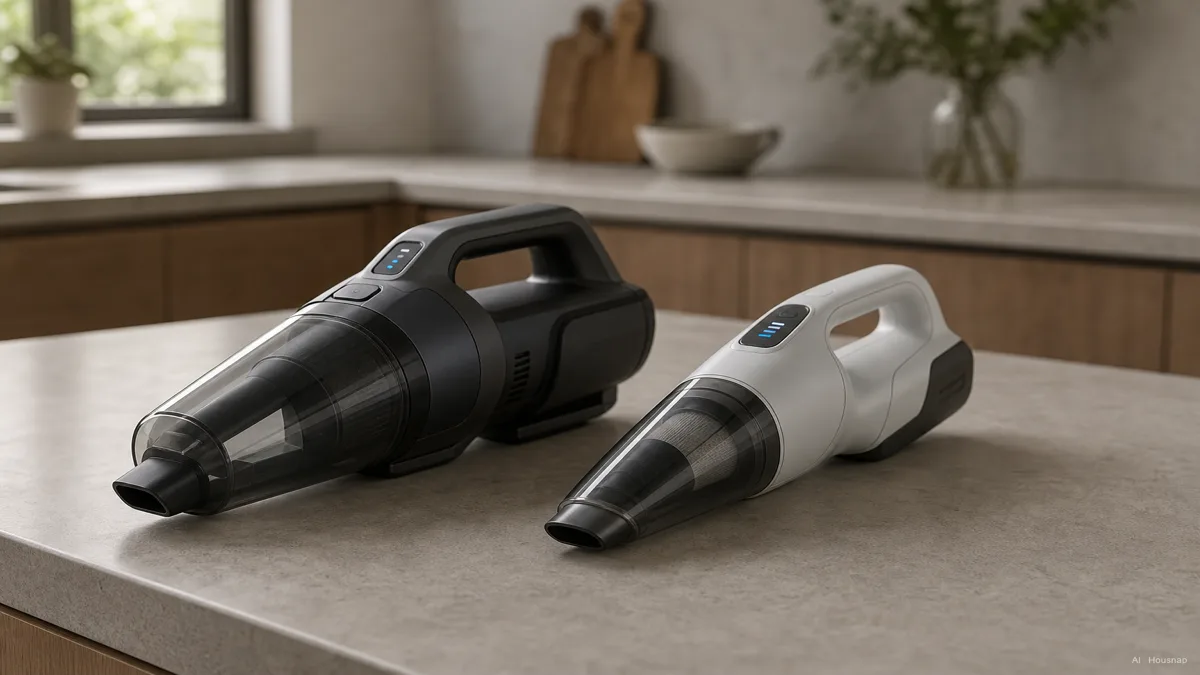
Weight versus suction. Most quality handheld vacuums weigh under 3 pounds, about 1.4 kilograms, and that ceiling is not arbitrary (Consumer Reports' buying guide). Heavier units generally pack a stronger motor and more suction, but that extra weight tires your arm faster the longer you hold it up at an angle, say cleaning a car ceiling or the back of a stair. A first-time buyer is usually better off picking the lightest unit that still clears their actual mess, rather than chasing the highest suction number on the shelf.
Battery chemistry and replaceability. Nearly all current handheld vacuums use lithium-ion batteries rather than older nickel-cadmium packs, and lithium-ion holds suction more evenly as the charge runs down instead of fading early (Consumer Reports). What is worth checking before you buy is whether the battery is swappable. Only a small number of handheld models let you replace a dead battery on its own, and on most others, once the built-in battery degrades, the whole unit is done, a real consideration if you want this to be a five-year purchase rather than a two-year one.
Attachments That Matter for Pet Hair, Cars, and Upholstery
Raw suction gets top billing on a spec sheet, but attachments decide whether that suction actually reaches the mess. Reviewers repeatedly point to one attachment as the real difference-maker, a motorized brush-roll head rather than a plain suction nozzle. A motorized roll agitates the surface as it cleans, which is what actually pulls embedded pet hair and ground-in carpet dirt free, while a plain nozzle mostly lifts loose surface debris and leaves the rest behind (Consumer Reports).
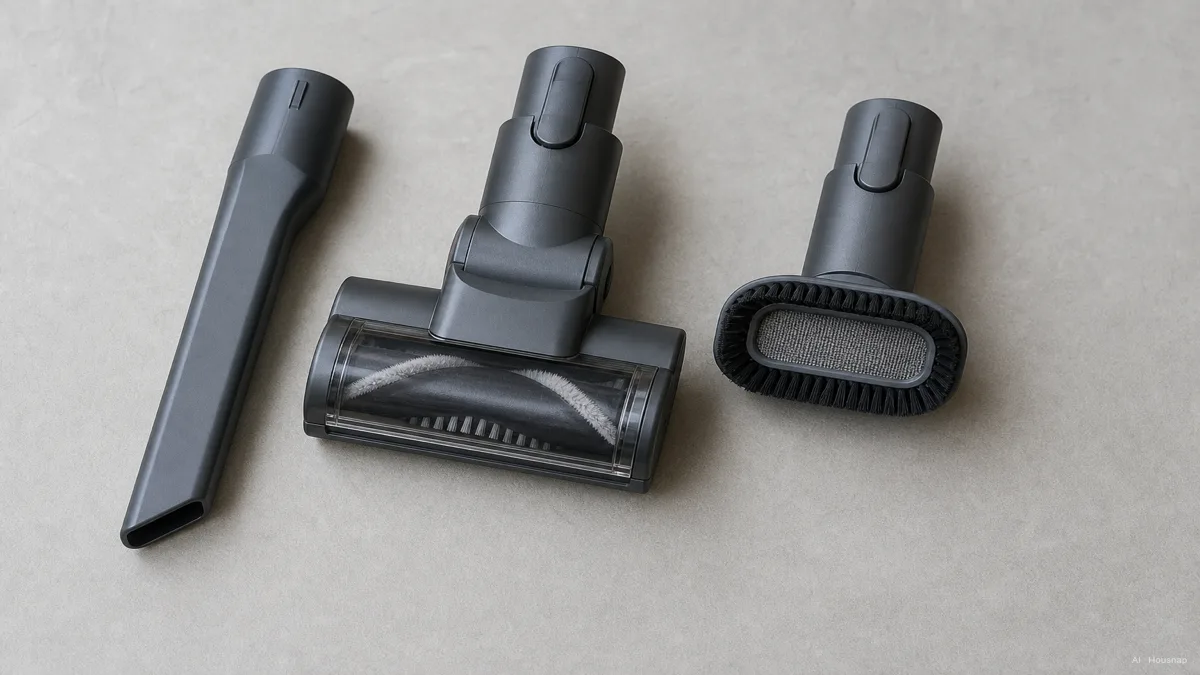
Attachment set. A crevice tool for seat seams and stair corners, an upholstery brush for fabric that will not scratch it, and a motorized mini brush-roll for pet hair are the three that matter most, and whether a model has all three (or only one) is one of the biggest real-world differences between units that otherwise look identical on paper (TechGearLab).
Dustbin size. This is a genuine tradeoff, not a simple bigger-is-better spec. A larger dustbin means fewer trips to empty it mid-clean, but it also adds bulk to a unit meant to be held one-handed. Some of the lightest handhelds, in the roughly 1-pound class, trade capacity for maneuverability on purpose, which suits quick, frequent spot-cleaning better than one big weekly session (Consumer Reports).
How to Read Lab Reviews Before You Buy
A star rating alone does not tell you much, and it is worth pausing here rather than just trusting whatever list comes up first. Consumer Reports' methodology for handheld vacuums embeds sand and pet hair into a section of carpet and scatters litter across a bare floor, then scores each model on pickup rate, whether debris scatters back out or clogs the unit, how easy it is to maneuver one-handed, and how loud it runs, a rubric that gets much closer to how you will actually use the vacuum than a wattage number ever could.
This is also a category genuinely worth reading more than one source on before you buy. Consumer Reports, RTINGS, CNN Underscored, TechGearLab, and NBC News Select all publish their own dedicated, lab-tested handheld vacuum roundups, and their top picks do not always agree, because they weight pickup rate, noise, weight, and price differently. Cross-checking two or three of these against your own priority, pet hair versus car interiors versus pure portability, gets you a far more useful answer than any single best-of list.
Sources
- Choose the Right Vacuum for Your Home — Consumer Reports; handheld positioning as a spot-cleaning tool, the under-3-pound weight benchmark
- 5 Best Handheld Vacuums of 2026, Lab-Tested and Reviewed — Consumer Reports; 9-to-25-minute runtime range and lab methodology (embedded sand/pet hair, litter scatter, pickup and noise scoring)
- Vacuum Cleaner Ratings & Reviews (handheld) — Consumer Reports; lithium-ion vs nickel-cadmium, swappable-battery rarity, motorized brush-roll and dustbin-size tradeoffs
- The 4 Best Handheld Vacuums of 2026 — RTINGS; handheld-as-spot-cleaning-category framing
- The Best Handheld Vacuums of 2026, Tested by Editors — CNN Underscored; independent editor-tested roundup
- 4 Best Handheld Vacuums of 2026, Lab Tested & Ranked — TechGearLab; Air Watts vs motor wattage explanation, attachment-set differentiation
- 9 Best Handheld Vacuums for Every Type of Job in 2026 — NBC News Select; use-case-specific picks
Wie dieser Guide entstand
This piece starts from a moment that repeats across handheld vacuum searches, a shopper lines up several listings side by side and finds wattage numbers that do not obviously compare, some in Air Watts, some in plain watts, some with no unit stated at all. We anchored the Air Watts-versus-wattage distinction and attachment-set guidance on TechGearLab's testing, the handheld-as-spot-cleaning positioning on Consumer Reports' and RTINGS' buying guidance, and the runtime range, weight benchmark, battery chemistry, and lab methodology on Consumer Reports' own handheld vacuum lab testing and ratings pages. The cross-outlet comparison in the final section reflects that CNN Underscored, TechGearLab, and NBC News Select each run independent, dedicated handheld vacuum testing too, and their top picks genuinely do not always agree. Catalog coverage for handheld vacuums in this vertical was not directly queried in this research pass, so the body stays comparative and spec-focused rather than citing live offer counts, and this topic remains a draft pending that catalog fit check.