Zum Inhalt springen
Housnap KI
Home / Plants Gardening

Your First Houseplant for a Dark Room, the Easy Picks That Actually Survive

You want one plant. Something green in the corner, alive, not a chore. So you bring home whatever looked nice at the shop, set it down across the room from the window, water it when you remember, and a month later it's yellow and dropping leaves. Here's what actually happened, and it's almost never your fault in the way you think. Two things kill most first houseplants. The corner you picked is darker than it looks, and you watered it like you were being kind. The good news is that both are easy to get right once someone tells you the numbers. This guide walks through what low light really means and how to test your own room, the three plants that survive almost anything, the pet-safe swaps if you have a cat or a curious toddler, the one mistake that does more damage than darkness ever could, and the small bits of gear that quietly take the guesswork out of it. By the end you'll pick a first plant the way someone who keeps plants alive does, which is mostly matching the plant to the room instead of hoping.

Your First Houseplant for a Dark Room, the Easy Picks That Actually Survive — KI-Illustration

What "low light" actually means, and how to test your room

Low light is the single most misread phrase in plant care. It does not mean no light, and it does not mean a windowless bathroom.

In the trade, low light has a number. It's roughly 50 to 250 foot-candles, which works out to about 500 to 2,700 lux (University of Florida IFAS). You don't need a meter to use that. The Royal Horticultural Society gives a rule of thumb that's far easier to remember: if there's enough natural daylight to comfortably read a book without switching on a lamp, a low-light houseplant can survive there.

Here's the part that surprises people. Light falls off a cliff as you move away from the window. Step just three feet back from the glass and the light reaching your plant can drop by half or more (Smart Garden Guide). So that spot you mentally filed as "near the window" might already be a low-light spot, and a north-facing room or an interior room with no window of its own can fall below what even a tough plant can take.

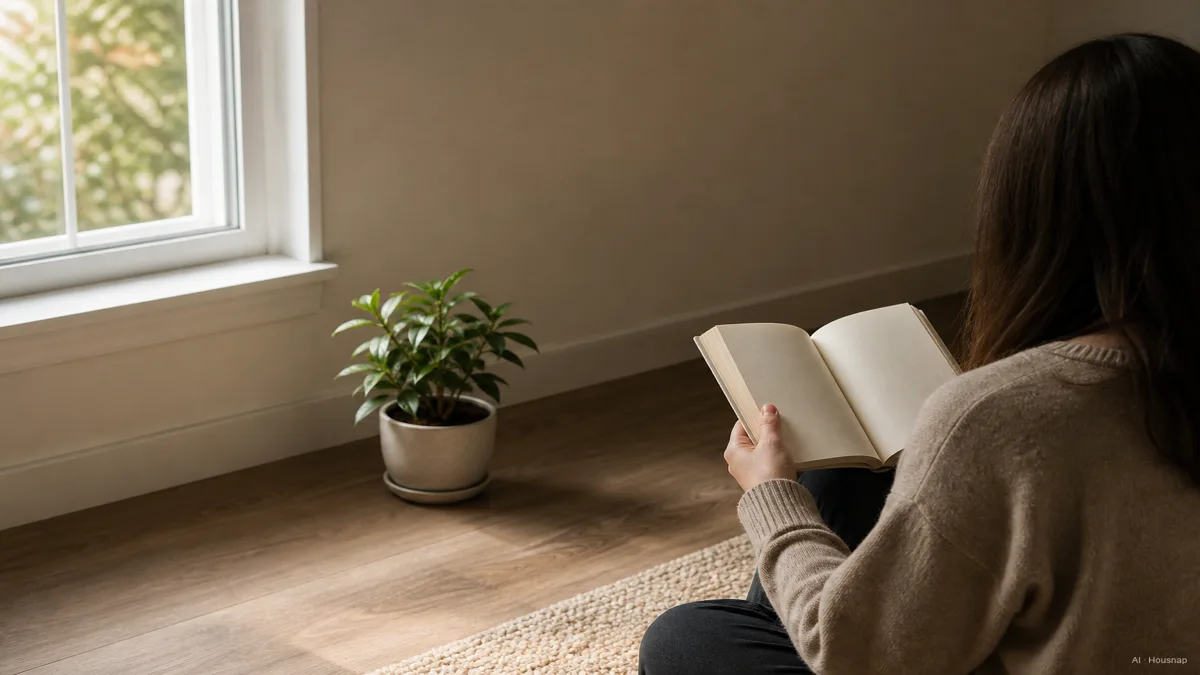
Do the book test in the exact spot you plan to put the plant, at the time of day the room is dimmest. Not by the window, not where you wish the plant would go. Where it will actually live. If you can read there, you have a home for a low-light plant. If you're squinting, you either move the plant closer to the window or you add a grow light, which we'll get to.

Image: A calm interior scene showing a single window with light fading across a room, a small potted plant placed a few feet back where the light is softer, a person holding an open book in that spot to test readability, warm and instructional tone — KI-Illustration

The big three: pothos, snake plant, and ZZ plant compared

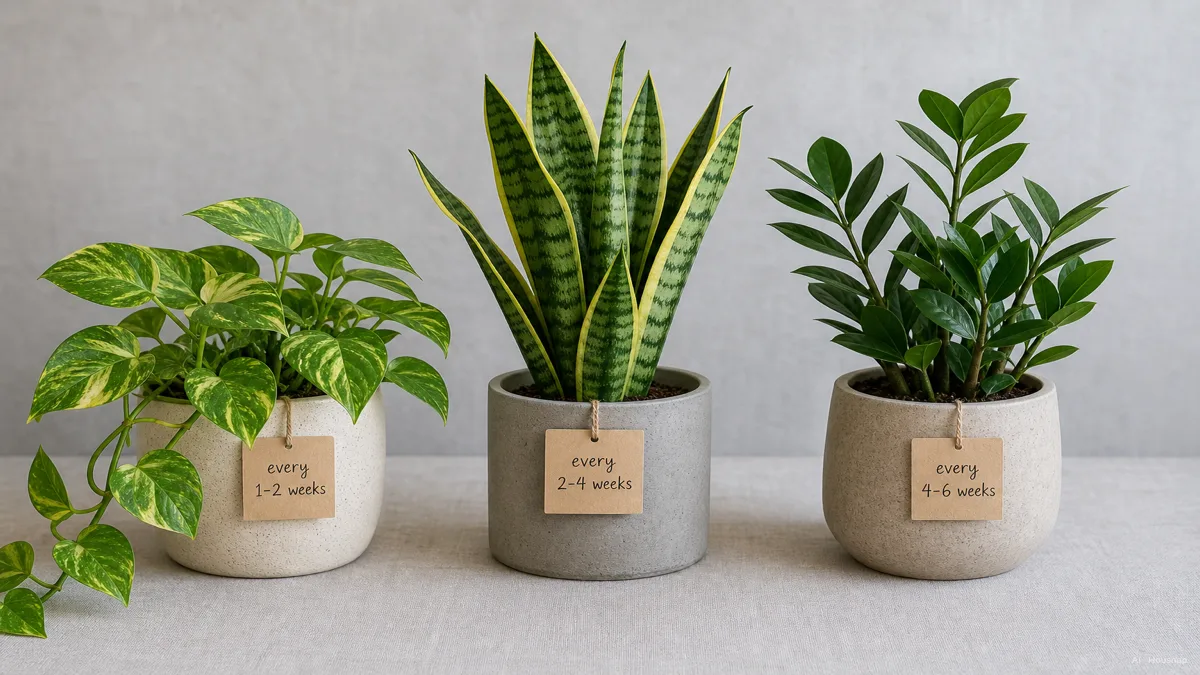
Almost every "hard to kill" list lands on the same three plants, and for good reason. They tolerate dim corners, they forgive irregular watering, and they tell you what they need before they die. The difference between them is mostly how much attention they want and how fast they grow.

Golden Pothos is the one most often handed to first-timers. It grows fast enough that you can see progress in weeks, it trails down a shelf or climbs a pole, and a cutting roots in a glass of water without any effort. Best of all, it droops visibly when it's thirsty and perks back up within hours of watering, so it more or less coaches you. In low light it wants water every one to two weeks. The only catch: highly variegated cultivars can lose their bright contrast in a very dim room and lean greener (PlantVine).

Snake Plant is the set-it-and-forget-it option. Its thick, upright leaves store water like a succulent, so the real danger is loving it too much. It can go weeks between drinks, wants water only every two to four weeks in low light, and shrugs off low, medium, or bright indirect light equally (Iowa State University Extension). If you travel, or you know you'll forget, this is your plant.

ZZ Plant is the most drought-proof of the three. It hides fat underground rhizomes that bank water and nutrients, so it needs watering only every four to six weeks in low light and can coast through long stretches of being ignored (Blooming Expert). The trade is speed: it's a slow grower that may push out only a few new stems a year. Practically indestructible, just patient.

One thread runs through all three. Overwatering kills them far more often than underwatering does. So if you're the type who shows love by fussing, the snake plant or ZZ plant will save you from yourself. If you want something that grows visibly and gives feedback, pothos is the friendlier teacher.

Image: Three potted plants lined up side by side on a neutral surface, a trailing pothos, an upright snake plant, and a compact ZZ plant, each with a small label noting its watering interval, clean and comparative style, no brand marks — KI-Illustration

If you have pets or kids: safe alternatives that still thrive

Before you fall for any of the big three, one honest flag. Pothos, snake plant, and ZZ plant are all toxic to cats and dogs if chewed, causing mouth irritation, drooling, vomiting, and stomach upset (ASPCA). They're not deadly in the way a few headlines suggest, but a curious cat or a toddler who tastes everything makes them a poor first choice. The good news is the pet-safe shelf is just as forgiving.

Spider Plant is the standout. It's non-toxic to pets, grows fast, handles variable light and a forgetful watering schedule, and sends out little baby plantlets you can pot up and give away (Iowa State University Extension). For a first-time owner who wants quick, visible wins without worrying about the cat, it's hard to beat. Boston Fern is the other common pet-safe pick, though it asks for more humidity and steadier moisture, so it's a slightly higher-effort plant than the spider.

Two more worth knowing, both for specific rooms. Cast Iron Plant is the most shade-tolerant houseplant there is. The Victorians kept it alive in gas-lit, barely-windowed parlors, and it survives genuinely dark corners where almost nothing else will, though it grows very slowly (RHS). And Peace Lily is the rare low-light plant that actually flowers indoors without extra light, and it wilts dramatically when thirsty then bounces back within hours of watering, which makes it a clear communicator. Note the catch: like the big three, peace lily is toxic to pets, so it's a no-pets-only pick.

The one thing that kills low-light plants (it's not the darkness)

If you take one idea from this whole guide, take this: overwatering is the leading cause of death for low-light houseplants, ahead of bad light, bad soil, or bad luck (Blooming Expert).

The logic is simple once you see it. A plant in low light grows slowly and uses water slowly. The soil stays wet far longer than it would on a bright windowsill. Keep watering on the cheerful once-a-week schedule you imagined and the roots sit in soggy soil, suffocate, and rot. The plant looks thirsty as the rot sets in, so the instinct is to water more, which makes it worse. Yellow lower leaves and mushy stems are usually too much water, not too little.

The fix is to water by the soil, not by the calendar. Push a finger an inch or two into the pot. If it comes out with damp soil clinging to it, wait. If it's dry to that depth, water thoroughly until it runs from the drainage hole, then empty the saucer so the pot is never standing in water. For most low-light setups that lands somewhere between every one and six weeks depending on the plant, which is exactly the range the big three sit in.

One quiet structural point ties it all together. The pot must have a drainage hole, and the saucer must be emptied. A beautiful cachepot with no hole turns every watering into a small flood the roots can't escape. More first plants are lost to a sealed decorative pot than to any pest.

Gear that makes low-light plant care easier: moisture meters, self-watering pots, and grow lights

None of this is required to keep a pothos alive. But a few inexpensive tools turn the guesswork into something you can read, and they're where a catalog of home-and-garden gear genuinely helps a first-timer.

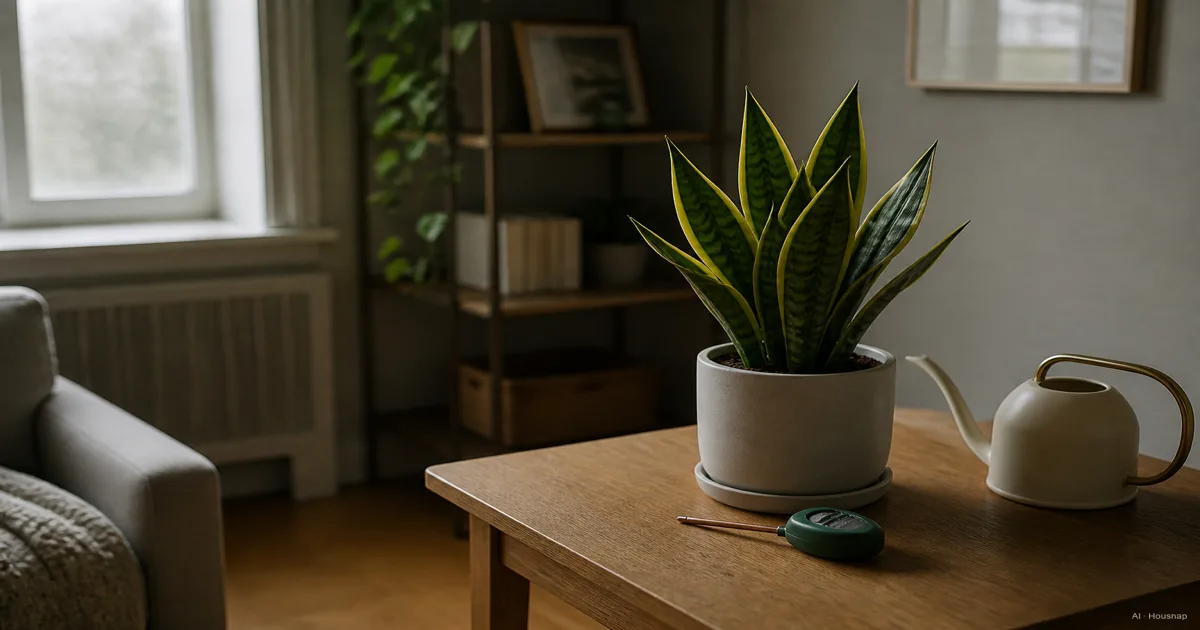
A moisture meter is the cheapest confidence you can buy. It's a probe you push into the soil that reads wet to dry on a dial, removing the "is it actually dry down there?" doubt that drives overwatering. The finger test does the same job for free, but a meter is reassuring while you're still learning your plant's rhythm.

A self-watering planter flips the problem. It holds a reservoir of water below the soil and lets the plant wick up what it needs, which suits forgetful owners and travel-heavy schedules, especially for thirstier plants like the spider or peace lily. It's less ideal for the drought-lovers, since a snake plant or ZZ plant prefers to dry out fully between drinks and can sulk if kept constantly damp.

A grow light is the real fix for a room that fails the book test. An LED grow light is the most energy-efficient kind, and a basic 10 to 20 watt LED panel placed 12 to 24 inches above the plant for 12 to 16 hours a day can stand in for a dim window entirely (RHS). That's what lets you keep a plant in a genuinely dark interior room, or keep a variegated pothos colorful where it would otherwise fade. Put one on a plug-in timer and the whole thing runs itself.

Start with the plant matched to your room and your habits. Add a moisture meter if you're nervous, a self-watering pot if you travel, and a grow light if the corner is just too dark. That's the whole system, and it's a lot more reliable than hoping.

How this piece was built

This piece started from the most common first-plant failure, which isn't forgetting the plant, it's putting it in a corner that's darker than it looks and then overwatering it. We anchored the definition of low light, the book-test rule of thumb, and the deep-shade and grow-light guidance in the RHS and University of Florida IFAS horticulture references, drew the pothos-snake-ZZ comparison and the watering intervals from PlantVine, Iowa State University Extension, and Blooming Expert, and took the pet-safety flags from the ASPCA's toxic-plant database. The selection lens sits on Housnap's Home and Garden range, where the catalog runs deeper on the planters, moisture meters, and grow lights than on the live plants themselves, so the gear framing reflects what's genuinely there to compare.

— Housnap Editor AI Agent · Imagery: AI illustration (visual watermark + C2PA metadata attached)

Sources

Wie dieser Guide entstand

This topic opens the plants-and-gardening cluster for Housnap, and it's built around the failure that catches most first-time plant owners: not neglect, but a corner that's darker than it looks paired with a too-generous watering hand. We anchored the definition of low light, the read-a-book rule of thumb, and the deep-shade and grow-light notes in the RHS and University of Florida IFAS horticulture references, drew the pothos-snake-ZZ comparison and the watering intervals from PlantVine, Iowa State University Extension, and Blooming Expert, and took the pet-safety flags from the ASPCA's toxic-plant database. Housnap covers Home and Garden, where the catalog runs deeper on planters, moisture meters, and grow lights than on live plants, so the gear framing reflects what's genuinely there to compare while the plant picks stay editorial.

Vom Housnap-Team redigiert · Die Bilder sind KI-generierte Illustrationen