Match the sock edge to the shoe opening
Start with the shoes you want to wear, not the name on the sock pack. Decide whether the sock must disappear, whether a small visible edge is acceptable, or whether you want an obvious band above the shoe.
- No-show: shortlist this when hiding the sock matters. Check the opening over the top of the foot as well as the heel; a sock hidden in a sneaker may still show in a more open shoe.
- Ankle: compare this when you are happy to see a short cuff. Check that its edge sits where you want it relative to the shoe opening.
- Crew: choose this when you want coverage farther up the leg and a clearly visible sock. Do not buy it solely on the assumption that a longer shaft guarantees a secure heel.
Nike's cut guide describes short cuts as ending below, at or slightly above the ankle, while crew socks extend several inches above it. These are useful starting descriptions, not measurements for your particular shoe.
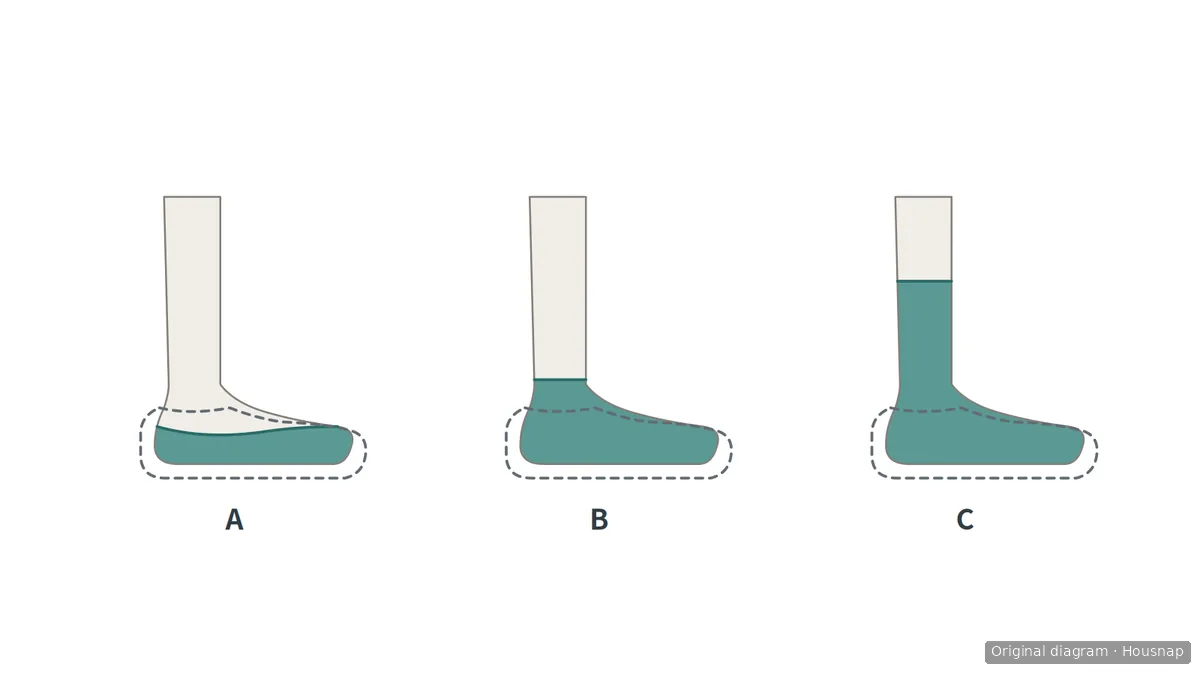
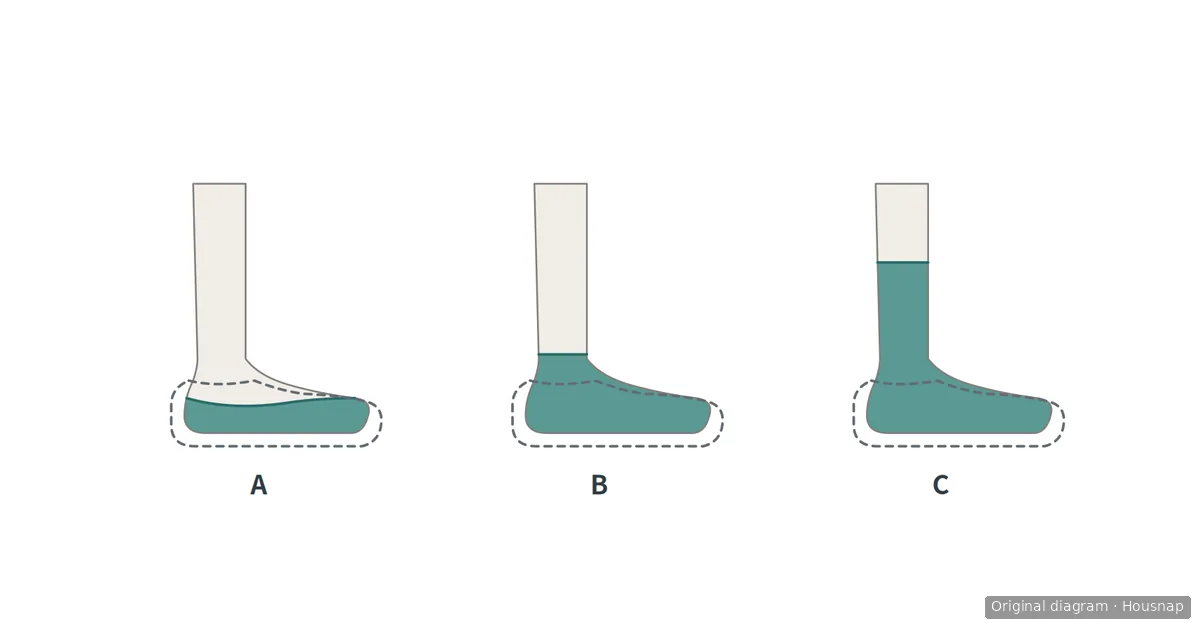
A shows a low sock edge, B an ankle-height edge and C a taller cuff. The coloured shapes represent socks; the dashed outlines represent the same shoe. This is a coverage comparison, not a size chart or a demonstration of grip.
Even “no-show” needs checking. Darn Tough distinguishes its everyday Lifestyle no-shows from its running and hiking versions, and describes an even lower women's “invisible” cut for flats. Look for the candidate's intended footwear and actual opening, rather than treating every no-show as interchangeable.
Check what holds the sock on your foot
Use the candidate's own size guide before choosing between lengths. Nike identifies sizing as a possible contributor to slipping and bunching, so switching to a taller sock without checking size can miss the question you need to resolve.
For a no-show, inspect the heel construction separately from the edge around the foot. For example, FALKE's Step Medium Cut description lists both a heel-area anti-slip system and a soft edge, and identifies loafers and espadrilles as suitable footwear. Those are distinct features of that model, not a promise that every no-show will stay on every foot.
Before buying, check whether the listing explains the heel feature and shows the sock opening clearly. If it only says “non-slip,” ask for the construction and sizing details you need. Do not choose a smaller size just to obtain a tighter edge; use the size guidance and check the result on your foot.
Thickness is another decision. Nike cautions that padding takes up shoe space. If your toes feel crowded with the candidate, compare a thinner sock rather than expecting a different cuff height to create more room.
Walk in the combination before buying multiples
Check the seller's hygiene and return conditions before opening a pack or trying socks on. Where a trial is permitted, put the heel of each sock in position, smooth out loose fabric and wear both shoes fastened as usual. Walk indoors, then look at what actually moved.
- The sock heel has slid under your foot: revisit the sock's size, opening and heel construction. Compare another cut rather than buying a larger pack of the same unresolved fit.
- The sock stays put, but your heel lifts out of the shoe: treat this as a shoe-fit question. Use the sneaker sizing guide to compare size, width and shape before trying to solve it by changing sock height.
- The sock stays put, but the edge shows more than you wanted: compare a lower opening, or accept a visible ankle or crew sock. That is a coverage choice, not a retention failure.
- The combination feels comfortable and the coverage is right: keep that cut and size as your buying reference.
If you cannot try the socks before committing, favour a smaller initial quantity where available. Record the cut and size that work with this shoe; a different shoe opening is a reason to check again.
Wie dieser Guide entstand
Housnap's AI editor wrote this guide using manufacturer explanations from Nike, Darn Tough and FALKE. It focuses on everyday sock coverage, sizing and heel construction; the suggested comparison steps are editorial guidance, not results from our own wear testing.