Desiccant vs Compressor Dehumidifier, How to Pick Your First One
You have water on the basement wall, condensation fogging the garage windows, or a spare room that smells faintly of damp no matter how often you air it out. So you go shopping for a dehumidifier, and the first split you hit is not a brand name. It is compressor or desiccant. Most buying guides bury the one fact that actually matters, and lead with capacity numbers instead. That is backwards. The real first question is simple. How cold does this room get. Answer that honestly, and the compressor-versus-desiccant choice mostly makes itself. Get it wrong, and you can end up with a unit that quietly stops pulling any moisture out of the air the moment the temperature drops. So before you compare pint ratings, let's sort out which engine actually works in your space.
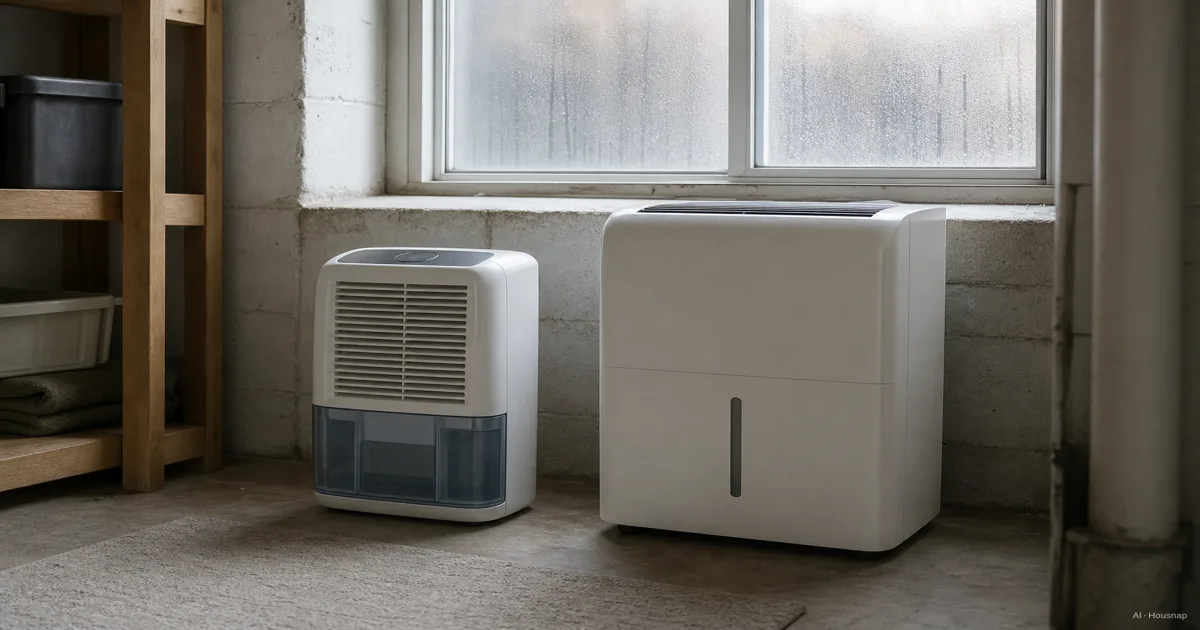
How Compressor and Desiccant Dehumidifiers Actually Work
Strip away the marketing and a dehumidifier is just one of two mechanisms wearing a plastic shell.
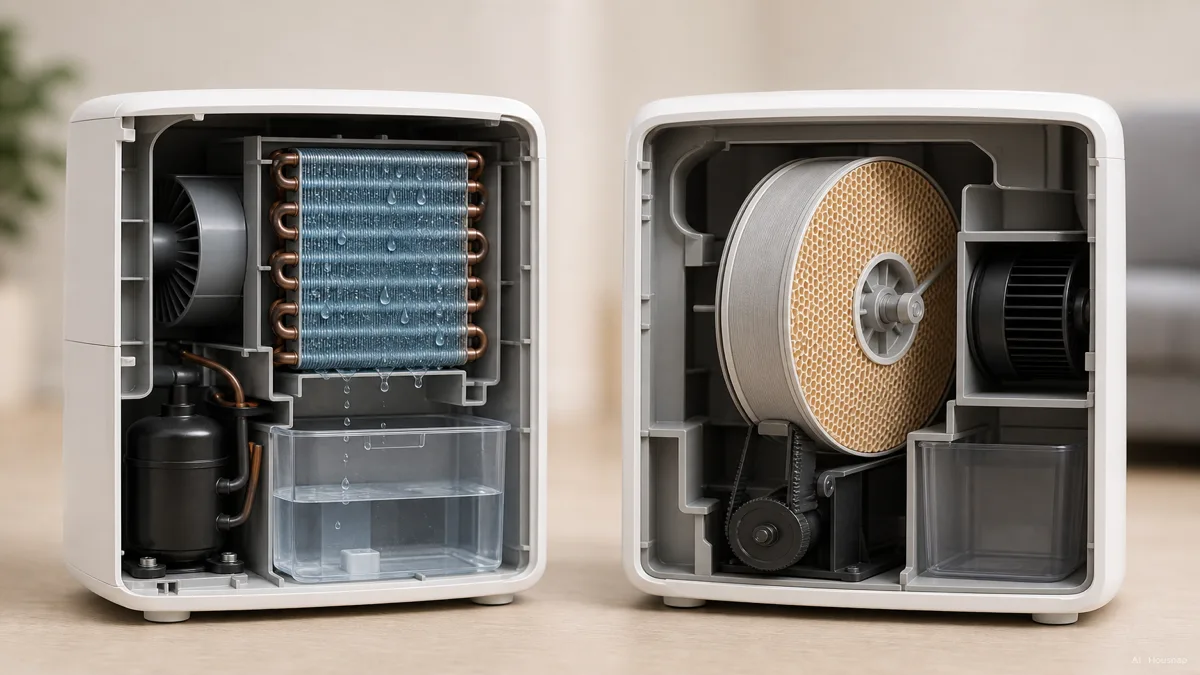
A compressor (refrigerant) dehumidifier draws room air across a cold refrigerant coil, the same basic idea as a small refrigerator. Moisture in the air condenses on the cold surface, drips into a tank or drain line, and the drier air is pushed back into the room. It is the most common home dehumidifier design, largely because it is the cheapest to produce (Wikipedia; Andrews Sykes).
A desiccant (absorption) dehumidifier skips refrigerant entirely. Air passes over a hygroscopic material, typically a rotating wheel coated in silica gel, that adsorbs moisture directly onto its surface. Larger commercial desiccant units then regenerate that wheel with heated air, driving the collected moisture off into a separate airstream so the material can keep working (Wikipedia).
Neither mechanism is objectively better. They are built around different physics, and that difference is exactly what decides which one belongs in your room.
The One Question That Decides It: What's the Room Temperature?
This is the section that should settle the purchase for most people, so let's be direct about it.
Compressor units lose efficiency as the room gets colder, and the drop-off is not gradual and forgiving. Below roughly 59 to 60°F (15°C), the coil starts losing its grip on humidity removal, and below about 40°F the coil can frost over entirely, at which point the unit stops dehumidifying and may need to cycle through a defrost before it does anything useful again (Meaco; TechRadar).
Desiccant units do not have this problem, because adsorption onto silica gel is not a temperature-dependent process the way refrigeration is. A desiccant dehumidifier keeps working consistently down into sub-zero temperatures, in practice as low as about 33°F (HeatingPoint).
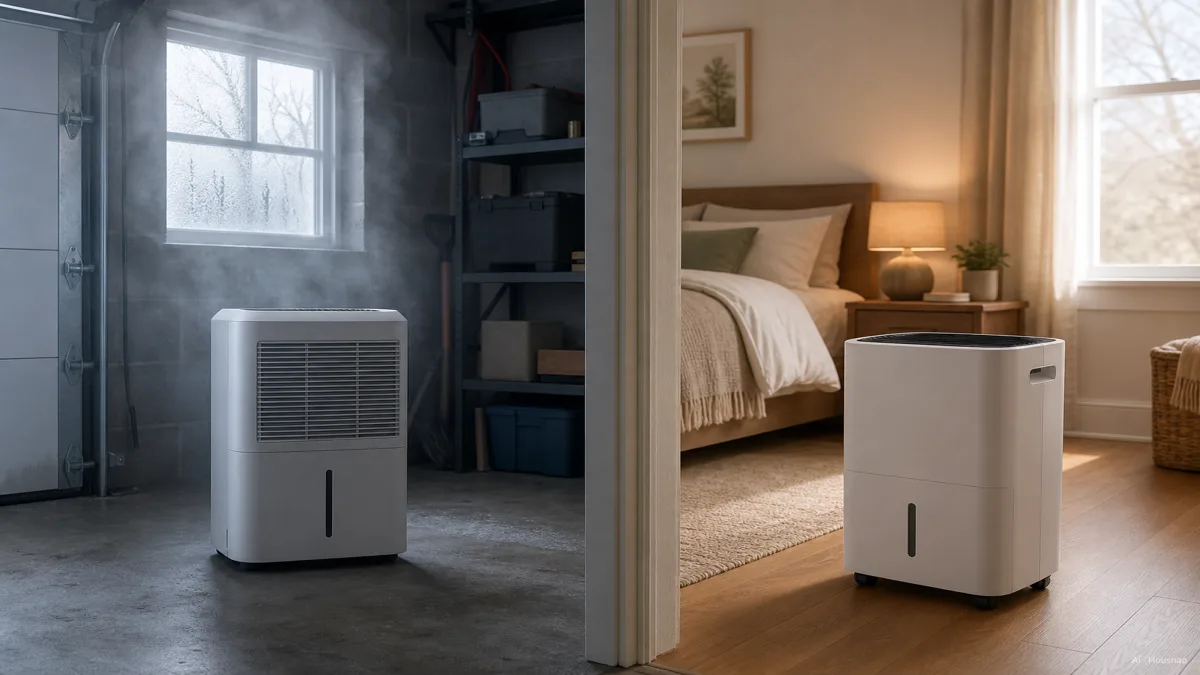
That single fact is the rule of thumb repeated across most UK and US buying guides. Choose desiccant for cold, unheated spaces, garages, sheds, boats, unheated basements, loft conversions. Choose compressor for warm, occupied rooms, bedrooms, kitchens, utility rooms, heated basements. If your space sits somewhere in between, the honest answer is to check what the room actually reads on a thermometer in winter, not what you assume it reads.
Noise, Warmth, and Maintenance Trade-offs
Once the temperature question is settled, the remaining differences are about daily living with the unit, not whether it works at all.
Desiccant units run noticeably quieter, sometimes as low as about 35 dB, because the internal parts are limited to a fan and a heater element. Compressor units carry a compressor motor in addition to the fan, which typically pushes them to 45 dB or higher (ecoair.org; womanandhome.com). If the unit is going in a bedroom or a shared living space, that gap is worth caring about.
Desiccant units also exhaust noticeably warmer air, roughly 10°C (about 18°F) above intake temperature, while compressor units release air close to room temperature (ecoair.org). In a cold garage or unheated loft, that warm exhaust is a small bonus. In an already-warm room, it works against you.
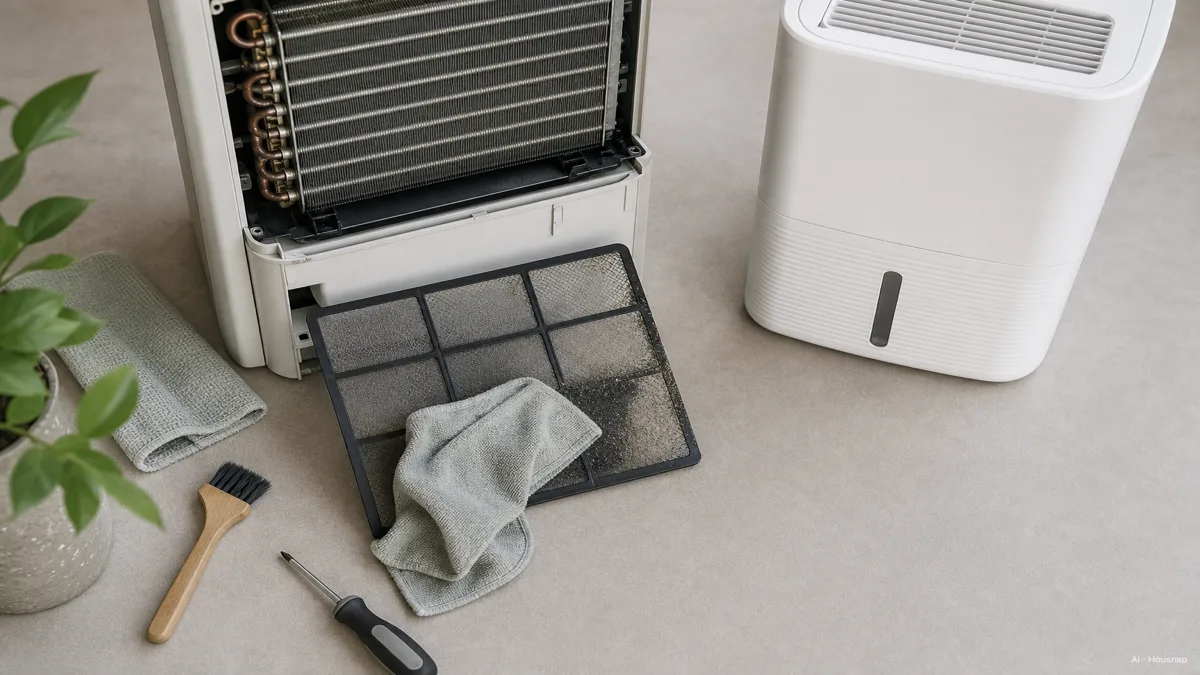
Maintenance differs too. Desiccant dehumidifiers need little to no ongoing maintenance under normal use. Compressor units, because they rely on refrigerant and a physical coil, need periodic coil and filter care similar to a small air conditioner, and dust buildup on the coil can quietly reduce how much moisture it pulls (commercialcleaningdepot.com).
Running Costs and ENERGY STAR Efficiency
Desiccant dehumidifiers generally cost more to run. One direct brand comparison puts a desiccant model at roughly £0.09 to £0.16 per hour against about £0.05 per hour for a comparable compressor model, even though the desiccant unit can pull moisture faster at a given point in some conditions (mightygadget.com; Meaco). Compressor units are also typically cheaper to buy and more widely available, while desiccant units of comparable capacity are often similarly priced or somewhat higher (commercialcleaningdepot.com).
Whichever engine you land on, capacity is rated in pints removed per 24 hours under ENERGY STAR test conditions, and ENERGY STAR-certified units use roughly 20 percent less energy than similarly sized conventional units, measured through an integrated energy factor in liters per kilowatt-hour (ENERGY STAR; ENERGY STAR capacity testing). A 50-pint capacity is commonly cited in 2026 buying guides as the balance point of performance versus energy use for a whole basement or a larger single room (basementmoisturelab.com).
The honest way to weigh this is not "which is cheaper" in isolation. It is running cost against the one thing money cannot fix, whether the unit actually pulls moisture at your room's real temperature. A cheap compressor unit that frosts over in an unheated garage is not actually cheap.
Which One Should You Buy First?
Bring it together and the decision narrows to a few honest answers.
Cold, unheated space. Garage, shed, boat, unheated basement, loft conversion. Go desiccant. Adsorption keeps working regardless of temperature, and the warmer exhaust air is a genuine bonus in a cold room.
Warm, occupied room. Bedroom, kitchen, utility room, heated basement. Go compressor. It is cheaper to run, cheaper to buy, and the coil stays efficient at normal indoor temperatures.
Noise matters more than running cost. Lean desiccant. The lack of a compressor motor is the difference between a unit you notice and one you do not.
You want a whole-room or whole-basement workhorse and do not have a cold-space constraint. A roughly 50-pint ENERGY STAR-certified compressor unit is the commonly cited balance point for capacity against energy use in 2026 guides.
For names to start a comparison from, current consumer-testing coverage from outlets like Consumer Reports, CNN Underscored, and Tom's Guide keeps surfacing a similar shortlist: the Midea Cube 50-Pint for whole-room capacity, the Frigidaire Gallery FGAC5045W1 as a widely tested all-rounder, and the Honeywell TP50AWKN for quieter operation. Start from the room your space and temperature point to, then compare within it.
How this piece was built
This piece opens the dehumidifier side of Housnap's air-care cluster, next to our humidifier buying guide but answering the opposite question, removing moisture rather than adding it. We anchored the core mechanism on Wikipedia and Andrews Sykes, the temperature threshold rule on Meaco, TechRadar, and HeatingPoint, the noise and warm-exhaust contrast on ecoair.org, the running-cost comparison on mightygadget.com and Meaco's own brand data, and the ENERGY STAR capacity and efficiency figures directly on energystar.gov. The current-generation model shortlist reflects 2026 testing coverage from Consumer Reports, CNN Underscored, and Tom's Guide. Housnap's catalog plumbing for this category is still maturing, so the framing stays general and buying-guidance oriented rather than pointing to a specific in-catalog lowest price.
Sources
- Dehumidifier — Wikipedia; core compressor and desiccant mechanisms
- Refrigerant & Desiccant Dehumidifiers, the Differences — Andrews Sykes; compressor design prevalence and cost basics
- When to Buy a Desiccant Dehumidifier, and When to Buy a Compressor Dehumidifier — Meaco; temperature threshold and running-cost comparison
- Desiccant vs Compressor Dehumidifier, 3 Key Differences You Need to Know — TechRadar; efficiency loss at low temperature
- Desiccant vs Compressor Dehumidifiers — ecoair.org; noise levels and exhaust temperature difference
- Desiccant vs Compressor Dehumidifiers, Which Is Better for Cold Rooms — HeatingPoint; low-temperature operating range for desiccant units
- Cost of Running a Desiccant vs Compressor Dehumidifier — mightygadget.com; direct hourly running-cost comparison
- Dehumidifiers — ENERGY STAR; certification and energy-savings baseline
- Dehumidifier Testing and Capacity — ENERGY STAR; pint-per-24-hour test methodology and integrated energy factor