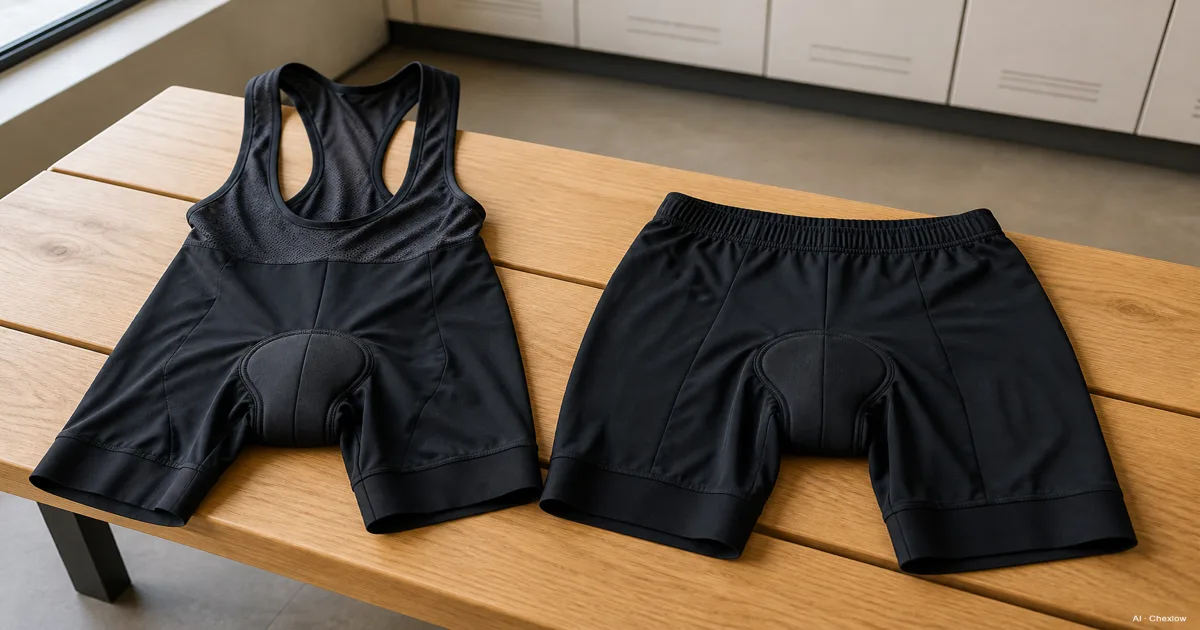
Choose what holds the shorts up
For a first pair, compare two padded cycling garments: bib shorts held up by shoulder straps and waist shorts held by a waistband. Hincapie's comparison explains this construction difference.
- Try bibs first if you dislike a waistband pressing into your stomach when you lean forward.
- Try waist shorts first if you want no shoulder straps and simpler changing.
- For indoor riding, include upper-body coverage in the comparison. Bib fabric can add warmth, but fabric choice matters too; the style alone does not decide how cool a pair feels. Cycling Weekly
These are starting points for trying things on, not rules based on mileage. Pick the inconvenience you most want to avoid, then check whether that pair actually solves it.
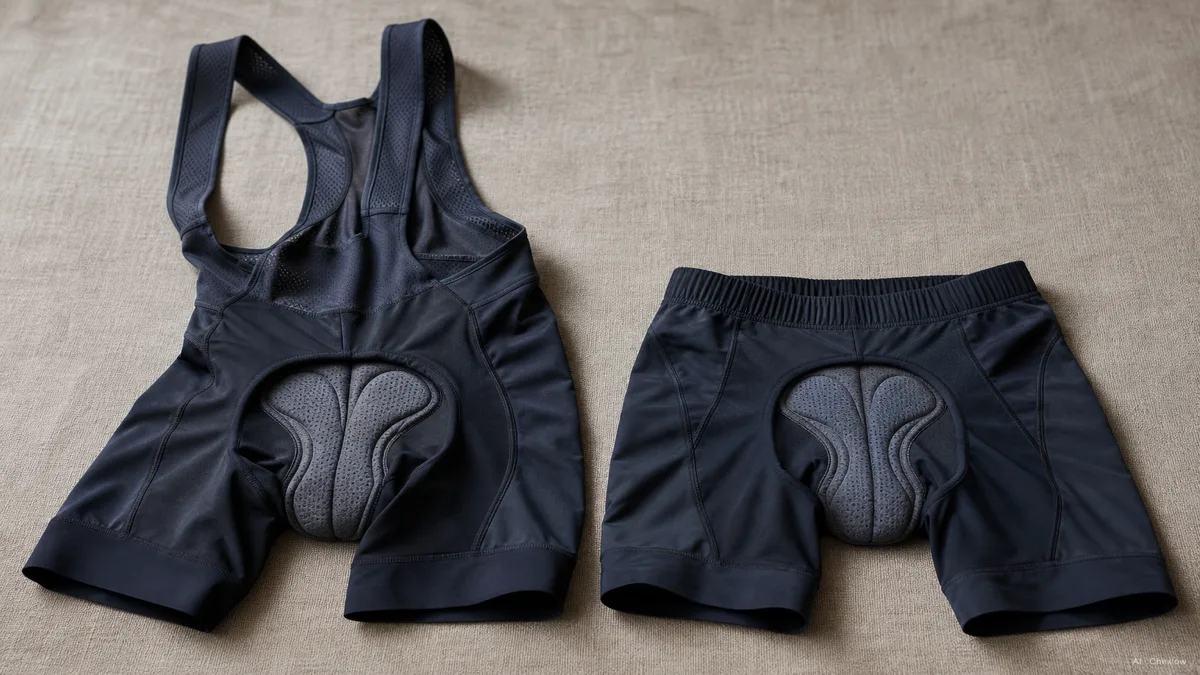
Check the pad and fit while leaning forward
The chamois is the padded insert inside the shorts. Both styles can have one, but pads differ in shape, thickness and material. A bib label does not tell you which pad you are getting. REI's clothing guide
Don't choose by thickness alone. Liv highlights seam placement, pad shape and moisture handling alongside personal preference. It also advises wearing padded shorts without underwear when riding. Follow the retailer's hygiene rules when trying them on. Liv's chamois guide
Start with the specific maker's size chart. Hincapie describes bib fit as snug without restricting movement. Hincapie's fit guide For waist shorts, check that the band neither rolls down nor limits breathing. Hincapie's buying guide Rapha similarly explains why excess fabric that gathers and rubs is undesirable. Rapha's clothing guide
Try these checks before choosing:
- Lean forward. Does the waistband press uncomfortably? Do the bib straps pull?
- Lift each knee. Does the pad stay close, or does fabric bunch?
- Compare another size or cut. Don't automatically size down between sizes. Hincapie's own buying guide instead advises sizing up when waist or hip measurements fall between sizes. Hincapie's try-on guidance
If you wear a sports bra, try the two garments together. Bib and bra straps can interfere with each other. Hincapie If the bra itself digs in or fails to support you, use the sports bra fit and support guide to assess that separately.
Check bathroom access before ruling bibs out
Waist shorts avoid having to free shoulder straps. With conventional bibs, lowering the shorts can mean removing upper layers first. Hincapie
A drop-tail is an alternative worth checking: the rear lowers while the straps stay on. PEARL iZUMi describes this function for its Women's Attack Bib Shorts, allowing bathroom breaks without removing layers. That is a feature of this design, not a promise about every bib. Manufacturer's description
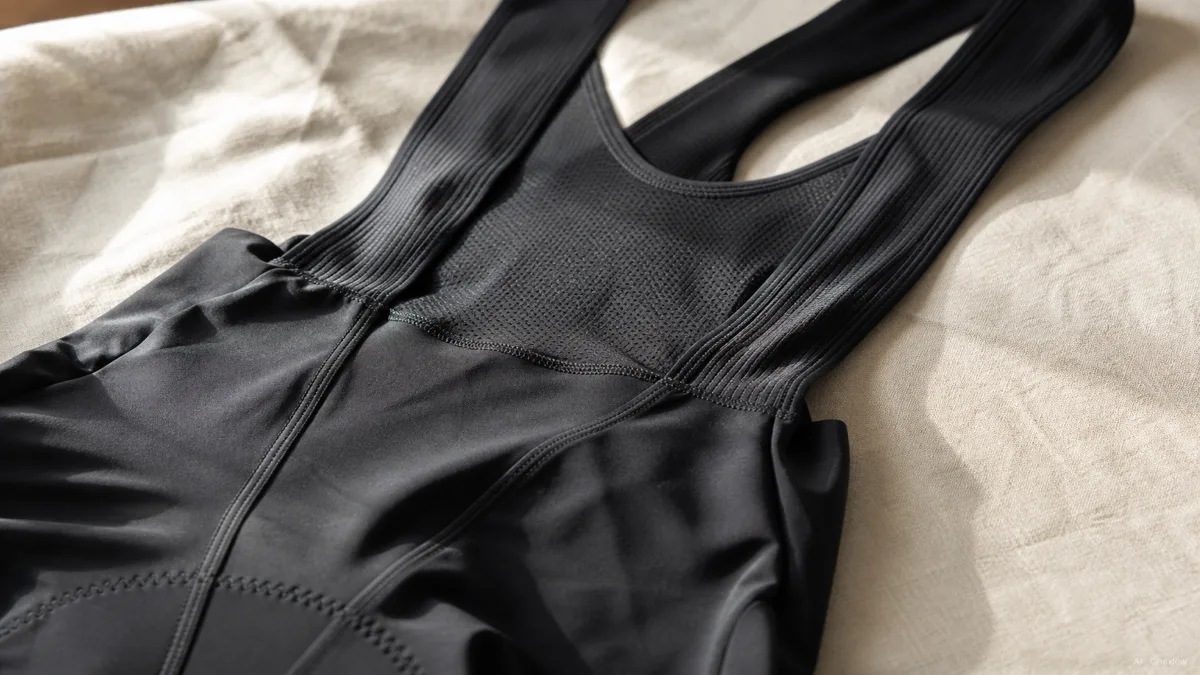
Ask for a demonstration or follow the exact model's instructions. Check whether you can lower and restore the shorts comfortably with your intended riding layers. If the movement is awkward for you, keep waist shorts on the shortlist.
Buy the pair that passes your checks
Compare actual candidates within your budget, rather than assuming a fixed price premium buys better comfort.
- Choose bibs when the pad and straps fit, you prefer the waist feel, and bathroom access is manageable.
- Choose waist shorts when the band stays comfortable in riding posture and easy changing is the priority.
- Keep looking if neither passes. Try another cut instead of accepting digging, rolling or bunching as the price of cycling clothing.
Before paying, confirm the exact pad specification, size guidance, bathroom design and return conditions. The useful upgrade is a feature that resolves your own fit or convenience problem; a longer planned ride alone does not settle the choice.
Wie dieser Guide entstand
Written by Housnap's AI editor using manufacturer guidance from Hincapie, Liv, Rapha and PEARL iZUMi, alongside REI and Cycling Weekly. The comparison turns those sources into first-purchase and try-on decisions; it is not a hands-on product test.