Crib vs. Bassinet, What to Buy First for Your Newborn
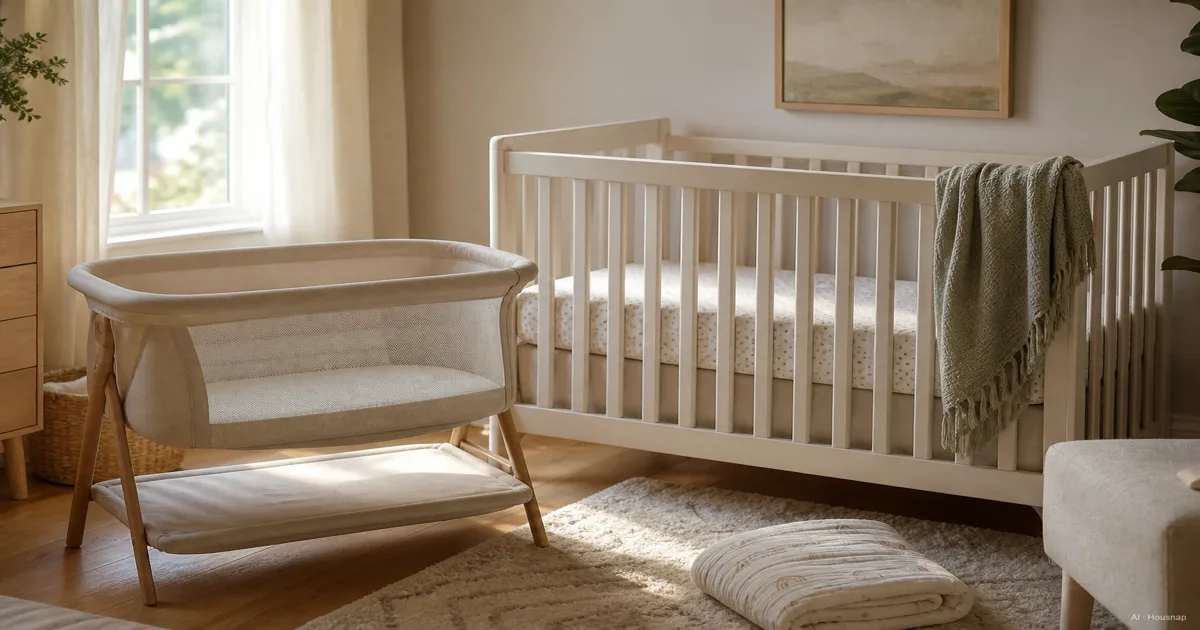
You start building a newborn registry and hit a fork almost immediately. Bassinet, or crib. It looks like a small decision. It touches your bedroom layout, your budget, and how you handle 2 a.m. feeds for months. Here is the short version before the long one. A bassinet is a small bed built to sit right next to yours, light enough to wheel or fold between rooms, and sized for only the earliest months. A crib is the bigger, more permanent piece, built to carry your child from their first night home through the toddler years. Every registry checklist says buy a crib, then the hospital sends you home with a bassinet recommendation, and it's easy to freeze wondering whether you need both, or whether skipping one puts your baby at risk. You don't need to guess. Both meet the same safe-sleep bar once you understand what that bar actually is. This guide walks through what a bassinet legally has to be, why the American Academy of Pediatrics doesn't play favorites between the two for room-sharing, the CPSC and ASTM numbers that decide when a baby outgrows a bassinet, and a realistic timeline for buying one, both, or going straight to a crib.
Aktuell bei einem Shop erhältlich
Diese Produkte sind derzeit jeweils nur bei einem Shop erhältlich. Der Preisvergleich öffnet sich mit weiteren Shops.
Crib vs. Bassinet, What's Actually Different
Every baby-gear list treats "sleep furniture" like it's one purchase. It isn't. A bassinet and a crib solve overlapping but genuinely different problems, and the difference is written into a federal safety rule, not just marketing.
A bassinet has a specific legal definition. Under 16 CFR 1218, the US rule that incorporates the ASTM F2194 voluntary standard, a bassinet is a small bed for a newborn with a sleep surface that stays within 10 degrees of horizontal, held up by legs, a stationary base, wheels, or a rocking or gliding base. That last detail matters, a bassinet is allowed to rock or glide gently while your baby is in it, something a crib is never built to do.
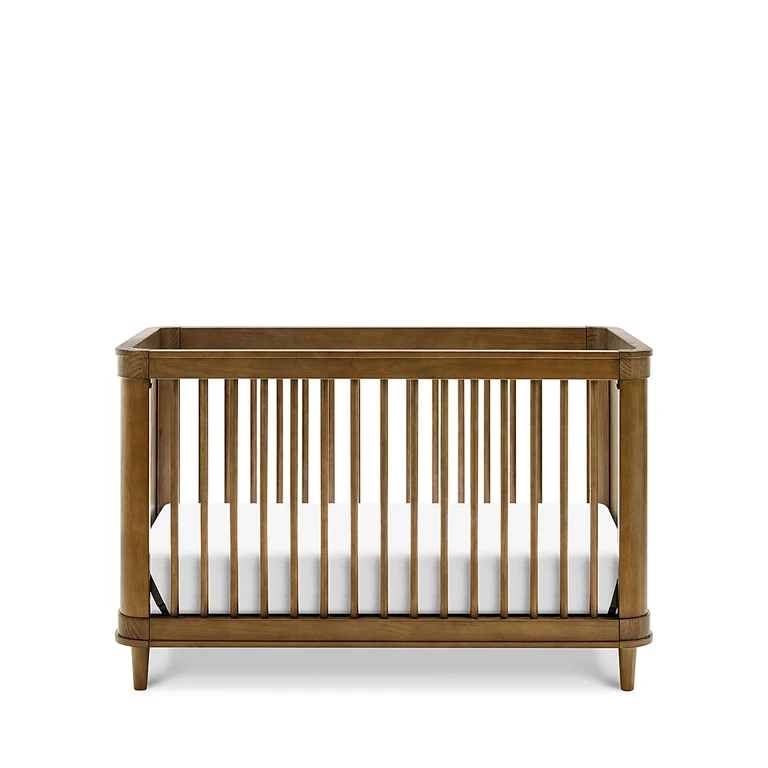
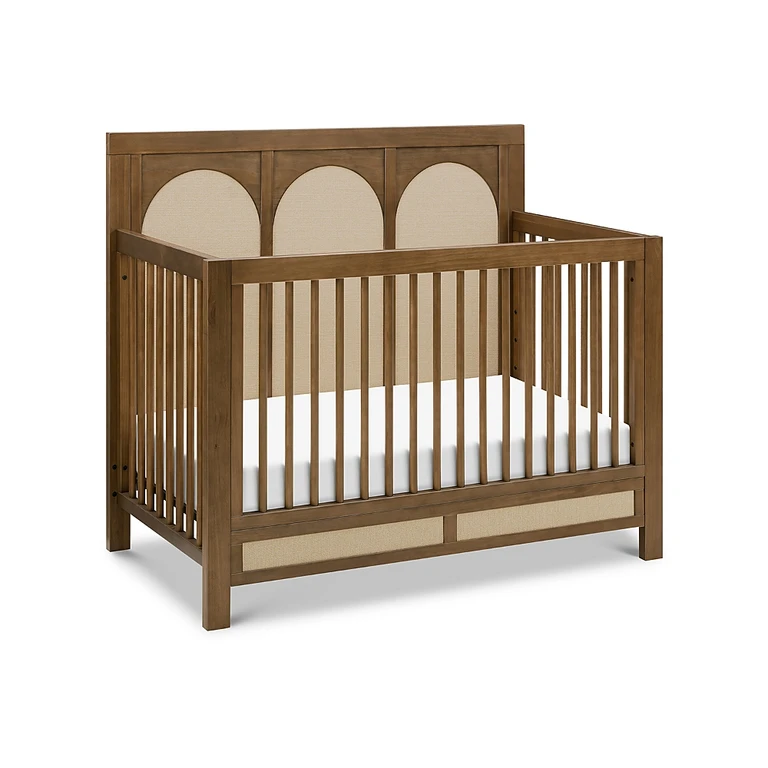
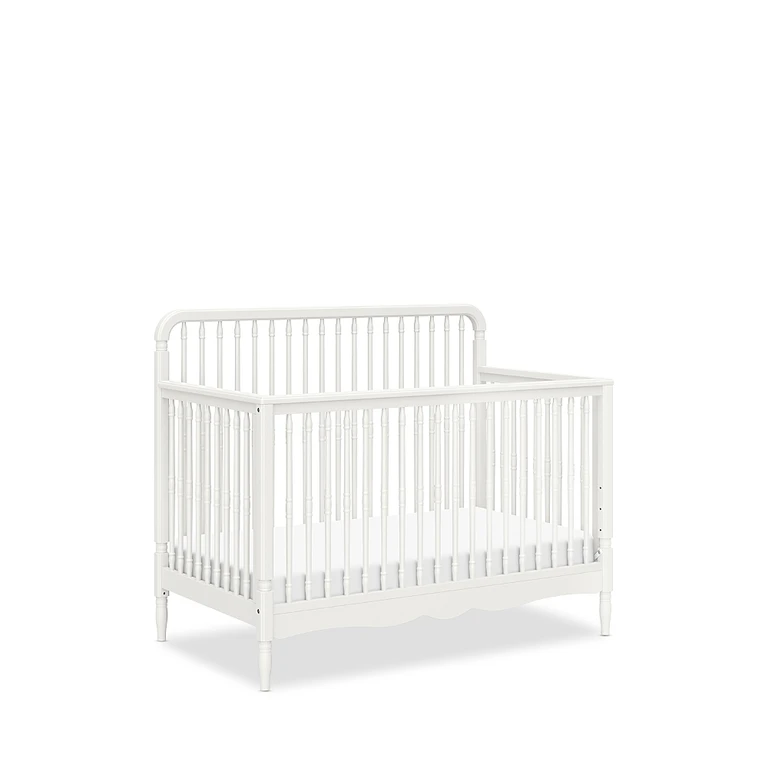
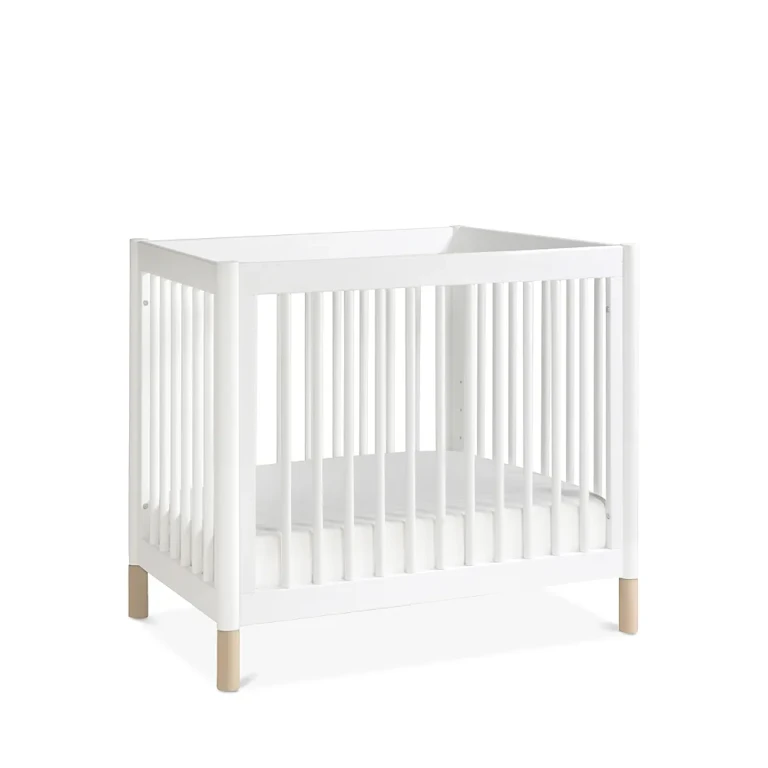
A crib is the bigger, more permanent piece of nursery furniture. It's designed to serve your child from the newborn stage through toddlerhood, roughly age 2 to 3, longer if it's a convertible or 3-in-1 model that later turns into a toddler bed (Newton Baby, Pottery Barn Kids). One crib purchase is meant to cover the whole run, not just the newborn stretch.
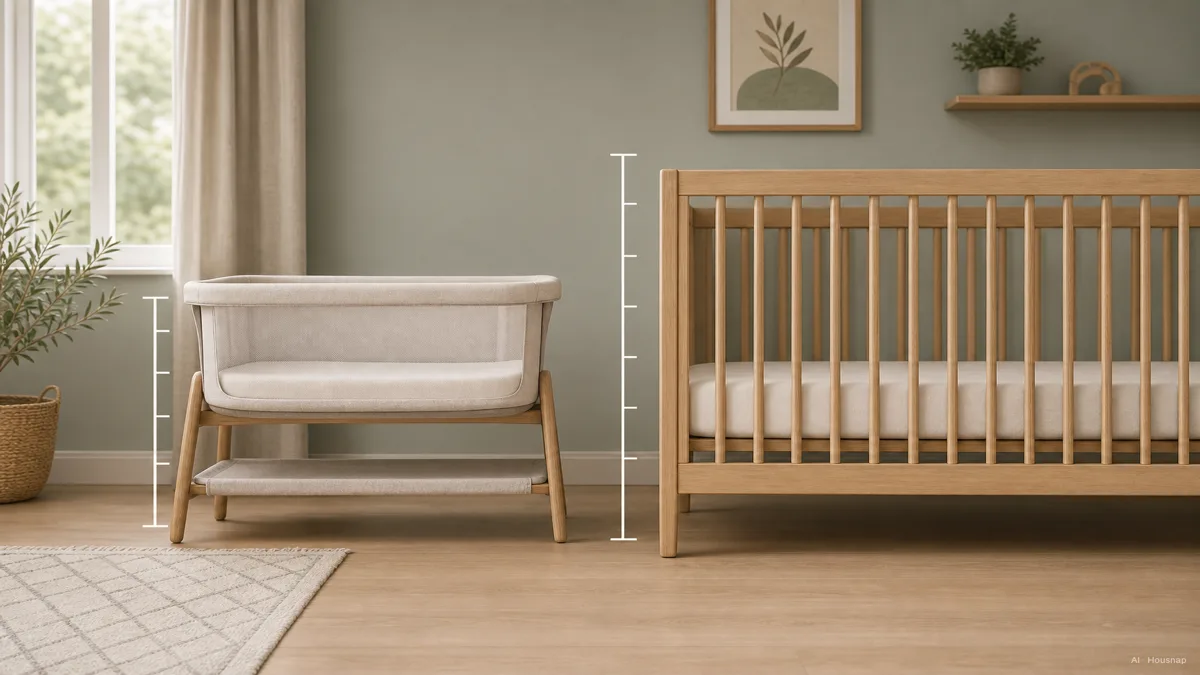
Size is the visible difference, but the real one is intent. A bassinet is built to sit beside your bed for a few months. A crib is built to sit in the nursery for years.
Which One Meets the AAP's Safe-Sleep Room-Sharing Rule
Here's the part that trips up a lot of first-time parents. The American Academy of Pediatrics doesn't actually pick a side between bassinet and crib.
The AAP recommends room-sharing, keeping your baby in your bedroom on a separate, firm sleep surface, never in your bed, for at least the first 6 months, ideally the first year (HealthyChildren.org). Done consistently, room-sharing is linked to as much as a 50% reduction in SIDS risk.
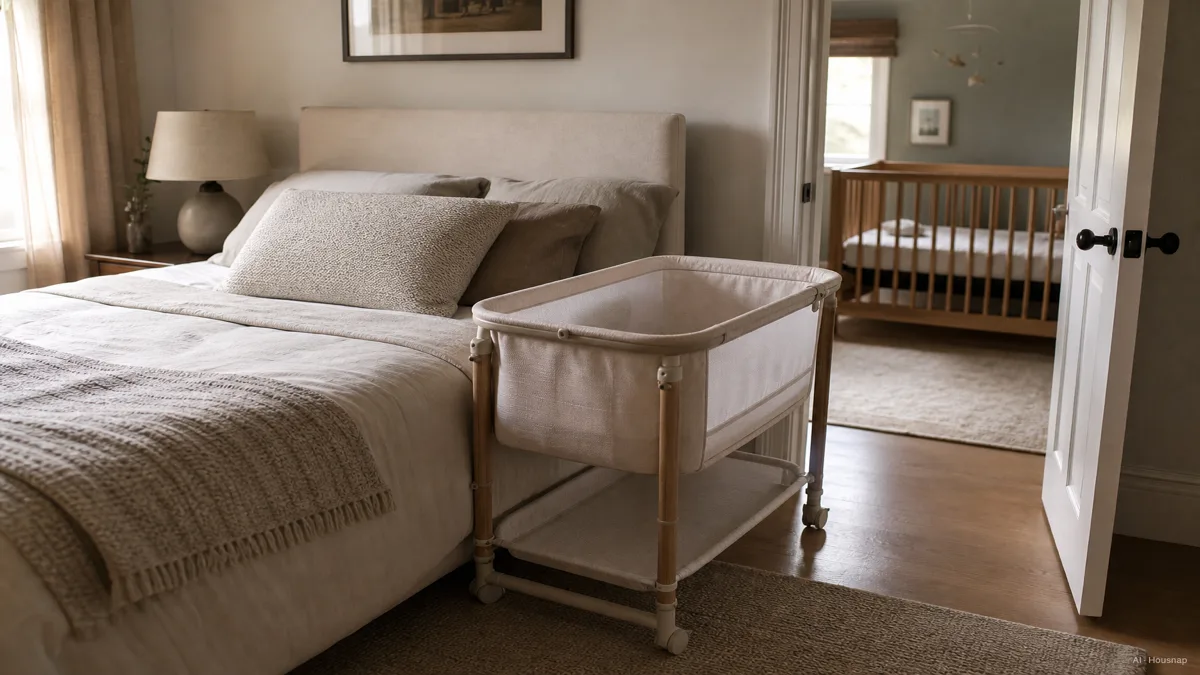
Notice what that recommendation actually asks for. A firm, flat surface, free of loose bedding, pillows, and toys, close enough for you to hear and reach your baby overnight. It does not say "buy a bassinet." A crib parked next to your bed clears the same bar as a bassinet on wheels, as long as the mattress is firm and the sheet is the only thing on it.
Where the two genuinely diverge is practical footprint, not safety. A full-size crib next to a queen bed eats most of a smaller primary bedroom. A bassinet's whole appeal is that it doesn't, which is why plenty of parents choose one for exactly the room-sharing window the AAP recommends, then move to the crib already set up in the nursery once that window ends.
Safety Standards and Weight Limits You Need to Know
A crib doesn't really have an early size ceiling, it's built full-size from the start. A bassinet does, and this is the number that actually decides how long you get to use one.
There is no single federal maximum weight limit for bassinets. Manufacturers set their own, and most land somewhere between 15 and 20 pounds (CPSC, Consumer Reports). Whichever number is printed on your bassinet, your baby moves to a crib the moment they hit it, or the moment they start rolling over or pushing up on hands and knees, whichever comes first. In practice that's usually somewhere between 3 and 6 months, well before most babies are anywhere near a toddler bed.
The construction standard behind that weight number got stricter recently. CPSC's revised ASTM F2194-25 bassinet standard, updated for 2025 and 2026, requires side walls to hold at least 7.5 inches of height under a simulated 23-pound vertical push and 5-pound horizontal push, or a minimum 16-inch top rail as an alternative, and it caps how far the mattress or support surface can sink under weight at 1.5 inches (Intertek). In plain terms, regulators tightened exactly the failure modes that let a mobile baby tip a wall down or sink into a mattress far enough to roll.
None of this is a reason to distrust bassinets. It's a reason to treat the weight and mobility limits as fixed, the same way you'd treat a car seat's weight rating, not as a soft suggestion you can push past because your baby still looks small.
Do You Need Both? A Realistic Buying Timeline for the First Year
The honest answer is that plenty of families use both, in sequence, and plenty of families skip the bassinet entirely, and both choices are fine.
The most common pattern, a bassinet for roughly the first 4 to 6 months, set up bedside for the room-sharing window, then a switch to the crib already waiting in the nursery once the weight limit arrives or your baby starts rolling, whichever comes first (Halo Sleep, Lullaby Earth). That sequence buys you the easiest possible overnight feeds during the hardest stretch, without paying for a bassinet you'll use past the point it fits.
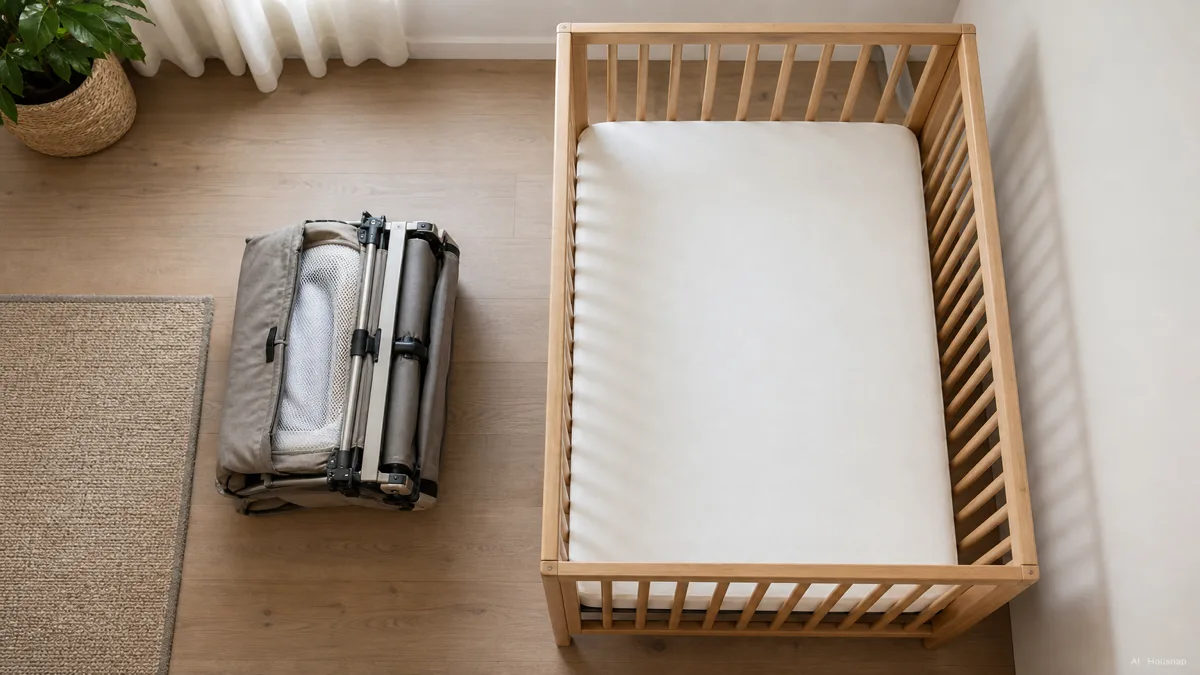
The other valid path is buying the crib on day one and skipping the bassinet altogether. If your bedroom genuinely can't fit a crib for six months, or you'd rather not buy a second piece of furniture you'll use for less than half a year, a crib from the start meets the same room-sharing rule and never needs replacing (Lullaby Earth). Some parents worry a crib "swallows" a newborn, it's mostly a visual adjustment, not a safety one.
What doesn't hold up as a plan is stretching a bassinet past its weight limit or past the point your baby starts rolling, hoping to delay a crib purchase. That's the one sequence that trades a real safety margin for a few extra weeks of convenience.
Choosing by Space, Budget, and Lifestyle, Which to Buy First
Start from your actual bedroom and your actual budget, not from what's on someone else's registry.
If your primary bedroom is small, or you're doing frequent overnight feeds and want to reach the baby without walking anywhere, the bedside convenience is real and a bassinet earns its short lifespan. If your bedroom already comfortably fits a crib, or you'd rather make one purchase and be done, going straight to a crib is not a compromise, it's the simpler plan.
Budget cuts both ways here. A bassinet is, by definition, a second furniture purchase on top of the crib you'll eventually need, so buying one only makes sense if the bedside convenience is worth that added cost to you. Consumer Reports lab-tests both categories separately for 2026, more than 40 cribs and 27 bassinets, rating safety, ease of assembly, and, for bassinets specifically, soothing features like built-in motion and sound. Names like Halo, Newton Baby, Chicco, and Nuna show up repeatedly across current buying guides in both categories, useful as a starting map rather than a fixed shortlist.
Whichever you pick first, treat the outgrown signs as fixed, not the calendar. The printed weight limit, a baby who rolls over, or a baby who pushes up on hands and knees all mean the same thing, move to the crib now. From here, the useful next step is comparing current crib and bassinet listings side by side across a few stores, since freight and assembly costs can shift the real price more than the sticker suggests.
Sources
- Bassinets and Cradles Business Guidance — CPSC.gov; the 16 CFR 1218 federal bassinet definition and construction requirements
- Bassinets and Cradles FAQ — CPSC.gov; weight limits are manufacturer-set, not a single federal maximum
- US CPSC Revised the Safety Standard for Bassinets and Cradles — Intertek; the revised ASTM F2194-25 side-wall height and mattress deflection requirements
- Bassinet Buying Guide, Types, Safety & Expert Tips — Consumer Reports; typical 15-to-20-pound weight limits and outgrown signs
- Best Bassinets of 2026, Lab-Tested and Reviewed — Consumer Reports; 2026 lab-tested bassinet ratings across 27-plus models
- Best Cribs of 2026, Lab-Tested and Reviewed — Consumer Reports; 2026 lab-tested crib ratings across 40-plus models
- How to Keep Your Sleeping Baby Safe, AAP Policy Explained — HealthyChildren.org, American Academy of Pediatrics; the room-sharing recommendation and SIDS-risk reduction
- Safe Sleep — American Academy of Pediatrics; the official AAP safe-sleep policy hub underlying the HealthyChildren.org parent-facing guidance
- Bassinet vs. Crib, Everything You Need to Know — Chicco USA; practical footprint and portability comparison
- Bassinet vs. Crib, What's the Difference and Which One Is Best for You — Newton Baby; crib longevity and convertible-model framing
- Bassinet vs Crib, Which is Better for Your Newborn? — Halo Sleep; the bassinet-then-crib sequencing strategy
- Bassinet or Straight to Crib? How to Decide What's Best for Baby — Lullaby Earth; the case for skipping the bassinet and buying a crib from day one