Aktuell bei einem Shop erhältlich
Diese Produkte sind derzeit jeweils nur bei einem Shop erhältlich. Der Preisvergleich öffnet sich mit weiteren Shops.
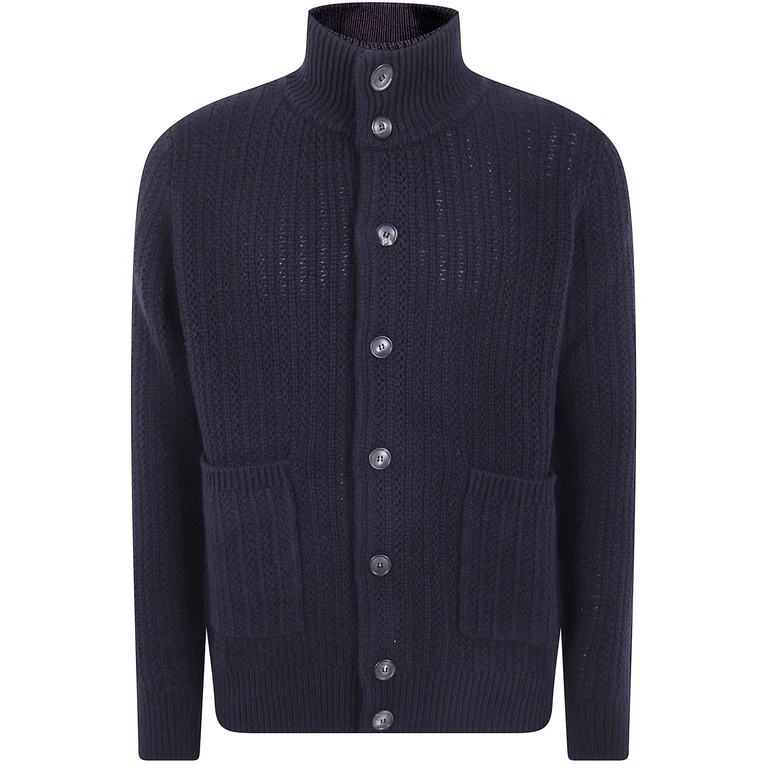
Filippo De Laurentiis
Sweater Turtle Neck Cardigan Sweater

Huxbaby
Boys' Parisian Painter Pup Knit Pullover Sweater - Baby, Little Kid
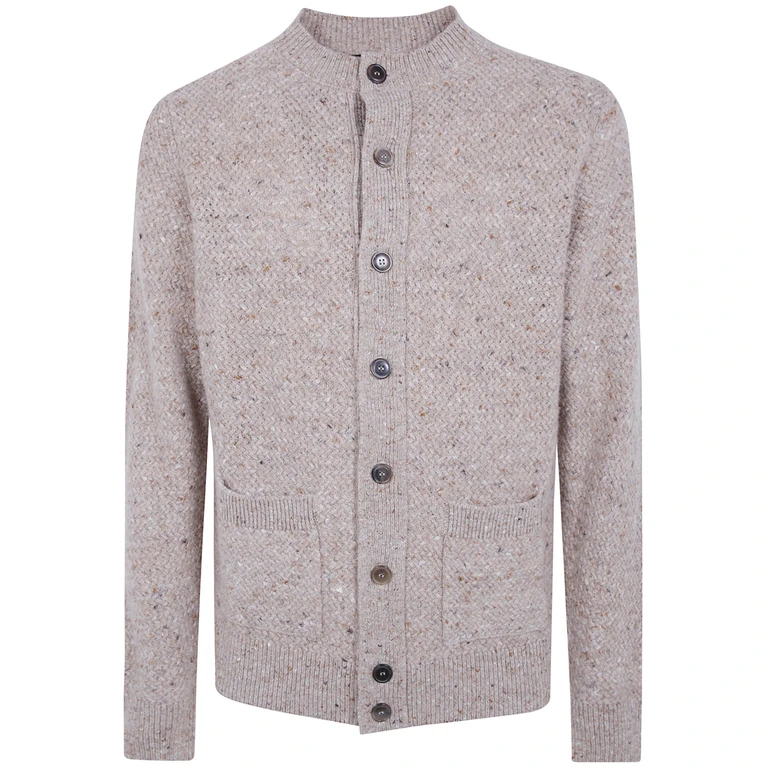
Filippo De Laurentiis
Round Neck Cardigan Sweater

Scotch & Soda
Boys' Chenille Pullover Sweater - Little Kid, Big Kid
Choose the job before the shape
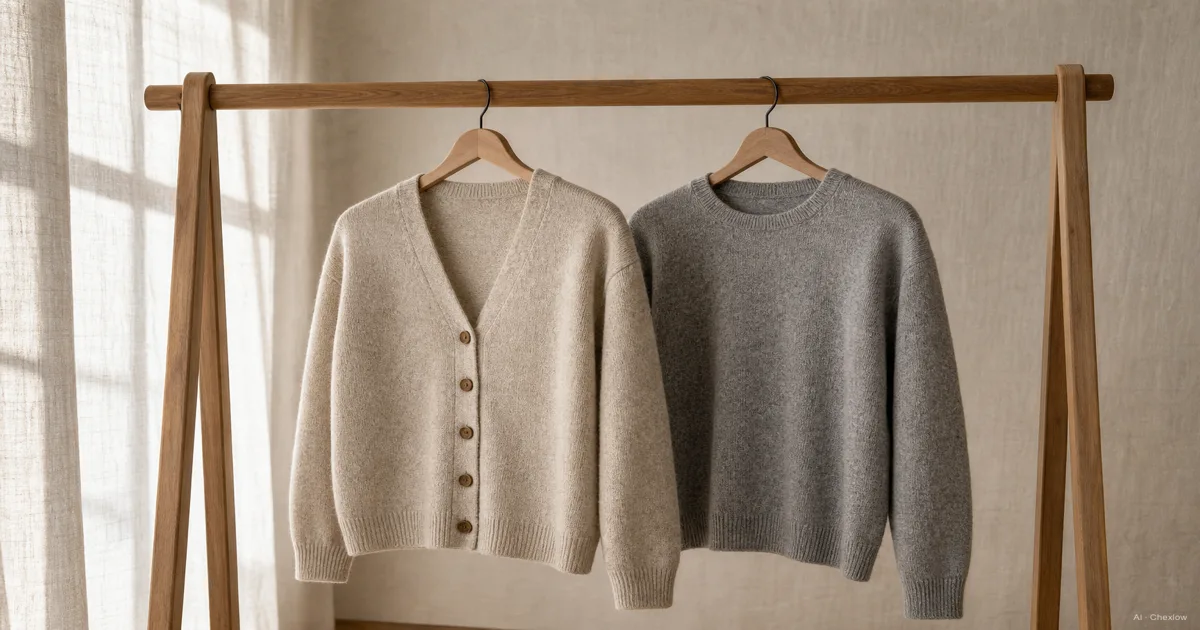
Think of the last day you wanted a sweater. Did you need something to take off at your desk, or a top to wear until you got home? That is a more useful starting point than deciding which style looks more versatile on a hanger.
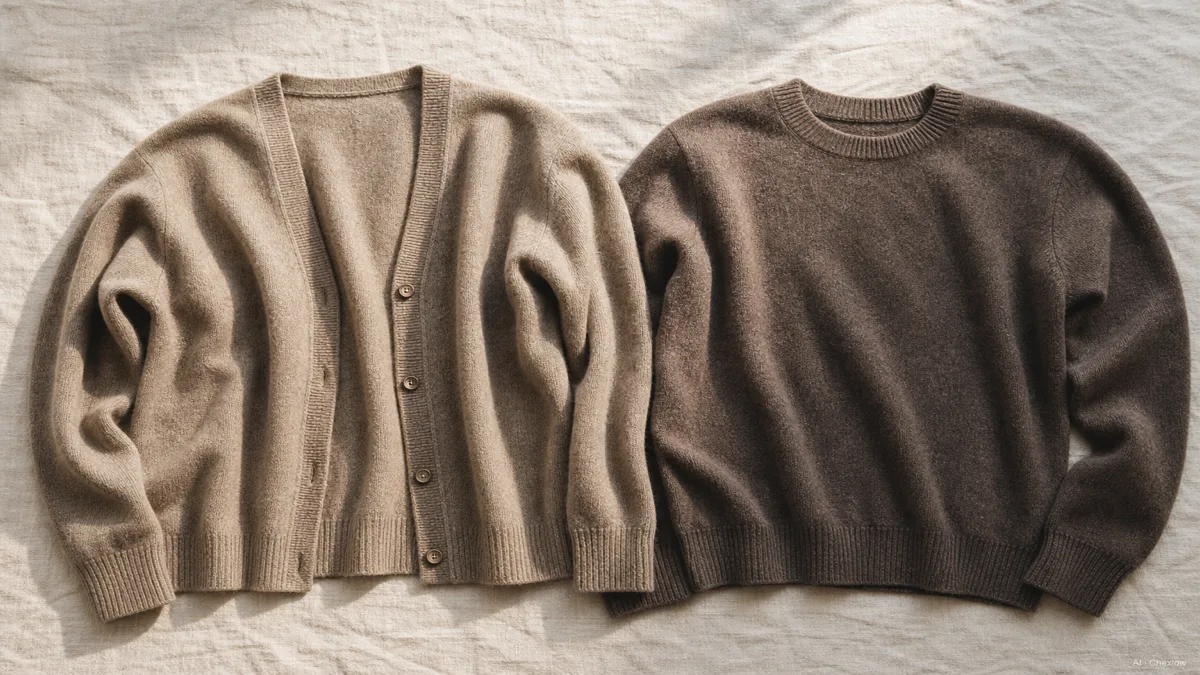
A cardigan's defining feature is its front opening. The illustration makes that difference visible; it does not compare insulation.
- Choose a cardigan for frequent changes of layer, or when you want your shirt or T-shirt visible. If you also want to wear it closed, shortlist a fastening style rather than one designed only to hang open.
- Choose a pullover when you prefer an uninterrupted front and do not mind pulling it over your head. Try a crew neck first if you have no strong neckline preference.
- Buying mainly for warmth? Keep both options in contention. Compare the actual garments, including thickness, neck coverage and how they fit under your coat, before picking a winner.
These are starting choices for your routine, not a ranking of quality. Neither needs to be your only way of wearing knitwear.
Try it with the clothes it has to fit
Bring the shirt you expect to wear underneath, and try your coat over the knit. Both shapes can work between those layers. Reach forward, sit down and bend your arms; reject a combination that pulls across the back or bunches uncomfortably inside the sleeves.
For a cardigan, fasten it as you intend to wear it. Look for gaps between buttons and pulling across the chest. For a pullover, check that the neck passes over your head comfortably and that the hem sits where you want it when seated. An open cardigan can disguise a fit you dislike once closed.
Online, compare garment measurements with a knit you already like, using the seller's measuring method. Even John Smedley's named fits have different measurements, so a familiar size letter is not enough.
Gauge counts knitting-machine needles per inch, as the same guide explains. It is not a warmth score: use it as a clue to the knit's scale, then check close-up photographs and the actual thickness. If a higher collar is the remaining question, compare turtlenecks and mock necks before settling on your pullover.
Pick a fabric you want to wear and look after
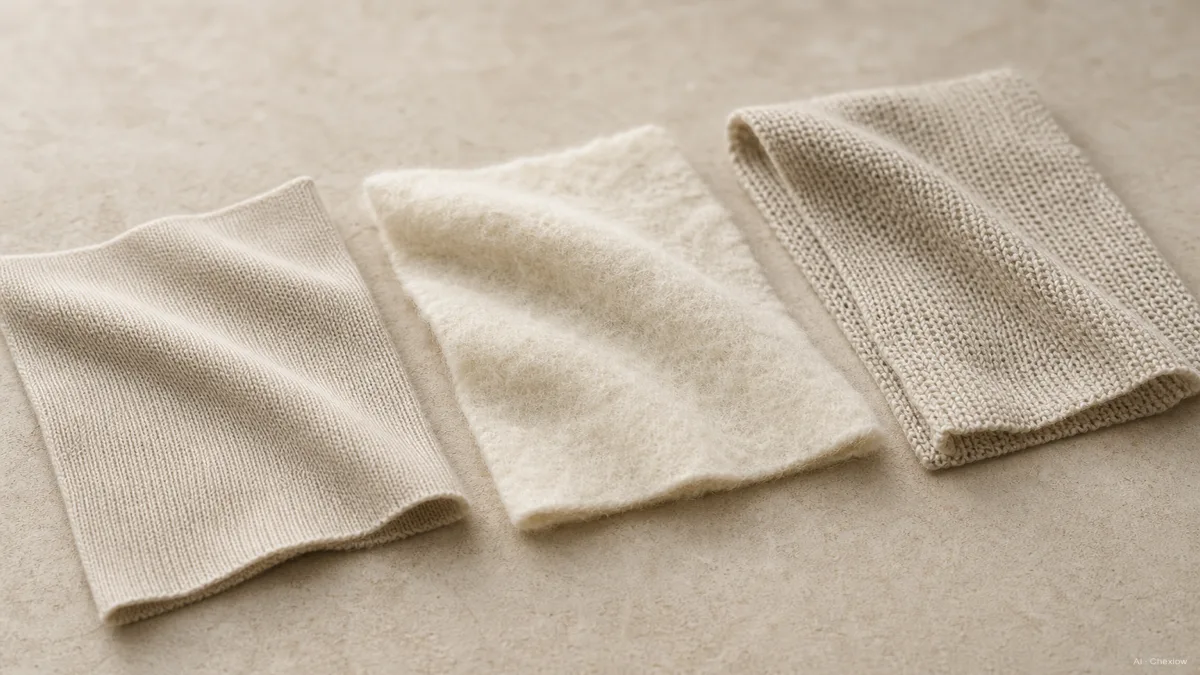
The swatches illustrate surface differences, not a test of softness or fibre identity. Read the composition label and feel the garment where it will touch your neck or wrists.
- Merino. A useful candidate when you want fine wool. Its fine, flexible fibres help explain its softness (Woolmark); still try the particular knit rather than assuming the name guarantees comfort.
- Cashmere. Consider it if the feel is what draws you to the garment. CCMI links longer fibres with less pilling, but that is not a promise of a pill-free sweater (purchasing guide).
- Cotton. Worth trying if you prefer its feel to animal fibres. Ordinary cotton readily absorbs moisture; specialist moisture-management treatments are a separate feature (CottonWorks). Do not assume any cotton sweater will dry quickly after a sweaty commute.
Check washing and drying instructions before paying. For wool, Woolmark advises flat drying unless tumble drying is specified. Decide whether you have room and patience for that, whichever shape you choose.
Still deciding between animal fibres? The merino, lambswool and cashmere comparison is the next question to tackle.
Inspect the finalist, then make the purchase
Use this as a rejection checklist, not a way to predict a sweater's lifespan.
- Construction. Inspect seams, cuffs and the neckline for loose stitches or damage. On a cardigan, also work every fastening and check the front bands, the strips carrying the buttons or zip.
- Labels. Read the full composition and care instructions. Ask the seller for missing details rather than treating a soft photograph as evidence.
- Ply. Do not pay more just for a higher ply count. Ply means strands twisted together; CCMI notes that extra plies can add weight without adding quality (CCMI).
- Certification. If present, a Woolmark certification adds evidence of fibre-content, durability and laundry testing (Woolmark). It does not replace your fit check or the care label.
Choose the cardigan if opening and removing it solves your everyday problem and its closed fit also works when needed. Choose the pullover if its neckline, sleeves and thickness work with your usual clothes. If neither passes, change the cut or fabric before abandoning the shape you actually wanted.
Wie dieser Guide entstand
Written by Housnap's AI editor using Dictionary.com, John Smedley's fit guidance, Woolmark, CCMI and CottonWorks. The sources inform the construction, fibre and care explanations; the try-on sequence and purchase criteria are editorial guidance, not results from product testing.