Infant Car Seat vs Convertible, How to Choose Your Baby's First Car Seat
Standing in the car seat aisle with a registry list in hand, it's easy to freeze the moment you realize infant seats and convertible seats aren't just two price points, they're two completely different tools. An infant seat clicks in and out of its base so you can carry a sleeping newborn without waking them, while a convertible seat installs once and rides rear-facing for years longer, which crash-test data says actually matters for a one-year-old's head. This guide walks through what each seat is actually built for, why the age-1 mark is the real fork in the road, and how to tell from the seat itself, not the calendar, when it's time to switch.
Aktuelle Produkte zum Vergleichen
Diese Produkte stammen aus den Housnap-Suchergebnissen zu diesem Thema.
Infant Seat vs Convertible, What You're Actually Choosing Between
Every registry checklist tells you to buy "a car seat," like there's one kind. There isn't, and figuring out which kind before the baby arrives is one of those decisions that feels bigger than it needs to.
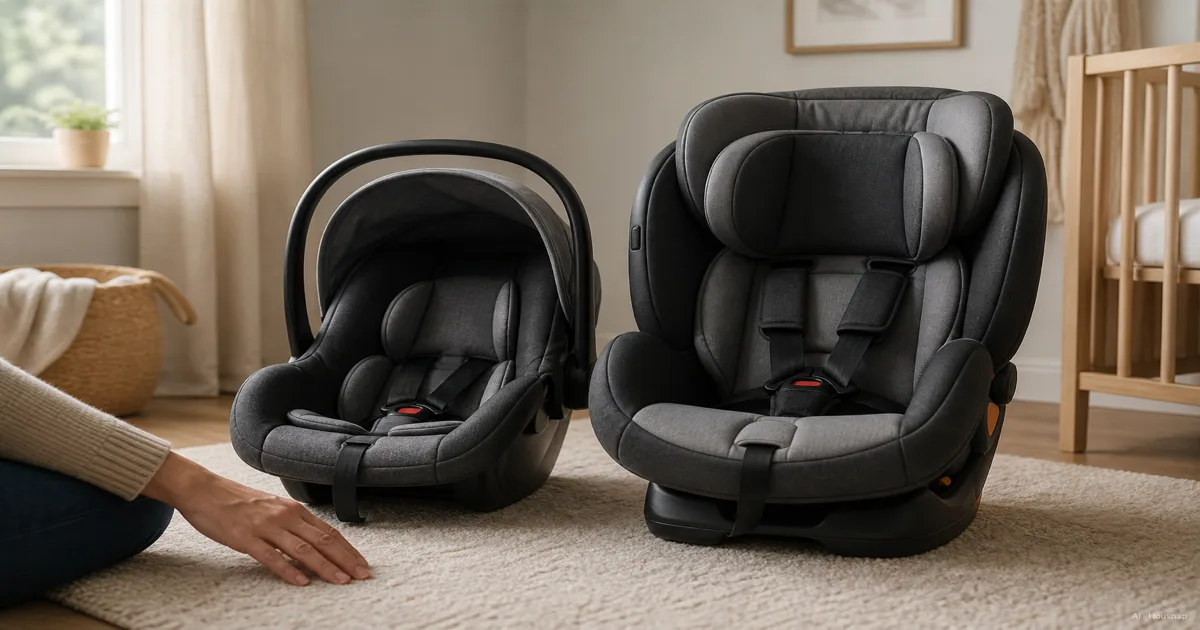
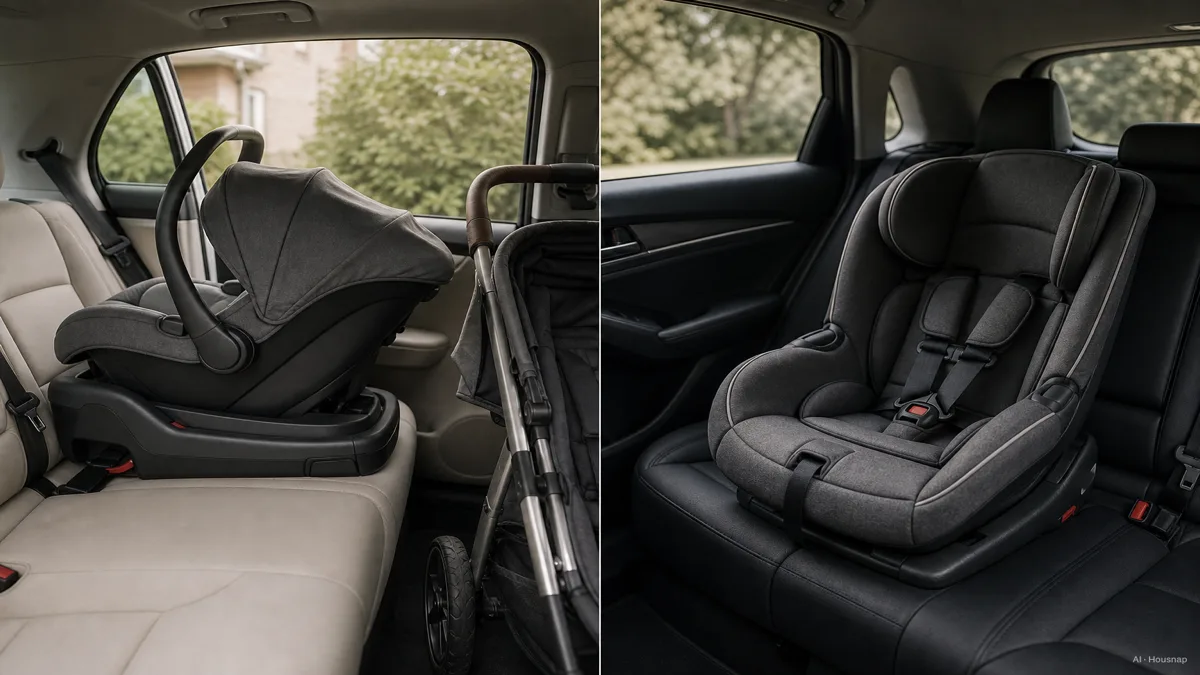
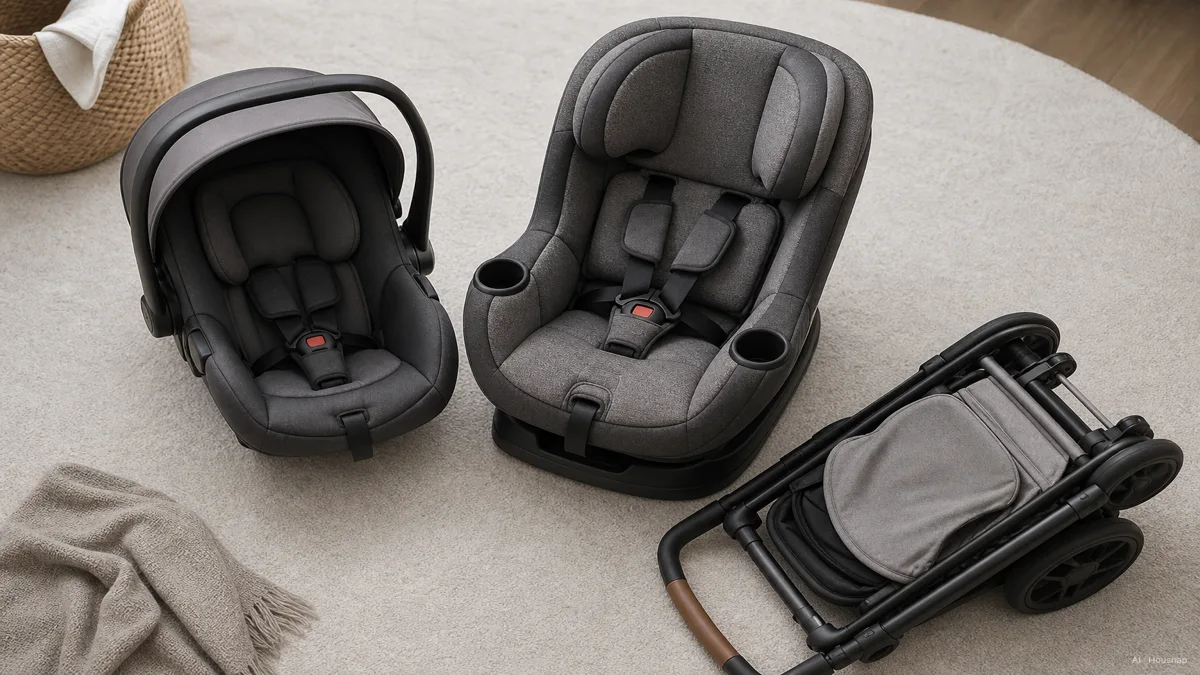
Break it down and there are really two families of seat. An infant seat is rear-facing only, built for newborns, and usually rated from birth up to somewhere between 22 and 35 pounds and 30 to 32 inches tall, depending on the model (Chicco). It comes with a base that stays bolted into the car, so the seat itself clicks in and out like a puzzle piece, and you can carry a sleeping baby from the car to the store without ever waking them.
A convertible seat starts out rear-facing too, but it's built to convert to forward-facing later as your child grows. Some models keep kids rear-facing up to 40 or even 50 pounds, or as late as age 3 to 5 (NHTSA). What it doesn't do is travel. A convertible installs directly into the vehicle and stays there, so the baby comes out at every single stop.
That's really the whole trade-off in one paragraph. Infant seats sell you portability when you need it most. Convertible seats sell you years of rear-facing runway in one seat, one install, one purchase.
Rear-Facing Limits and Why Age 1 Is the Real Decision Point
Here's the rule that matters more than any spec sheet: NHTSA recommends every child under age 1 ride rear-facing, no exceptions, and stay rear-facing until they hit the top height or weight limit of whatever seat they're in.
That single rule is why the seat type you pick ends up mattering so much around the one-year mark. Most infant seats top out rear-facing somewhere in that 22-to-35-pound range, and plenty of babies get there before their first birthday. A convertible seat, by contrast, is built with a much bigger tank of rear-facing capacity, some models good for 40 to 50 pounds or a child up to age 3 to 5.
The American Academy of Pediatrics backs the same logic: keep kids rear-facing until they outgrow the rear-facing limit of whichever convertible or all-in-one seat they're in, not just until some default age. So the real question isn't "when do babies switch seats." It's "which seat gives your child the longest possible rear-facing stretch without you having to do anything." That's the convertible's whole argument.
Safety Data, What Crash Testing Actually Shows
Numbers like "22 to 35 pounds" and "40 to 50 pounds" can start to blur into a wall of specs, so here's the one number that actually changes how you should think about the switch.
Consumer Reports crash-tested a range of infant seats and rear-facing convertibles using a 12-month-old test dummy. In nearly 75 percent of the infant seats tested, the dummy's head made contact with the simulated front seatback. In the rear-facing convertible seats, that head contact almost never happened.
That's not a small gap. It's the reason Consumer Reports explicitly recommends moving a child into a rear-facing convertible seat by their first birthday, regardless of whether the infant seat's weight limit has technically been reached yet. The infant seat isn't unsafe by any normal standard, it just wasn't built with a one-year-old's proportions in mind the way a convertible seat is.
How to Know Your Baby Has Outgrown the Infant Seat
Most babies age out of an infant-only seat somewhere between 1 and 2 years old, but the calendar isn't the real test. The seat itself tells you, if you know what to check (Bambi Baby).
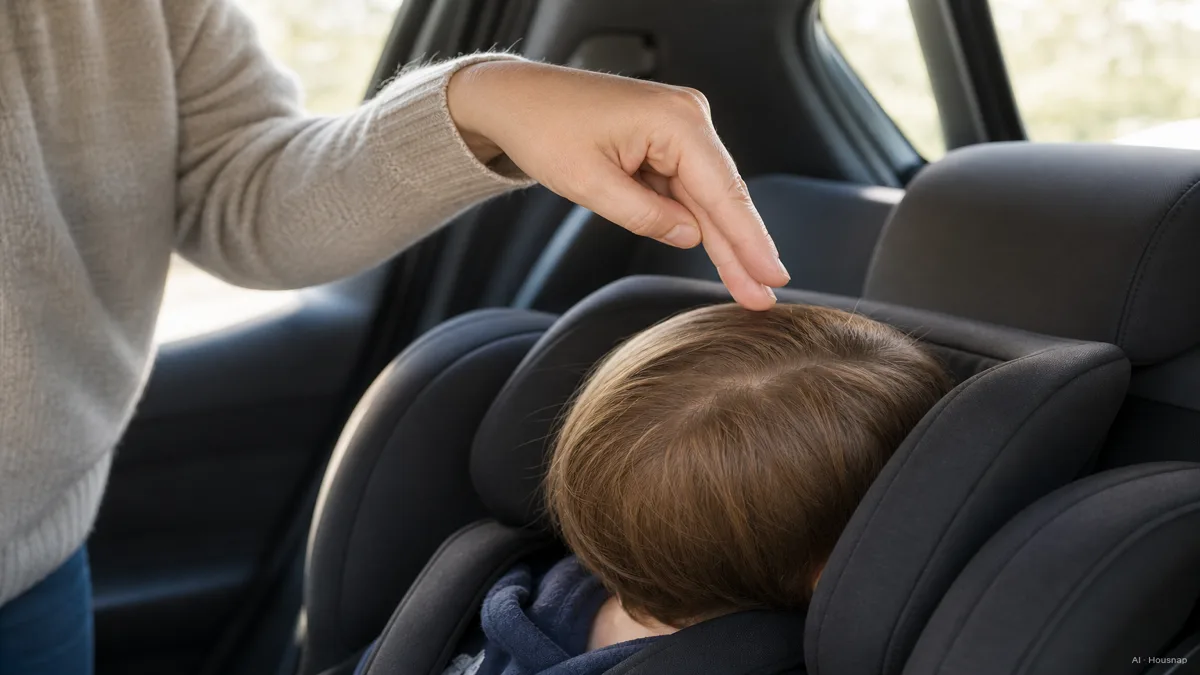
Look for three things. Less than an inch of hard shell above the top of your baby's head. Harness slots that sit above shoulder level instead of at or below it. And a buckle that only closes if you press down and compress the padding to get the straps to reach.
Any one of those is your answer. You don't need all three, and you don't need to wait for a birthday. If the seat is telling you it's done, believe it before the weight limit sticker does.
Choosing for Your Family's Life, City Errands vs One-Seat Simplicity
Put the specs aside for a second and think about your actual week.
If you're constantly moving a sleeping baby between a car and a stroller, splitting drop-offs between two cars, or juggling grandparents and caregivers who each need to buckle the baby in fast, the infant seat's click-in-click-out base is genuinely the better tool for that stretch of life. Buying a second base for a second car is a small cost next to what it saves you in daily friction.
If your priority is buying once and being done, or you'd rather lean straight into the longer rear-facing window the crash-test data supports, starting with a convertible seat from day one skips the switch entirely. It's bulkier for a newborn and you'll always be lifting the baby out at the curb, but you're not buying twice, and you're not racing a weight limit that might arrive before the first birthday does.
Budget matters here too. The Chicco KeyFit is a widely recommended infant seat, priced under $200 in the US, and it carries Consumer Reports' highest crash-protection rating in its category, so going affordable doesn't mean going unsafe. On the convertible side, Consumer Reports' top-rated picks for 2026 include the Nuna Revv, Chicco Fit360, and Britax Poplar, each evaluated on crash performance, ease of use, and how well it actually fits in a back seat.
Whichever you start with, the plan doesn't really change: watch the fit signs, not just the calendar, and don't let the infant seat's convenience talk you past the point where a convertible seat is doing a better job protecting your child's head. From here, it's worth comparing current listings across a few stores side by side, since the exact same model can carry a meaningfully different price tag depending on where it's sold.
Sources
- Why You Should Buy a Convertible Car Seat Sooner Rather Than Later — Consumer Reports; the 12-month dummy crash-test comparison and the age-1 switch recommendation
- Car Seat Recommendations for Children — NHTSA; rear-facing weight and height ranges by seat type
- How to Install a Rear-Facing Only Infant Car Seat — NHTSA; infant seat installation and base use
- Infant vs Convertible Car Seat, How to Choose — Chicco; portability, base systems, and the case for each seat type
- Best Convertible Car Seats of 2026, Lab-Tested and Reviewed — Consumer Reports; top-rated convertible seats and evaluation criteria
- Best Infant Car Seats of 2026, Lab-Tested and Reviewed — Consumer Reports; top-rated infant seats including budget picks
- When to Switch from an Infant Car Seat to a Convertible — Bambi Baby; fit-check signs that a baby has outgrown an infant seat
- Car Seat and Booster Seat Safety, Ratings, Guidelines — NHTSA; the under-1 always-rear-facing rule
Wie dieser Guide entstand
This piece started from the confusion new parents hit almost immediately: an infant seat and a convertible seat look like they solve the same problem, but they don't, and the wrong first pick either sags on portability or leaves a one-year-old with less head protection than the safer option. The editorial spine, an infant seat sells portability while a convertible seat sells years of rear-facing runway in one install, is anchored on Chicco's own infant-versus-convertible comparison and NHTSA's official car seat recommendations. The age-1 crash-test finding, comparing head-contact rates between infant seats and rear-facing convertibles, came from Consumer Reports, and the fit-check signs for outgrowing an infant seat were drawn from Bambi Baby. Consumer Reports' top-rated infant and convertible picks round out the buying guidance. Seat selection maps to Housnap's baby-kids category, where infant and convertible car seats from brands like Chicco, Nuna, and Britax appear across stores.