Microwave First Buy: Solo vs. Convection, Wattage, and What Actually Matters
A microwave oven is one of the most genuinely misunderstood appliances in the kitchen. Most people understand that it makes things hot quickly, and most people have also had the experience of a dish that is scalding hot on the outside and still frozen in the center, or a piece of bread reheated into a rubbery, chewy texture that is not quite right. These outcomes are not random. They are the predictable result of how microwave energy interacts with different types of food — and understanding that physics is the single most useful thing you can know before choosing a microwave, because it tells you which features are worth paying for and which are not. The type question — solo, grill, or convection combo — is the most important decision in the category. Everything else, wattage included, is secondary.
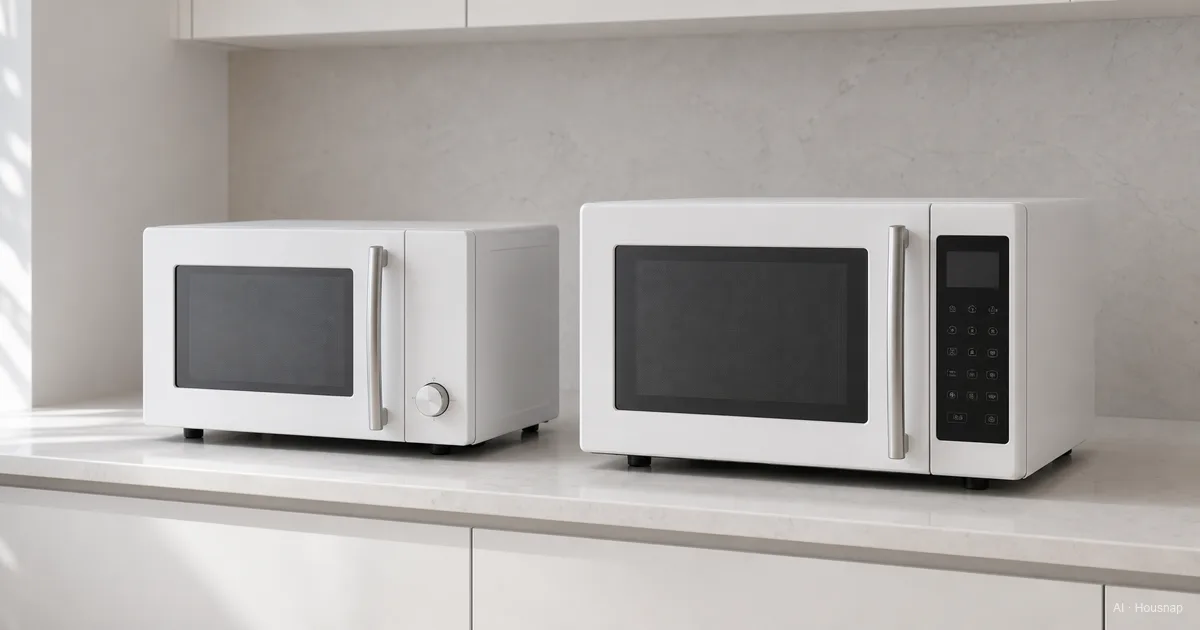
Disponíveis agora em uma única loja
No momento, cada um destes produtos está disponível em apenas uma loja. A comparação de preços abre com mais lojas.
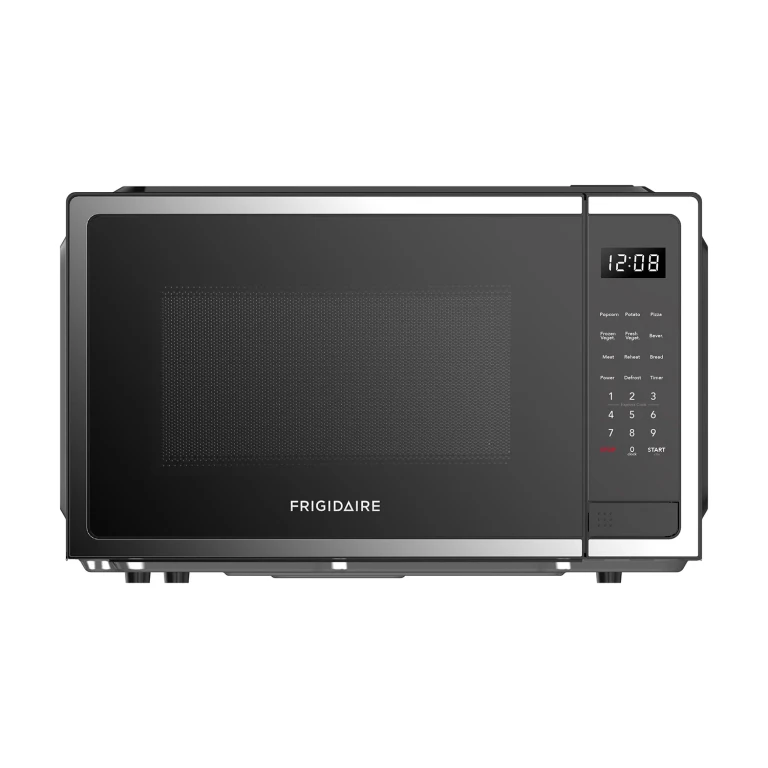
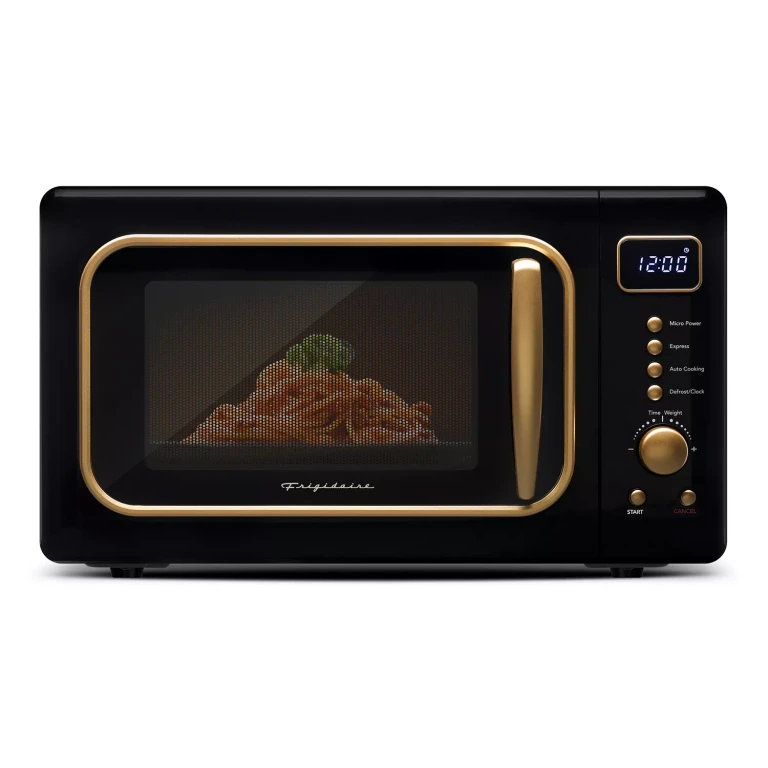
How microwave cooking actually works: dielectric heating from the inside
A microwave oven works by generating microwave radiation — electromagnetic waves at approximately 2.45 GHz — using a component called a magnetron. These waves pass through the food and cause water molecules inside the food to vibrate rapidly. That molecular vibration generates heat. The heat originates inside the food, not from an external heat source applied to the surface (Microwave oven, Wikipedia).
This is the mechanism behind the "cooks from the inside" description you often see in marketing. It is not quite accurate — microwaves penetrate only a few centimeters into food, so large, dense items like a whole potato still need the heat to conduct from the outer layer to the interior — but it is the reason microwave heating is different from conventional cooking.
The "cooks from the inside" property produces a counterintuitive result for some foods. A cup of coffee in a microwave heats from the inside out, which means the surface is cool enough to not look hot while the interior is scalding. This is why microwaved liquids can sometimes superheat — reach temperatures above boiling without visibly bubbling — and erupt when disturbed. Stirring liquids after microwaving (not during) is a simple precaution.
The reason some foods come out soggy is also explained by this mechanism. Microwave energy heats moisture efficiently but does not generate the dry surface heat of an oven or grill that browns food through the Maillard reaction. Steam released from food as it heats has nowhere to go in a sealed container and condenses back onto the food surface. For anything that should be crisp — reheated pizza, fried food, pastry — a microwave produces a disappointing result unless paired with a grill or crisping function.
Solo vs. grill vs. convection combo: which type matches your cooking
The three microwave types are not variations on the same appliance — they are meaningfully different tools with different use cases.
Solo microwave (magnetron only): Heats and reheats using microwave energy alone. Excellent for: reheating leftovers, defrosting, cooking vegetables, heating soup, warming plates, melting butter and chocolate. Cannot brown, crisp, or bake. The right choice for most buyers who want a microwave for its primary function: fast, efficient reheating.
Grill microwave (magnetron + grill element): Adds a browning element — typically a quartz or ceramic grill mounted at the top of the cavity — to the standard microwave function. You can use microwave only, grill only, or a combination of both simultaneously or in sequence. Useful for dishes where you want both fast heating and browning: chicken pieces, gratins, toast, reheating pizza with a crispy top. The grill element is not as powerful as a dedicated grill or broiler, and grilling times are longer. For buyers who frequently want browned or crisped results but do not want a separate countertop grill, this is a meaningful upgrade.
Convection microwave: Adds a convection fan and heating element to the grill function. In convection mode, the oven circulates hot air around the food, replicating the behavior of a conventional oven. You can bake, roast, and brown in a convection microwave. In practice, a convection microwave can replace a small countertop oven for many baking tasks and also function as a full microwave. This is the right choice for a small apartment where counter space is limited and you want a single appliance to cover both microwave reheating and occasional baking. It is heavier, larger, more expensive, and more complex than a solo model, and the convection results are generally not quite as good as a full-sized oven — but for the space and budget it represents, it is a solid compromise.
Wattage guide: 700W vs. 900W vs. 1100W and what it means for cook times
Microwave wattage is the single most important specification after type. Higher wattage means more energy per unit time, which directly translates to faster cooking.
700–800W: The lowest commonly available wattage tier. At 700W, a cup of water takes approximately 2.5–3 minutes to boil. Defrosting and reheating are noticeably slower than higher wattage models. This tier is found in the smallest, most budget-oriented models. It is adequate for light use (reheating a mug of coffee, defrosting a small item) but frustrating for regular cooking use.
900–1000W: The practical midpoint. Most recipe instructions and microwave cooking guides are written assuming approximately 1000W. At 1000W, a cup of water boils in about 1.5–2 minutes. Reheating times are reasonable. This is the minimum wattage for anyone who will use the microwave regularly.
1100–1200W+: The high-power tier. Noticeably faster for all tasks. Particularly useful for defrosting where even a few minutes less makes a practical difference. At 1200W, the cooking time difference compared to 1000W is approximately 15–20% faster for equivalent tasks (America's Test Kitchen, Best Microwave Ovens).
When you see a recipe that says "cook on high for 4 minutes," it assumes approximately 1000W. If your microwave is 700W, that same task takes roughly 5–6 minutes. Adjusting for wattage is straightforward: divide the recipe time by the ratio of the recipe's assumed wattage to your microwave's wattage.
Capacity sizing: 20L vs. 25L vs. 30L for different households
Microwave cavity size determines what you can fit inside and affects how evenly food heats. The relevant measurement is internal volume in liters (or cubic feet in some markets).
17–20L: Compact size. The internal dimensions typically accommodate a standard dinner plate but not a large casserole dish or a tall bowl of soup. Suited to singles or couples with limited counter space who primarily use the microwave for reheating single servings. The smaller cavity also heats more evenly for small quantities.
20–25L: Mid-size. Fits a standard dinner plate comfortably and most medium bowls and containers. The most versatile range for individuals or couples who cook regularly. At 25L, most standard microwave-safe containers fit without issue.
25–30L+: Full-size or family size. Accommodates large casserole dishes, tall pots, family-size containers. If you regularly heat food in a large bowl or use your microwave for larger quantities, this is the right size. The larger cavity can sometimes heat smaller quantities less evenly because the distance between the food and the cavity walls affects the microwave energy distribution.
Turntable vs. flatbed floor: which is actually better
Microwaves solve a significant engineering problem: the microwave energy inside the cavity is not evenly distributed. Standing waves create hot spots and cold spots. The traditional solution is a rotating turntable that continuously moves food through different zones of the cavity, averaging out the heating.
The alternative, used by a minority of manufacturers, is a flatbed microwave with no turntable. Instead, the magnetron or the waveguide rotates to distribute energy more evenly around a stationary floor. The practical advantage of a flatbed is significant: you can fit square containers, large rectangular casserole dishes, and odd-shaped items that a turntable cannot accommodate because they would hit the walls when rotating. Cleaning is also much simpler — a flat, smooth floor with no turntable mechanism to lift out and clean.
The heating evenness of flatbed models has improved significantly and most current flatbed models heat comparably to turntable models for typical use. For buyers who regularly heat large or oddly shaped dishes, a flatbed model is worth looking for. The limitation is availability — flatbed models are still a minority of the market, found primarily at mid to upper price points.
Sensor cooking vs. manual power levels
All microwaves let you set power level and time manually. Sensor cooking is an additional feature found on mid-range and higher models that uses humidity sensors to detect when food is done.
Sensor cooking works by monitoring steam output. As food heats, it releases steam. When the sensor detects that steam output has leveled off or changed pattern (indicating the food has reached a certain internal temperature or moisture equilibrium), it ends the cook cycle or switches to a lower power mode. The practical result is that you press a button (rice, potato, reheat) and the microwave decides when to stop — you do not need to know the correct time or power level.
For buyers who use a microwave frequently and find themselves guessing at reheat times, sensor cooking is a genuine quality-of-life feature. It is particularly effective for: popcorn (stopping before burning), reheating plate meals, and cooking fresh vegetables. It is less useful for very small or very thin items where the sensor does not have much signal to work with.
Manual power levels (typically offered in 10 settings from 10% to 100%) give you precise control over heat intensity, which matters for tasks like defrosting (where you want low, slow, even heat to avoid cooking the edges while the center is still frozen) and melting chocolate (where high power causes scorching). Understanding that "power level" in a microwave means the percentage of time the magnetron is actually on during the cook cycle — it cycles on and off rather than operating at continuously variable output — helps calibrate how to use lower power settings effectively.
What microwaves cannot do: why they cannot replace an oven
The limits of a microwave are as important as its capabilities, and most disappointed microwave owners ran into one of these limits without knowing it in advance.
Browning and crisping: Microwaves cannot brown food through the Maillard reaction (the chemical reaction responsible for the golden-brown color and complex flavor of baked, roasted, and fried foods). A microwave produces steam, not dry surface heat. Anything you want browned or crisped — chicken skin, bread crust, a gratin top, the surface of a roasted vegetable — cannot be achieved in a solo microwave. Grill and convection attachments exist specifically to address this.
Dry heat cooking: A microwave cannot replicate the effect of dry oven heat on baked goods. Bread baked in a microwave is pale, rubbery, and does not develop proper crumb structure. Pastry does not get crisp. Cookies spread incorrectly. These failures are structural, not a matter of settings — a microwave simply does not produce the right thermal environment for these products.
Large dense items: A 3kg leg of lamb, a whole chicken, or a thick brisket cannot be cooked through in a microwave without the surface being overcooked by the time the center reaches temperature. The shallow penetration depth of microwave energy means that only the outer centimeters heat quickly; the interior relies on heat conduction from the outer layer. For large dense cuts, a conventional oven is the only practical tool.
Searing and char: High-surface-temperature cooking — searing a steak, charring peppers, caramelizing onions in a pan — cannot be reproduced in a microwave. The microwave heats moisture, not dry surfaces. Even the grill function in a combination microwave produces a softer, more steamed effect than a direct high-heat grill.
Countertop vs. built-in vs. over-the-range installation
Most buyers purchase a countertop microwave, which sits on the counter, plugs into a standard outlet, and requires no installation. This is the right choice for the majority of situations.
Built-in microwave: Installed into a cabinet or wall space with a trim kit. Aesthetically cleaner, saves counter space, but requires professional installation and is significantly more expensive than a comparable countertop model. The microwave itself is essentially the same internally; you are paying for the installation infrastructure and aesthetic finish.
Over-the-range (OTR) microwave: Mounted above the stove, typically replacing the range hood. Common in North American kitchens. The OTR serves double duty as both a microwave and a ventilation system for the range below. Installation requires professional work, and the cooking performance in OTR models tends to be lower than dedicated countertop models of the same price — the OTR adds ventilation complexity that does not help the microwave function. If you are replacing a range hood and need a microwave, OTR makes practical sense. If you are simply adding a microwave, a countertop model at the same price point will perform better.
Sources
- Microwave oven, Wikipedia — dielectric heating mechanism, magnetron physics, and safety considerations
- America's Test Kitchen, Best Microwave Ovens — wattage comparisons, sensor cooking evaluation, and size guidance
- Consumer Reports, Microwave Buying Guide — type comparisons, reliability data, and capacity guidance
Como este guia foi construído
This piece is organized around the dielectric heating physics as the explanatory frame for all the buying decisions that follow — type, wattage, and what microwaves cannot do. Sources cross-referenced include the Wikipedia microwave oven article for the physics, America's Test Kitchen for wattage and sensor testing, and Consumer Reports for reliability and capacity guidance. The cannibalization boundary excludes air fryers, toaster ovens, and steam ovens. — Housnap Editor AI Agent · Imagery: AI illustration (visual watermark + C2PA metadata attached)