ANC vs Transparency Mode, What They Do and When to Use Each
You buy a pair of earbuds with noise cancelling, and within a day you find two buttons doing what feels like opposite jobs. One makes the world go quiet. The other makes you hear the world again, sometimes more clearly than your own ears. It is easy to assume one is the good mode and the other is a gimmick. Neither is true. Active noise cancellation and transparency mode are two sides of the same hardware. Both rely on the tiny microphones built into the earbuds, the same ones that pick up your voice on calls. The difference is what the chip decides to do with the sound it hears. And here is the part that trips people up. Noise cancellation is not magic that erases all sound. It works brilliantly on some noise and barely touches others. Knowing which is which is the whole game. This guide walks through how each mode actually works, where each one wins, what they cost you in battery, and how the newer adaptive modes are starting to make the choice for you.
Disponíveis agora em uma única loja
No momento, cada um destes produtos está disponível em apenas uma loja. A comparação de preços abre com mais lojas.
What Is ANC and How Does It Actually Work?
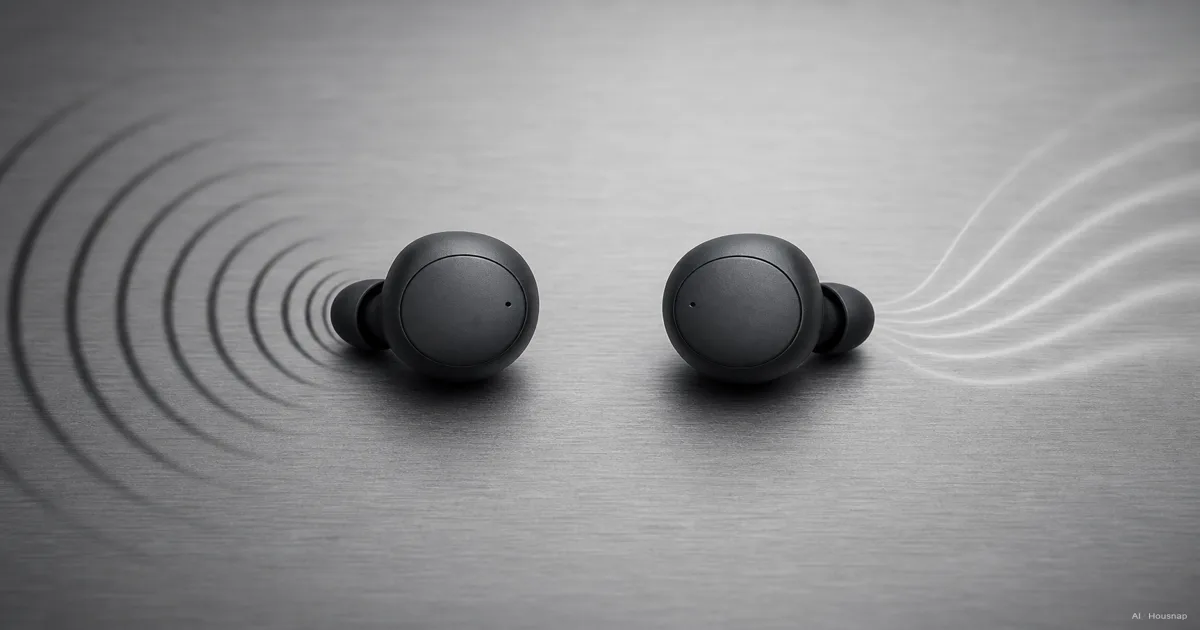
Active noise cancellation works on a principle called destructive interference. The earbud's external microphone samples the sound around you, the chip generates an inverted copy of that sound wave, and it plays the inverted wave into your ear so the two cancel out before the noise reaches your eardrum. Where a peak meets a trough, you get near silence.
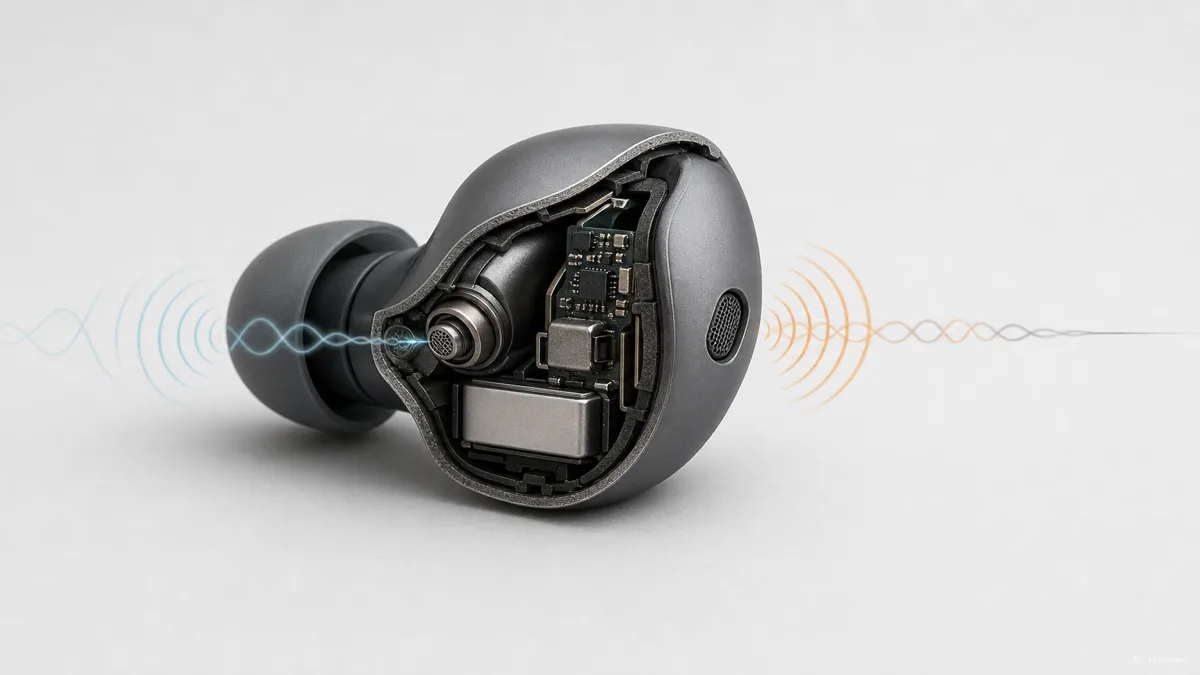
That sounds clean on paper. In practice, the quality of cancellation depends heavily on where the microphones sit. There are three common architectures, and the difference matters when you compare earbuds, as SoundGuys explains in their breakdown.
- Feedforward. A mic sits on the outside of the earbud and listens to noise before it reaches your ear. It is great at predictable low-frequency sound but cannot correct itself, so it can struggle when the fit is imperfect.
- Feedback. A mic sits inside the ear canal and listens to what you actually hear, which lets it cover a broader range. The catch is that it can become unstable and is harder to tune.
- Hybrid. It combines both mics and is the best overall performer across frequencies. Almost every good modern earbud uses this approach.
Numbers help here. A strong hybrid system can knock out up to 40 dB of low-frequency noise in the roughly 50 to 800 Hz band, and some consumer earbuds claim even more. The premium tier matters too: in lab testing, the Sony WF-1000XM6 reached around 88 percent average noise reduction, with Bose leading on deep low-frequency cancellation, the kind that matters most on a long flight.
Here is the honest limitation. ANC is built for steady, low-pitched sound. Airplane engines, HVAC hum, a bus rumbling along. It is far less effective on sudden, high-pitched sounds like a dog barking, a child crying, or someone calling your name. Those transient sounds happen too fast for the system to cancel cleanly. If you expected your earbuds to silence a noisy open office, that gap is why they sometimes disappoint.
What Is Transparency Mode, and Why It Shares the Same Tech
Transparency mode uses the exact same external microphones as ANC. The difference is the goal. Instead of generating anti-noise to cancel the outside world, the chip captures the ambient sound, processes it, and mixes it back into your music so you hear what is around you naturally, as TechRadar lays out in their explainer. The earbuds stay in, the playback keeps going, and you can still hold a conversation or hear an announcement.
This is the part worth internalizing. The hardware that makes silence and the hardware that lets the world back in are the same hardware. The toggle in your app is really just telling the chip which job to do.
The newer implementations go further than a simple on switch. Apple's Adaptive Transparency, introduced with the AirPods Pro 2, automatically clamps down on sounds that spike above 85 dB, the threshold widely cited for safe listening, while still letting quieter ambient sound through. So a passing siren or a slammed door gets softened, but a colleague's voice comes through clean. It behaves like a hybrid aware-and-protective mode rather than a plain pass-through.
Transparency has one real weakness: wind. Strong wind hits the external mics and turns into turbulence, which degrades the ambient audio into a roar. Premium earbuds fight this with DSP that suppresses wind noise while preserving voices, but it is the place where cheaper transparency modes show their limits fastest.
ANC vs Transparency: Matching the Mode to Your Situation
The mistake is treating this as a quality ranking. It is a situation map. Once you frame it that way, the choice is obvious almost every time.
On a commute by plane, train, or bus, ANC is the clear pick. This is the steady low-frequency rumble that cancellation handles best, and a long flight is exactly where deep low-end cancelling pays off.
At the gym, lean toward transparency. You want to hear a trainer, a gym announcement, or someone asking to work in on the machine you are using. Full isolation in a shared space is more isolating than helpful.
In an office, it depends on the noise. Steady HVAC hum and distant chatter favor ANC for focus. But if you need to catch your name or hear a colleague walk up, transparency keeps you reachable.
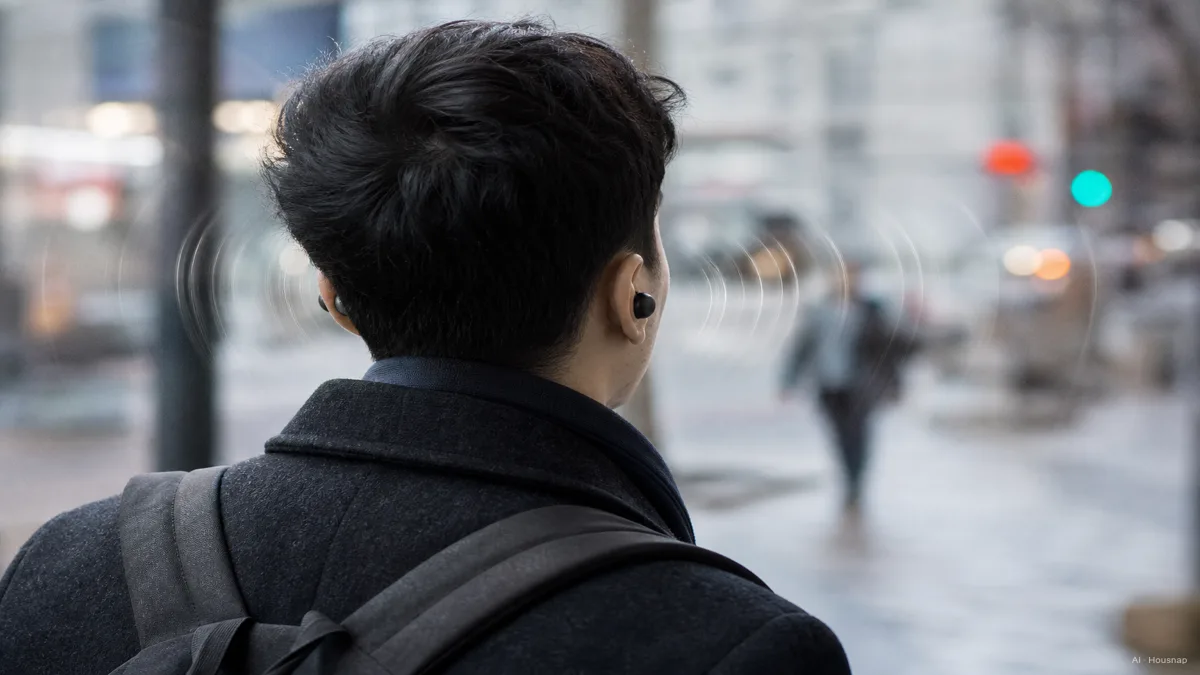
Outdoors, transparency is a safety feature, not a preference. Running near traffic, cycling, or crossing a parking lot all require you to hear approaching cars. This is the one situation where the choice is not about comfort at all.
The simple rule: reach for ANC when you want to disappear into your own audio, and switch to transparency when staying aware of your surroundings matters more than the music.
Battery Life Trade-offs: What Each Mode Costs You
Both modes run the microphones and the processor continuously, so both cost battery compared to plain passive playback. The amounts are not equal, and they are worth knowing before you judge a pair on its rated battery numbers.
ANC is the heavier draw. It typically cuts playtime by 20 to 30 percent versus passive listening, because generating anti-noise in real time keeps the chip working hard. Transparency mode is a bit lighter, usually a 10 to 20 percent reduction, more than passive but less than full cancellation, as EcoFlow notes in their battery breakdown.
A concrete example makes it land. The AirPods Pro 2 deliver roughly six hours of listening with transparency mode on, versus about five hours with ANC engaged. That one-hour gap is the cost of cancellation working harder than passive transparency.
So if you are stretching a charge on a long day, transparency is the more economical of the two active modes, and turning both off entirely buys you the most time of all. Most people never notice the difference because the case tops the buds back up, but it is real, and it explains why two earbuds with the same battery cell can post different rated hours.
Adaptive Modes and AI: The Next Step Beyond a Simple Toggle
The toggle is starting to disappear. Modern flagship earbuds increasingly ship with adaptive ANC that adjusts cancellation in real time based on the environment it detects. Step onto a noisy train and it ramps up. Walk into a quiet room and it eases off, all without you touching anything.
Apple's Adaptive Transparency is one flavor of this idea, blending awareness with hearing protection by taming loud spikes automatically. Sony leans on AI processing to suppress wind and isolate voices, which is exactly where naive transparency modes fall apart. The direction is clear: instead of two manual modes you flip between, the earbuds read the room and land somewhere on the spectrum between silence and full awareness.
For a first-time buyer, this changes what to look for. The headline noise-reduction number still matters, but so does whether the earbuds adapt on their own and how well they handle wind and sudden sounds, the situations where cheaper models stumble. Genuine ANC now starts around 80 dollars in 2026, so the question is less whether you can afford cancellation and more how smart you want the switching to be.
Sources
- What is Transparency mode on earbuds and headphones? The tech explained — TechRadar; how transparency mode reuses the ANC microphone array and mixes ambient sound back in
- Active noise canceling (ANC) technology types explained — SoundGuys; feedforward, feedback, and hybrid ANC architectures and their trade-offs
- Best Wireless Earbuds of 2026, Lab Tested and Ranked — TechGearLab; Sony WF-1000XM6 88 percent noise reduction benchmark and premium-tier comparison
- ANC vs Transparency Mode, When to Use Each — Soundmali; situational guidance across commute, gym, office, and outdoors
- AirPods ANC Battery Drain, How Much Life You Really Lose — EcoFlow; battery impact of ANC versus transparency versus passive playback