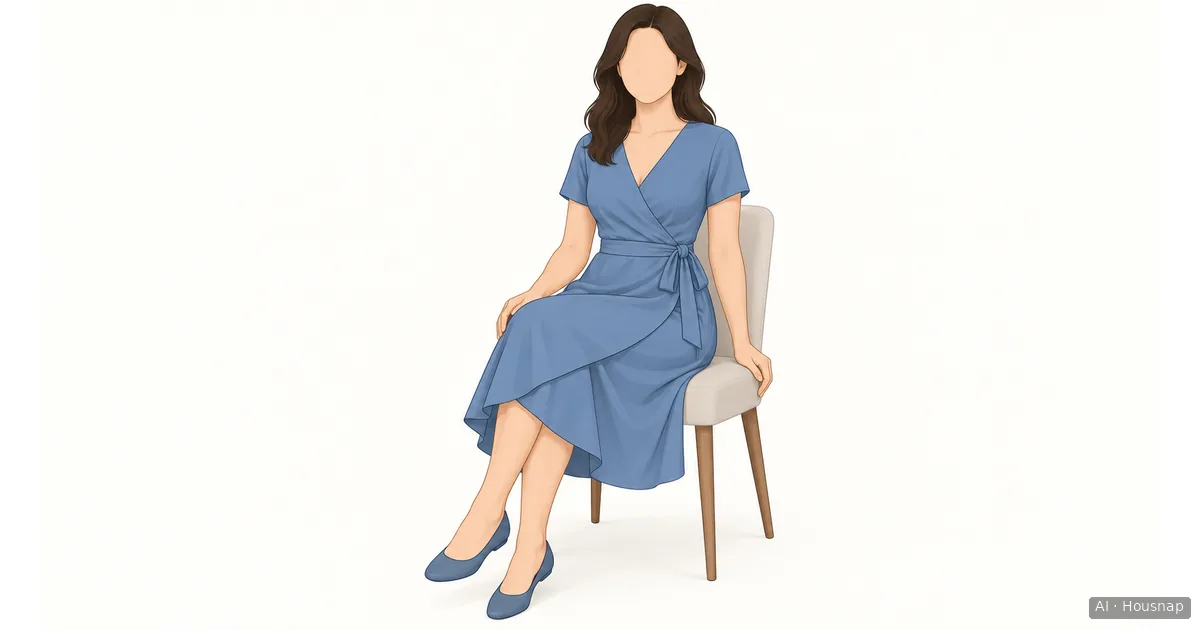
Check the fastening and size guidance first
Before ordering, look for a clear description of how the dress closes. Do the ties hold the front together, or is the crossed front already sewn in place? Ask for fastening instructions if the photographs leave this unclear. A visible waist bow alone does not answer that question.
Use the exact style’s size guidance, paying attention to the bust as well as the waist and hips. Do not assume an adjustable waist settles the whole fit.
By Samantha Melbourne’s size guide illustrates why a blanket sizing rule is unhelpful: between sizes, it suggests the smaller option may suit A–D cups, but advises the larger option for DD cups and above for bust coverage. Those are that maker’s recommendations, not a cup-size rule for every wrap dress or brand.
If your measurements point to different sizes, ask the seller which size and cut to try. Confirm the conditions for trying on and returning the garment before ordering, especially when you cannot inspect its overlap in person.
Tie it comfortably, then check the neckline
Follow the instructions for the actual dress. In DVF’s demonstrated sequence, the first loose tie passes through the slit on the opposite side. The ties go behind the waist and back to the front while the neckline is adjusted, then finish in a knot at the side. Use this as an example of a specified fastening route, not a reason to invent a slit or fastening on another dress.
By Samantha Melbourne’s tying guide also asks for flat, untwisted fabric and a secure knot or bow that is not excessively tight. It treats moving the neckline fabric and adjusting waist tightness as separate steps.
Once the dress is settled, leave your hands off the neckline. Lean forward as you normally would and reach across your body. Check whether the crossed edges still cover what you want covered, with the underwear you intend to wear.
If the opening is wrong even while standing, adjust it once according to the maker’s instructions and repeat. If it only stays acceptable while you hold it, or tightening the waist becomes uncomfortable, compare another cut. These are practical try-on criteria, not manufacturer-tested coverage guarantees.
Sit down and watch the skirt overlap
The overlap is the area where one front skirt panel covers the other. Check it separately from the hem length: look at where the opening leads as well as where the hem ends.
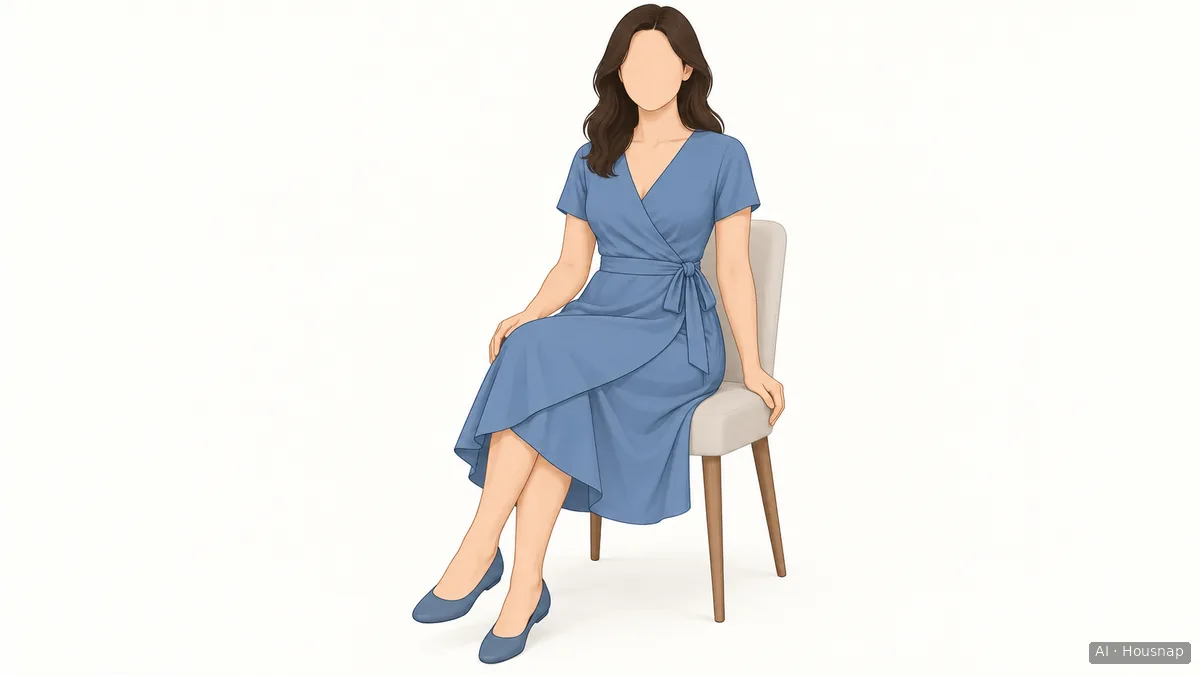
The illustration shows where to inspect the front panels while seated. It does not establish a minimum overlap measurement or prove how any listed dress behaves.
- Sit as you normally would, then stand again. Look at the front and side of the overlap without holding either panel closed.
- Walk at your usual stride and take a comfortable step up. Check whether the opening exposes more than you want.
- After moving, inspect the waist ties and neckline again. Notice whether the knot has loosened or you need to reset the fabric.
Choose your own acceptable coverage before judging the result. If you would spend the day shortening your stride, holding the skirt or avoiding ordinary movements, that candidate has not met your brief.
Keep the dress, change size or change cut
Make the decision from all three checks: neckline, skirt overlap and ties. Passing one does not cancel a problem with another.
- Keep it as a candidate when it gives you the coverage you want through your normal movements, with comfortable ties and no repeated rearranging.
- Compare another size when the maker’s guidance suggests one may fit better. Repeat the complete check rather than assuming the new size fixes every area.
- Change the cut when you like the waist fit but cannot get an acceptable neckline or skirt opening without constant adjustment.
For this purchase, do not treat an untried pin, tape or alteration as proof that a failing fit will work. If you already intend to wear a visible underlayer, try that exact combination and judge the skirt separately.
If you decide to switch to a slip dress, the next question changes: do its straps, neckline and lining work with your planned underwear? Resolve that before buying fixes for the replacement.
Hoe deze gids is opgebouwd
This article was written by AI for Housnap, using DVF’s tying instructions and By Samantha Melbourne’s sizing and adjustment guidance. The movement checks are editorial buying criteria, not original wear tests or guarantees about the products shown.