Steam Cleaner Buying Guide, Which Type to Buy First and Which Surfaces Are Safe
"Steam cleaner" is a much wider category than most first-time buyers expect. It covers a handheld unit small enough to hold in one hand, an upright mop built only for floors, and a canister machine with a hose and a box of attachments that can degrease a stovetop and scrub a shower door with the same machine. Standing in front of that lineup with no experience is disorienting, and marketing copy that treats "steam cleaner" as one single product does not help. The good news is that the decision comes down to two questions you can answer before you shop at all, what do you actually need to clean, and what is that surface made of. Get those two right, and the rest, tank size, heat-up time, attachments, is just spec-reading.
Nu verkrijgbaar bij één winkel
Deze producten zijn momenteel elk bij één winkel verkrijgbaar. Prijsvergelijking opent zodra meer winkels zijn toegevoegd.
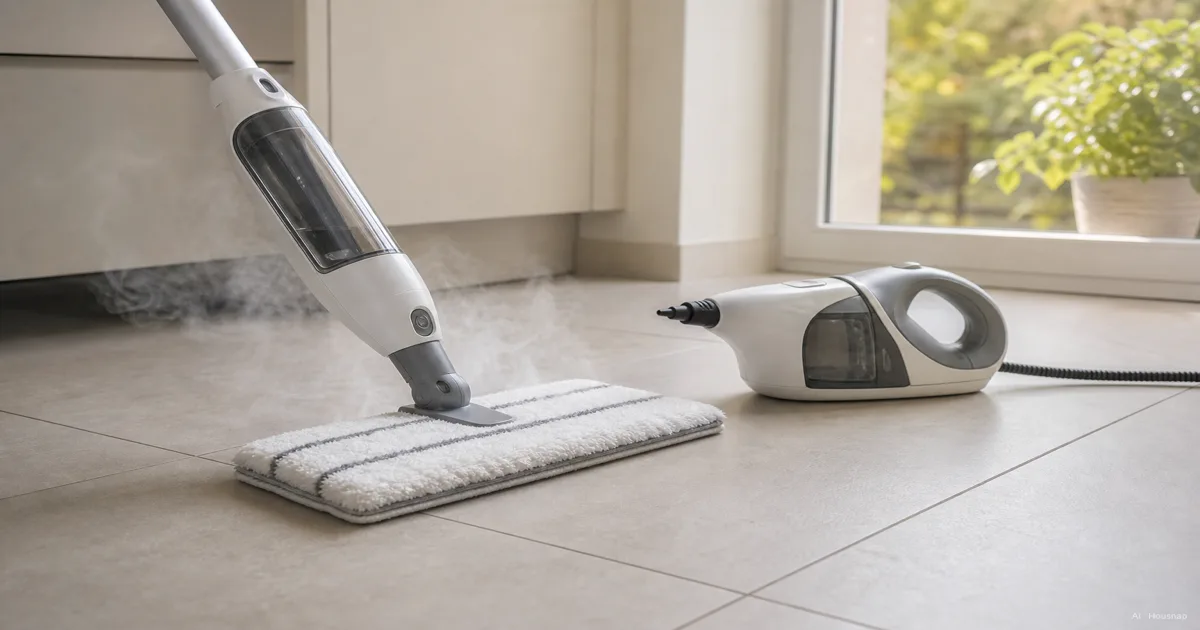
A steam cleaner heats plain water into vapor and forces it out through a nozzle, pad, or brush attachment onto a surface. There is no detergent required, and properly used, that vapor is what is called dry steam, most machines produce steam that is less than 5% water content by the time it reaches the surface, which is why it does not soak a sealed countertop or tile floor the way a wet sponge or a mop and bucket would (AchooAllergy, Steam Cleaner Buying Guide).
What a Steam Cleaner Actually Is, and How It Cleans
That dryness is most of the appeal. Heat and a small amount of moisture loosen grease and grime on contact, and a pad or cloth wipes it away with no chemical residue and nothing to rinse off afterward. It is also the reason steam cleaners get marketed as sanitizing tools, high heat kills a lot of common household bacteria on contact, though how effectively depends on the model and how long the steam actually sits on one spot, a detail worth remembering once you get to shopping for a specific machine.
Steam Mop vs. Handheld vs. Canister, Which Type Fits Your Home
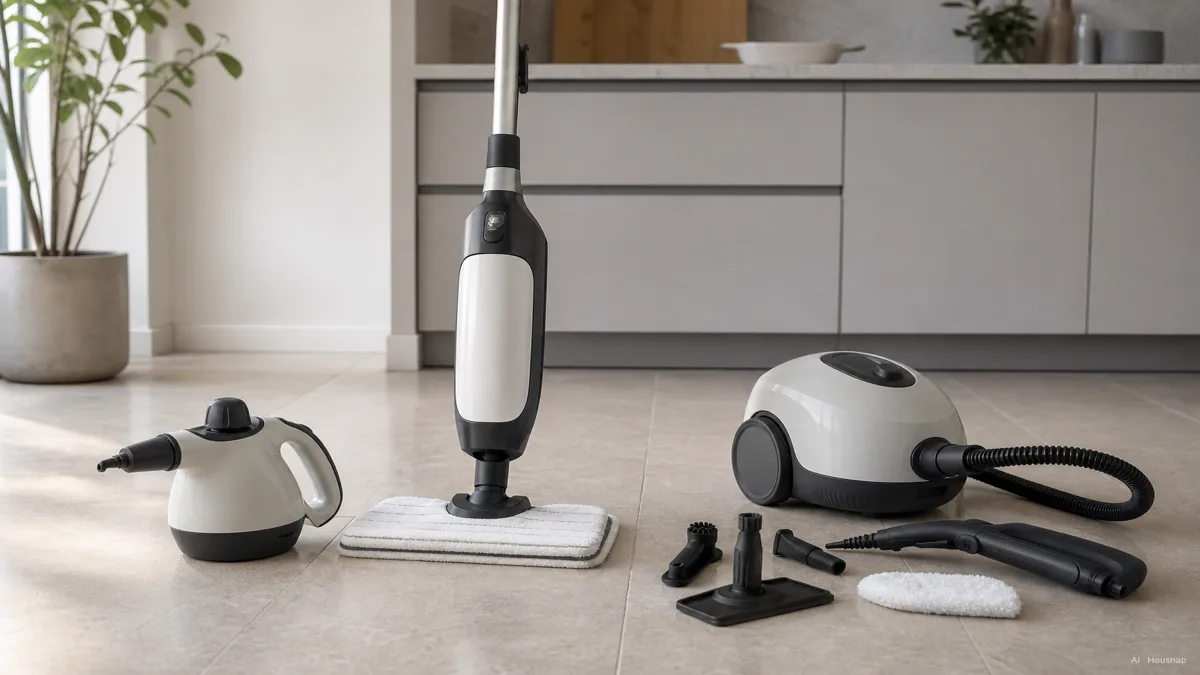
Once you understand the mechanism, the category splits into three formats, and choosing among them really means choosing based on what you are cleaning, not which one is universally "best."
Handheld steamers are compact, sized to hold in one hand or fitted to a short wand, and built for spot jobs, a stained stovetop, a shower door, a window, a countertop. Their tank is small by design, so run time is short, and they are usually the cheapest way into the category (Home Vacuum Zone, Steam Mop vs Steam Cleaner).
Steam mops are upright machines built specifically for floors, lightweight and easy to push, and the natural first purchase if floors are the only surface you want steam for. Housnap has a [separate guide comparing a steam mop against a regular mop and bucket](/topics/steam-mop-vs-regular-first-buy) if that narrower fork is your actual question.
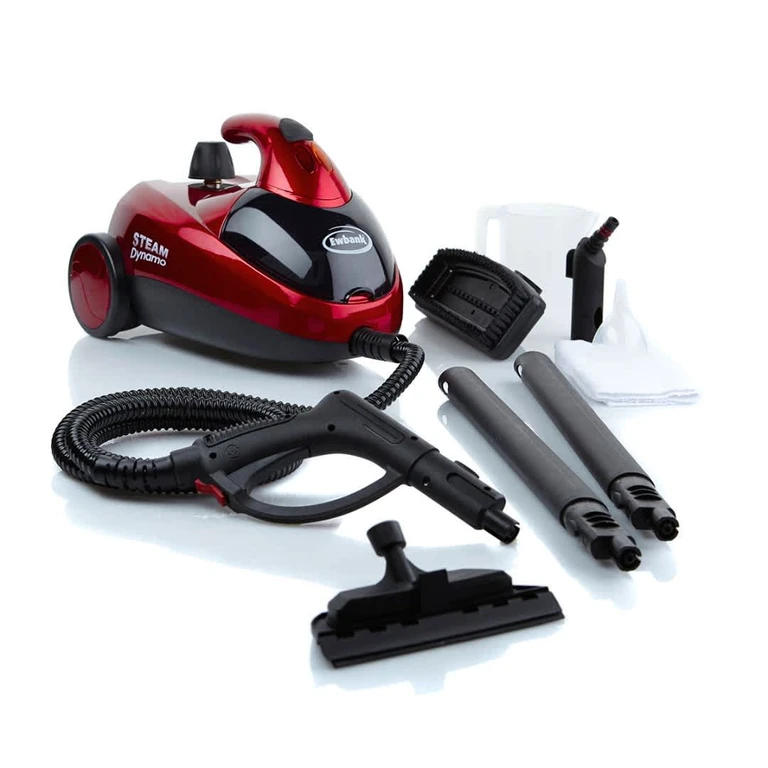
Canister steam cleaners are the most versatile format. A separate tank connects by hose to a wand and a set of swappable attachments, brushes, nozzles, a squeegee, sometimes a mop-head adapter, so one machine covers grout lines, upholstery, a stovetop, and the floor. AchooAllergy's buying guide frames the canister format as the right pick for anyone who wants to steam more than one kind of surface in the same household (AchooAllergy, Steam Cleaner Buying Guide).
The tradeoff mirrors the versatility. A steam mop's wide pad covers a kitchen floor faster than a canister unit being dragged around and re-fitted with nozzles, but a mop head simply cannot reach into a grout line or up onto a stovetop the way a narrow nozzle attachment can (Home Vacuum Zone, Steam Mop vs Steam Cleaner).
Which Surfaces Are Safe, and Which Ones Steam Can Damage
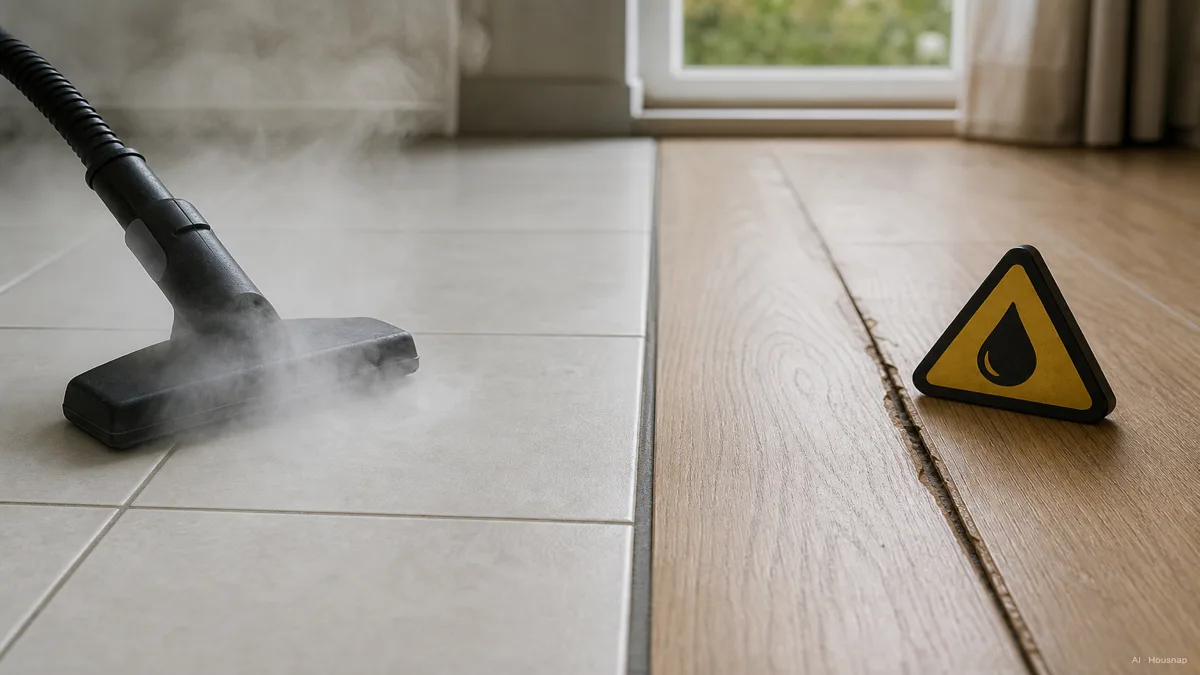
This is the question that matters more than brand or price for a first purchase. Steam is generally safe on sealed tile, sealed grout, sealed hardwood, vinyl sheet flooring, and most hard sealed surfaces. It is not safe on unsealed wood, unsealed grout, laminate, and seamed vinyl tile, because forced steam pushes moisture into gaps and seams, and that moisture causes buckling, swelling, joint separation, or delamination over time, damage that does not reverse (House Digest, Avoid These Areas When Steam Cleaning Your Home; Home Vacuum Zone, Steam Mop vs Steam Cleaner).
Grout deserves its own mention, because it is the exact surface most people buy a steam cleaner to fix, and the surface most at risk if it is unsealed. On unsealed grout, the combination of heat and pressure can erode the material and cause chipping, and moisture can seep in deep enough to eventually cause mold. The standard advice is to seal grout before you ever run a steamer over it, not after you notice a problem (Tile Sealing, Does Steam Cleaning Damage Grout?; Mapei FAQ, Can I use a steam cleaner on my tile and grout?).
Before you run any steamer over a whole room, test it on a small, out-of-sight patch first, inside a closet, behind a rug, under an appliance, and check your flooring's warranty terms. Some hardwood and laminate warranties are voided by steam cleaning outright regardless of whether the surface is sealed, so a five-minute check can save a much bigger repair later (House Digest, Avoid These Areas When Steam Cleaning Your Home).
What to Check Before You Buy, Tank Size, Heat-Up Time, and Attachments
Once the surface question is settled, three practical specs separate a steamer you will reach for every week from one that ends up at the back of a closet.
Heat-up time varies far more between models than most buyers expect. Some units are ready to use in under a minute, others need five to ten minutes to build enough pressure, and that gap matters more to daily convenience than almost any other spec (AchooAllergy, Steam Cleaner Buying Guide).
Tank size is a direct tradeoff. A bigger tank means longer continuous run time before a refill, but it also adds weight, and weight matters a lot on a handheld unit held at arm's length or an upright mop pushed across a floor for twenty minutes (AchooAllergy, Steam Cleaner Buying Guide).
Attachments decide whether the machine actually does the job you bought it for in the first place. A canister unit with only a floor nozzle will not reach a shower grout line, and a handheld steamer without a narrow jet attachment struggles in tight corners. Match the attachment set to the surfaces from the section above before comparing anything else on a spec sheet.
Performance also varies between models more than the price tag alone would suggest. Consumer Reports' 2026 lab testing of handheld steamers found that only two of four tested models were powerful enough to fully remove grime from a sink basin, real variance even within one format category, so it is worth checking independent test results rather than assuming every steam cleaner in a given price range performs the same (Consumer Reports, 4 Best Handheld Steam Cleaners of 2026). Consumer Reports' separate steam mop testing named the Kärcher SC 3 Upright EasyFix and the Euroflex Vapour M2R as strong all-around performers, and noted that mop pads with a rougher, more bristly texture remove dried-on stains like ketchup or mustard more effectively than soft, smooth pads (Consumer Reports, 5 Best Steam Mops of 2026).
Care Tips, Water, Sealing, and Getting the Most Life Out of Your Steamer
Fill the tank with distilled water rather than tap water, especially if you live somewhere with hard water. Mineral buildup from tap water is the most common reason a steam cleaner's heating element fails early or its nozzle clogs, and it is one of the cheapest habits to get right from the very first use.
If any part of your home has unsealed grout, seal it before you start steam cleaning it on a regular basis, not after you notice chipping or a hint of mold. Sealing grout is a one-time weekend task. Repairing eroded grout, or a warped floor, is not.
Test on a small hidden patch every time you use steam on a surface for the first time, even a surface you believe is sealed, and keep your flooring's warranty terms in mind. A first steam cleaner is a genuinely useful tool once you know exactly where in your home it belongs, and where it does not.
Sources
- Steam Cleaner Buying Guide, AchooAllergy — dry steam mechanism, format comparison, tank size and heat-up tradeoffs
- Steam Mop vs Steam Cleaner: What's the Difference?, Home Vacuum Zone — three-format breakdown, coverage speed vs attachment reach
- Avoid These Areas When Steam Cleaning Your Home, House Digest — surface compatibility, warranty voiding
- Does Steam Cleaning Damage Grout?, Tile Sealing — unsealed grout erosion and moisture risk
- Can I use a steam cleaner on my tile and grout?, Mapei FAQ — sealing recommendation before steam cleaning
- 4 Best Handheld Steam Cleaners of 2026, Consumer Reports — lab-tested performance variance
- 5 Best Steam Mops of 2026, Consumer Reports — top-performing models, pad texture and stain removal
Hoe deze gids is opgebouwd
This piece opens from a mix-up that shows up across steam cleaner searches, shoppers treat handheld steamers, steam mops, and canister units as one interchangeable category, then find out after buying that the exact surface in their own home was never a safe match for steam. We anchored the mechanism and three-format breakdown on AchooAllergy's buying guide and Home Vacuum Zone's format comparison, the surface-damage and warranty guidance on House Digest, Tile Sealing, and Mapei's own FAQ, and the performance-variance findings on Consumer Reports' 2026 lab testing of handheld steamers and steam mops. Readers whose real question is steam mop versus a regular bucket mop are pointed to Housnap's dedicated comparison on that narrower fork.