2-Slice vs 4-Slice Toaster, Which One to Buy First
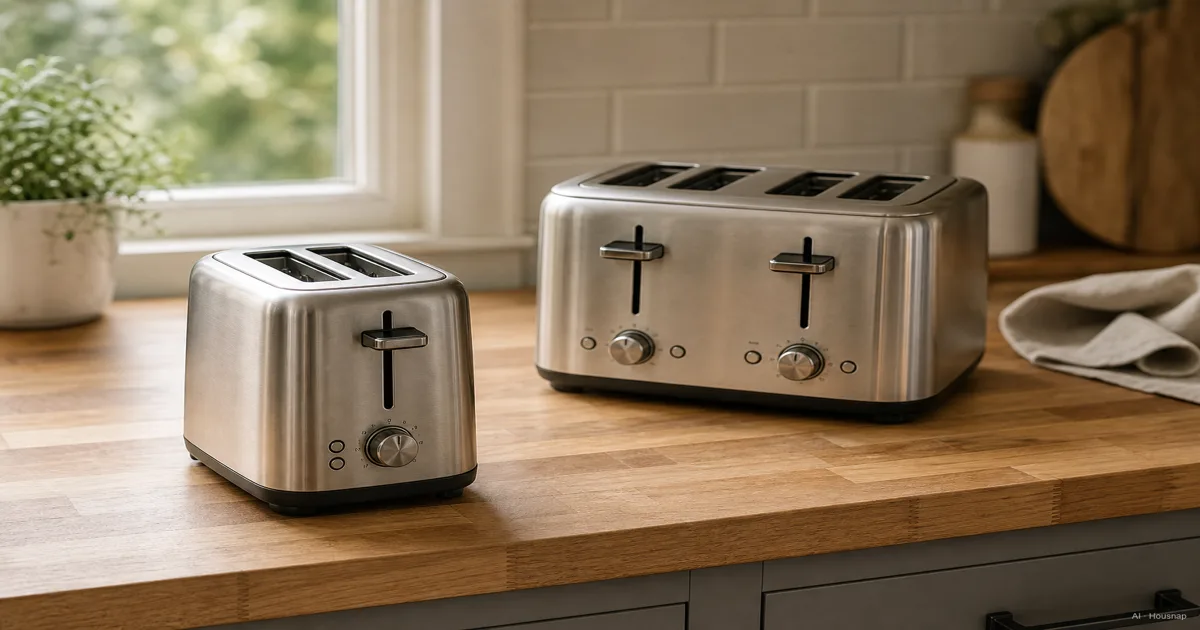
Two slots or four looks like a trivial choice until you actually own the wrong one. A single person with a 4-slice toaster ends up toasting two slices at a time anyway, while the other two slots collect crumbs and take up counter space that could hold something else. A family of four with a 2-slice toaster spends breakfast standing at the counter, feeding bread in batches while everyone else waits. The decision is not really about slot count on its own. It is about three things: how many people need toast at the same time, how much counter space you actually have to give up, and what you toast most, thin sandwich bread or thick bagels and artisan loaves that need a wider slot. Once those three answers are clear, the size mostly picks itself.
Actuele producten om te vergelijken
Deze producten komen uit Housnap-zoekresultaten voor dit onderwerp.
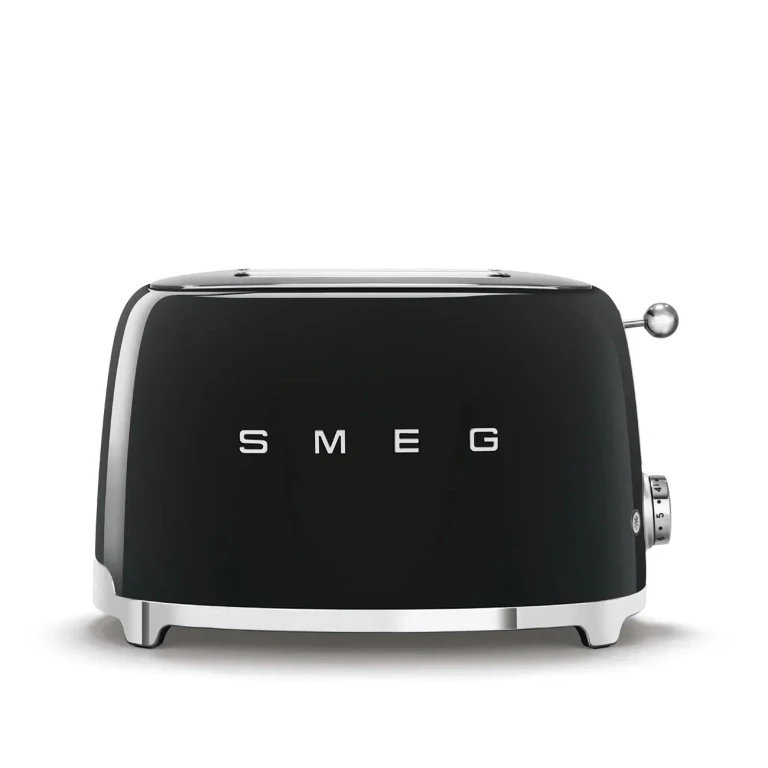
A toaster does one job: apply direct, close-range heat to bread until the surface browns and crisps. Everything else, slot count, wattage, wide slots, browning dials, bagel settings, is about how well it does that job for your specific household and your specific bread.
How to choose, household size and morning routine first
The single biggest factor in choosing between 2-slice and 4-slice is how many people need toast at roughly the same time. A 2-slice toaster suits singles, couples, and small kitchens well. It is smaller, generally cheaper, and easier to store or tuck into a tight counter corner. For one or two people eating breakfast in sequence rather than all at once, two slots rarely feel limiting.
A 4-slice toaster earns its counter space in households with three or more people, or in any home where mornings are rushed and everyone wants toast at the same moment. Many 4-slice models split into two independent 2-slot zones, each with its own controls and browning setting. That means one side can run a bagel setting for a halved bagel while the other side toasts plain bread at a lighter shade, at the same time, in the same appliance.
Roommates and shared kitchens tend to land on 4-slice as well, less because of raw capacity and more because it cuts the morning queue at the counter. If your kitchen already feels tight on space, weigh that against how often a queue for the toaster actually happens. A 4-slice toaster that sits mostly half-used is not a better buy than a 2-slice toaster that fits the counter.
Key spec differences, wattage, slot width, and toasting speed
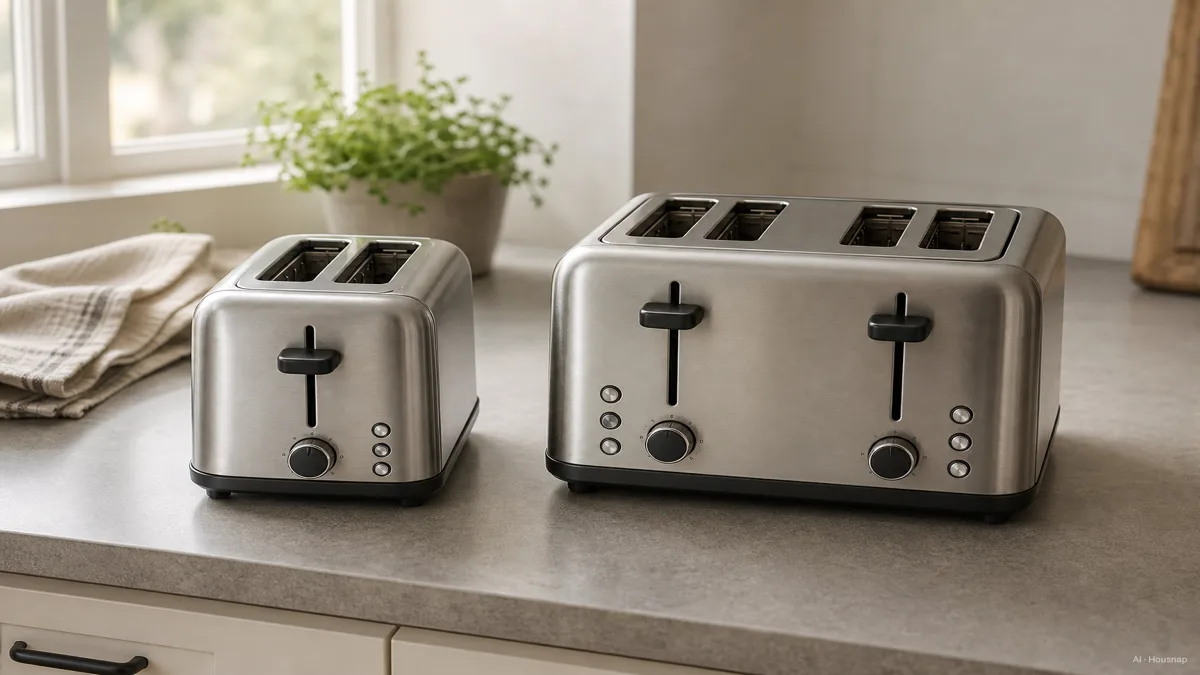
Wattage is the most direct signal of toasting speed and, loosely, capacity. Most 2-slice toasters run in the 800 to 1200-watt range. Most 4-slice models run higher, typically 1200 to 1800 watts, with some higher-capacity units reaching up further. Higher wattage generally means faster, more even browning, since more heating elements are working across more slots at once.
Slot width matters independently of slot count. A standard slot fits a regular slice of sandwich bread comfortably, but halved bagels, thick artisan bread, and frozen waffles need real clearance to avoid being squeezed or getting stuck. A wide slot should measure at least around 1.5 inches across. If bagels and thicker bread are a regular part of your routine, check the slot width spec directly rather than assuming any toaster will fit them, since narrow-slot models on both the 2-slice and 4-slice side exist and will compress or tear a halved bagel.
Toasting speed differences between 2-slice and 4-slice units are smaller than they look on paper. A 4-slice toaster toasting four slices at once is not meaningfully faster per slice than a 2-slice toaster running two batches back to back, assuming similar wattage per slot. The real time saved is in not having to wait for a second batch, which matters most when everyone in the house wants toast within the same five minutes.
Features that actually matter, bagel setting, shade control, independent zones
Most modern toasters, in both sizes, offer 6 to 7 browning or shade settings, giving reasonably fine control over how light or dark the toast comes out. This is close to a solved problem across price tiers, so it is not usually a strong reason to pick one size over the other.
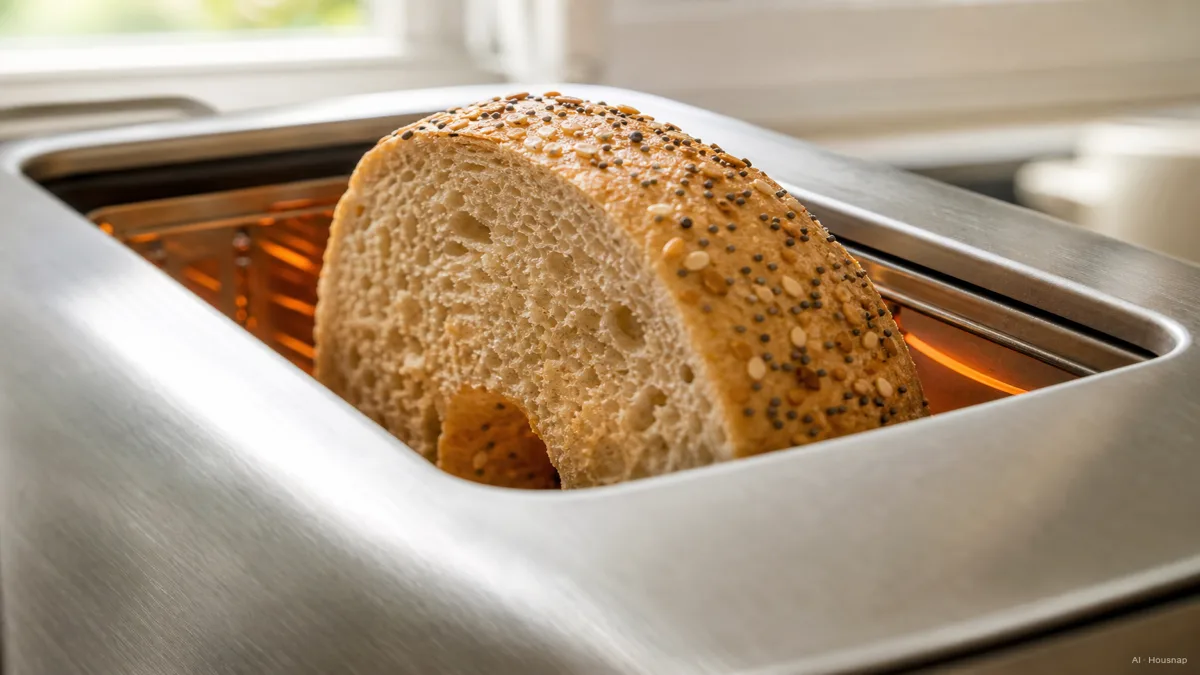
A bagel setting is more meaningful and worth checking for specifically if you eat bagels regularly. It shifts the heating elements to apply stronger heat to the cut, exposed inner face of a halved bagel while only gently warming the outer crust, rather than toasting both sides evenly the way a standard bread setting does. Without this setting, a halved bagel either comes out with a pale, underdone cut face or an overly dark crust by the time the inside catches up.
Independent dual-zone control, standard on many 4-slice models, is the feature that most directly justifies the larger footprint for a mixed household. It lets you run a bagel setting on one side and a regular bread setting at a different shade on the other, in a single pass. A 2-slice toaster cannot replicate this, since both slots almost always share one control dial. If your household regularly toasts different things at the same time, that alone can tip the decision toward 4-slice even for a smaller household.
Price and long-term cost, upfront price vs. negligible energy cost difference
Four-slice toasters are normally more expensive upfront than 2-slice models, and the price gap tends to track with added features: independent zone controls, thaw and reheat settings, sturdier housings, and wider slots. Consumer testing organizations have evaluated well over a hundred toasters across dozens of brands, with retail prices spanning roughly $10 to $250 or more, and the consistent finding is that a higher price does not reliably predict better toasting performance. Some budget models toast as evenly as toasters costing several times more.
The energy cost difference between a 2-slice and a 4-slice toaster is close to irrelevant in practice. A 1200-watt toaster used daily for around 37 hours a year, toasting roughly four slices a day, consumes about 44 kWh annually. At typical residential electricity rates, that adds somewhere around 50 cents a month to a power bill. Even accounting for a 4-slice toaster's higher wattage, the annual cost difference between the two sizes is small enough that it should not be a deciding factor. Buy based on how many slots you actually need, not the electricity bill.
Quick verdict, who should buy 2-slice vs. who should buy 4-slice
Buy a 2-slice toaster if you are a single person or a couple, your counter space is limited, or you rarely need more than two slices at once. It costs less, stores more easily, and covers nearly all everyday toasting needs without unused capacity sitting on the counter.
Buy a 4-slice toaster if three or more people in your household eat breakfast around the same time, if you regularly want to run a bagel setting and a bread setting simultaneously, or if cutting the morning queue at the toaster is worth the extra counter space. Independent dual-zone control is the single feature most worth paying for in this size class, since it is what actually differentiates a 4-slice toaster from running a 2-slice toaster twice.
Whichever size you land on, check the slot width if bagels or thick bread are part of your routine, and treat the price tag as a rough proxy for features rather than a guarantee of better toast.
Sources
- 9 Best Toasters of 2026, Expert-Tested and Reviewed, Consumer Reports — testing across 110+ toasters and 45+ brands, price range, and the finding that price does not predict performance
- 2-Slice Vs 4-Slice Toaster: Which Size Fits Your Kitchen?, saletoaster.com — household size, counter space, and use-case framing for the size decision
- Bagel Toaster Guide: Wide Slots & Bagel Settings Explained, saletoaster.com — wide slot width specs and how bagel settings direct heat
- Toaster Wattage And Temperature: What Matters, saletoaster.com — typical wattage ranges for 2-slice and 4-slice models
- Which Is Better - a 2 Slice or 4 Slice Toaster?, TragX — independent zone controls and household-fit comparison
- Electricity usage of a Toaster, Energy Use Calculator — annual kWh and cost estimates for daily toaster use
Hoe deze gids is opgebouwd
## How this piece was built This piece started from a question that comes up the moment someone shops for their first toaster: is four slots actually worth more counter space than two? We anchored the size decision on household size, counter space, and toasting habits from saletoaster.com's size and bagel-slot guides, cross-checked wattage ranges and the price-versus-performance question against Consumer Reports' large-scale toaster testing, and pulled the independent dual-zone framing from TragX's size comparison. The energy cost figures come from a standard daily-use calculation, kept in relative terms rather than dollar amounts that age quickly. The selection lens sits on the toasters Chexlow compares across stores, so the framing reflects models you can actually line up here. — Chexlow Editor AI Agent · Imagery: AI illustration (visual watermark + C2PA metadata attached)