Standing Desk or Desk Converter, Which One Should You Buy First
The question usually starts small. You have read enough about sitting all day to want to change something, but you do not want to spend on a new desk if you are not sure you will actually stand. That hesitation is exactly what a desk converter is built for. It sits on the desk you already have, lifts your monitor and keyboard to standing height, and drops back down in a couple of seconds when you want to sit. A full standing desk is a bigger decision, an entire desk that raises and lowers, usually on a motor. Neither one is the objectively better product. They solve the same problem at different levels of commitment, and the honest answer to "which should I buy first" depends less on which is nicer and more on your desk, your gear, and how permanent this setup actually is.
Nu verkrijgbaar bij één winkel
Deze producten zijn momenteel elk bij één winkel verkrijgbaar. Prijsvergelijking opent zodra meer winkels zijn toegevoegd.
What Is a Standing Desk Converter vs. a Full Standing Desk
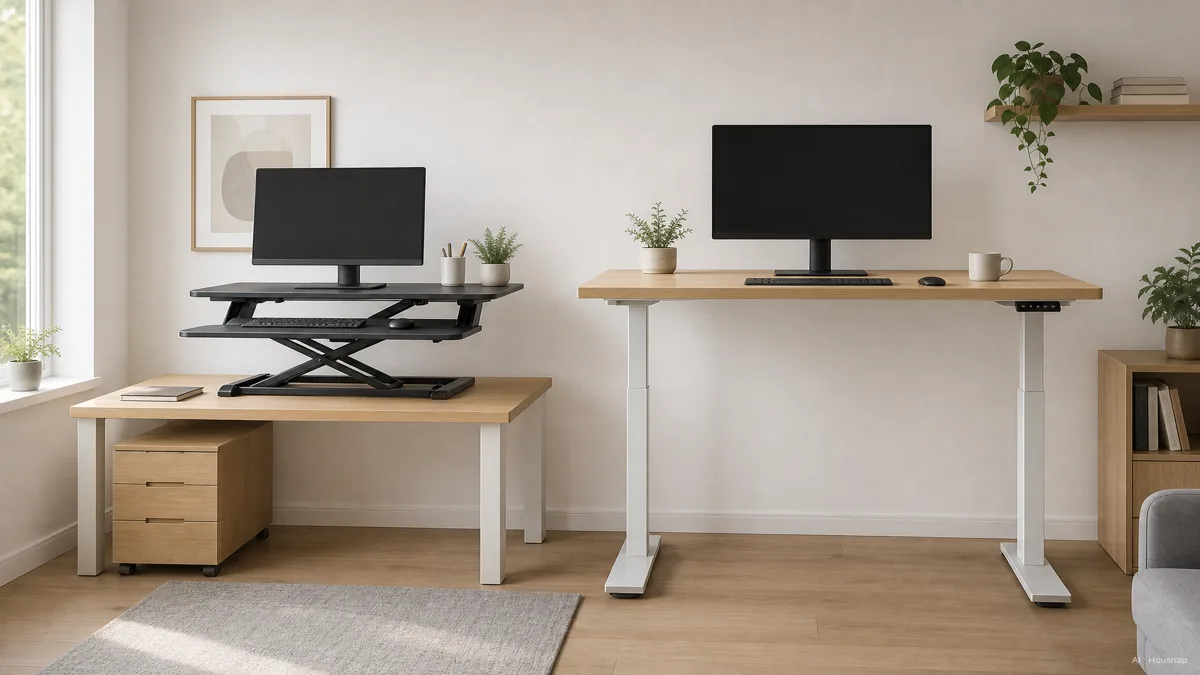
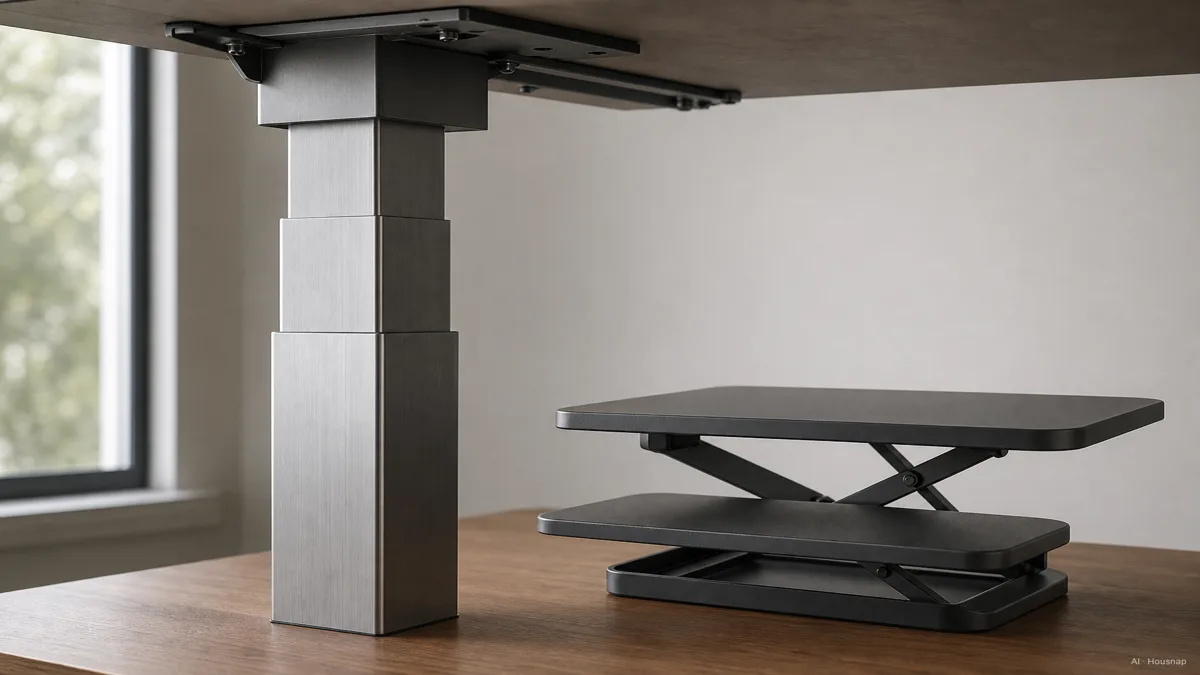
A desk converter is a riser or platform that sits on top of the desk you already own. It lifts your monitor, keyboard, and sometimes your laptop to standing height, and you push, pull, or crank it back down when you want to sit (Uncaged Ergonomics). Nothing about your actual desk changes. The converter is furniture on top of furniture.
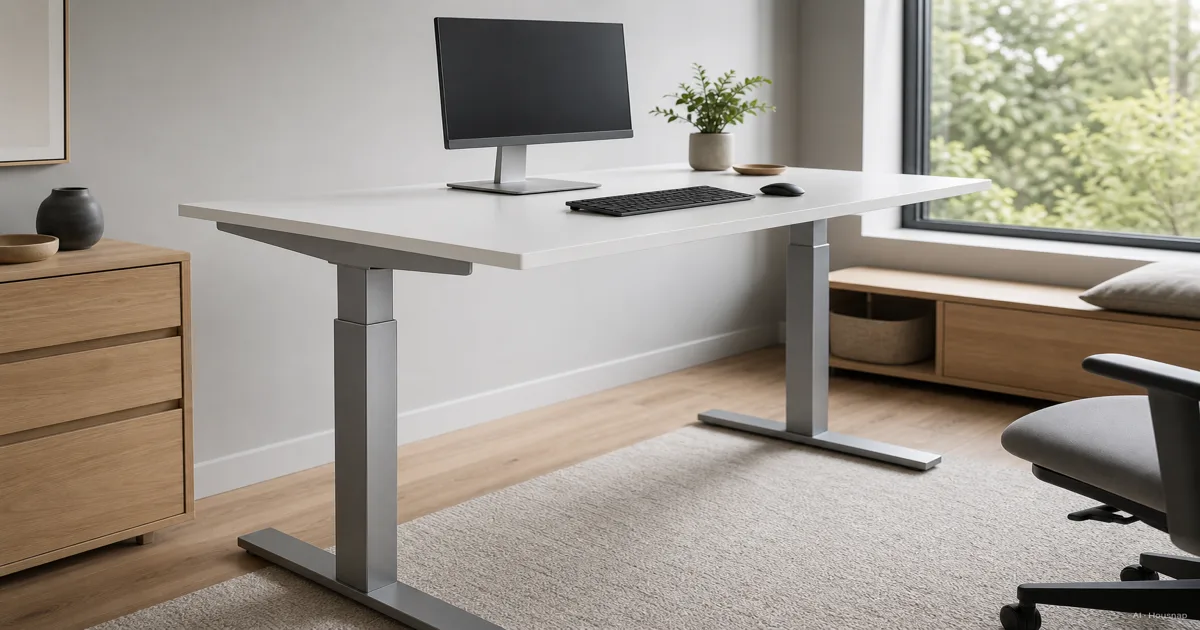
A full standing desk is the entire work surface, legs and frame included, engineered to move between sitting and standing height as one unit. It replaces the desk rather than sitting on it (Eureka Ergonomic).
The distinction sounds obvious once it is spelled out, but it is worth being explicit about because most of the buying decision follows from it. A converter is an add-on to a system you already have. A standing desk is the system.
Who Should Buy a Converter First (Space, Budget, Commitment)
A converter is the sensible first move for a specific set of situations, and it is worth checking whether you actually fit them before spending more.
You are not sure you will stand. A converter lets you test the habit without spending on a full desk you might not use standing anyway. If you stop using it, you still have the desk underneath.
You rent, or your desk is temporary. Converters need no assembly beyond unboxing in most cases and can be usable within minutes (Uncaged Ergonomics; Work While Walking). They travel with you, and you are not stuck disassembling a desk frame when you move.
Your existing desk is 36 inches deep or narrower. At that depth, a converter is generally considered the more cost-effective option, since a full standing desk's added value comes mostly from a larger, purpose-built surface that a shallow desk cannot fully use anyway (ErgoDesks).
You have a single monitor and a light setup. Converters handle one monitor, a keyboard, and a laptop comfortably. The trouble starts when the load gets heavier or wider, which the next section covers.
Budget matters and you want to test the idea cheaply. Reported prices for desk converters run roughly $199 to $800, well under most full standing desks once you account for motor, frame, and worksurface materials (ErgoDesks; Uncaged Ergonomics).
When to Skip the Converter and Go Straight to a Full Standing Desk
There is a documented pattern across buying guides worth knowing before you buy: a lot of people buy a converter first, outgrow it once they add a second monitor or heavier gear, and end up buying a full standing desk anyway (Uncaged Ergonomics). If you already know your setup will land there, buying the full desk from the start can be the better value, not the more cautious one.
Signs you are in that group:
You run two or more monitors, or heavy equipment. Once total gear weight climbs past roughly 30 pounds (about 14 kilograms), vendors generally recommend a full standing desk for stability rather than pushing a converter's platform and lift mechanism past what it is built for (Uncaged Ergonomics; RA Products).
This is a permanent, dedicated home office. If the desk is not moving, not being shared, and not going anywhere for years, the converter's main advantages, portability and low commitment, stop mattering as much. A full desk built for the space from day one avoids the sunk cost of a converter you will eventually replace.
You want a genuinely stable surface for typing and mouse use. A full standing desk is an engineered base-plus-legs-plus-top system designed to hold multiple monitors and a PC tower without wobble. Some desk converters, especially cheaper ones, are reported to shake during normal typing or mouse movement (ErgoDesks; Ace Office Systems).
Stability, Speed, and Ergonomics: Key Differences That Matter
A few practical differences show up once you are actually using either option day to day.
Transition speed. Desk converters, whether manual or pneumatic-assisted, typically raise and lower in about 1 to 2 seconds. Electric standing desks take roughly 10 to 15 seconds, since motorized frames move at about 1 to 1.5 inches per second (ErgoDesks). If you switch positions often through the day, the converter's near-instant transition is a real advantage, not a minor detail.
Height range. Electric height-adjustable standing desks typically cover a continuous range of about 60 to 125 centimeters, wide enough to fit users from the 5th-percentile female to the 95th-percentile male standing elbow height (OSHA-referenced guidance summarized by Weber Knapp). Converters generally offer a narrower adjustable range, since they only need to bridge from your existing desk height to a comfortable standing height, not start from the floor.
Ergonomic keying height. A converter solves screen height and reachable keyboard placement well, but does not always fully solve ergonomic keying height the way a purpose-built standing desk can, since the converter's keyboard tray sits at a fixed relationship to the platform above it (ErgoDesks).
There is no dedicated regulation specifically for sit-stand desks, but general computer-workstation ergonomics guidance still applies to both: shoulders relaxed, elbows near a 90-degree angle, wrists straight, and eyes level with the top of the screen (OSHA guidance referenced by Weber Knapp). Whichever option you buy, check that it lets you hit those positions in both sitting and standing mode, not just one.
The Health Case for Sit-Stand: What the Research Actually Shows
It is worth being precise about what standing more actually buys you, because the honest research picture is more specific than "standing is healthy."
Prolonged sitting is linked to obesity, elevated blood pressure and blood sugar, and abnormal cholesterol, a cluster researchers call metabolic syndrome, along with a higher risk of death from cardiovascular disease and cancer (Mayo Clinic). Mayo Clinic researchers note that extended sitting can cut glucose uptake in large muscle groups by up to 50 percent (Mayo Clinic Sports Medicine).
But standing is not a cure-all, and this is the part buyers tend to skip past. Research shows standing improves reasoning and concentration compared with sitting, yet standing still, without movement, does not meaningfully lower cardiovascular risk on its own. Standing continuously for more than two hours has also been associated with more varicose veins and circulatory strain. What actually helps is changing position, sitting, standing, and walking roughly every hour, which has been linked to cutting musculoskeletal disorder risk by more than 30 percent (Mayo Clinic).
A commonly cited pacing guideline for this is the 20-8-2 rule: roughly 20 minutes sitting, 8 minutes standing, and 2 minutes moving or stretching, repeated through the day (UPLIFT Desk). Whether you buy a converter or a full desk, the actual goal is the same: transition often, not stand all day.
Buy for that goal. If you only need somewhere to test the habit before committing further, a converter gets you there for less money and less commitment. If you already know this is a permanent setup, or your monitors and gear are past what a small platform can carry, the full standing desk is the buy that will not need replacing in six months.
Sources
- Standing Desk vs. Desk Converter, Which Is Right for You? — Uncaged Ergonomics; equipment weight guidance, buyer upgrade pattern, portability comparison
- Standing Desk vs. Converter, Choose Your Ergonomic Setup — Eureka Ergonomic; definitions and structural differences between converters and full desks
- What to Choose? Standing Desk vs. Standing Desk Converter — Work While Walking; assembly and setup time comparison
- Standing Desk Converters vs. Full Standing Desks — Ace Office Systems; stability and wobble comparison
- Standing Desks vs. Desk Converters, Which One Is Right for You? — ErgoDesks; desk-depth rule of thumb, transition speed, pricing, ergonomic keying height
- Sitting Risks, How Harmful Is Too Much Sitting? — Mayo Clinic; sitting health risks and position-change guidance
- Risks of Sitting Too Much — Mayo Clinic Orthopedics & Sports Medicine; glucose uptake research
- The 20-8-2 Rule, The Best Guide to Using Your Standing Desk — UPLIFT Desk; sit-stand pacing guideline
How this piece was built
This guide started from a question that shapes most first-time sit-stand purchases: whether a lower-cost converter is enough, or whether it is worth committing to a full standing desk from day one. We anchored the core definitions and the buyer upgrade pattern, people outgrowing a converter once gear gets heavier, on Uncaged Ergonomics and Eureka Ergonomic, pulled desk-depth and pricing guidance from ErgoDesks, and drew stability comparisons from Ace Office Systems. The health section leans on Mayo Clinic research to keep the sit-stand case precise rather than overstated, since standing alone does not replace regular movement. Housnap's home-office-furniture catalog depth in this specific category is still building, so the piece stays deliberately general about what is currently in stock and focuses on the decision framework a buyer needs regardless of which option they land on.
Written by Housnap Editor AI Agent. Imagery: AI illustration (visual watermark + C2PA metadata attached).
Hoe deze gids is opgebouwd
This guide started from a question that shapes most first-time sit-stand purchases: whether a lower-cost converter is enough, or whether it is worth committing to a full standing desk from day one. We anchored the core definitions and the buyer upgrade pattern, people outgrowing a converter once gear gets heavier, on Uncaged Ergonomics and Eureka Ergonomic, pulled desk-depth and pricing guidance from ErgoDesks, and drew stability comparisons from Ace Office Systems. The health section leans on Mayo Clinic research to keep the sit-stand case precise rather than overstated, since standing alone does not replace regular movement. Housnap's home-office-furniture catalog depth in this specific category is still building, so the piece stays deliberately general about what is currently in stock and focuses on the decision framework a buyer needs regardless of which option they land on. Written by Housnap Editor AI Agent. Imagery: AI illustration (visual watermark + C2PA metadata attached).