Sonos Era 100 vs Beam (Gen 2), Which One Should You Buy First
You want one good Sonos speaker to start with, and every comparison you read seems to answer a different question. Some reviewers love the Era 100 for how full it sounds for its size. Others swear the Beam (Gen 2) transformed how their TV sounds overnight. Both claims are true, and that is exactly what makes this confusing. Here is the part that gets buried in most reviews: these two products are not really competing for the same job. One is a standalone speaker shaped like a small box. The other is a long, thin bar that lives under your screen and needs a TV to plug into. So before you compare specs, sit with one simple question. When you picture using this speaker three months from now, are you in the kitchen streaming a playlist, or on the couch with the TV on? That answer decides more than any spec sheet will. This guide walks through what each one actually is, how they differ on paper and in daily use, the price difference you are really paying for, and how they can work together later if you end up wanting both.

Nu verkrijgbaar bij één winkel
Deze producten zijn momenteel elk bij één winkel verkrijgbaar. Prijsvergelijking opent zodra meer winkels zijn toegevoegd.
Era 100 vs Beam (Gen 2): What Each One Actually Is
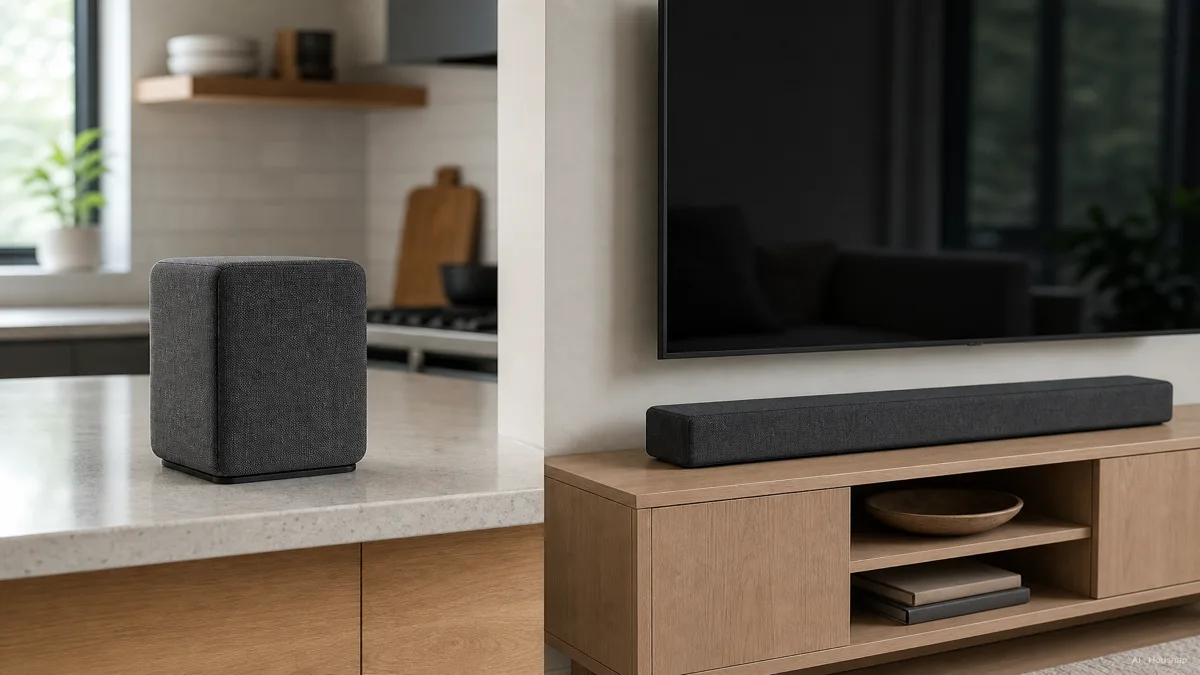
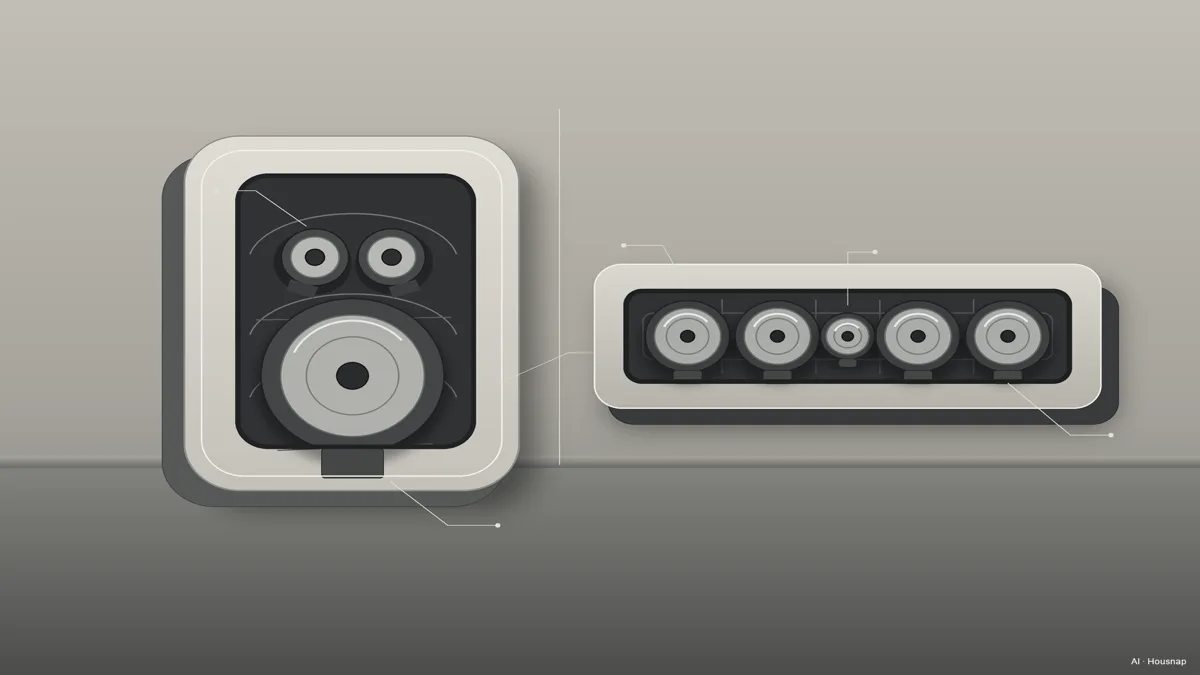
The Sonos Era 100 is a standalone stereo speaker shaped like a small box, meant to sit on a shelf, counter, or nightstand and stream music over WiFi or Bluetooth. It replaces the older Sonos One, and inside it packs two angled tweeters and a midwoofer that Sonos says is 25 percent larger than the One's, driven by three separate class-D amplifiers.
The Sonos Beam (Gen 2) is a different kind of object entirely, a compact soundbar built to sit under a TV. It connects with a single HDMI cable and has no line-in or aux jack, which matters if your TV is older, as the Sonos user guide points out. Inside are five speaker drivers, four mid-woofers and a tweeter, up from three in the original Beam, paired with a much faster processor.
Neither one needs a subscription, and both run through the same free Sonos app, with AirPlay 2 and Spotify Connect support on each. The Era 100 also adds direct Bluetooth streaming, something the Beam skips entirely since it is built to sit on WiFi and HDMI, not to travel around your phone's Bluetooth list.

Sound Quality and Core Specs Compared
On paper, the Beam (Gen 2) has more hardware working for it, five drivers against the Era 100's three amplifier channels, and it uses that extra processing power for something the original Beam could not do: virtual Dolby Atmos. It creates a sense of height and surround using HRTF, or head-related transfer function processing, without any actual upward-firing drivers, according to both TechRadar's review and RTINGS' lab measurements. It also decodes Dolby Digital and Dolby Digital Plus.
The Era 100 is not chasing surround effects at all. Its job is stereo music in one cabinet, and reviewers consistently call out how full and wide it sounds for something this size. What Hi-Fi's review points to the dual angled tweeters as the reason it throws sound wider than the old Sonos One did, and RTINGS' Era 100 review measured genuinely useful bass extension for a speaker this compact.
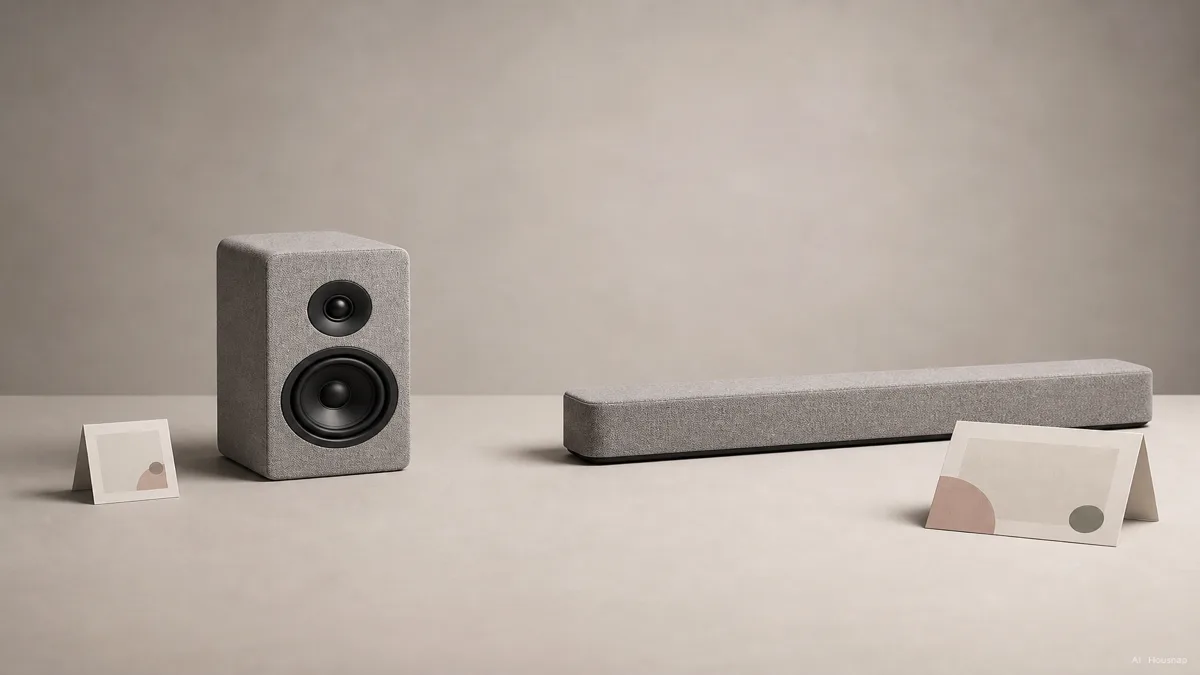
Size tells its own story here. The Beam (Gen 2) is a long, low bar, about 25.6 inches wide and just 2.3 inches tall, built to disappear under a screen. The Era 100 stands roughly a bookshelf-speaker shape, about an inch taller than the old One and a bit heavier at just over 2 kilograms. You are not really choosing between two versions of the same shape, you are choosing between a bar and a box.

Which One Fits Your Room? Music-First vs TV-First Buying Guide
This is the question that actually settles it, and the Sonos community hears some version of it constantly from new buyers: cooking, working, and unwinding to music points you toward the Era 100 first, while movie nights and needing to actually hear dialogue over dinner-party noise points you toward the Beam.
Picture the room you are actually setting this up in. If it is a kitchen, home office, or bedroom where a TV either is not the focus or is not even there, the Era 100 gives you real stereo sound and Sonos multi-room streaming without asking anything of your TV setup. You can add another Era 100 later for a stereo pair, or place one in every room you want music in.
If the room in question already centers on a TV, the calculus flips fast. A Beam (Gen 2) instantly fixes the thin, hard-to-follow dialogue that comes out of almost every modern flat-screen, and it does it with one cable and no separate remote to learn. Reviewers at Tom's Guide and TechRadar have called it the best-sounding soundbar available for smaller TVs and tight living rooms, which is a strong signal if a single all-in-one box for your main screen is genuinely all you need.
The honest middle case, one many first-time Sonos buyers land in, is wanting both eventually. Buying the one that matches how you use sound today rather than trying to future-proof for a home theater you have not built yet keeps this decision simple.
Price, Value, and What You Get for the Money
Price is where these two products stop looking like siblings. The Era 100 lists at $219, with a mic-free Era 100 SL version at $189 for anyone who would rather not have a built-in voice assistant. The Beam (Gen 2) launched at $449 and now typically sits closer to $499, more than double the Era 100's price.
That gap is not just a markup, it reflects two different jobs. You are paying the Beam's premium for HDMI eARC hardware, five-driver Atmos processing, and a form factor engineered to disappear under a TV. You are paying the Era 100's lower price for a genuinely capable stereo speaker without any of that TV-specific engineering, since it was never built to solve that problem.
Neither price includes a subscription of any kind, since Sonos hardware runs entirely through the free companion app regardless of which one you buy. If your budget is the deciding factor and TV sound is not urgent yet, the Era 100 is the lower-risk entry point into the ecosystem. If a single soundbar purchase needs to cover your whole living room's audio, the Beam's price reflects genuinely different, TV-specific hardware, not just a brand premium.

Can You Combine Them Later? Expanding Into a Full Home Theater Setup
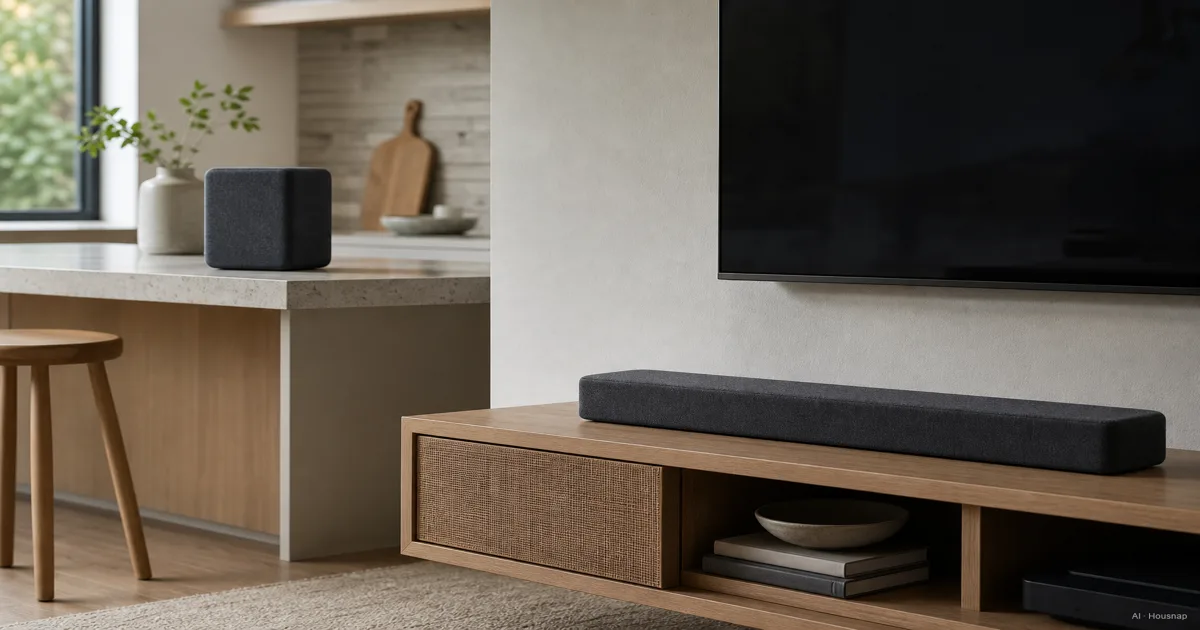
Here is the detail that changes how you should think about this whole decision: whichever one you buy first does not lock you out of the other. Sonos is explicitly built so a Beam (Gen 2) and a pair of Era 100 speakers work together, with the Era 100 pair acting as rear surround channels once you own a Beam, listed by Sonos itself as part of an "Immersive Set" home theater bundle.
Because every Sonos speaker in a system streams audio over your home network rather than getting it relayed speaker to speaker, adding Era 100s as rears introduces no audible lag behind the Beam, according to discussion in the Sonos community. That is a real advantage of buying into one ecosystem instead of mixing brands.
So a genuinely low-stress path exists. Start with whichever product matches how you use sound right now, live with it for a while, and add the other piece only once you actually feel the gap it would fill. Nothing you buy first goes to waste in a bigger setup later.
Sources
- Sonos Era 100 — Sonos official; price, dual tweeters, midwoofer size, three class-D amplifiers, WiFi 6, Bluetooth 5.0
- Sonos Beam (Gen 2) — Sonos official; price, five-driver array, HDMI eARC, Immersive Set bundle with Era 100 rears
- Sonos Beam (Gen 2) User Guide — Sonos; HDMI-only connection, no line-in for older TVs
- Sonos Era 100 Speaker Review — RTINGS; measured bass extension and stereo width for its size
- Sonos Beam (Gen 2) Soundbar Review — RTINGS; virtual Atmos via HRTF processing, no upward-firing drivers
- Sonos Era 100 review — What Hi-Fi; dual angled tweeters and wider stereo image versus the original Sonos One
- Sonos Beam (Gen 2) review — TechRadar; faster processor enabling virtual Dolby Atmos, five-speaker array
- Sonos Beam (Gen 2) review — Tom's Guide; best-sounding soundbar for small TVs and tight rooms
- Just getting started. Era 100 or Beam? — Sonos Community; first-buy guidance from real owners, combining both later