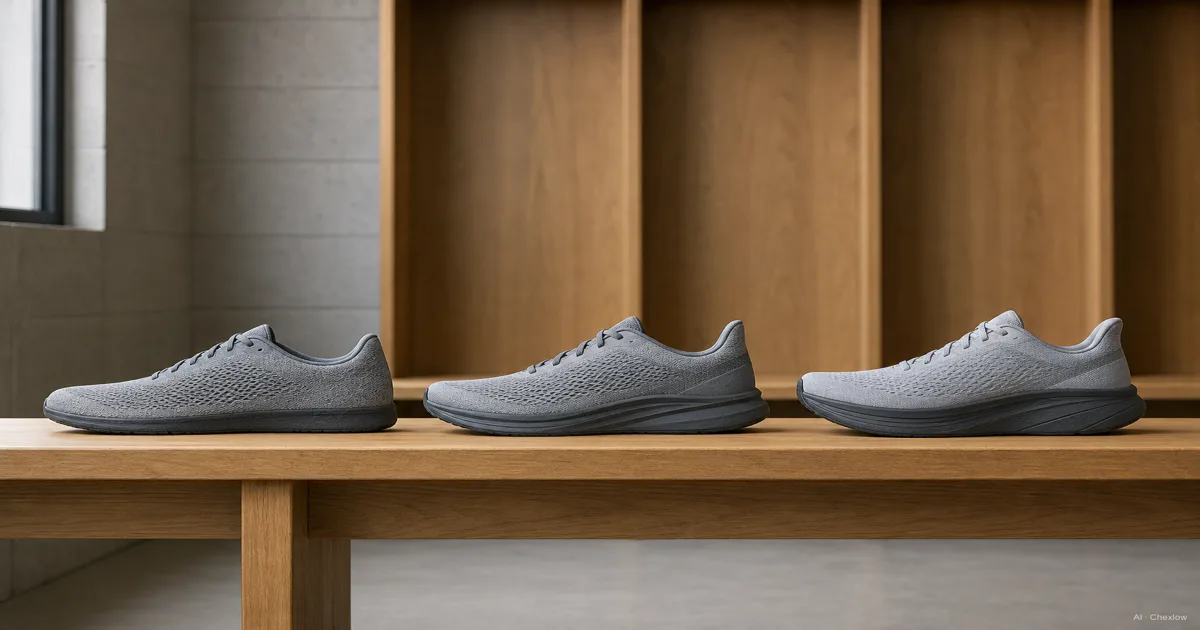
Read the difference, not the thickness
Drop (offset) is heel height minus forefoot height: 36 − 28 = 8 mm in this example. (Brooks glossary)
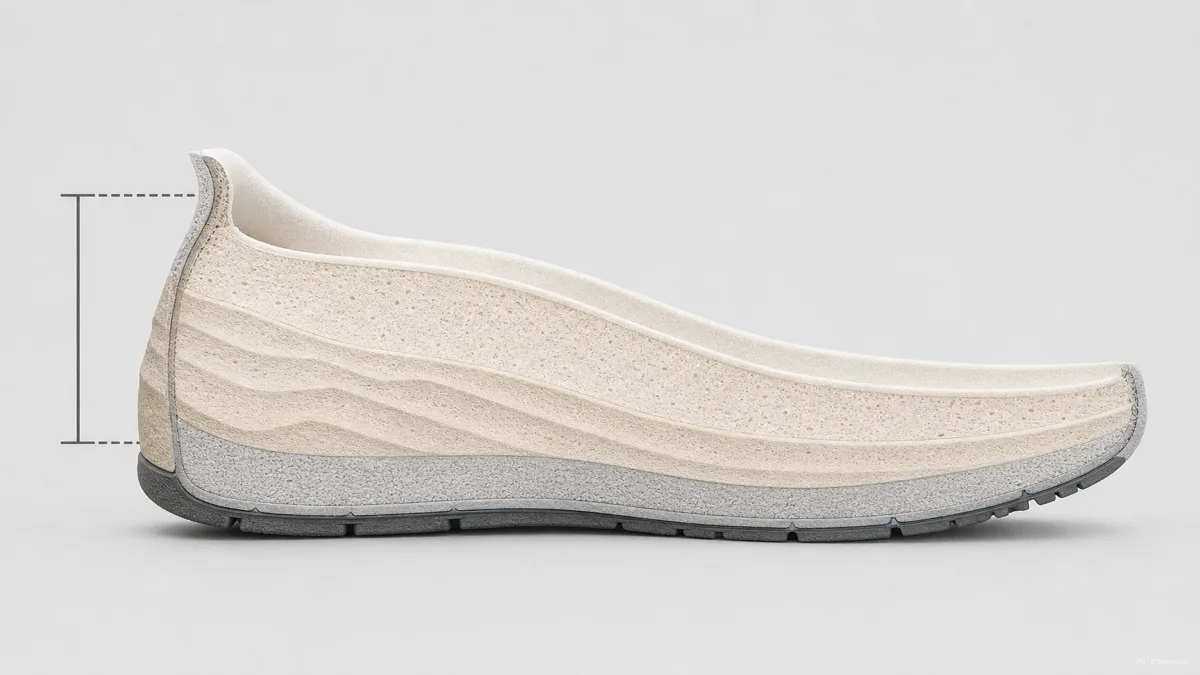
Zero drop can still be cushioned. Check drop and sole thickness separately for your exact candidate. (ASICS explanation)
Choose a starting point you can actually compare
- Already running comfortably? Keep its drop as your reference; a comfortable setup need not change. (ASICS)
- No familiar running shoe? For a manageable first fitting, try an everyday trainer around 8–10 mm alongside a lower-drop option that fits. This is a comparison strategy, not a medically preferred range.
- Interested in zero drop? Keep it on the shortlist if it fits, but budget time for the gradual introduction below. Zero is a design choice, not a graduation target.
A six-month trial involving 553 runners found no overall injury-risk difference among 0, 6 and 10 mm cushioned shoes. That does not establish a universally safest drop. (Randomized trial)
Use the load diagram without turning it into a prescription
Lower drop can increase foot and calf demands. Plan substantial changes carefully. (Altra guidance)
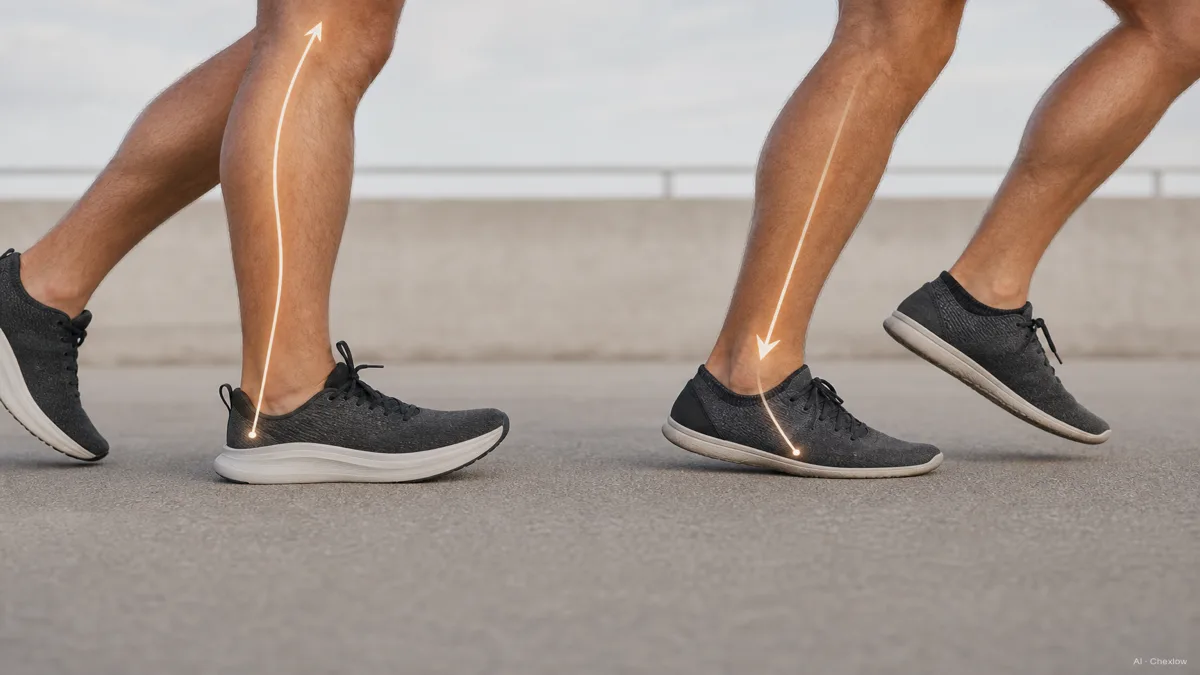
This is a simplified illustration, not a rule that drop determines landing style. A 59-runner trial found no drop-specific adaptation in initial-contact leg angles. Do not assign yourself a shoe from a heel-, midfoot- or forefoot-strike label alone. (Running-pattern trial)
A seven-man study compared 0 and 15 mm shoes, but materials and stiffness differed too. Its joint-work findings cannot isolate drop or establish pain relief. (Biomechanics study)
With ongoing knee or Achilles pain, stop running and seek assessment, rather than self-prescribing a drop. (NHS guidance)
Let the fitting decide between your candidates
Bring your usual running socks and any inserts you already use. If the length fits but the sides squeeze or leave excess room, reconsider width. (Brooks fitting advice)
For each candidate, note its exact version, drop, size and width. Walk in both shoes, then try an easy jog if the shop permits. Reject uncomfortable candidates even when their drop matches your initial plan; check the seller's trial and return conditions before buying.
Still deciding between neutral and stability shoes? Explore cushioning and support choices as a separate question. If your usual route is off-road, use the trail-shoe guide to consider terrain before settling on a pair.
Introduce a different drop without a deadline
- Start small. Begin with brief wear and check your response that evening and the next morning. (Altra transition advice)
- Build the running separately. Increase running gradually. For a clearer shoe trial, avoid adding speed and distance together. (NHS advice)
- Pain changes the plan. Stop if running hurts; seek assessment for persistent symptoms. (NHS)
Treat these as checkpoints, not a universal four-to-eight-week schedule. The buying decision is whether this shoe fits and works for you, not whether you can force yourself to reach a particular drop.
Hoe deze gids is opgebouwd
Written by AI for Housnap, using manufacturer explanations, published running studies and NHS guidance. This guide helps first-time buyers compare heel drop without treating a specification as a diagnosis; the fitting sequence is editorial guidance, not a product test or an individualized treatment plan.