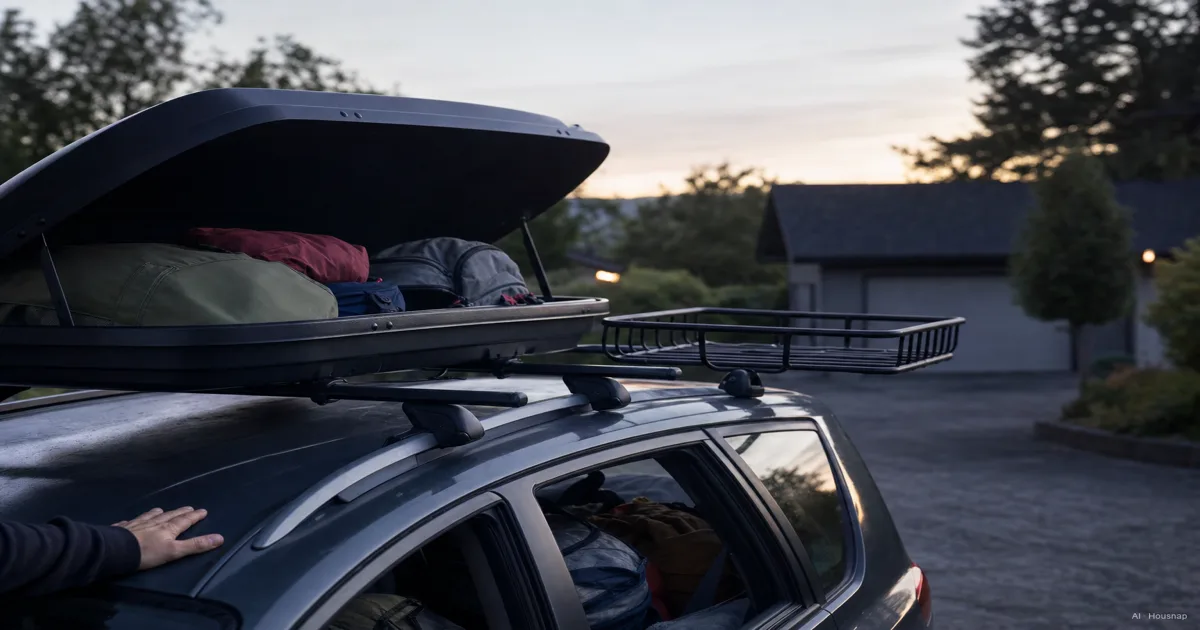
Choose around the load you actually need to carry
Put the overflow luggage beside the car before shopping. The choice is between an enclosed box and an open basket; “roof rack” can also mean the crossbars supporting either one.
- Choose a box for light, bulky bags when you want a lid and a lock. Thule's box guide describes that use. Check usable internal dimensions against your longest and tallest items.
- Choose a basket when your awkward gear needs an open loading area and you are willing to secure it for every trip. Yakima's LoadWarrior illustrates this crossbar-mounted format.
- Keep sensitive items inside the car. A box is not a guarantee against water or dust, as REI explains.
If grouping loose items makes everything fit inside, consider choosing a trunk organizer before adding roof storage. An organizer addresses clutter, not a genuine shortage of cargo volume.
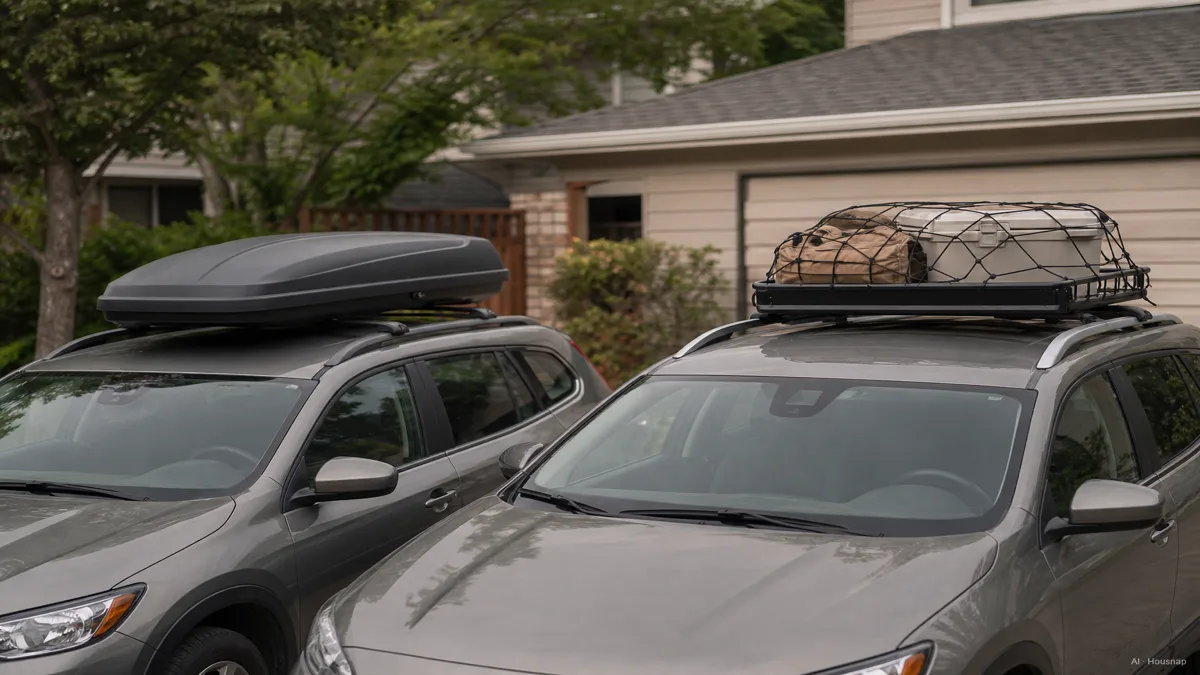
Confirm the mounting system and three measurements
Crossbars run across the roof; a basket is the load-carrying tray above them. Check the fit guide for your exact vehicle and roof configuration, then the carrier's mounting requirements. Compatible crossbars, feet and any required adapters belong in the purchase budget. Thule explains the rack and adapter requirement.
- Bar fit. Compare bar profile and spacing with the selected carrier's instructions. A broad “universal” claim is not enough: LoadWarrior specifies its own spacing range.
- Hatch clearance. Use the chosen maker's measuring method. Thule's chart measures from the front crossbar centre to where the roof meets the hatch.
- Loaded height. Measure to the highest point, including basket cargo, and compare with your parking entrance. An empty basket's height does not settle this.
If any dimension is unresolved, get the vehicle and carrier manufacturers to confirm the combination before ordering.
Calculate the payload before choosing a larger carrier
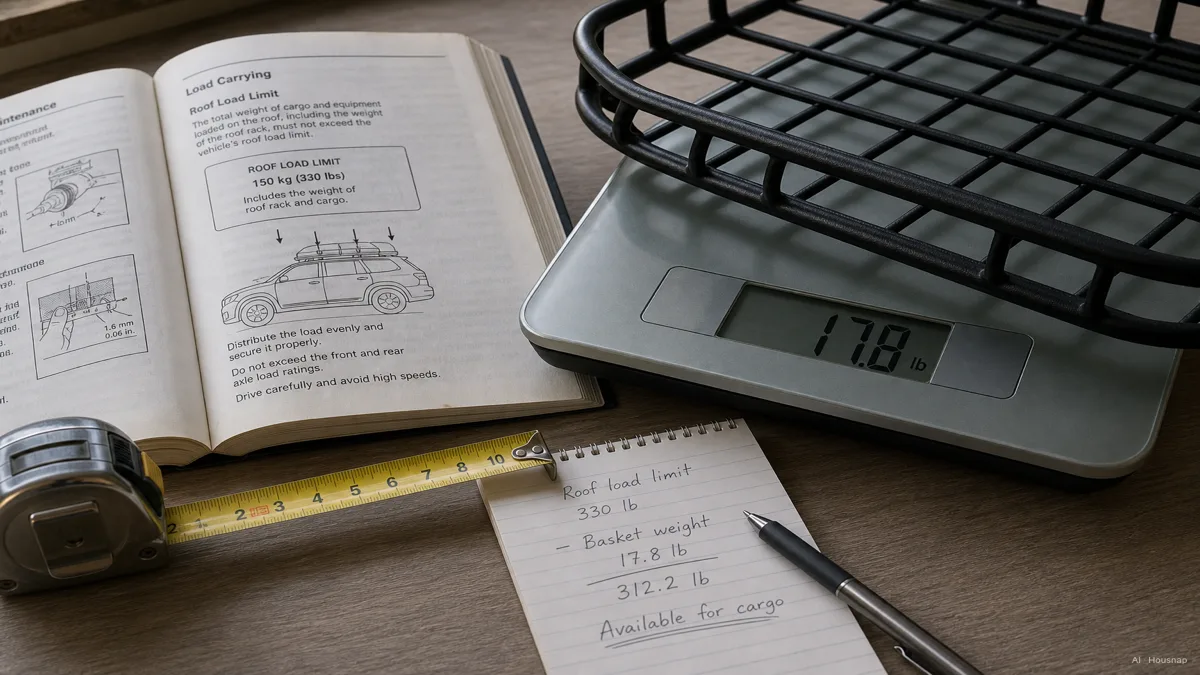
Use the dynamic limit, for driving, rather than the static limit for a parked vehicle. Respect the vehicle, rack and carrier limits separately. Thule's load guidance explains the distinction.
For a vehicle limit that includes all roof equipment, subtract the complete rack, empty carrier and other roof accessories. Factory-rack ratings may be expressed differently, so follow the applicable instructions without subtracting the same equipment twice. Yakima's capacity guidance.
Illustrative calculation: 75 kg total roof allowance − 5 kg rack − 20 kg carrier = 50 kg remaining. If the carrier allows only 40 kg of cargo, the ceiling is 40 kg, assuming the rack permits it too. These are hypothetical figures, not your car's rating.
Weigh the planned load, including its bags and restraints. More litres cannot solve an exceeded weight limit.
Compare the complete setup, then decide
For a basket, include suitable cargo tie-downs in the plan; rack straps secure the load. Follow the carrier's restraint instructions: LoadWarrior's manual calls for even loading and front and rear tie-downs for long loads. The illustration is not a substitute for those instructions.
For a box, check that you can reach the opening, secure the contents and verify the locks. Thule's safety instructions require mounting, restraint and lock checks before and during journeys.
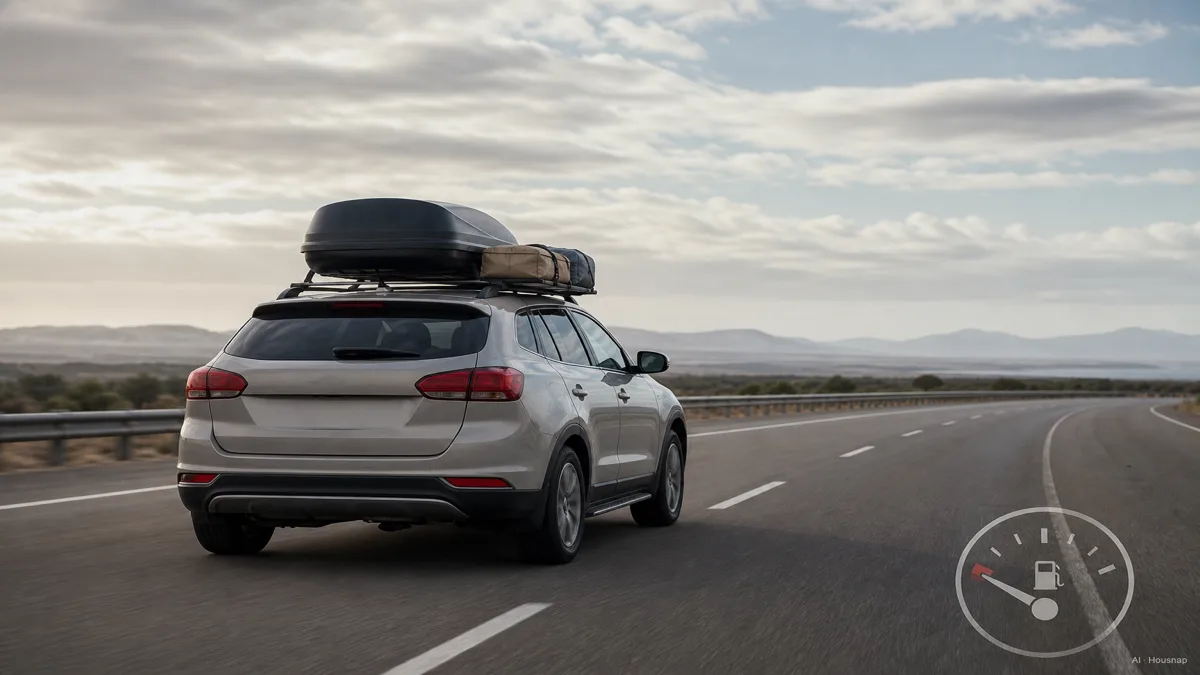
Roof cargo adds aerodynamic drag. Plan to remove the carrier when unused; FuelEconomy.gov supports that step, not a blanket claim that baskets always use less fuel than boxes.
Before paying, write down the complete fitted cost, cargo allowance, loaded height and off-car storage location. Choose the option that passes all four and suits your usual load. If neither does, reduce the load or reconsider roof transport before buying.
Hoe deze gids is opgebouwd
This guide was written by the Housnap AI editor using Thule and Yakima documentation, REI's cargo-box guidance and FuelEconomy.gov. It organizes those sources into a first-purchase comparison; it is not a hands-on product test or vehicle-specific fit approval.