Parchment Paper vs. Silicone Baking Mat, What Each Is and When to Use Which
The question of parchment paper versus silicone baking mat sounds like it should have a simple answer, but in practice it depends on what you bake, at what temperature, and how much variation you expect in your baking routine. Both surfaces do the same basic job — prevent food from sticking to the pan — but the way they do it produces different results, and the practical tradeoffs are worth understanding before you commit to one or the other as your default. Adding to the confusion, many home bakers also have wax paper in the drawer, and wax paper is neither of these things. Using wax paper in the oven is a common mistake with consequences that range from smoke to a faint off-taste to, in some ovens at high temperature, a more dramatic problem. The three products are worth distinguishing clearly before deciding which two to keep.
Nu verkrijgbaar bij één winkel
Deze producten zijn momenteel elk bij één winkel verkrijgbaar. Prijsvergelijking opent zodra meer winkels zijn toegevoegd.
Parchment paper and silicone baking mats both solve the pan-sticking problem, but they solve it through different materials and mechanisms, and those differences cascade into performance differences that are meaningful enough to affect the quality of what you bake.
What each is and how it works
Parchment paper is paper that has been treated with silicone or quilon coating, making it nonstick and heat-resistant. The paper itself gives it structure; the coating gives it release. When you line a baking sheet with parchment, you are creating a sacrificial layer between the food and the pan — once the food is done, the parchment comes off with the food, and you can dispose of it. The heat-resistance of parchment varies by brand and treatment, but most commercially available parchment paper is rated to around 220°C to 230°C, with some premium versions rated to 260°C.
A silicone baking mat, commonly known by the brand name Silpat (though many other brands exist), is made from a layer of food-grade silicone bonded around a fiberglass mesh. The fiberglass mesh gives the mat structural rigidity so it holds its shape on the baking sheet, and the silicone layer provides the nonstick surface. The mat sits on the baking sheet and can be washed and reused. Food-grade silicone in this application is typically rated to around 230–260°C continuous (Silicone Baking Mat, Wikipedia).
Both surfaces work by providing a low surface energy coating that prevents covalent bonds between the food and the surface — in simpler terms, neither the food's proteins nor sugars bond chemically to the surface during cooking, which is what causes sticking. The difference in performance comes from the surface texture, heat transfer characteristics, and the behavior of each material at different temperatures and with different foods.
Cost per use comparison
Parchment paper is an ongoing cost. A roll of quality parchment paper costs a modest amount but requires regular replacement, and each use of the paper results in disposal. For a baker who uses parchment two to three times per week, the annual cost in parchment paper is real and recurring.
A silicone baking mat has a higher upfront cost but is rated for a significant number of uses — manufacturers typically claim 2,000 to 3,000 uses per mat, which at two to three uses per week is over ten years. The cost per use of a silicone mat, amortized over its rated lifespan, is lower than parchment paper per use by a significant margin. Whether this calculation matters to you depends on how much you bake and whether you care about the comparison (The Best Silicone Baking Mats, Serious Eats).
The practical caveat with the cost comparison is that silicone mats are not free to maintain. They must be washed after each use — a step parchment eliminates — and they will eventually need replacement if mishandled (cut with a knife, folded sharply, exposed to temperatures beyond their rating). The cost per use calculation assumes the mat is cared for correctly. If a mat is cut or damaged early in its life, the cost comparison shifts substantially.
Performance differences for cookies, bread, and roasting
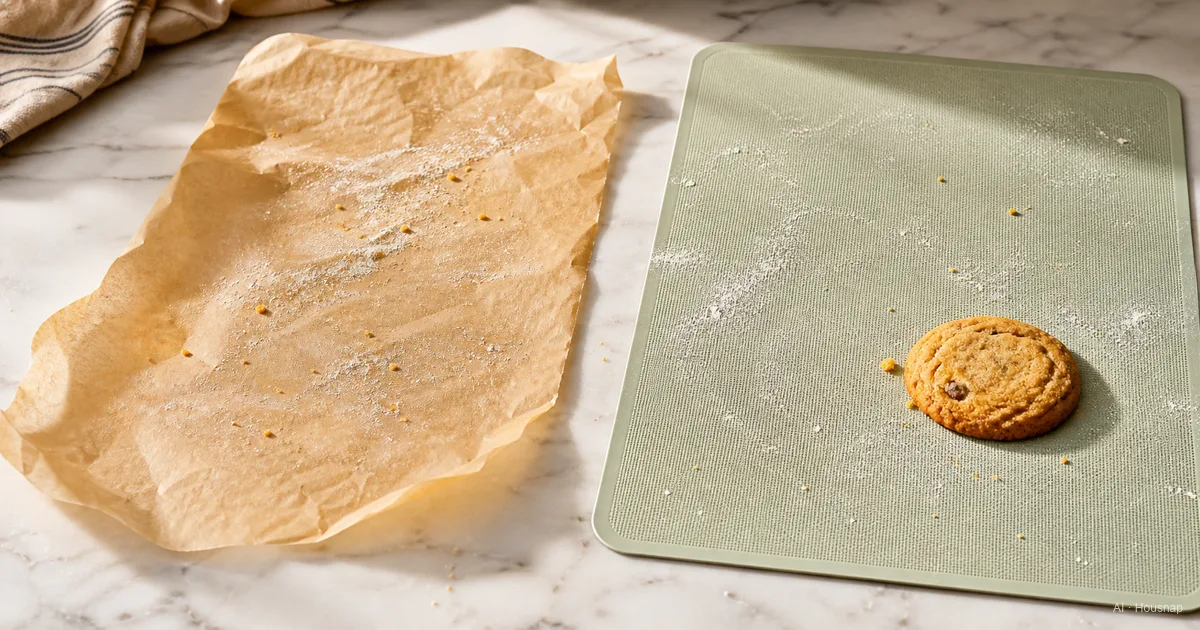
For cookies, the differences between parchment and silicone mat are real and consistently observed by bakers and testers. Cookies baked on parchment tend to spread slightly more and brown slightly more on the bottom than cookies baked on a silicone mat. The silicone mat insulates slightly, which slows the rate of heat transfer to the bottom of the cookie. This produces cookies that are lighter on the bottom and sometimes chewier throughout. Whether this is better depends entirely on the cookie and your preference — for thin, crispy cookies you want to brown, parchment is better. For thick, chewy cookies where you want the interior to set without much bottom color, a silicone mat is better (Stella Parks, Cookie Baking Science, Serious Eats).
For bread, parchment is almost always the better choice for one specific reason: bread is typically baked at very high temperatures, often 230°C to 260°C, and some baking methods (the Dutch oven method for sourdough, for instance) approach or exceed 260°C. Most silicone mats are not rated for sustained use above 230°C, and using a mat at or near its temperature limit degrades it faster and risks the mat's silicone separating from the fiberglass mesh. Beyond temperature, parchment is also a better transfer surface — you can proof bread on parchment and then lift it directly into a Dutch oven using the parchment as a sling, something you cannot do with a silicone mat.
For roasting vegetables, meat, or fish, both surfaces work, but parchment has the advantage for high-heat or high-moisture situations. Roasting vegetables at 220°C works fine on either surface, but if you are adding a lot of oil or cooking something that releases significant liquid (fish, tomatoes), parchment is easier to clean up — just remove and discard. A silicone mat soaked in oil and rendered fat requires more thorough washing.
Release characteristics for sticky doughs
Release — the property of letting cooked food come off the surface cleanly — is where parchment and silicone mats diverge most meaningfully for certain bakers. Most foods release from both surfaces without problem. Sticky, high-sugar doughs are where differences emerge.
Caramel-heavy cookies, brittle, tuile, and similar confections that rely on a high sugar content to set during cooling can stick to a silicone mat even after cooling, particularly if the sugar content is very high or the food has been left on the mat too long after baking. This happens because the silicone surface, while nonstick, can bond with very high concentrations of hot sugar at the molecular level, and that bond strengthens as the sugar cools and crystallizes. On parchment, the same confection releases cleanly because the paper surface does not form the same bond (The Food Lab, Kenji López-Alt, Serious Eats).
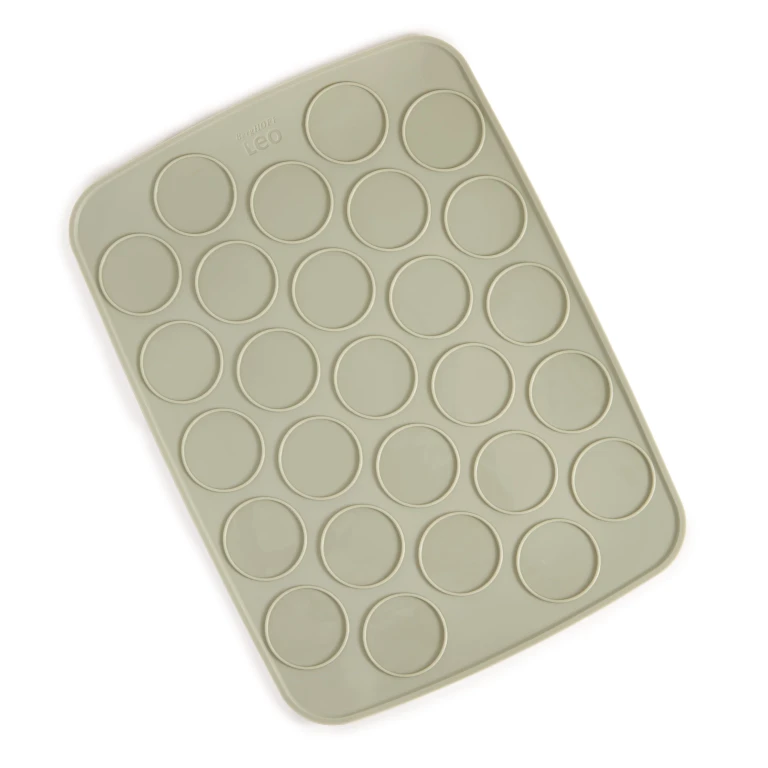
For macarons, which are notorious for sticking challenges, parchment is generally considered the more reliable release surface. Some experienced bakers prefer parchment for all delicate meringue-based cookies and pastries, citing the cleaner release. Others use silicone mats successfully for macarons by ensuring the mats are completely clean and at room temperature before baking.
The practical takeaway is that for everyday cookie and pastry work, both surfaces release adequately. For candy work, high-sugar confections, and particularly delicate work where the integrity of the finished piece matters, parchment is the safer default.
Silicone mat care and lifespan
Silicone mats require more consistent care than parchment, which requires no care because you discard it. The main enemies of a silicone mat are cuts, sharp folds, extreme temperatures, and accumulated grease.
Wash a silicone mat in warm water with mild dish soap after every use. Do not use abrasive scrubbers, which can damage the silicone surface. Many silicone mats are dishwasher-safe, but the top rack is recommended over the bottom rack because the heating element in many dishwashers can exceed the mat's rated temperature. Hand washing is more conservative and extends the mat's life.
Do not cut on a silicone mat. Knives leave cuts in the silicone that become food traps, create areas of inconsistent nonstick performance, and structurally weaken the mat. If you use a silicone mat for rolling out dough, do not use a knife on it.
Do not fold a silicone mat sharply or roll it tightly. The fiberglass mesh inside the mat is designed to flex but not to be bent at a sharp angle repeatedly. Storing a silicone mat flat or loosely rolled is the correct approach. Mats that are bent sharply in the same spot repeatedly will eventually develop a crease where the silicone separates from the mesh.
Do not use a silicone mat for temperatures at or above the manufacturer's maximum rated temperature. Most mats are rated to 230–260°C, and sustained use at the high end of that range degrades the mat faster than use at lower temperatures.
A mat that is properly cared for will last years. A mat that is cut, folded, or repeatedly used at high temperatures will start showing performance issues — uneven nonstick behavior, staining that does not wash out, a noticeable odor during baking — within a year or two.
When parchment wins
Parchment is better than a silicone mat for:
High-temperature baking above 230°C. Sourdough bread, pizza, flatbreads, and anything baked in a very hot oven stays within parchment's rating where silicone mats are operating at the edge of theirs. Most quality parchment is rated to 220–230°C, with premium versions rated to 260°C.
One-time-use situations where cleanup is important. Roasting fish, glazed meats, or anything very messy is easier to clean up when you discard the parchment rather than washing a mat.
Candy and high-sugar confections. As described above, parchment releases sticky, high-sugar items more reliably than silicone.
Situations where the paper becomes part of the cooking method. Bread baked in a Dutch oven using parchment as a sling, en papillote cooking where the paper is sealed around the food to create steam, and butter paper wrapping for certain pastries all require the structural and disposable qualities of parchment that a silicone mat cannot replicate.
Irregular pan shapes and custom-cut liners. Parchment can be cut to fit any shape. Silicone mats are fixed sizes.
When silicone mat wins
A silicone mat is better than parchment for:
Repetitive baking of the same product in large quantities. Baking dozens of cookies over several hours is cheaper with a mat than buying parchment for each batch.
Tasks where you want slightly less bottom browning. Thick, chewy cookies, madeleines, and similar baked goods where a pale bottom is preferred benefit from the silicone mat's slight insulating effect.
Macarons and macaron-adjacent work for bakers who have learned to use the mat correctly. Many professional pastry kitchens use silicone mats for macarons, citing consistent results once the mat is well-seasoned and the technique is established.
Situations where the ecological cost of disposable paper matters to you. Silicone mats produce less waste over their rated lifespan than the equivalent number of parchment paper sheets.
Wax paper is neither (common mistake)
Wax paper is paper coated with paraffin wax. It is nonstick at room temperature and is useful for tasks like rolling out pastry dough between two sheets, wrapping food for refrigerator storage, or separating layers of baked goods in a storage container.
Wax paper is not oven-safe. At oven temperatures, the paraffin wax coating melts and can smoke. In a very hot oven, it can ignite at the edges where it extends beyond food coverage. The wax also melts into food, contributing an off-flavor that is subtle but present. Wax paper in the oven is a mistaken substitution for parchment paper, and it is a common mistake because the two look similar in a drawer.
The distinction to remember: parchment is silicone-coated and oven-safe. Wax paper is wax-coated and is not oven-safe. When any recipe calls for parchment, wax paper is not an acceptable substitute (Baking Parchment, Wikipedia).
Sources
- The Best Silicone Baking Mats, Serious Eats — comparative testing of release, browning, and durability
- Stella Parks, Cookie Baking Science, Serious Eats — how baking surface affects spread, browning, and texture
- Silicone Baking Mat, Wikipedia — construction, material properties, and use guidelines
- Baking Parchment, Wikipedia — parchment vs. wax paper distinction, silicone coating chemistry