
First decide whether you need a supplement
Before comparing bottles, write down what you want to address, foods you regularly avoid, and any supplements or medicines you already take. “I should probably take something” is a reason to ask questions, not a shopping list.
- Several dietary gaps: a multivitamin may be worth considering.
- One identified need: compare products containing that nutrient.
- No clear gap: it is reasonable to postpone the purchase and review your diet.
These are buying decisions, not diagnoses. NIH guidance describes multivitamins as a possible way to supplement inadequate intake, not a replacement for varied meals.

Choose breadth or a specific nutrient
A multivitamin is the broader option, but “multi” does not mean complete: formulas vary, and basic products usually contain little calcium or magnesium. Check what your candidate actually covers. (NIH)
Single-nutrient B12 is a candidate when B12 is the identified gap, for example when a vegan diet lacks a reliable source. B12 also comes in multivitamins; a separate bottle lets you select it without adding other nutrients. No supplemental B12 form has been shown superior to the others. (NIH B12 guidance)
Single-nutrient vitamin D is another conditional choice when supplementation has been advised. It is also found in multis, so check the existing amount first. Treatment of a diagnosed deficiency may require a clinician-directed dose; the largest bottle strength is not a self-treatment plan. (NIH vitamin D guidance)
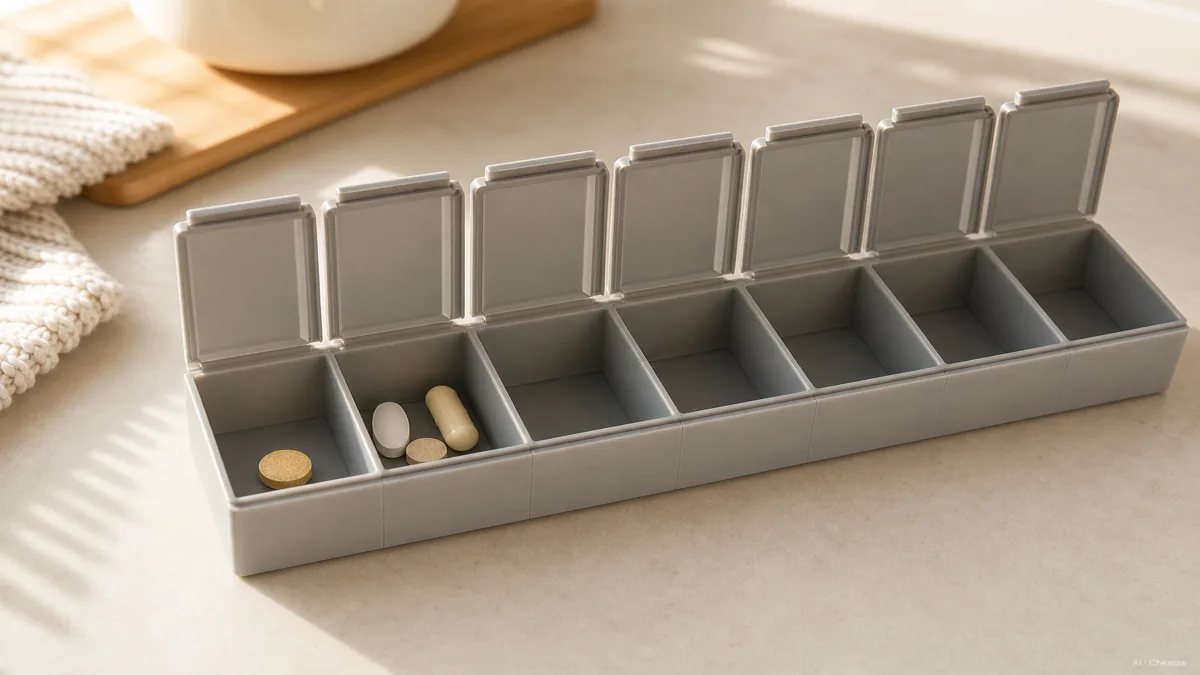
Choose the ingredient before the format. The organizer below illustrates different approaches, not a recommendation to take all the pills shown.
Compare the full serving, not the front label
For a US-labeled product, start with Supplement Facts: serving size and nutrient amounts per serving. A serving can contain more than one tablet. For example, a hypothetical 60-tablet bottle taken at two tablets daily lasts 30 days, not 60. Compare cost for the intended daily serving, rather than bottle size alone. (FDA label guidance)
“Active” is not an automatic reason to pay more. Common MTHFR gene variants do not mean you must avoid folic acid. (CDC)
Independent quality testing can help assess contents and contaminants, but a seal does not prove that the supplement will benefit you. (NIH quality guidance) Nor does US sale mean FDA approval: supplements do not receive premarket FDA approval. (FDA)
Check the combination before you buy
Put the labels of everything you take side by side. Add repeated nutrient amounts using the same units, including fortified foods where relevant. Show that list to a pharmacist or clinician before adding products, especially if you take medicine or are pregnant. Vitamin K, for example, can reduce warfarin’s effect. (NIH safety guidance)
If skin, hair or nails are the real goal, make that a separate decision: compare collagen and biotin before adding a beauty formula. Evidence for biotin beauty claims is limited, and above-recommended amounts can distort some laboratory results; tell the clinician ordering your tests what you take. (NIH biotin guidance)
Before checkout, be able to name the nutrient or dietary gap, the intended daily amount and any overlap. If one remains unclear, take the label to a professional rather than adding another bottle.
Hoe deze gids is opgebouwd
Written by Housnap AI using NIH Office of Dietary Supplements, CDC and FDA guidance. This guide compares first-purchase decisions and label checks; it does not diagnose deficiencies, prescribe treatment or report product testing.