Stainless, Glass, or Ceramic Mixing Bowl — Which Material Actually Works for Baking
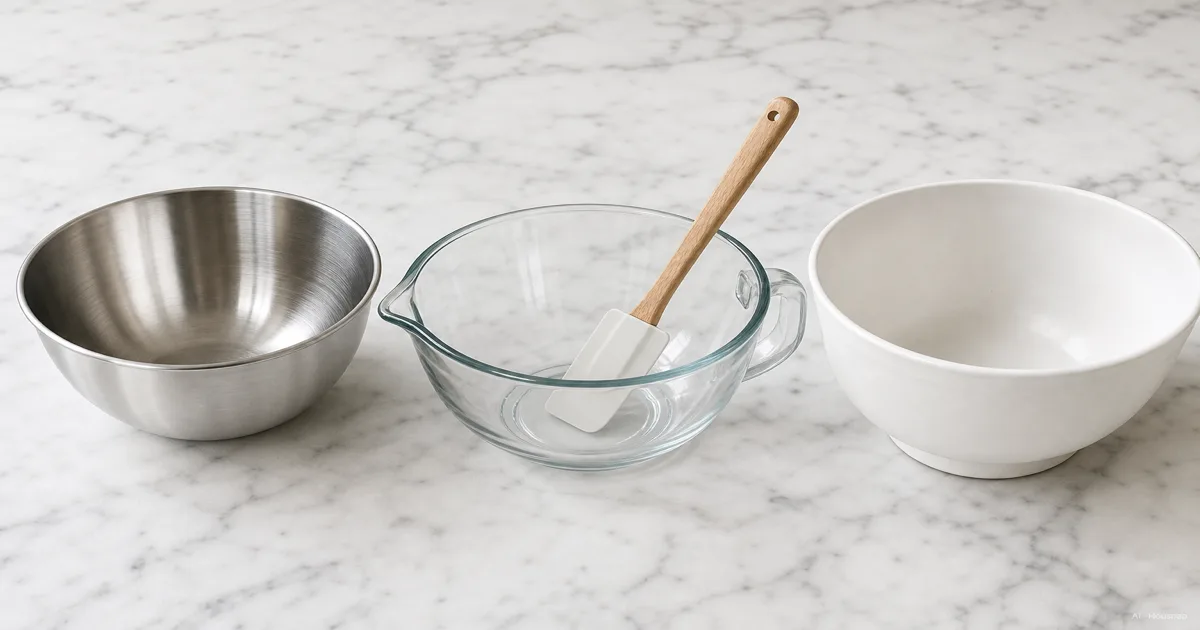
A mixing bowl does not need to be complicated. But it is the kind of thing where people end up owning three or four by accident — a glass one from a gift set, a plastic one from a moving box, a ceramic one that looks nice on the counter — and none of them quite do everything they want. The material question is actually worth thinking through once, because the differences are real. Stainless steel behaves differently than glass. Ceramic serves a different purpose than either. And plastic is the one that causes actual problems in serious baking, specifically for egg whites and whipped cream. This guide covers what each material changes, how to size a set, what features matter, and what a practical first buy looks like.
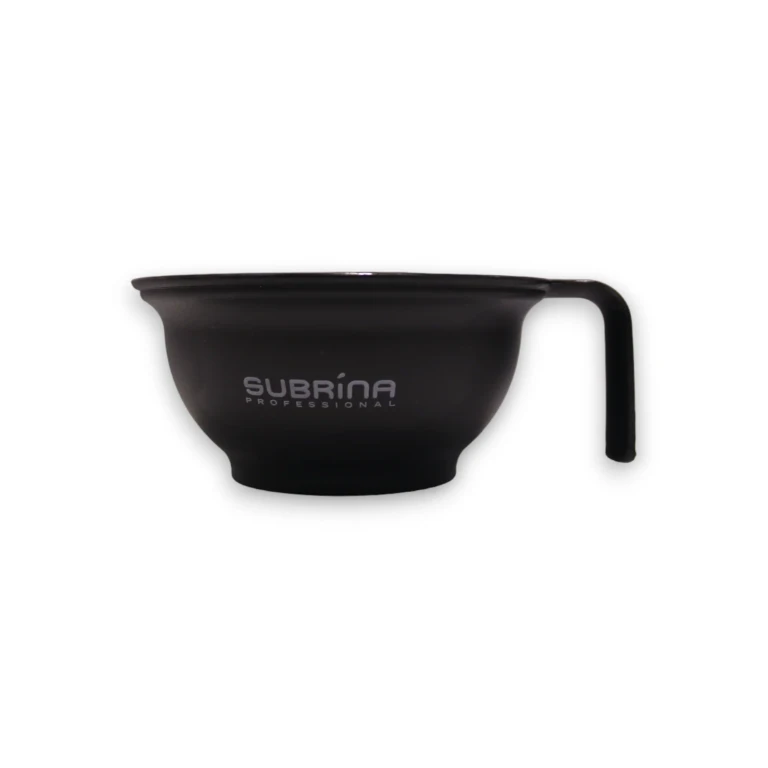
Actuele producten om te vergelijken
Deze producten komen uit Housnap-zoekresultaten voor dit onderwerp.
Choosing a mixing bowl comes down to understanding what each material is good at — and what it cannot do. There is no single bowl that wins on every axis. But stainless steel comes closest for most baking tasks, and understanding why makes the other materials easier to place.
Stainless steel: the professional default and why
Most professional bakers use stainless steel. It is not because they have strong feelings about the material — it is because stainless steel gets out of the way and lets the baking happen.
The key properties: stainless is lightweight compared to glass or ceramic, which matters when you are mixing bread dough by hand for several minutes. It is unbreakable in any reasonable kitchen scenario. It is non-reactive, meaning it will not affect the flavor of acidic ingredients like lemon juice or tomatoes. It is dishwasher safe. And it is completely neutral — nothing absorbs into it and nothing leaches out of it.
The freezer trick is real and worth knowing. Stainless steel conducts temperature well, so you can put the bowl in the freezer for ten to fifteen minutes before whipping cream. A cold bowl helps cream whip faster and hold its shape more reliably than a room-temperature bowl. This also works for keeping butter cold when making pastry dough. KitchenAid notes that the chillable surface of their stainless bowls is specifically useful for cream and cold-butter techniques.
The limitations are straightforward: stainless is not microwave-safe (metal in microwave), and you cannot see through it to check the consistency of your batter from the side. Neither is a serious problem for most baking, but both are worth knowing before you assume a stainless bowl covers everything.
Most stand mixers — KitchenAid, Bosch, Kenwood — come with a stainless bowl included. If you are replacing a KitchenAid bowl, note that bowl sizes are not interchangeable between models. A 5-quart bowl does not fit a 6-quart model. Check your mixer's model number before buying a replacement.
Glass: the transparent option and when it helps
Glass is the second most common choice, and it has a genuine use case that stainless cannot match: microwave compatibility.
If you melt chocolate or butter in the same bowl you then mix into your batter, glass is the more convenient choice. You can go from melting in the microwave to mixing in the same container, without transferring between vessels. This is a real advantage for ganache, brownie batter, or any recipe that starts with melted fat or chocolate.
The other advantage is visibility. You can see the batter from the side and bottom of the bowl — useful for checking whether dry and wet ingredients have fully combined, or for spotting lumps. Tasting Table notes that glass shares many of stainless steel's advantages and outperforms it in transparency and microwave use.
The tradeoffs are weight and fragility. Glass bowls are significantly heavier than stainless of the same size — which is not a problem if you leave the bowl on the counter while mixing with a hand mixer, but does matter if you are holding the bowl while whisking by hand. Glass also breaks. Not often under normal use, but it happens, and a large glass bowl dropped on a tile floor is not a good outcome.
One practical note: glass bowls are good for marinating. Non-reactive and microwave-safe, they can go from fridge to microwave to table without switching containers, which is genuinely useful outside of baking.
Ceramic: for the serving table, not the stand mixer
Ceramic and stoneware mixing bowls are the most visually appealing option, and that is a real consideration — not a trivial one. A ceramic bowl that looks good is something you might actually leave on the counter and use, which increases how often you reach for it.
The practical advantages of ceramic are temperature retention and non-reactivity. Ceramic holds cold temperatures well, which makes it useful for no-bake desserts, cold dips, or any prep where you want ingredients to stay cold. It is also non-reactive and easy to clean.
The limits are real though. Ceramic is the heaviest option by a significant margin — heavier than glass, noticeably heavier than stainless. Chips are a long-term concern, particularly on the rim where bowls make contact with other surfaces in storage. And ceramic bowls typically do not fit stand mixers — the shape and bowl attachment mechanism are designed for the manufacturer's own bowl, not generic ceramic containers.
According to Tasting Table's material comparison, ceramic is often too heavy for practical use and chips easily over time. This does not make it a bad choice — it makes it a serving choice more than a daily mixing choice. Buy a ceramic bowl if you want something that looks good on the table when you bring the salad or the dip out. Do not buy it expecting to use it as your primary mixing bowl for bread dough or cookie batter.
Plastic: the one to avoid for serious baking
Plastic mixing bowls are cheap and lightweight. If you are looking for a bowl to hold prepped vegetables or mixed dry ingredients on the way to the main bowl, plastic is fine.
The problem is fat absorption. Plastic is porous enough that fat residue from previous uses soaks into the surface. This becomes a serious issue when you try to whip egg whites or cream — fat contamination is what causes egg whites to fail to peak. Even a small amount of fat on the bowl surface (from a previous batch of cookie dough, for example) can collapse a meringue. Stainless and glass do not have this problem. Once you know this, you will understand why professional kitchens do not use plastic mixing bowls for egg white work.
The HexClad comparison and other sources also note that plastic picks up odors over time. A plastic bowl that has been used for garlic aioli will carry that smell into your next use. Stainless does not do this.
For occasional light prep, plastic is acceptable. For anything involving egg whites, cream, or long-term kitchen use, it is the weak option.
Sizing: what a three-bowl set actually covers
Most mixing bowl sets are sold in three sizes. The classic combination is a small bowl (around 1.5 quarts), a medium bowl (around 3 quarts), and a large bowl (around 5 quarts). All-Clad's 3-piece set is a common reference point for these proportions.
What each size actually does:
The small bowl (1.5 qt) is for prep work. Whisking eggs before adding them to batter. Mixing a sauce. Holding melted butter. Measuring and combining dry spices. It is too small for any full baking recipe but indispensable as a prep container.
The medium bowl (3 qt) handles a single layer cake, a batch of muffins, a standard cookie recipe, or a pizza dough for one. It is the bowl you reach for most often in everyday baking.
The large bowl (5 qt) is for bread dough, double batches, large batches of cookie dough, or any recipe that needs room for the dough to develop without climbing the sides. It is also useful for tossing salads or mixing large quantities of anything before a gathering.
If you are buying just one bowl before deciding on a set: a 5-quart stainless is the most versatile starting point. It handles large tasks and can handle small ones too, though a small bowl makes prep noticeably cleaner.
Features worth looking for
Non-slip base. A bowl that stays in place while you whisk with both hands, or while a hand mixer is running, is significantly easier to work with than one that slides. Look for a rubberized ring on the bottom, a suction-cup base, or a silicone-ringed base. Some bowls also have a weighted bottom that achieves the same effect.
Pour spout. A spout or pouring lip makes transferring batter to a pan much cleaner — relevant for muffin tins, loaf pans, or cake pans where dripping on the outside means extra cleanup. Not all stainless bowls have this, but it is worth checking.
Handle. A single handle makes it easier to hold the bowl with one hand while operating a hand mixer or whisk with the other. Some large bowls have a side handle for exactly this purpose.
Measurement markings. Some bowls have interior volume markings stamped or printed on the side. Useful for recipes that call for specific volumes of liquid — you can measure directly in the bowl rather than using a separate measuring cup.
First buy recommendation
For most people starting from nothing: a three-piece stainless steel set in the 1.5 qt / 3 qt / 5 qt range. This covers 90% of baking tasks without compromise. The bowls nest for storage, they last indefinitely with basic care, and the freezer technique for whipping cream works well with them.
Add one glass bowl — around 2 to 3 quarts — if you regularly melt chocolate or butter in the microwave and want to mix in the same vessel. A glass bowl is genuinely useful for this, and one is enough.
Ceramic is worth buying if you want something that looks good when you serve from it. Buy it as a serving bowl that can also be used for mixing — not as a core mixing bowl that happens to look nice.
Avoid plastic as a primary mixing bowl, especially if egg whites or whipped cream are part of your baking.
Sources
- Tasting Table — Best Mixing Bowl Material for Home and Professional Bakers — material comparison with professional chef input
- KitchenAid — Glass Bowl vs. Stainless Steel — temperature, microwave, and freezer technique comparison
- HexClad — Glass vs. Stainless Steel Mixing Bowls — pros and cons including odor absorption and material behavior
- All-Clad — Stainless Steel 3-Piece Mixing Bowl Set — reference for standard 3-piece sizing (1.5 / 3 / 5 qt)
- KitchenAid — Are KitchenAid Mixer Bowls Interchangeable? — model-specific bowl compatibility