Count removals, not just nights
Three evenings away plus one daytime makeup removal means four removal sessions. That is a packing estimate, not a promise that four wipes or a particular number of milliliters will be enough. Use your normal consumption with the makeup you intend to wear as the starting point.
The useful distinction is often individual packets versus a bottle and application pads. Lancer’s Makeup Removing Wipes, for example, are individually wrapped and sold as 30 wipes. You can pack separate unopened packets without taking the whole box. A resealable multipack is a different packing proposition, so check the packaging before buying.
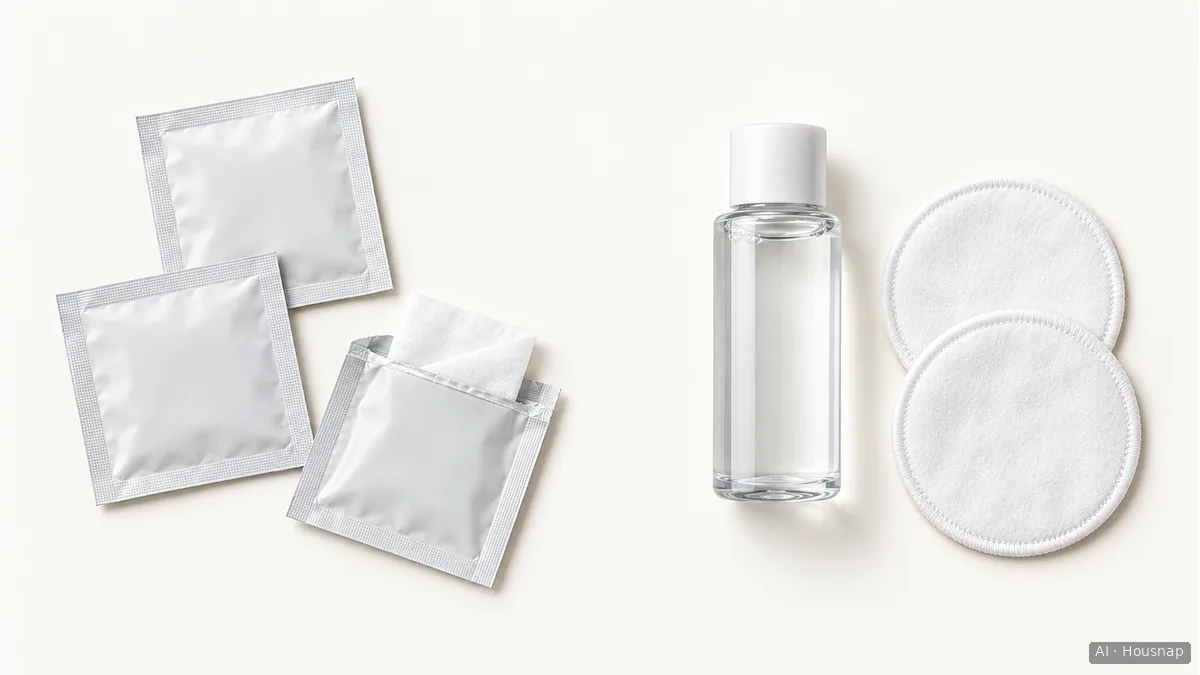
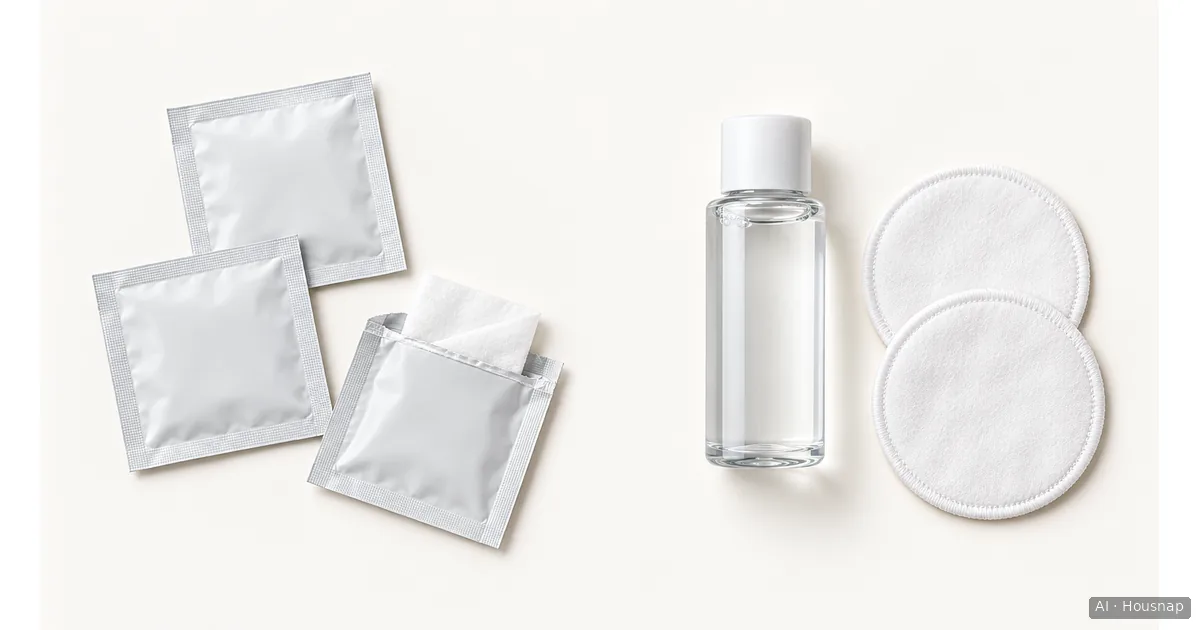
The illustration compares what you would pack. The objects are not a recommended quantity, a scale comparison or evidence of airport approval; the open packet simply reveals the wipe format.
For a bottle, estimate both the remover and the pads you will use. Compare the complete purchase you need for the trip, including any unused remainder, rather than comparing a price per wipe directly with a price per milliliter.
Check the journey before choosing the bottle
For US TSA screening, wet wipes are permitted in carry-on and checked bags, with the final decision resting with the checkpoint officer. This is US guidance, not a worldwide permission statement.
Under the TSA liquids rule, ordinary carry-on liquids must be in containers of 3.4 ounces (100 milliliters) or less and fit in a quart-sized liquids bag. Larger containers belong in checked baggage. The limit concerns the container: a partly empty large bottle does not become a compliant small one.
- Carry-on only, with a crowded liquids bag. Individually wrapped makeup-removing wipes are worth comparing, provided their intended use matches your makeup.
- Room for a suitable small bottle. Check the actual size you are ordering, not just the product name or a “travel” description.
- Checking a bag. You can consider a larger bottle under these TSA rules, but still decide what you need accessible before reaching the hotel.
For other departures and transfer checkpoints, check the relevant airport or security authority before buying. Do not extend the US allowance to the whole itinerary.
Pack a routine you can finish at the destination
A bottle does not automatically require a sink, and a wipe does not automatically finish the whole cleansing routine. Read the exact product’s directions for eye-area use, makeup removal and any rinse or follow-up step.
Garnier’s All-in-1 Waterproof micellar water is one documented example: the maker describes a no-rinse formula for face, eyes and lips, names waterproof makeup among its uses, lists a 3.4 fl oz size and instructs users to saturate a reusable pad. Those details belong to that version, not every bottle of micellar water.
If you choose that pad-based method, include clean application pads in the packing list. With reusable pads, decide how you will wash and dry them according to their own instructions, or bring enough clean ones to avoid relying on hotel laundry. Pads already treated with exfoliating ingredients are a different product from a plain pad you wet with remover.
Lancer describes its wipes as pre-moistened and intended for face and eye makeup removal. That does not establish that every wipe removes your waterproof mascara or replaces a later wash. Check the particular pack rather than treating “wipe” as a complete set of instructions.
Buy for the trip without rebuilding your routine
Choose the smallest practical kit that covers your planned removals and lets you follow the directions. If you already own a suitable bottle and can carry it, a separate travel purchase may add nothing. If you only need a few separately packed removals, individual wipes may solve that specific problem.
If your chosen remover leaves you needing a separate face-washing step, continue to deciding whether and how to add a second cleanser. Make that decision before assuming the hotel will supply what you need.
Do not keep using a new travel product through a skin reaction. The American Academy of Dermatology advises gently washing it off promptly and not using it again; a severe reaction that is not relieved by cool compresses or petroleum jelly may need a dermatologist’s care.
Hoe deze gids is opgebouwd
This draft was written by AI for Housnap, using manufacturer product information, US TSA baggage guidance and American Academy of Dermatology advice. It compares short-trip packing decisions, not removal performance in original testing; the product examples do not establish current availability or suitability for every traveler.