Check the bottle and lid separately
Find the bottle model and the name of the lid fitted to it, especially if you bought a replacement lid. Before washing, identify which parts may go in the dishwasher, where they belong in the rack, and which pieces must stay assembled. If a permission is unclear, check the manual or ask the manufacturer before putting that part in the machine.
For example, Hydro Flask specifies top-rack washing for every piece of its Flex Sip Lid, with pieces secured on rack prongs or in an accessory basket. That lid instruction does not establish dishwasher permission for the bottle body attached to it.
Keep the instructions open while you work. The useful information is the exact component and permitted method, not simply the word “stainless.”
Remove the named seal, not every rubber part
A gasket is the flexible seal fitted around or inside a lid. Before removing one, compare your lid with its assembly diagram and note its orientation. A photo can help you keep track of the pieces, but use the manual to establish the correct arrangement.
The distinction matters on the YETI Rambler Bottle Straw Cap: its instructions call for opening the mouthpiece and removing the straw and circular cap gasket, but explicitly say not to remove the small pressure valve gasket. Hydro Flask’s Flex Sip instructions, meanwhile, include removing its red silicone seal. These are instructions for different mechanisms, not interchangeable disassembly methods.
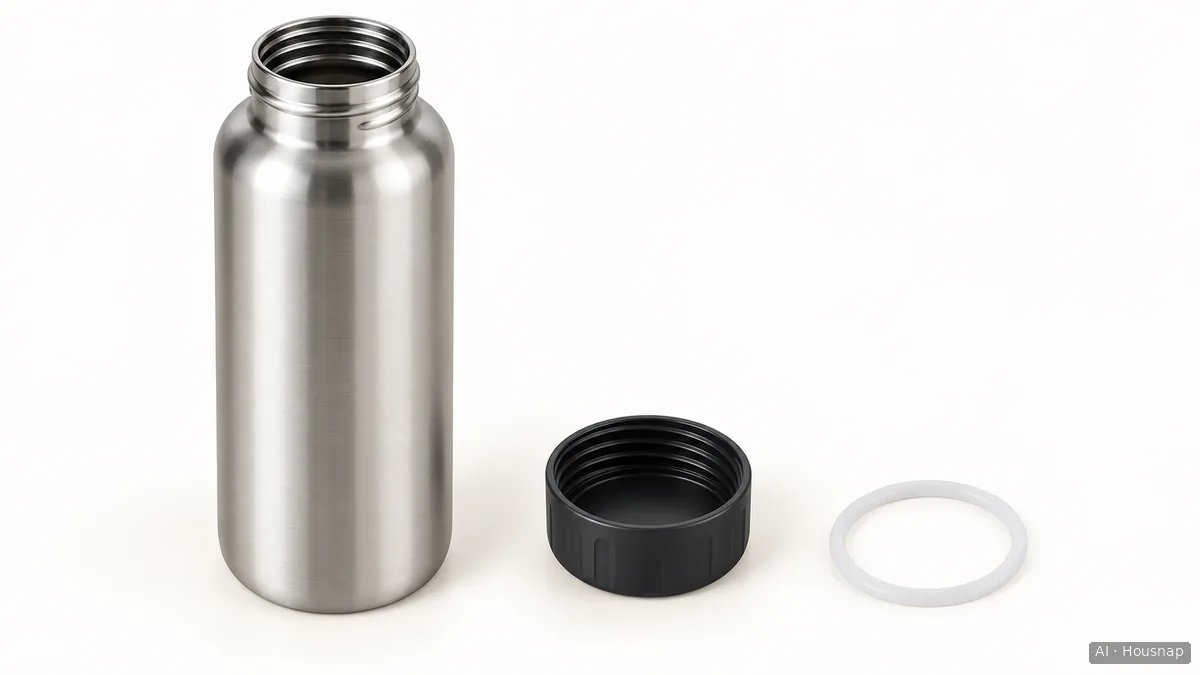
The illustration is a generic overview of separate components, not a diagram of your lid. It does not show a pressure valve or establish which seals are removable. If your instructions do not identify a part for removal, do not pry it out or push a tool through it.
Match the brush to the surface you need to reach
For hand washing, use the cleaner and water temperature permitted for the particular component. Hydro Flask specifies mild bleach-free soap and a soft sponge or brush for the Flex Sip Lid. Reuse suitable cleaning supplies you already own.
- Bottle interior. Choose a soft bottle-cleaning brush that fits through the opening and reaches the bottom. Thermos recommends a long-handled bottle brush; its care article also warns against steel wool, abrasive sponges and harsh scouring powders.
- Removable lid pieces. Wash the separated pieces and the exposed seal recess using the permitted method. Keep track of every part rather than washing several different lids together.
- Straw, if fitted. YETI specifies a soft-bristle brush long enough to reach every internal surface of the Rambler Bottle Straw Cap’s straw. A drinking-straw cleaning brush serves this task; it is not a tool for extracting the pressure valve.
Rinse every component until no soap residue remains, as Thermos directs. For deposits that remain, consult the exact product’s deeper-cleaning instructions. Do not transfer a boiling, soaking or chemical-treatment method from a different lid.
Dry the pieces, then check the seal’s direction
Let the cleaned components dry fully before reassembly. Thermos specifies complete drying, and YETI’s Rambler Bottle Straw Cap instructions also call for thorough drying before reassembly, use or storage, with the cap removed for storage.
Reassembly has its own instructions. The Rambler Bottle Straw Cap’s circular gasket goes back with its flat side against the cap; the Flex Sip Lid’s red seal goes back with its text facing up. Neither direction is a universal rule for bottle seals.
Compare the finished assembly with your manual: are all required pieces present, correctly oriented and in their specified positions? If a seal is torn, a lid is cracked, a piece is missing or the bottle still leaks after correct reassembly, stop using it and ask the manufacturer about the exact replacement part or lid. Do not stretch, trim or glue a seal to make it fit.
If residue remains somewhere the permitted cleaning method cannot reach, ask for model-specific service or replacement advice. More force is not the next cleaning step.
Hoe deze gids is opgebouwd
AI wrote this guide for Housnap using manufacturer instructions from YETI, Hydro Flask and Thermos. It separates model-specific permissions from practical checks for an already-owned bottle; no original product testing was performed.