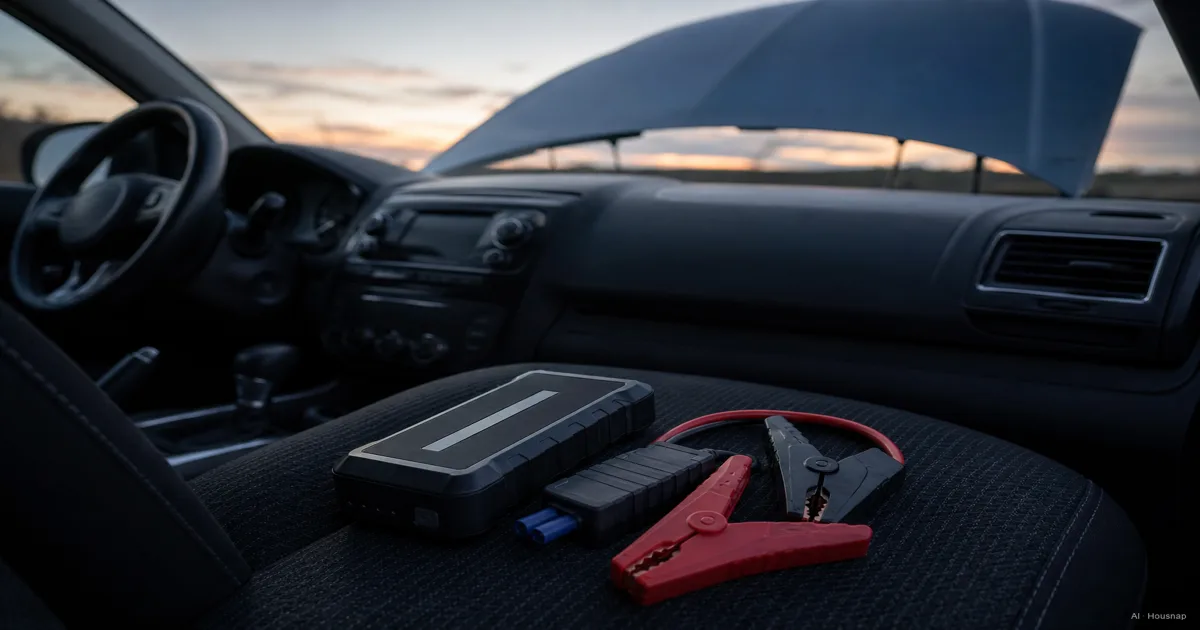
Check the vehicle before choosing the pack
Write down the battery voltage and chemistry, fuel type and engine displacement. Find the vehicle manual’s jump-start instructions and connection points before shopping; the GBX45 manual also requires those checks.
“Lithium jump starter” describes the battery inside the tool, not necessarily the battery it can assist. NOCO Boost X, for example, supports 12 V lead-acid vehicle batteries, including AGM and EFB, but not lithium vehicle batteries. For a hybrid, EV or unfamiliar battery system, confirm the vehicle’s procedure and the starter’s compatibility before choosing.
Then check the manufacturer’s engine limit for the correct fuel. NOCO’s GB40 is specified for up to 6.0 L gasoline or 3.0 L diesel engines. Those are model-specific limits, not a rule for every pack with the same amp number.

The vehicle silhouettes illustrate different use cases. Do not use the pictured peak-amp bands as a buying chart; check your actual engine against the candidate’s documentation.
Read the current rating without turning it into a guarantee
A useful comparison keeps the rating names attached. The JNC660 lists 1,700 peak amps and 425 cranking amps. Those numbers describe different ratings on the same device.
For lead-acid batteries, CCA measures a 30-second discharge at about −18°C; CA uses 0°C. Both require a 12 V battery to remain at least 7.2 V under the specified test. These are battery-rating definitions, not interchangeable labels for every jump pack. Interstate’s glossary explains the distinction.
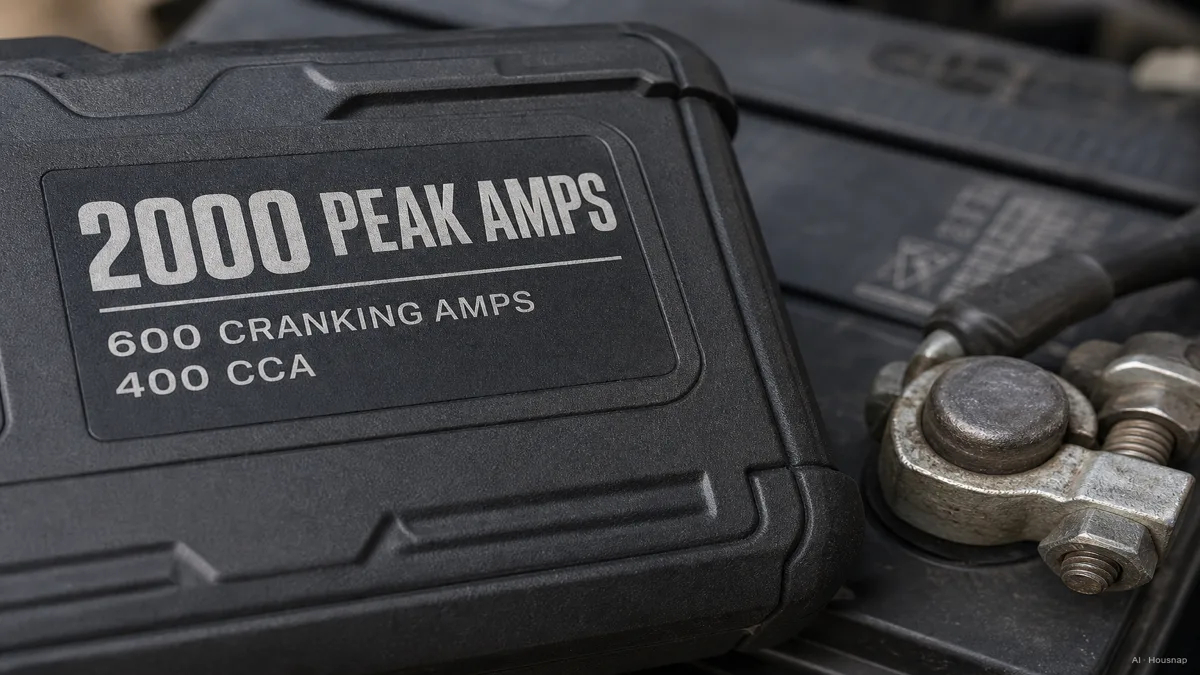
Illustrative label, not a tested product specification.
If two sellers give different types of current rating, ask for comparable test conditions rather than ranking the bigger number. Likewise, do not substitute mAh capacity for the manufacturer’s engine-compatibility statement. A listing that leaves compatibility unanswered belongs off your shortlist.
Choose protection you can understand
For a first purchase, make documented reverse-polarity protection and spark protection shortlist requirements. GB40 provides an example of both; confirm them on the exact model you are considering. This is a buying criterion, not a promise that every connection is safe.
Read the warning-light instructions before buying. Check how the model handles a reversed connection, excessive temperature and a battery it cannot detect. Manual override is not a routine “more power” button: on GBX45 it disables spark and reverse-polarity protections. Its manual says to seek professional help if unsure, and prohibits jumping damaged or frozen batteries. GBX45 instructions
Pick a size and charging routine you can live with
For an occasional emergency kit, start by comparing compact lithium units: their lower weight and smaller size are practical advantages over traditional lead-acid boxes. Schumacher explains the format difference.
A garage-oriented box can still suit someone who values longer leads and a dedicated charging place. The JNC660, for example, weighs 18 lb and has 46-inch leads and an automatic charger. Check whether that tradeoff makes sense for where you will carry and use it.
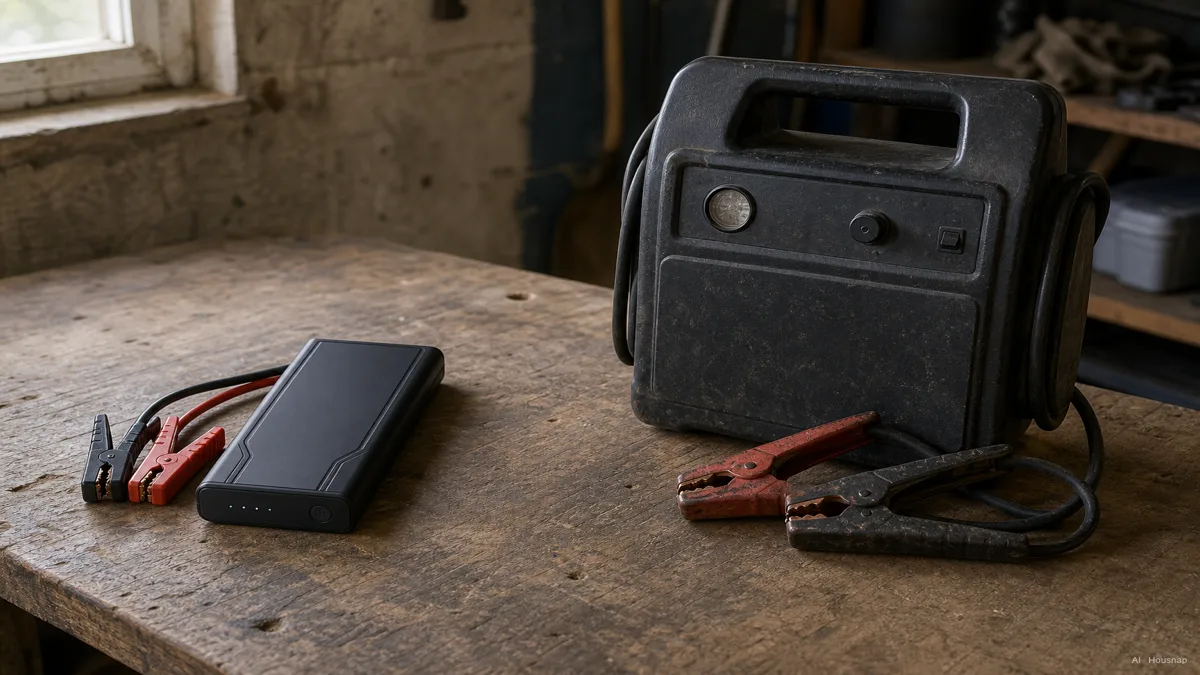
Compare the complete kit, including clamps and cables, against your storage space.
Also check operating, charging and storage limits separately. GBX45 specifies −20 to +50°C operation but 0 to +40°C charging. Its battery still needs recharging after storage. GBX45 manual Do not treat a winter operating rating as permission to charge a freezing pack, or add an arbitrary percentage to peak amps as a substitute for checking cold-weather suitability.
Decide on extras, then make the shortlist
USB-C: check input power as well as phone-charging output. GBX45’s 60 W charging needs a compatible USB-C PD 3.0 charger; the connector shape alone does not establish charging speed.
Air compressor: choose a combination unit only if you also need tire inflation and accept the complete kit’s size. The JNCAIR combines both functions and weighs 28.5 lb. That is one design example, not a weight rule for all combination units.
If tire top-ups are a separate need, compare a dedicated pump before paying for the built-in one. The first tire inflator guide covers that next choice.
Now compare only candidates that pass these checks:
- The documented battery voltage, chemistry and engine range match your vehicle.
- You understand the connection warnings and the limits of any override mode.
- The complete kit fits, and you have a suitable place and power source to recharge it.
- Each extra solves something you will actually use it for.
A jump starter addresses emergency starting. Boost X is explicitly not a vehicle-battery charger; do not buy it expecting a maintenance-charging function.
Sources
Hoe deze gids is opgebouwd
AI wrote this guide for Housnap using NOCO manuals and support pages, Clore specifications, Interstate’s battery glossary and Schumacher’s explanation of battery formats. The editorial scope is choosing a first jump starter; the model examples illustrate checks rather than a hands-on ranking or a guarantee of starting performance.