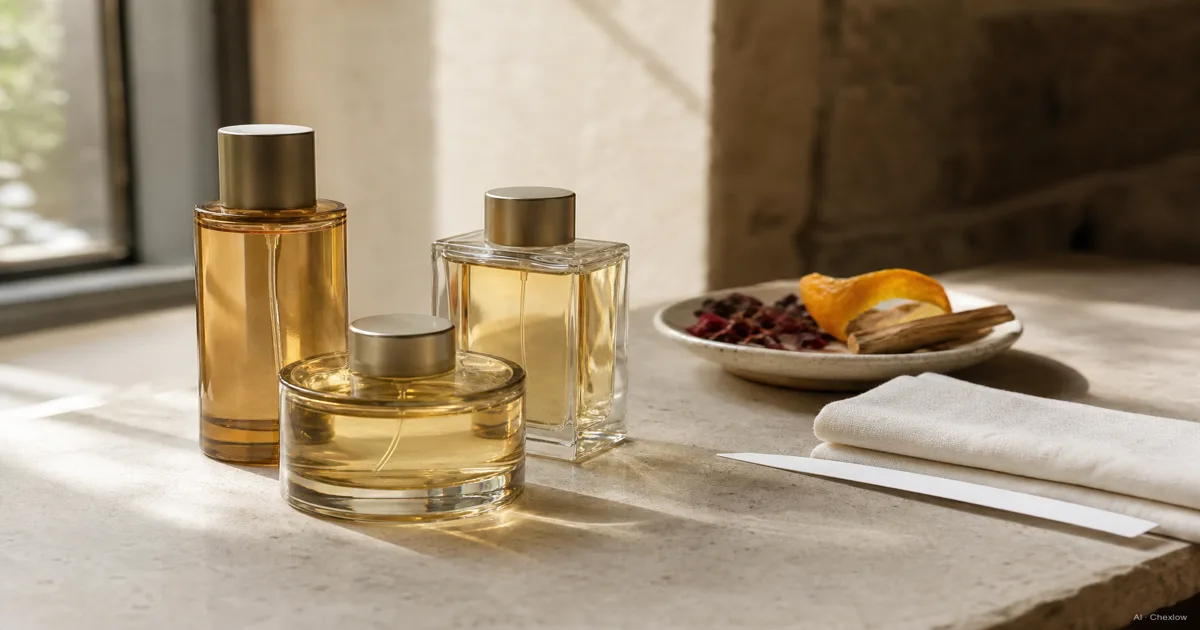
Choose the character you want to explore
You do not need a favourite perfume or a vocabulary of ingredients to start. Pick the description that interests you, then compare it with one contrasting option. The aim is a useful shortlist, not a lifelong commitment to one family.
Citrus, if you want a zesty starting point
Lemon, bergamot, orange, grapefruit and mandarin are useful reference points for this fresh direction (The Perfume Society).
When sampling, ask yourself whether you enjoy the sharpness or would prefer something softer. Keep a candidate only if you also like what remains after that initial freshness. Do not buy it solely because the first spray is appealing.
Floral, if you want flowers at the centre
Ask which flowers and what accompanies them. For a concrete example, Chanel describes Chance Eau Tendre Eau de Parfum as floral-fruity, with jasmine absolute and rose essence (Chanel). This illustrates a combination, not a recommendation for everyone who likes flowers.
Compare a flower-led candidate with a fruity-floral one. Note whether the flowers or the accompanying sweetness appeal to you. That distinction gives you a better next request than simply asking for another floral.
Woody, if you want to explore wood-led scents
The woody palette includes cedar, sandalwood, patchouli and vetiver; compositions can also bring in fruit, herbs or spice (The Perfume Society). Ask to compare a woody-fresh description with a woody-spicy one instead of treating every woody perfume as interchangeable.
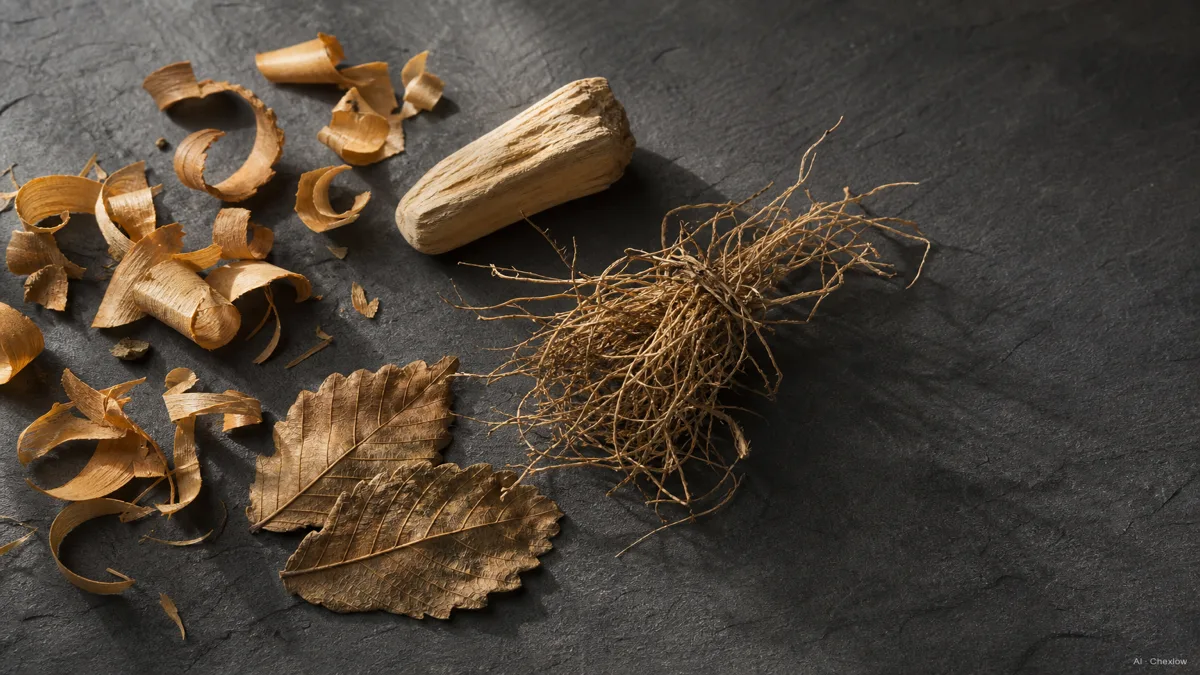
The materials illustration helps put names to this palette. It is not a recipe that every woody perfume must contain. When comparing, write down the part you would keep and the part you would change: for example, “keep the wood character, try less spice.”
Read the family label without mistaking it for a promise
A family describes a perfume's dominant character, and classification terminology varies between sources (The Perfume Society). Use it to narrow your search, rather than to predict a fixed number of hours or other people's approval.
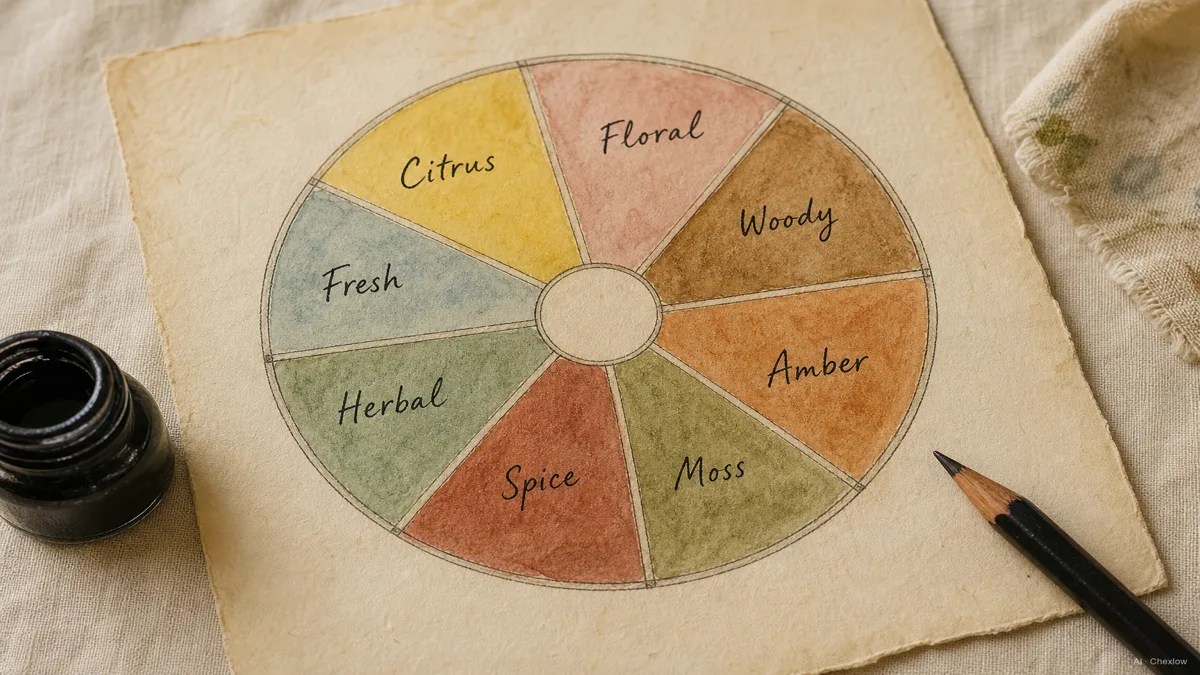
This illustration introduces the idea of a scent map. In Michael Edwards's classification, the main groups are Floral, Amber, Woody and Fresh, with Citrus under Fresh. Neighbouring groups suggest similarities worth exploring (fragrance wheel overview). They are sampling leads, not guaranteed matches.
Also separate family from development. Top notes describe the opening, heart notes emerge as that opening fades, and base notes contribute the lasting impression (Jo Malone London). A citrus opening is therefore only one part of your buying decision.
Compare samples on paper, then on skin
Use fragrance blotter strips to screen candidates, wait a few minutes, then try your favourite on skin. Paper alone is not enough to decide on a bottle (The Perfume Society's sampling advice).
Use the strips provided at the counter. For comparisons at home, a pack of fragrance blotters is useful if your samples do not include them. Their job is to keep the initial comparisons separate; they do not replace wearing the perfume.
- Label each candidate. Record its name and exact version on the strip and in your notes.
- Choose a finalist. Start with the one you most want to wear. Keep other fragrances off the same application area while comparing.
- Record the change. Note your first impression, revisit it later, and ask whether you still enjoy it during the activity you bought it for.
Use the same prompts each time: “What do I like?”, “What becomes distracting?” and “Would I choose to wear this again?” These are practical comparison prompts, not a laboratory performance test.
Check the version before buying, too. Different concentrations can have different notes, not just different strength (The Perfume Society). If your remaining choice is between versions of a favourite, continue with EDT, EDP and Parfum compared.
Buy the finalist, or make the next sample more specific
Use your notes to make one of these decisions:
- You enjoy both the opening and the later scent. Compare the exact version you sampled, its bottle size and total cost. Choose a size you are comfortable committing to.
- You like the opening but dislike what follows. Keep the appealing character in your search and ask for a different finish. Buying a larger bottle will not resolve that mismatch.
- You cannot identify a favourite yet. Keep sampling rather than choosing whichever family sounds most impressive. Ask whether a sample is available before committing to a full bottle.
If you have found a scent direction but are unsure which kinds of brands to explore next, read niche versus designer fragrance for a first bottle. Take your preference notes with you: “citrus opening, enjoyable later scent” is a more useful starting brief than a brand label alone.
Come è stata costruita questa guida
Written by AI for Housnap, this guide uses The Perfume Society's family and sampling explanations, Jo Malone London's note guide, Chanel's published fragrance description and a fragrance-wheel overview. The shortlist and purchase decisions are editorial guidance based on those sources, not results from product wear tests.