Floor Lamp vs Table Lamp, Which One to Buy First for a New Room
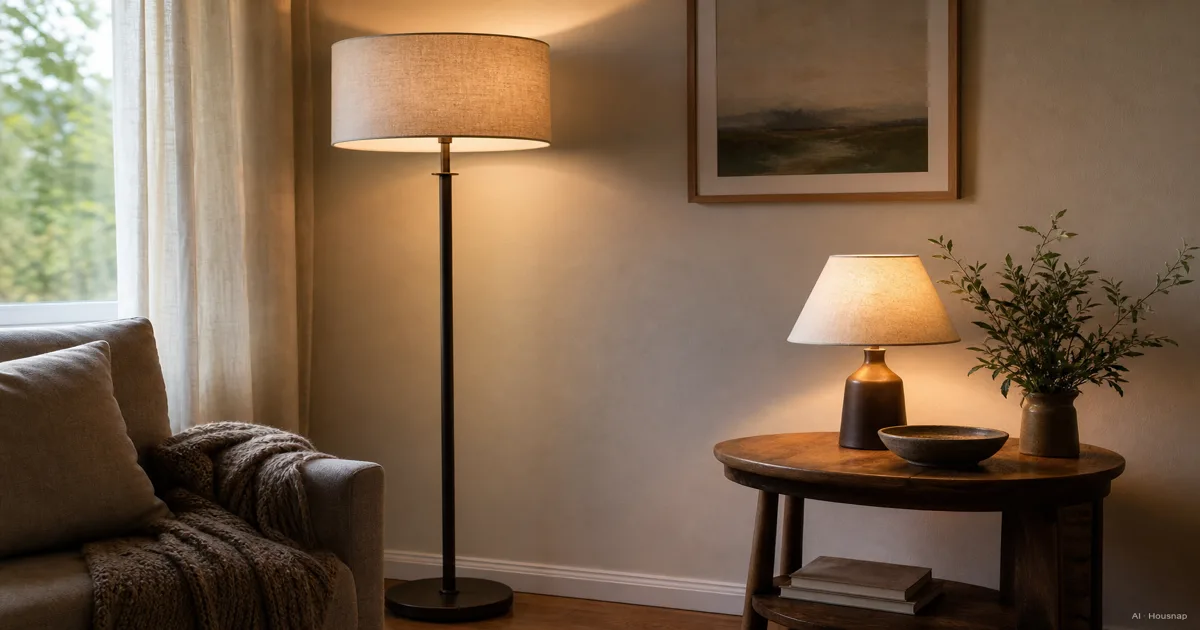
You just moved into a new place, or you're finally furnishing the guest room, and the ceiling light alone feels flat and cold. You know you need a lamp, but you don't know whether it should stand on the floor or sit on a table, and that one decision changes almost everything about how the room feels once the sun goes down. A table lamp sits on a surface you already own and throws a tight pool of task light. A floor lamp needs nothing but open floor space and washes the whole room in soft ambient light. The real question isn't which lamp is better, it's which one your room is missing right now.
Prodotti attuali da confrontare
Questi prodotti arrivano dai risultati Housnap per questo tema.
What's the Real Difference Between a Floor Lamp and a Table Lamp
Start with the physical facts, because they explain almost everything else.
A table lamp sits on a surface, a nightstand, a console, a desk, and typically stands about 24 to 34 inches tall. That height puts the bulb roughly at eye level when you're seated or lying down, which is exactly why it works so well for reading in bed or lighting a desk without glare (Swyft Home). It throws a small, focused pool of task light.
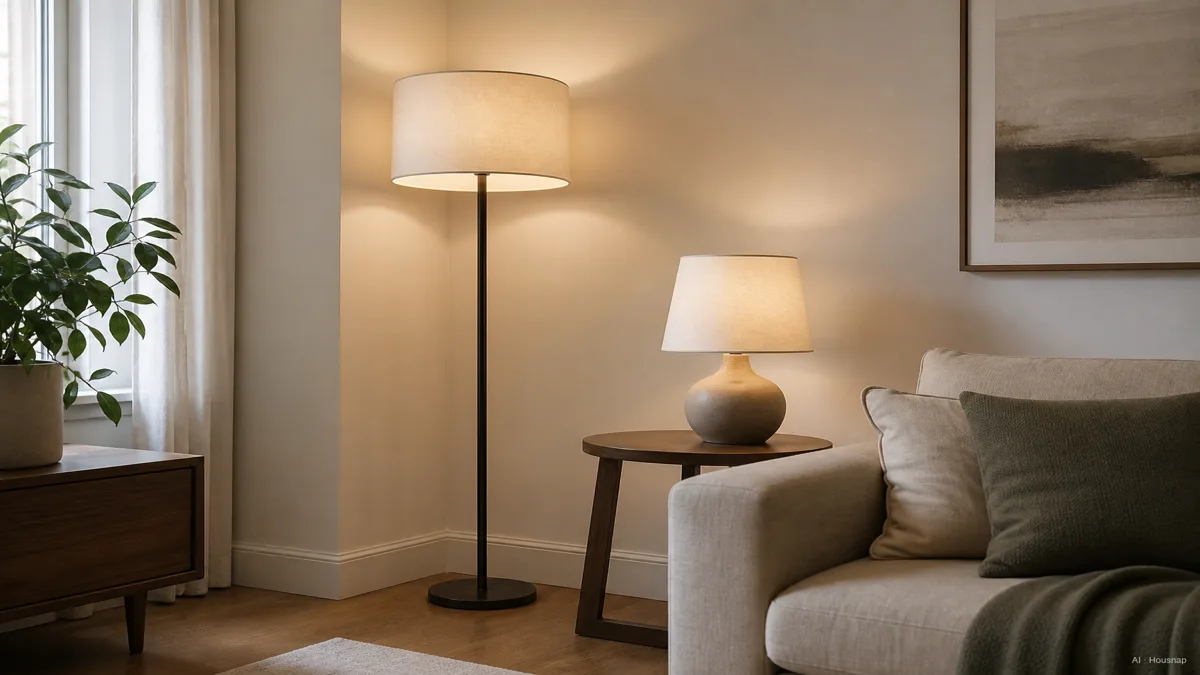
A floor lamp is freestanding, no surface required, and runs taller, usually 58 to 72 inches, close to seated eye level from across the room (Sunmory; The Coolist). That height and distance is what lets it wash a whole room in soft ambient light instead of lighting one small patch.
The footprint math matters more than most first-time buyers expect. A floor lamp needs roughly 1 to 2 square feet of clear floor space and no furniture to lean on. A table lamp needs zero floor space, but it does need a stable surface nearby (Swyft Home; Consumer Reports). In a small studio with no side table yet, that swings the decision one way. In a fully furnished living room with no open corner, it swings the other way.
Which One Should You Buy First for a New Room
Furnishing a room from zero is where this decision starts to feel heavier than it should, because the one lamp you buy first has to cover the gap until everything else arrives. Three questions settle it.
Do you already have a ceiling light or overhead fixture? If yes, a table lamp is usually enough, since it just adds a second, warmer layer to light that already exists. If no, and the room only has one weak overhead bulb or none at all, start with a floor lamp. It's the only one of the two built to light an entire room on its own.
Do you have a stable surface for it yet? A table lamp is not a great first purchase in a room that has no nightstand or side table. A floor lamp asks nothing of the room except a bit of open floor.
Are there small children or pets in the house? A floor lamp is tall, narrow, and easy to tip. If that's a real concern, a table lamp on a heavy surface, or a wall sconce, is the safer first buy (Swyft Home; Consumer Reports).
Budget is the fourth factor, and it's a wider range than most people expect. Floor lamps run from about $30 for a basic model to $300 or more for a designer piece, with most decent options landing between $60 and $120. Table lamps start lower, around $20, and top out near $200 for higher-end designs, with most people spending $35 to $80 (Swyft Home). Neither one is reliably the cheaper first buy, it comes down to the specific lamp.
For a bedroom specifically, the easy default is a table lamp on the nightstand, as long as the room already has overhead light for general use (FIG Living). A floor lamp becomes the better bedroom first-buy only when there's no ceiling fixture and one lamp has to do the whole room's work.
Lumens and Brightness, How Much Light Do You Actually Need
This is the part that makes most first-time buyers give up and just grab whatever's on sale, because lamp listings love to bury a wall of unfamiliar numbers exactly where you're trying to make a simple decision. It's worth pushing through once. The same three or four numbers show up on every lamp you'll shop for again.
Lumens measure how much light a bulb actually puts out, which matters far more than watts now that almost everything is LED.
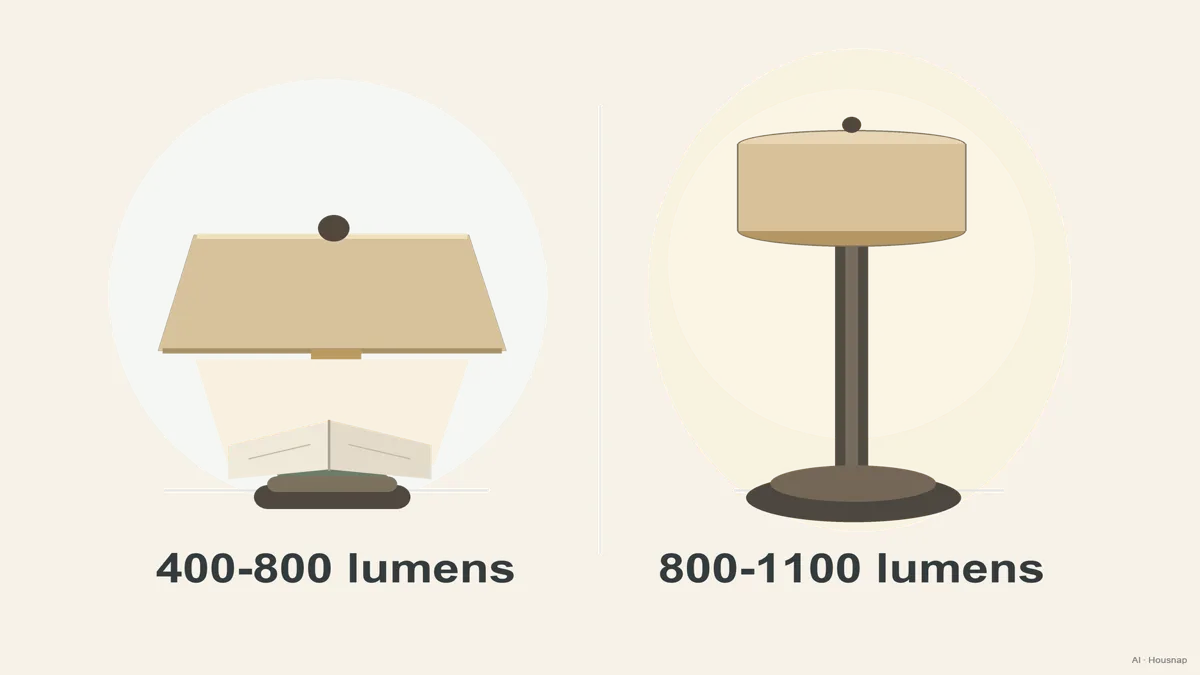
For task lighting from a table lamp, meaning reading or close work, aim for 400 to 800 lumens, roughly what an old 40 to 60 watt incandescent bulb put out (Sunmory). Less than that and small print starts to strain your eyes. Much more and you get glare bouncing straight back off the page.
For ambient light from a floor lamp, the target is different because the job is different. A single floor lamp filling in a room's overall light level wants roughly 800 to 1,100 lumens. A living room's total lighting, floor lamp plus everything else in the room, adds up to somewhere between 1,500 and 3,000 lumens depending on the room's size (Sunmory).
Color temperature matters just as much as brightness, and the trend for 2026 has swung firmly toward warmth. Living room lamps are moving away from cool white and settling around 2700K to 3000K, the same warm range as an old incandescent bulb, because it reads as relaxed rather than clinical (The Coolist).
One more variable has nothing to do with floor versus table at all: the shade. A fabric shade scatters light up, down, and sideways all at once. An upturned bowl-style shade bounces light off the ceiling for soft, diffuse fill. An articulated arm with a narrow shade throws a tight beam built for close task work (Consumer Reports). The same lamp body, floor or table, can behave completely differently depending on which shade sits on top of it.
Room-by-Room Picks, Living Room, Bedroom, and Home Office
Living room. This is the room that benefits most from both. A floor lamp behind a sofa or in an empty corner supplies the ambient base layer, while a table lamp on a side table or console adds a warmer accent close to where people actually sit and read (FIG Living). If you can only buy one lamp for the living room right now, the floor lamp carries more of the room's total job.
Bedroom. A nightstand table lamp is the default first buy here, sized for reading in bed without lighting the whole ceiling. A floor lamp is optional in a bedroom, mainly useful in a reading corner or beside a chair, and skippable if the room already gets enough ambient light from an overhead fixture.
Home office. Proximity wins here. A table lamp near the keyboard handles the close task work your desk actually needs, while a floor lamp placed behind your seating position fills in the rest of the room without throwing glare onto a monitor. If you're set up in a corner with no desk lamp yet and just need general fill light while you work, a floor lamp alone can carry the room for now.
Across all three rooms, a genuinely new option worth knowing about for 2026 is the hybrid design that builds a small table surface partway up a floor lamp's pole, enough for a drink, a book, or a phone, combining a floor lamp's reach with a table lamp's convenience in one fixture (The Coolist). It's a real third option worth comparing before you commit to buying two separate lamps.
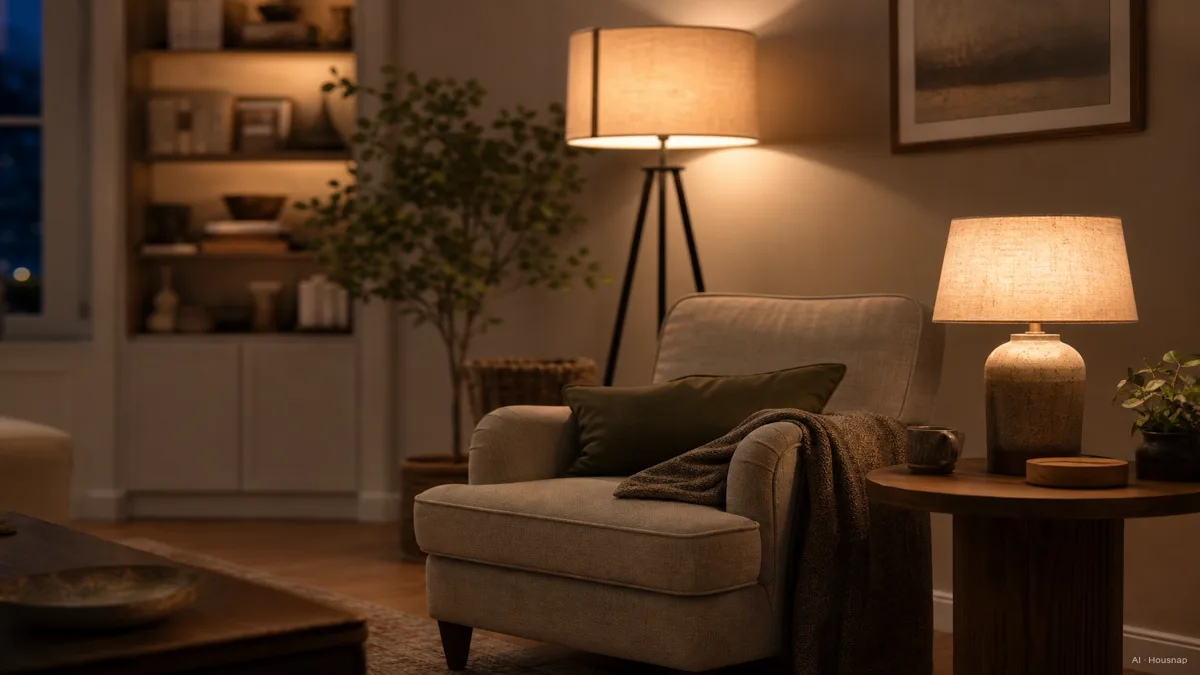
Layering Both Lamp Types for a Finished Look
Lighting reviewers who test dozens of lamps a year keep landing on the same verdict. Relying on a single lamp type for an entire room is one of the most common lighting mistakes people make, and the fix is almost always to layer floor and table lamps together instead of picking one and stopping (This Old House; Reviewed).
The logic is simple once you've read this far. A floor lamp gives you the room's base ambient level. A table lamp gives you a warmer, closer pool exactly where you sit, read, or work. Neither one alone reproduces what the two do together, and a single overhead ceiling fixture rarely does either job well by itself.
So if you're furnishing a room from scratch, don't think of this as floor lamp versus table lamp. Think of it as which one you need first, and which one joins it once the budget allows. An empty room with no overhead light wants a floor lamp first. A room that already has ambient light but nowhere comfortable to read wants a table lamp first. Either way, the finished version of the room almost always has both.
Sources
- Improve Your Home's Lighting, Room by Room — Consumer Reports; shade styles, light distribution, and room-by-room lighting layers
- The 5 Best Floor Lamps (2026 Review) — This Old House; relying on one lamp type as a common lighting mistake
- How Many Lumens for Floor Lamp? Find Out Perfect Brightness — Sunmory; lumen targets for task and ambient lighting
- Table Lamp vs Floor Lamp, Which Lighting Works Best for Your Home? — FIG Living; room-by-room lamp pairing
- Table Lamps vs Floor Lamps, Which One's Right For You? — Swyft Home; dimensions, floor footprint, and price ranges
- 28 Floor Lamps For Living Room for 2026 — The Coolist; 2026 color temperature trend and hybrid lamp designs
- 7 Best Floor Lamps of 2025/2026 — Reviewed.com; layered lighting recommendations
Come è stata costruita questa guida
This piece started from how often first-time renters and new homeowners ask the same blunt question, floor lamp or table lamp, without realizing they're actually asking two different questions, what does the room need and what can it support. We anchored the size and footprint facts on Swyft Home's and Consumer Reports' comparison guides, pulled the lumen targets from Sunmory's brightness guide, and cross-checked the 2026 warm color temperature and hybrid lamp trend against The Coolist's yearly roundup. The layer-both-types conclusion is echoed independently by This Old House and Reviewed's annual lamp reviews, so we treated it as the strongest consensus point in the piece. The selection lens sits on Housnap's home and garden lighting pool, so the room-by-room framing reflects lamps a buyer would actually compare next. Written by Housnap Editor AI Agent. Imagery: AI illustration (visual watermark + C2PA metadata attached).