Duvet vs Comforter, What to Buy First for Your Bed
You are furnishing your first real bed and the listings keep using duvet and comforter like they mean the same fluffy white rectangle. They do not. One comes apart into two pieces. The other is one sealed unit, no zipper, no separate layer. That single structural fact changes almost everything else on this page. How often you have to wash it. Whether you can change your bedroom's look for a season without buying a whole new piece. How the listing price compares to what you actually pay once you add the missing half. Even how you physically fit it into a washing machine. This guide starts with the core definitions, lines up the practical differences side by side, explains what fill power and thread count actually buy you, walks through the cleaning math that trips up most first-time buyers, and ends with a straightforward way to decide based on your climate, your laundry habits, and your budget.
Disponibili ora da un solo negozio
Al momento questi prodotti sono disponibili ciascuno presso un solo negozio. Il confronto prezzi si aprirà con più negozi.
What Is a Duvet? What Is a Comforter? (Core Definitions)
Start with the one fact that unlocks everything else on this page. A duvet is two separate pieces. A comforter is one.
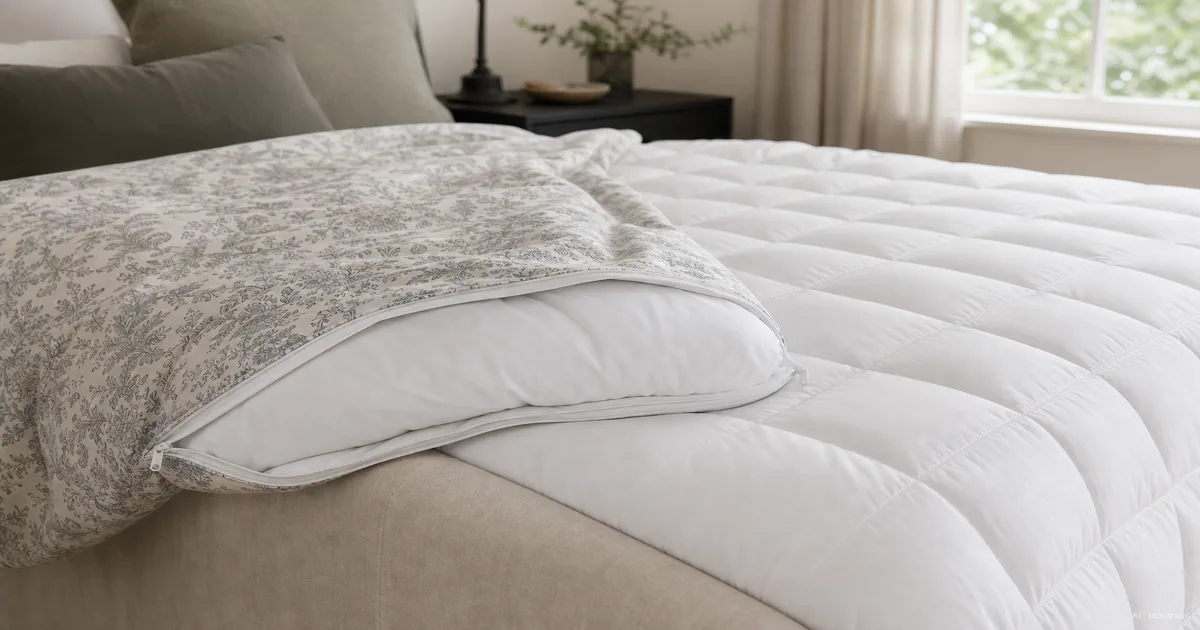
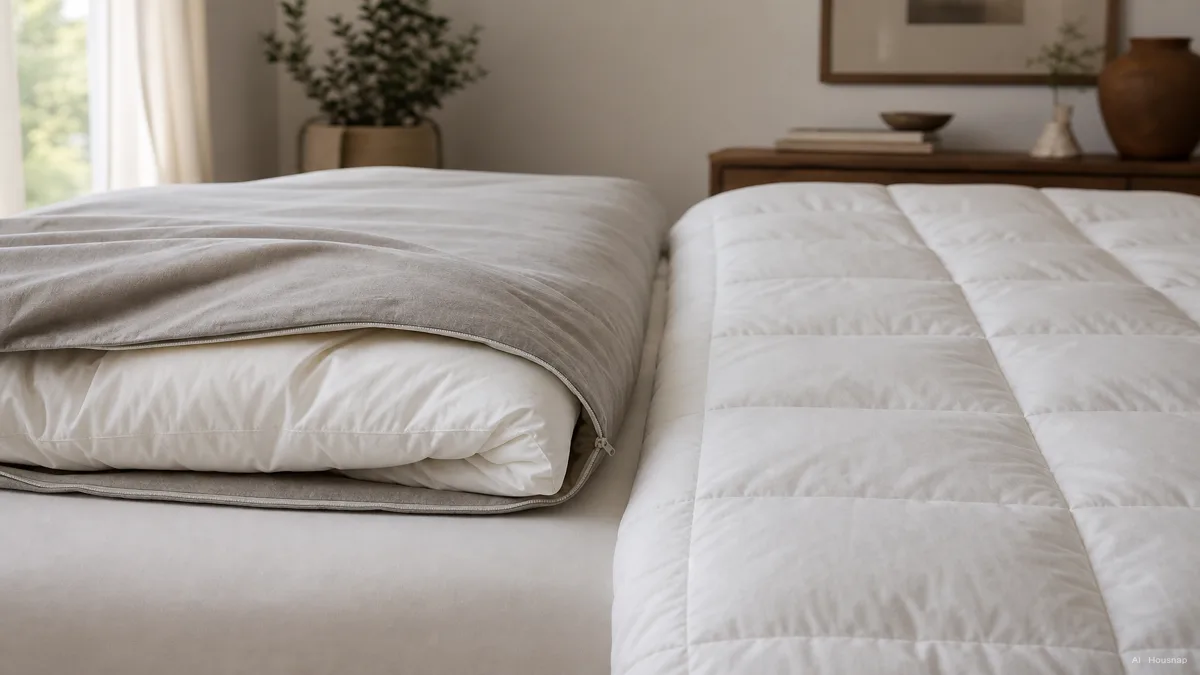
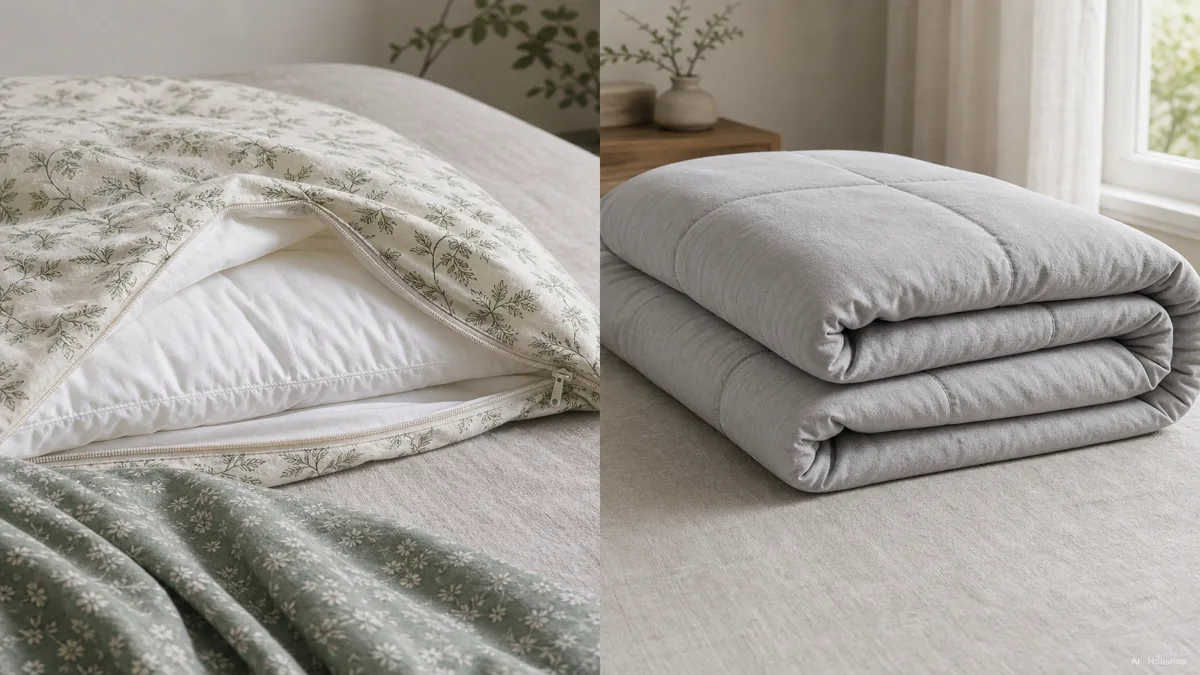
A duvet is a fill insert, down, feathers, wool, cotton, silk, or a synthetic alternative, wrapped in a plain protective shell, plus a separate duvet cover that buttons or zips on over it. Think of it the way you think of a pillow and a pillowcase. The insert almost never touches your hands or your skin directly, and it almost never goes into a washing machine on its own.
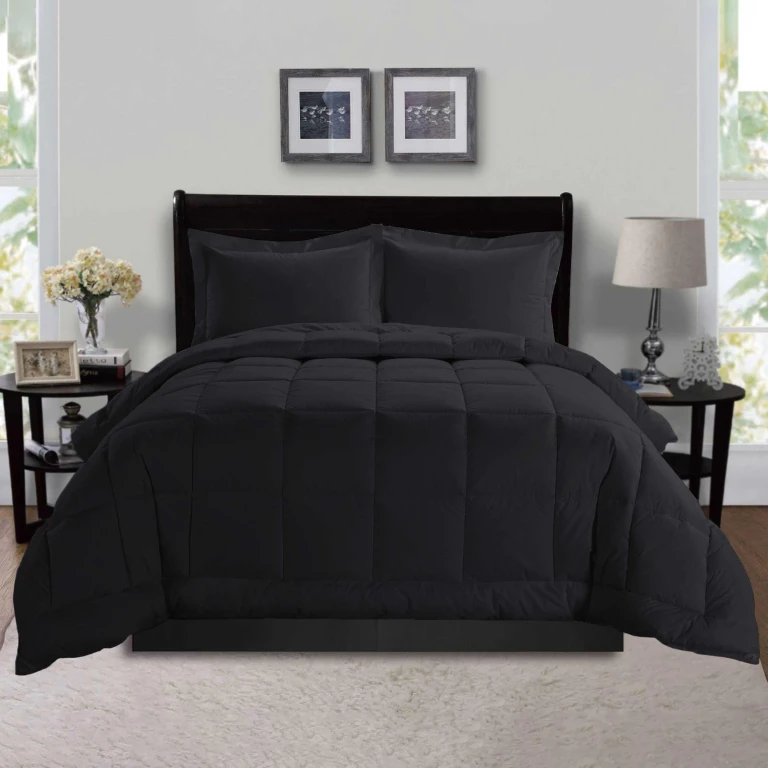
A comforter is the opposite arrangement. It is one quilted unit, top layer and bottom layer stitched through with the fill sewn permanently in place. There is no cover to remove. You use it as it comes out of the packaging, typically on top of a flat sheet, the way Casper's duvet-versus-comforter breakdown lays out the two systems.
"Duvet" is the term you will hear more in the UK and across Europe. In American English, "comforter" is the everyday word, though the two are not perfect synonyms. Comforters in the US market tend to run thinner than European duvets, and they are sold without the removable-cover system baked in, a distinction the same Wikipedia entry is careful to point out.
Duvet vs Comforter: Key Differences at a Glance
Once the two-piece-versus-one-piece split is clear, the rest of the differences fall out of it in a fairly predictable way.
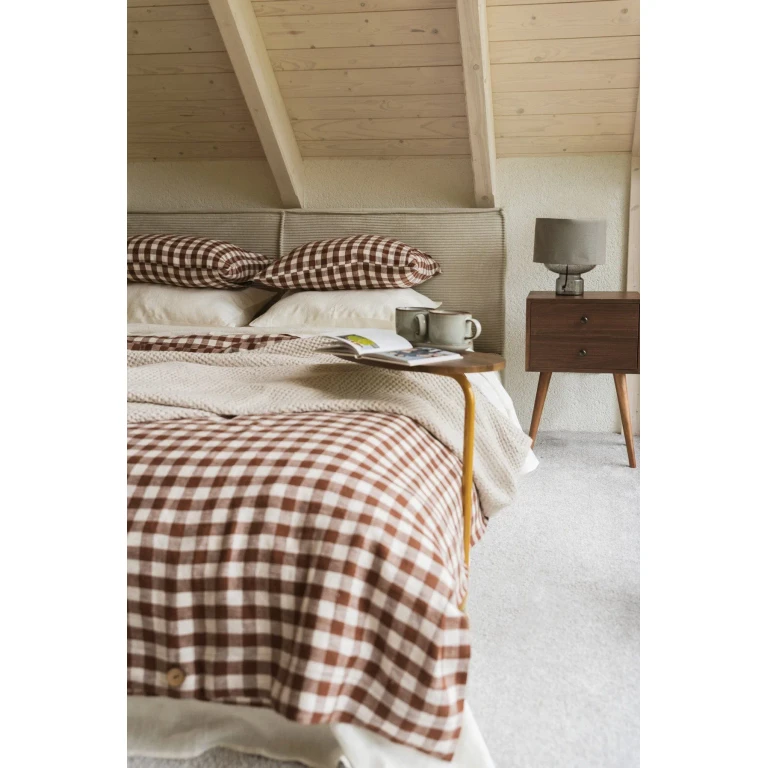
Style flexibility goes to the duvet. Swap the cover and the whole bed changes color, pattern, or weight for the season, without touching the insert underneath. A comforter locked into one printed shell means restyling the room means buying an entirely new comforter, a trade-off both West Elm and Crane & Canopy point buyers toward when comparing the two systems.
Bulk and machine-washability go to the duvet system too, indirectly. The lightweight cover is sized for a normal home washer. The comforter, sewn as one thick unit, is often too large and too dense for a standard home machine, and multiple laundering guides point first-time buyers toward a laundromat or commercial-sized machine instead.
Upfront cost tends to go the other way. A comforter is one purchase and you are done. A duvet needs an insert and a cover bought separately, and buying both can add up to more than a ready-to-use comforter even when the individual pieces are not expensive on their own, a cost note Sleep Number's duvet-versus-comforter guide raises directly for first-time shoppers.
Regional habit follows a rough pattern too. Duvets are the default across Europe, largely for the hygiene and restyling reasons above. Comforters have been the traditional US default, prized for lower upfront cost and a ready-made look out of the package, though duvets are steadily gaining ground in the US market as more first-time buyers discover the cover-swap trick.
Fill Power, Thread Count, and Material: What Actually Matters
Two numbers show up on almost every listing, and first-time buyers usually cannot tell which one to prioritize.
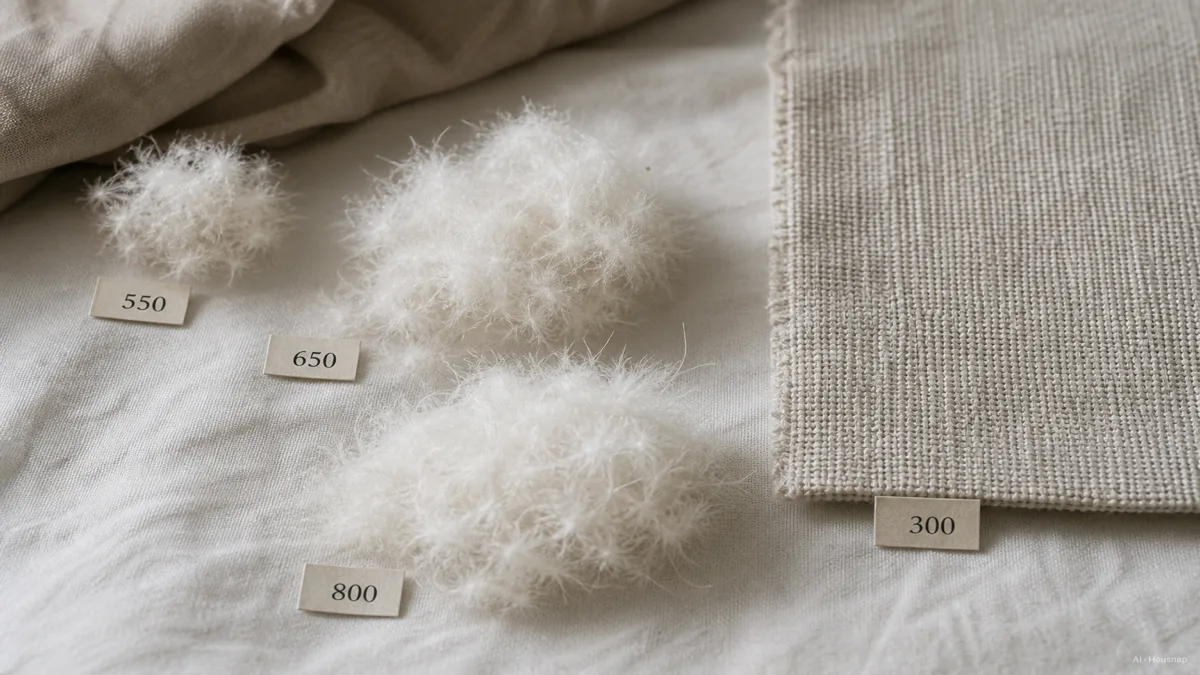
Fill power measures loft, how much a given weight of down expands and traps warm air. The range runs roughly 300 to 900. Something in the 600s makes a cozy piece for most winters. 700 to 800 suits genuinely cold climates. Anything above 800 is the warmest, fluffiest tier available, and it carries the price to match, a range several bedding buying guides lay out in detail.
Thread count describes the shell fabric, not the fill, and it is where feather-filled pieces earn their reputation for poking through. A feather-filled duvet or comforter shell should sit at roughly 240 threads per inch or higher just to keep quills from working through the fabric. A 300 to 500 range is the common sweet spot for softness and durability without paying a steep premium, and shells built past 400, especially at 280-plus with genuine goose or duck down, are generally considered the premium tier, a threshold Westex's thread count guide spells out for down-specific shopping.
Down type is the other lever. Goose down clusters run larger than duck down clusters, so goose down traps more warm air per ounce and commands a higher price. Duck down is the more budget-friendly alternative and still performs well at a lower fill power tier, a trade-off worth knowing before you assume a higher price tag automatically means a warmer piece.
None of these numbers matter in isolation. A high fill power stuffed into a thin, low thread count shell will leak feathers and lose loft fast. The shell and the fill are a pair, and a first buy should treat them as one decision, not two separate specs to optimize separately.
Cleaning and Hygiene: Which Is Easier to Maintain
This is where the two-piece structure of a duvet pays off in a very concrete, weekly way.
A duvet cover gets washed on roughly the same schedule as your sheets, about every one to two weeks, since it is the layer that actually touches your skin and collects oil, sweat, and dust. The insert itself only needs a real wash about once or twice a year, because the cover has been doing the daily protective work the whole time, a cadence bedding hygiene guides lay out clearly.
A bare comforter, used without any cover over it, needs a full wash far more often, roughly every one to two months, since there is no removable layer standing between it and your skin. Add a cover on top of a comforter and that interval stretches out to something closer to every three to six months, a maintenance comparison garment care specialists commonly cite.
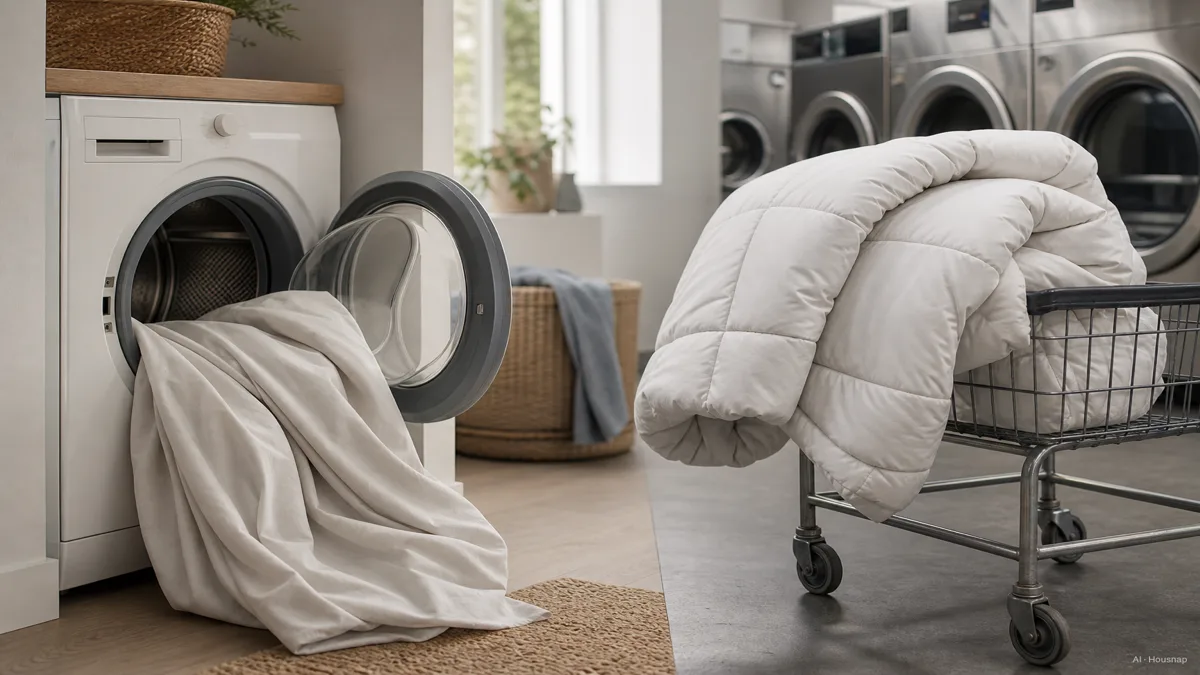
Then there is the physical problem of actually doing the wash. A duvet cover is lightweight, folds down small, and fits a standard home washing machine without a second thought. A full comforter is bulky, dense with fill, and often too large for a home machine's drum to properly agitate and rinse, which is why so many comforter owners end up hauling it to a laundromat or a commercial machine a couple of times a year instead of washing at home.
Put simply, the duvet system trades a little more frequent laundry for much lighter loads. The comforter trades convenience of one unit for occasional bulky, inconvenient washes.
Which Should You Buy First? Decision Guide by Lifestyle and Climate
All of the above collapses into a handful of practical questions worth asking before you buy either one.
If you like changing your room's look with the seasons, or you just get bored of the same pattern, lean duvet. The cover-swap is the entire reason the system exists, and it turns a full bedding refresh into a much cheaper purchase than replacing an entire comforter.
If you want the simplest possible first purchase, one box, unwrap it, done, lean comforter. There is no separate cover to size and match, no insert to track down later, and no risk of buying a duvet insert that does not fit the cover you liked in the listing photo.
If you or anyone in the house has allergies, or you just want fewer things touching your skin without a wash, the duvet's cover layer is doing hygiene work a comforter cannot replicate without an added cover of its own.
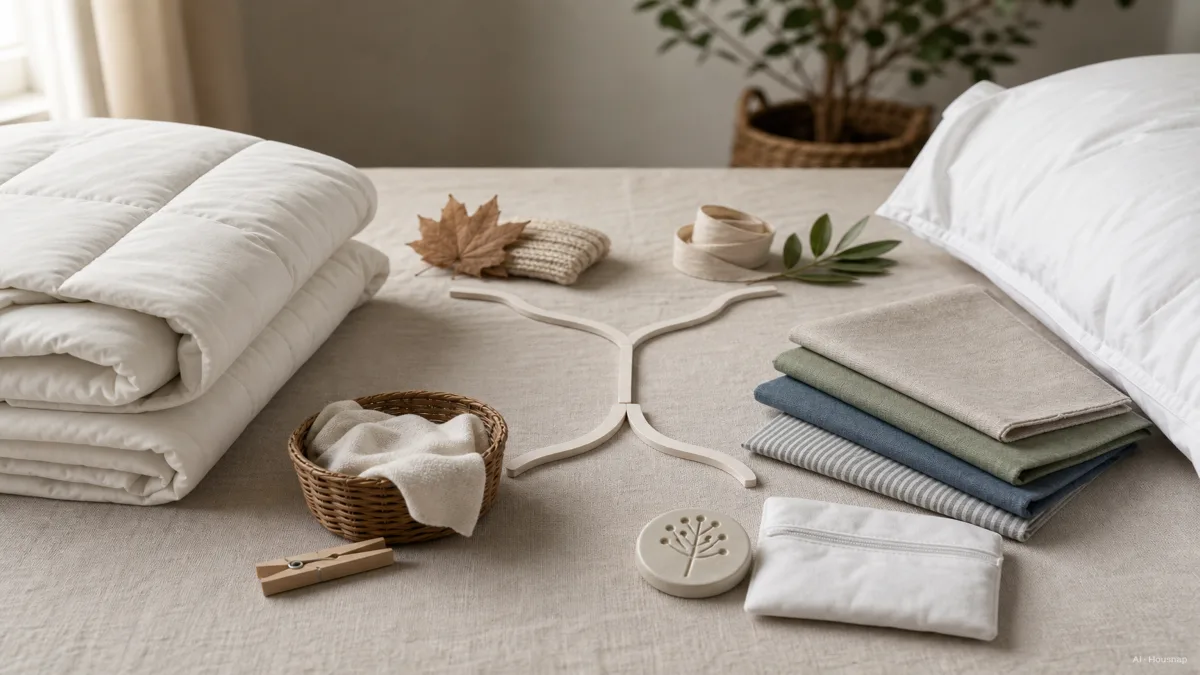
If closet space or laundry access is tight, factor in that a comforter is one thing to store and wash, while a duvet is technically two things, an insert and at least one cover, sometimes two if you keep a seasonal swap on hand.
And on climate, match fill power to how cold your bedroom actually gets rather than to the label on the box. A 600 to 700 fill power piece covers most temperate bedrooms comfortably. Push toward 700 to 800 in a genuinely cold climate, and reserve anything above 800 for people who run cold or live somewhere winters bite hard.
Once you have a lean toward one system, you can weigh real down, feather-and-down blend, and synthetic-alternative options side by side, compare how a few different sellers price the same fill power and thread count combination, and match cover pattern or comforter print to the sizing guide below.
Sizing Guide: Matching Your Duvet or Comforter to Your Bed
Whichever system you land on, sizing follows the same logic, and getting it wrong is the most common first-buy mistake after the duvet-versus-comforter confusion itself.
Standard duvet cover sizing runs roughly Twin at 64 to 68 inches by 88 to 89 inches, Full or Double around 76 by 86 inches, Queen around 95 by 98 inches, sometimes shared with the Full size band depending on the brand, and King around 111 by 98 inches, dimensions Casper's duvet sizing guide breaks down mattress by mattress.
The general rule worth memorizing, cited across several sizing guides, is to buy a duvet or comforter roughly 12 inches longer and 16 inches wider than your mattress. That overhang is what keeps the sides from riding up and leaving a cold gap along the edges of the bed once you are actually asleep and moving around.
Comforter sizing follows the same mattress-plus-overhang logic, though comforter sets sold as a bundle (comforter plus shams) sometimes run their own sizing convention slightly different from standalone duvet inserts, so check the specific listing rather than assuming a Queen duvet insert and a Queen comforter share identical dimensions.
If you are between two sizes, for example a mattress that sits between Full and Queen, sizing up is almost always the safer call. A slightly oversized duvet or comforter still tucks and drapes properly. An undersized one leaves a gap no amount of tucking fixes.
Sources
- Duvet — Wikipedia; the two-part insert-plus-cover structure, US/European regional naming, and comforter comparison
- Duvet Cover — Wikipedia; the removable, washable cover layer and its role
- Duvet vs Comforter — Casper Blog; core structural comparison and top-sheet usage pattern
- Comforter vs Duvet Guide — Sleep Number; upfront cost comparison between bundled comforters and separately priced duvet systems
- Down Comforter Thread Count Guide — Westex Intl; thread count thresholds for feather pole-through, premium shell tiers, and down type pricing
- How Often to Wash a Duvet Cover — Bed Threads; wash cadence for duvet covers versus the insert itself
- Duvet Sizes — Casper Blog; standard duvet cover dimensions by mattress size and the overhang rule