Surge Protector vs. Power Strip, What Your First Buy Actually Needs to Protect
Almost everyone who buys a strip of outlets assumes it protects whatever they plug into it. The two products look close enough that the assumption feels reasonable, same plastic housing, same row of outlets, sometimes even the same price on the shelf. They are not the same device. A power strip is a passive multiplier, it turns one wall outlet into several and does nothing else. A surge protector does that plus one more job, absorbing the voltage spikes that come from lightning nearby, grid switching, or even a refrigerator compressor kicking on in another room. This is a topic with a lot of numbers and acronyms attached to it, joules, UL 1449, VPR, and it is easy to feel like you need an electrical engineering degree to buy the right one. You don't. There are really two things worth checking, and once you know what they mean, the rest of the decision falls into place fast.

Disponibles actuellement chez une boutique
Ces produits ne sont proposés pour l’instant que par une seule boutique chacun. La comparaison de prix s’ouvrira avec plus de boutiques.
What Actually Separates a Power Strip From a Surge Protector
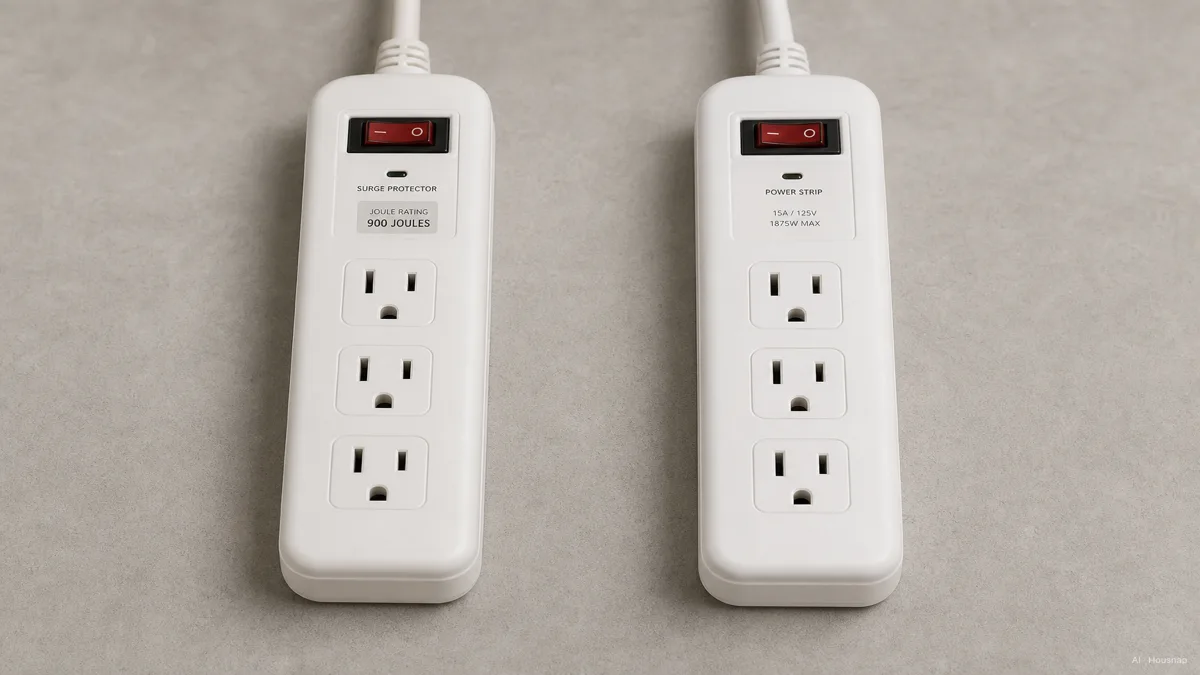
A power strip and a surge protector can look identical, same plastic housing, same row of outlets, sometimes even the same price. That's exactly why so many people grab a cheap power strip, plug in a laptop or a game console, and assume they're covered.
They are not the same device. A power strip is a passive multiplier. It takes one wall outlet and splits it into several, nothing more. It adds zero protection against the voltage spikes that come from lightning strikes nearby, grid switching, or even a large appliance's compressor kicking on elsewhere in the house (Anker, Surge Protector vs Power Strip; UL Solutions, Guide to Power Strips and Surge Protectors).
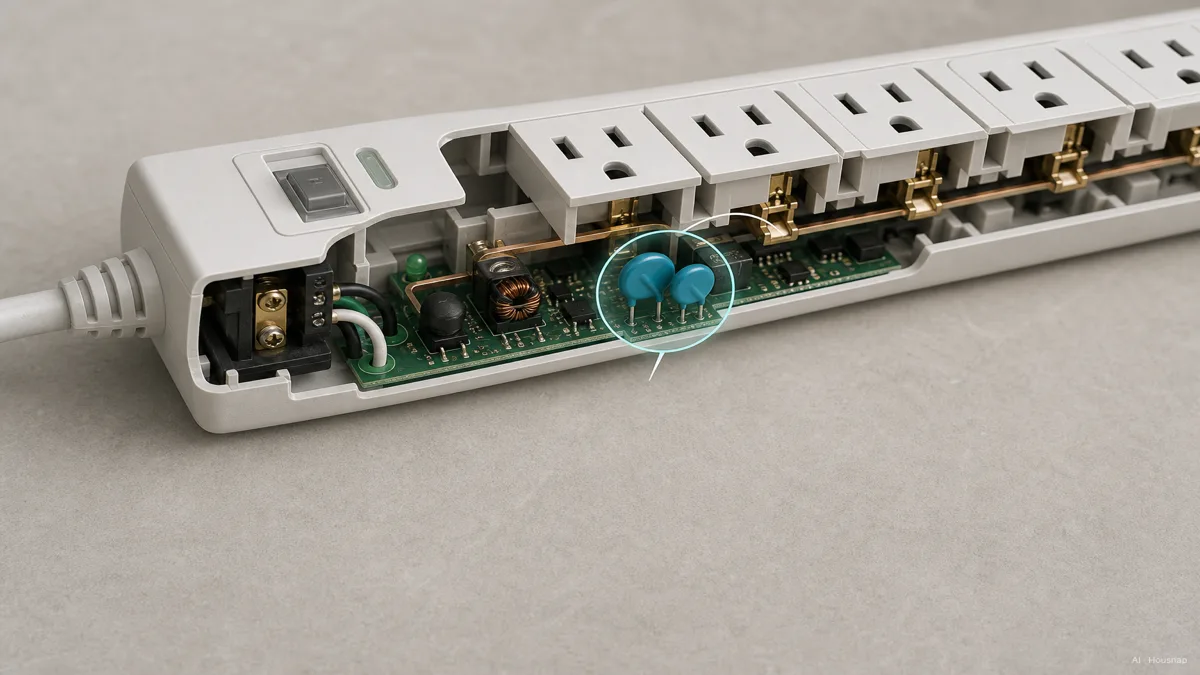
A surge protector does everything a power strip does, plus it has extra circuitry inside, almost always built around components called Metal Oxide Varistors, or MOVs. When incoming voltage rises above a safe threshold, the MOV absorbs the extra energy and diverts it to the ground wire before it reaches whatever you plugged in (Rytec Electric, Differences Between a Power Strip and a Surge Protector).
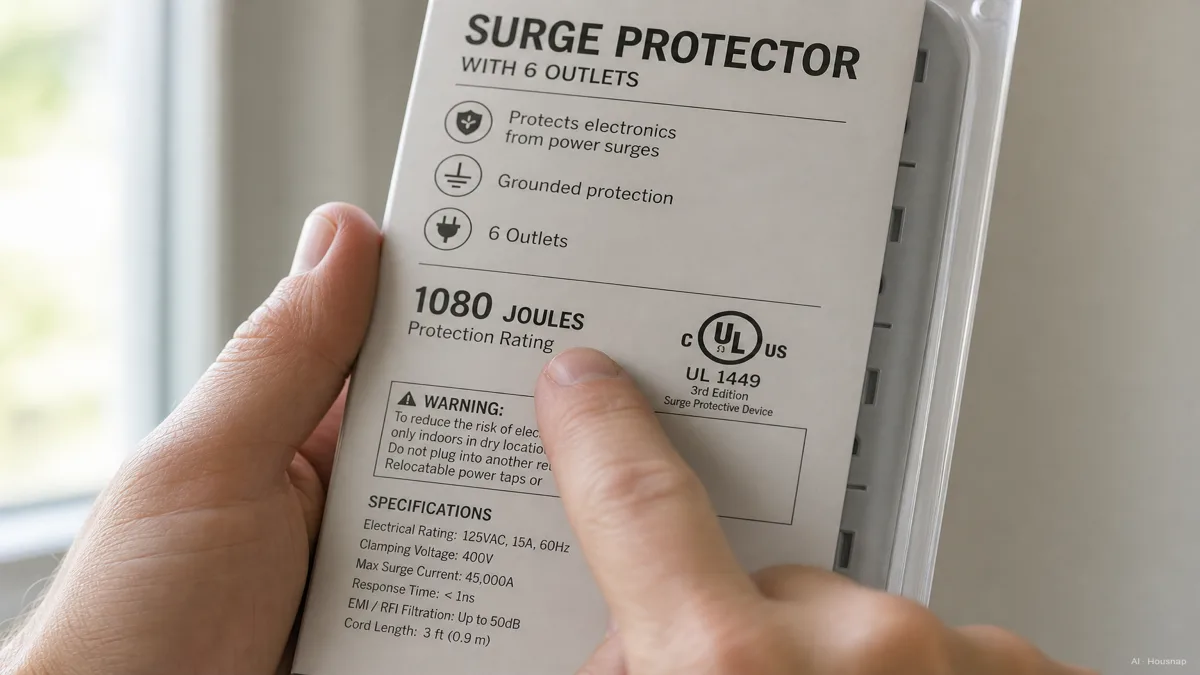
Here's the fastest way to tell them apart without reading a single spec sheet: flip the package over and look for a joule rating. A true surge protector will list one, printed right on the box or the label. A plain power strip never will, because it has nothing to rate (SocketDoctors, Surge Protectors vs. Power Strips).

How Joule Ratings and UL 1449 / VPR Actually Work
Once you know to look for a joule number, the next question is what that number actually tells you, and it's less than most shoppers assume.
Joules measure the total surge energy a unit can absorb over its entire lifetime, not how well it clamps a single spike. Think of it as a fuel tank for absorbing damage, not a speedometer. Every small surge that hits your house, and appliances cycling on and off around you generate dozens of them, uses up a little of that capacity. One big event can drain the tank in a single hit (Viox, Surge Protector Joules Rating, How Much Do You Need?).
The number that actually measures clamping quality is the Voltage Protection Rating, or VPR, and it comes from a completely different standard, UL 1449. That's the governing US safety standard for Surge Protective Devices, and it defines both the test method and the VPR itself, the maximum voltage a device lets through during a standardized surge test (NEMA Surge Protection Institute, UL 1449; thehearthfulhome.com, UL 1449 Explained).
Consumer surge protectors typically list a VPR of 330V, 400V, 500V, or 600V. Lower is better here, a 330V unit clamps tighter than a 600V one. So the real buying rule isn't "biggest joule number wins." It's UL 1449 compliance plus a low VPR, with the joule rating as a secondary signal for how long that protection will last. As a rough anchor, most 2026 buying guides put roughly 2,000 joules as enough for everyday electronics and game consoles, with options like Belkin's 4,320-joule units aimed at heavier home-theater setups.
Do You Need a Surge Protector? (Room-by-Room Guidance)
If the last two sections felt like a lot of numbers, here's the shortcut, you don't need to run this math for every outlet in the house. The decision comes down to what's plugged in.
Reach for a surge protector when the device behind it is expensive, sensitive to power fluctuations, or holds data you'd hate to lose. That's your desktop computer, TV, game console, router and modem, home office setup, and any serious sound system. A single bad spike can mean a dead motherboard or a corrupted drive.
A plain power strip is genuinely fine for low-risk loads, a lamp, a toaster, a blender, a phone charger sitting alone on a kitchen counter. None of those have delicate internal electronics that a small spike would damage, so paying extra for MOV circuitry there doesn't buy you much (Edison Energized, When to Use Power Strips vs Surge Protectors).
Room by room, that usually breaks down like this.
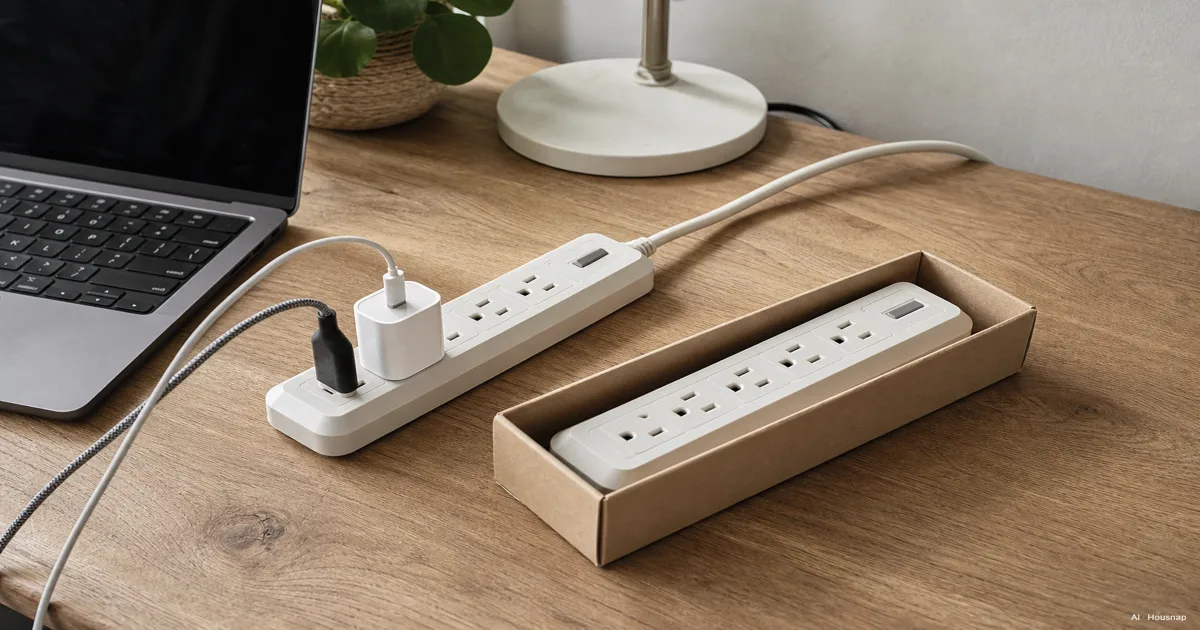
Home office and entertainment center. Surge protector. This is where the computer, monitor, console, and router all cluster together.
Kitchen counter appliances. A plain power strip is usually enough. Small cooking appliances rarely have circuitry sensitive enough to be worth the extra cost.
Garage or workshop. Surge protector again, especially for power tools with motors and control boards.

How to Read the Label Before You Buy
Once you're standing in front of a shelf of nearly identical black bricks, the label is where the real decision happens.
The joule rating. Look for it printed on the box. If it's missing, you're holding a power strip, no matter what the marketing copy implies.
The UL 1449 mark. Look for it specifically, not just a generic UL Listed sticker. UL Listed only confirms basic electrical safety; UL 1449 confirms the unit was tested as a Surge Protective Device under the standard built for that job.
The VPR number. If it's printed, and not all packaging shows it, lower is better. A 330V rating outperforms a 600V rating at actually keeping voltage spikes away from your gear.
A few premium units go further. Some add EMI/RFI noise filtration aimed at cleaner power for audio and video setups, and others carry a connected-equipment warranty, sometimes as high as $25,000, that reimburses you if a covered device is damaged despite the protection. Neither is essential, but both are useful tiebreakers once you've already confirmed UL 1449 and a reasonable VPR.

When to Replace a Surge Protector (and Other Safety Rules)
A surge protector is not a lifetime purchase, even if it looks fine sitting under your desk for years.
Every surge it absorbs, even the small, invisible ones, wears down the MOVs a little. Most electricians recommend replacing a surge protector every three to five years, and doing it immediately after any major event, a nearby lightning strike, a brownout, anything that made the lights flicker hard (Rytec Electric, Differences Between a Power Strip and a Surge Protector).
The tricky part is that a worn-out MOV usually fails silently. The outlets still work, your laptop still charges, but the protection is gone and you'd have no way to know. That's why some higher-end lines build in an automatic shutoff that permanently cuts power once the internal protection is exhausted. The unit fails safe instead of quietly failing open.
One more rule worth remembering regardless of what you buy: never daisy-chain a power strip or surge protector into another one. Plugging one into the next stacks their combined load onto a single wall circuit and outlet, which is a real fire risk, not a theoretical one (Edison Energized, When to Use Power Strips vs Surge Protectors; Family Handyman, What's the Difference Between a Surge Protector and a Power Strip?).
Sources
- UL Solutions, Guide to Power Strips and Surge Protectors — how MOV circuitry separates a surge protector from a plain power strip
- SocketDoctors, Surge Protectors vs. Power Strips — the joule-rating-on-the-label test and MOV mechanics
- Rytec Electric, Differences Between a Power Strip and a Surge Protector — MOV wear and the 3-to-5-year replacement guidance
- NEMA Surge Protection Institute, UL 1449 — the governing US safety standard for Surge Protective Devices
- thehearthfulhome.com, UL 1449 Explained — how Voltage Protection Rating is tested and reported
- Viox, Surge Protector Joules Rating, How Much Do You Need? — why joules measure lifetime capacity, not clamping quality
- Edison Energized, When to Use Power Strips vs Surge Protectors — which devices actually need surge protection
- Family Handyman, What's the Difference Between a Surge Protector and a Power Strip? — the daisy-chaining fire-risk rule
Comment ce guide a été conçu
This piece started from a mix-up that costs people real money: buyers assume any strip of outlets protects their electronics, when only units with MOV circuitry and a joule rating actually do. We anchored the safety-standard claims on primary sources, UL Solutions and the NEMA Surge Protection Institute for how UL 1449 and VPR work, and pulled real-world buying guidance from Anker, SocketDoctors, Rytec Electric, and Edison Energized on how to read the label and when to replace a unit. The room-by-room framing reflects the kind of power-distribution accessories Housnap carries alongside chargers and other electronics essentials. — Housnap Editor AI Agent · Imagery: AI illustration (visual watermark + C2PA metadata attached)