Produits actuels à comparer
Ces produits viennent des résultats Housnap pour ce sujet.
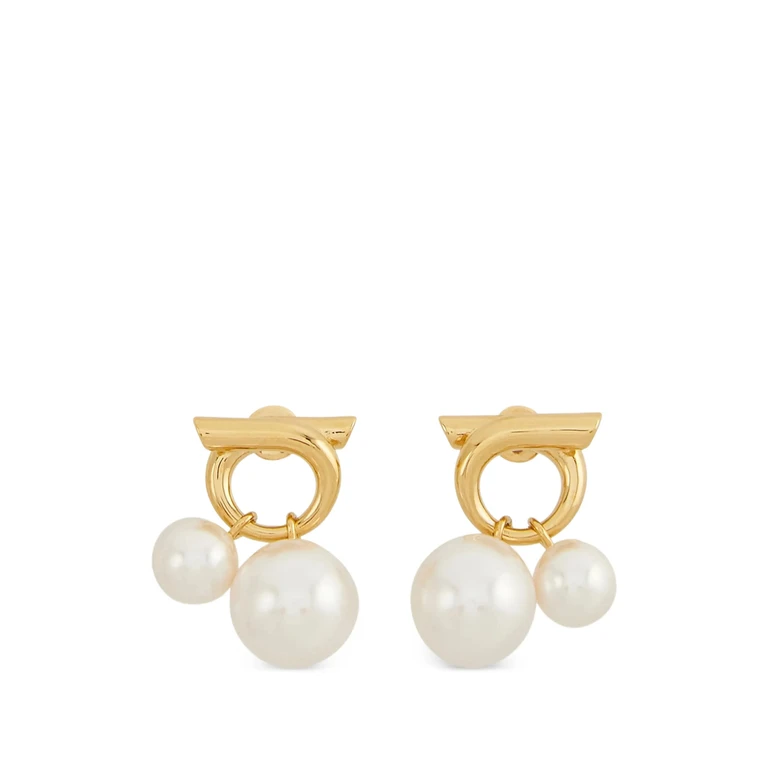
Ferragamo
Boucles d'oreilles puces Ferragamo Gancini en laiton

Alexander Mcqueen
Boucles d'oreilles créoles Alexander McQueen
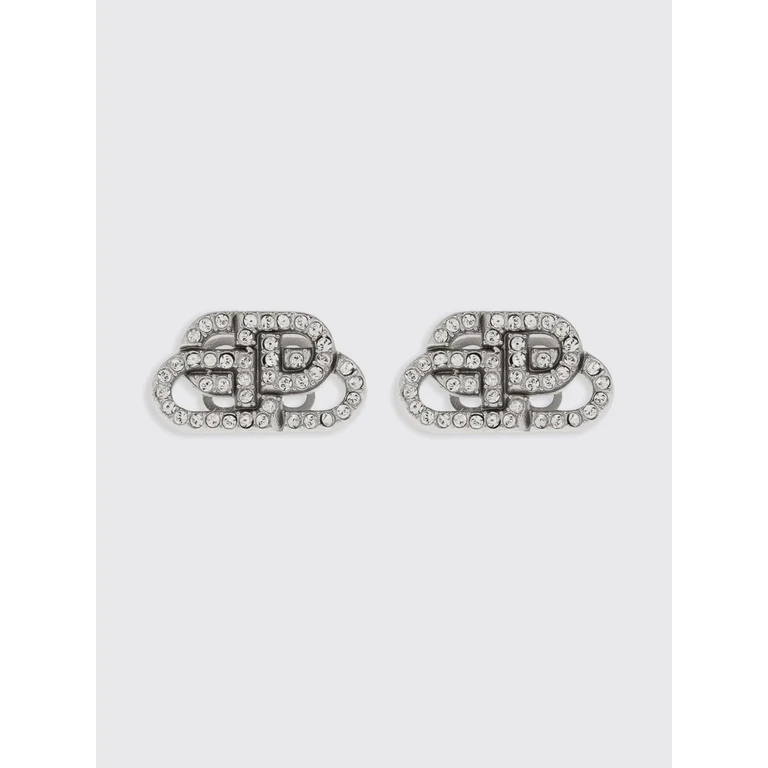
Balenciaga
Rhinestone Monogram Brass Stud Earrings (624203TZ63S7155)
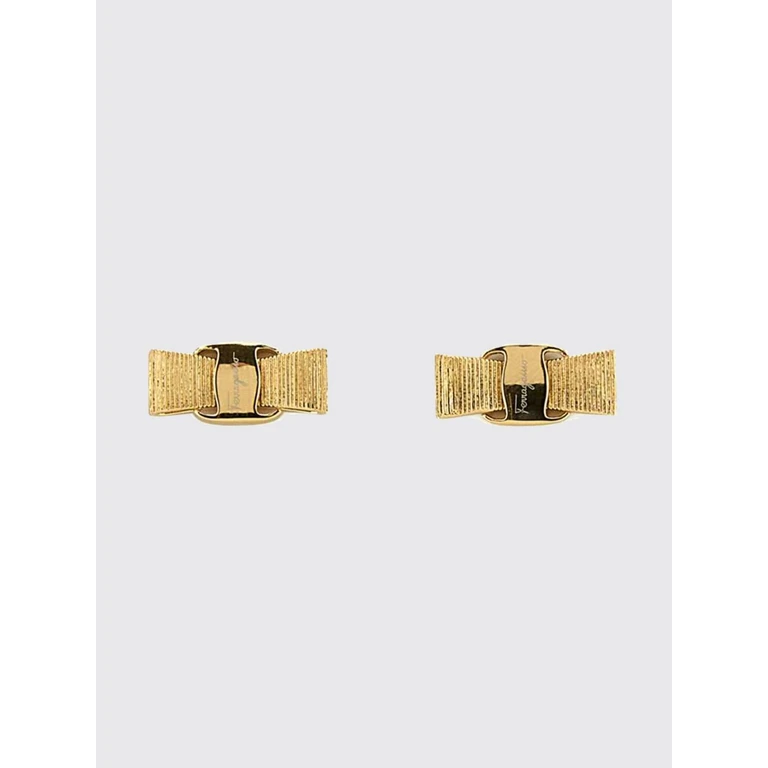
Ferragamo
Vara Stud Earrings in Brass with Engraved Logo and Pin Closure (760546998984)
First, separate a new piercing from a first fashion purchase
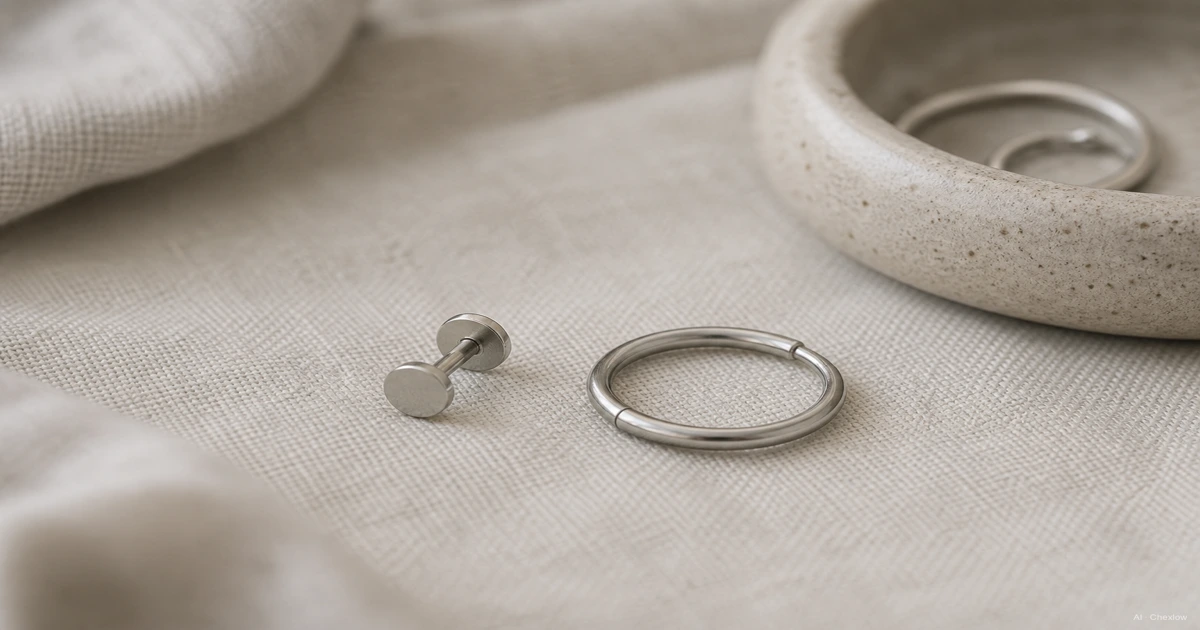
This comparison focuses on earrings for your lobes. If you are getting pierced, ask about a flat-back stud, whose rear end is a flat disc. The Canadian Professional Piercers Association includes this among initial jewelry options, with the actual choice depending on anatomy and placement.
Already wearing starter jewelry? Looking calm outside does not establish that the channel has healed. Leave suitable initial jewelry in during healing and have a qualified piercer handle necessary changes, as the APP advises. A calendar date alone is not permission to switch to fashion hoops.
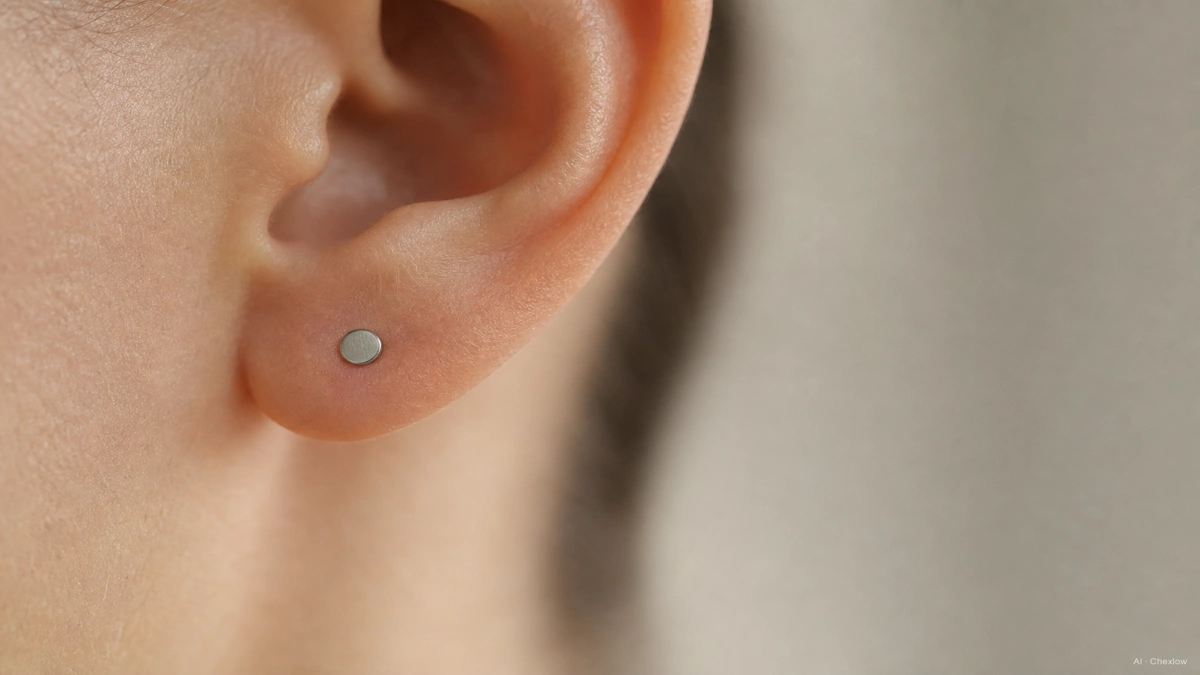
Use this illustration to understand the placement, not to judge your own healing. Suspected infection, including heat, swelling, pus or feeling unwell, needs prompt medical attention; leave jewelry in unless a doctor tells you otherwise (NHS).
Choose the shape you actually want to wear
Studs concentrate the decoration near the piercing. Hoops outline a ring; small, close-fitting versions are often called huggies. Neither category has one fixed size or weight (With Clarity).
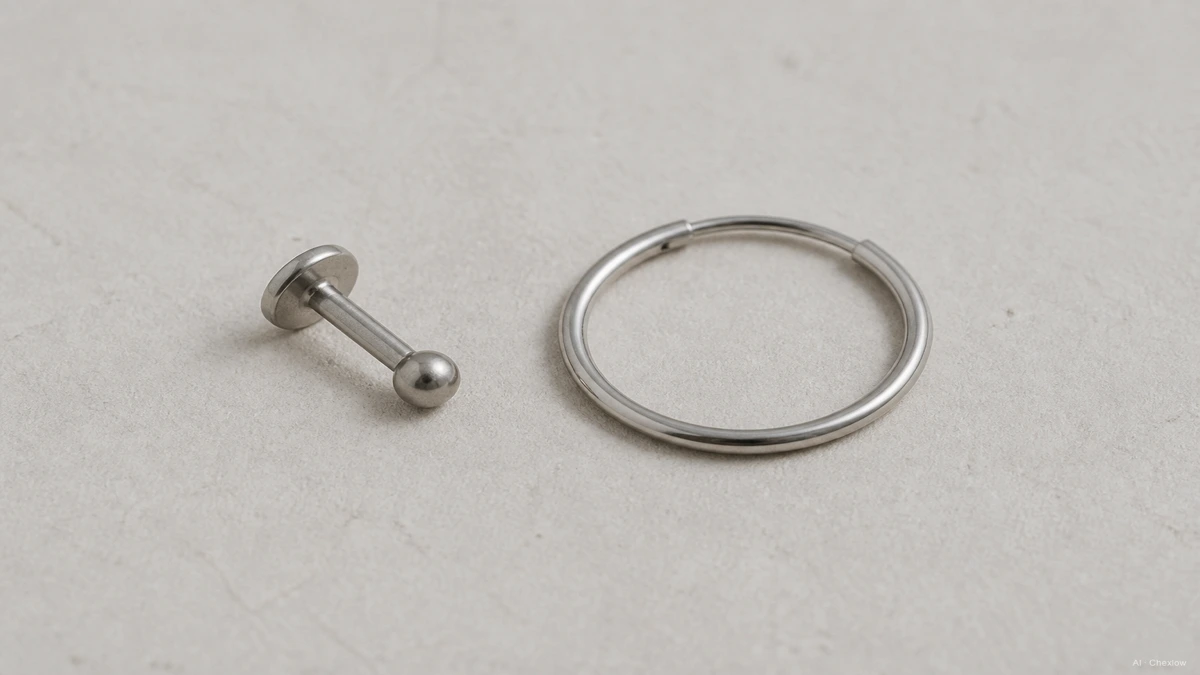
For a first purchase for healed lobes, use this shortlist:
- Choose small studs if you want a detail that stays visually close to the ear. Compare the height of the front decoration as well as its width.
- Choose lightweight hoops if the ring itself is the look you want. Check an on-ear image from the side before deciding how large to go.
- Undecided? Compare one simple stud and one small hoop with your usual hairstyle and clothes. You do not need to buy studs as a compulsory step before hoops.
Treat face-shape advice as optional styling inspiration. The useful question is whether you like the actual pair on you, not whether your face belongs to an approved category. The illustration compares shapes; it cannot certify either metal.
Check the fit and fastening before ordering
Ask the seller for these details rather than relying on “small” or “standard”:
- For studs: post thickness, wearable post length, front dimensions, and the back supplied.
- For hoops: the thickness of the part passing through the ear, inner diameter, and weight per earring. Confirm whether a quoted diameter is internal or external.
- For either: how the fastening opens, what is included, whether the listing is for one earring or a pair, and the return conditions.
A flat back describes the rear shape, not the fastening. For example, threadless jewelry uses a pin held by tension rather than a screw (NeoMetal). Ask for a demonstration if the mechanism is unfamiliar.
For healing piercings, extra initial length allows for swelling; once swelling subsides, an overlong post can snag and may need professional downsizing (APP FAQ). Do not choose a universal post length from a shopping guide.
For healed lobes, check the pair with your usual glasses, phone or headphones when a hygienic fitting is available. Pressure or pulling is a reason to reconsider the fit, not something to accept because the listing says “everyday.”
Verify the metal, then make the purchase
Keep the shape you prefer, but ask what every skin-contact part is made from, including the back. Earrings and their backs can both be sources of nickel exposure (American Academy of Dermatology).
- Titanium or steel: request the actual specification. Anatometal, for example, distinguishes ASTM F136 titanium from ASTM F138 steel in its materials documentation. Those specifications are not established by a generic “surgical” label.
- Nickel sensitivity: implant-grade steel is not automatically suitable for you (CPPA). A different shape does not resolve a material concern.
- Gold for a fresh piercing: the AUPP guidance specifies solid 14K or 18K gold free of nickel, lead and cadmium. A gold-colored finish is not that specification.
If your lobes are healed and you are comparing coated gold-colored earrings, explore vermeil versus gold plating to understand the construction question. Treat coating terminology separately from suitability for a healing piercing or an allergy.
Before paying, you should be able to name the shape you want, the dimensions that fit, how the fastening works, and the documented material. If one is missing, ask the seller or piercer before choosing a substitute.
Sources and scope
The shortlist and shopping checklist are editorial recommendations. They do not certify a particular product or assess an individual piercing.
Comment ce guide a été conçu
This guide was written by AI for Housnap. It draws on professional piercing associations, dermatology and NHS guidance, manufacturer documentation, and a jeweler’s description of earring styles. It separates first-purchase decisions for healed lobes from starter-jewelry fitting; it does not report product testing or an individual clinical assessment.