Travel System vs Lightweight Stroller, How to Pick Your First One
You start shopping for a first stroller and almost immediately run into two words that sound like they belong to different price ranges. Travel system. Lightweight. They are not premium-versus-budget. They are two different answers to the same question, what does a baby need in the first year and how do you move it around. A travel system is a stroller frame plus a matching infant car seat that clicks straight onto it. A lightweight stroller is a smaller, simpler frame you steer on its own. The first one is built around the newborn months. The second one is built around your shoulders, your trunk, and your stairs. Here is what most checklists skip. A newborn cannot sit up. Their head, neck, and spine need near-flat support for months, and the car seat that protects them in the car needs a way onto the stroller without a wake-up. That is the whole reason travel systems exist, and it is also why a lot of standalone lightweight strollers are a poor day-one choice. So this is not really a ranking. It is a fork. This guide walks through what a travel system actually does, what a lightweight stroller gives and takes, when the switch usually happens, and how the way you live, car-first or transit-first, points clearly at one of them.
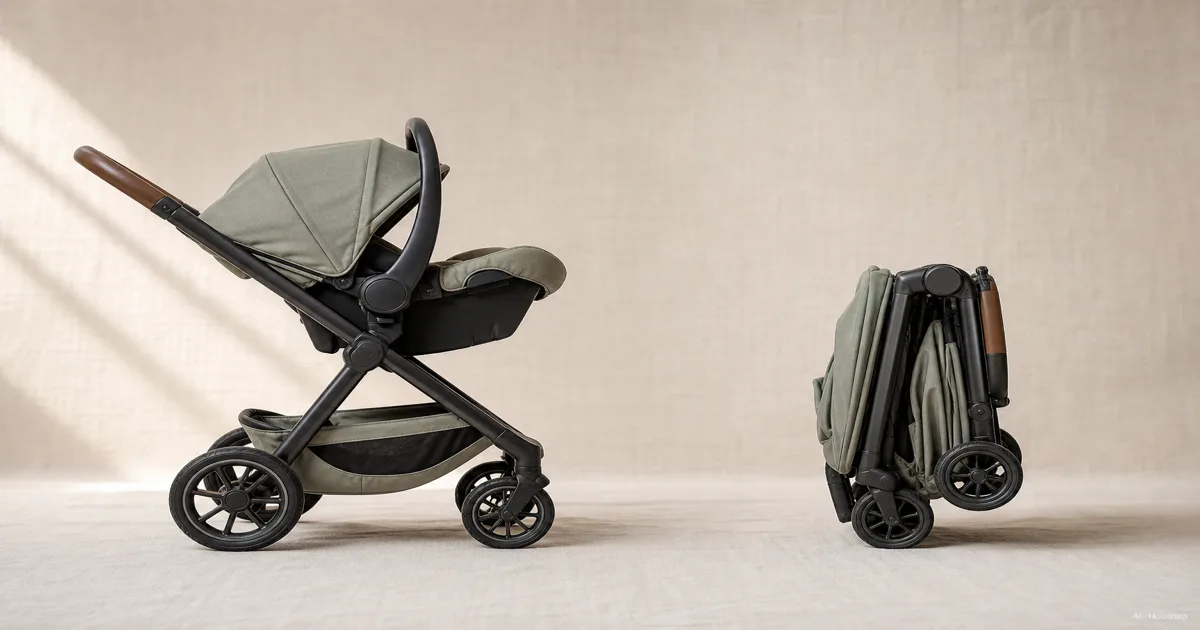
Produits actuels à comparer
Ces produits viennent des résultats Housnap pour ce sujet.
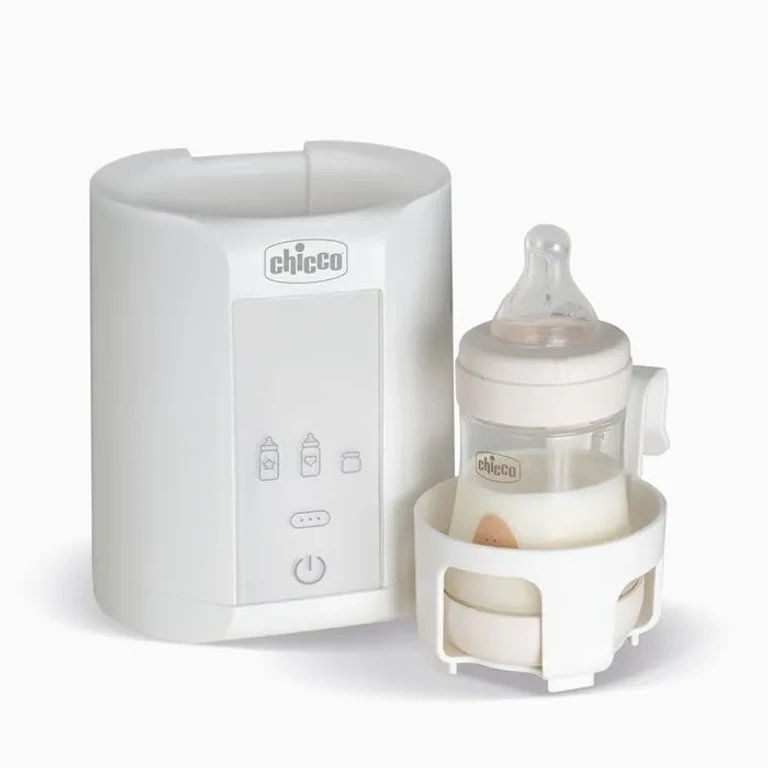
What Is a Travel System, and Who Actually Needs One
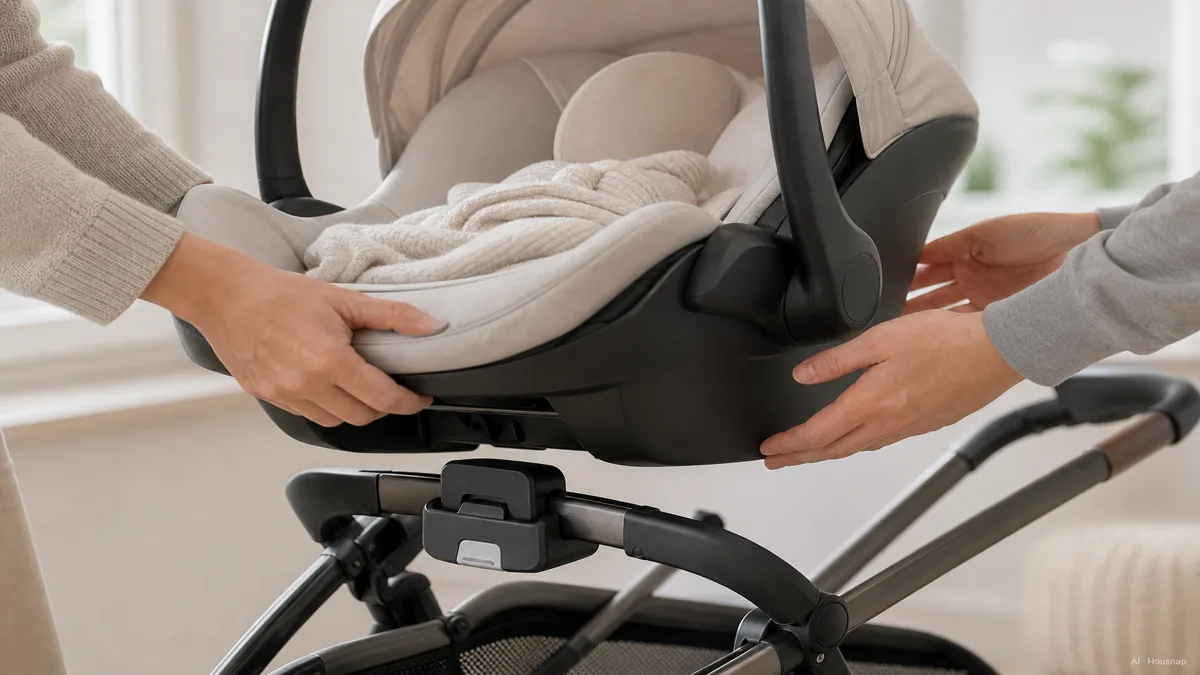
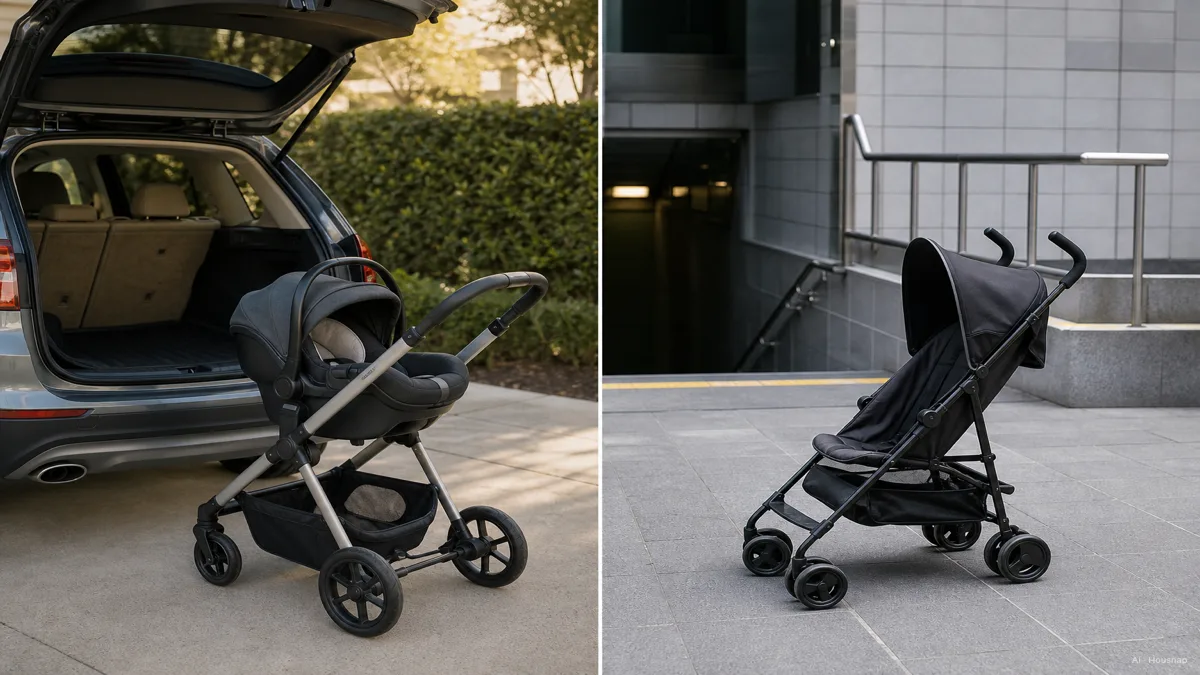
A travel system is two things sold to work together: a stroller frame and a matching infant car seat that clicks straight onto it. The seat is the star. You install its base in the car once, snap the seat in and out for each trip, and click that same seat onto the stroller without lifting the baby out, as Consumer Reports lays out in its stroller-and-car-seat combination guide.
That one move is the whole point. A newborn who falls asleep in the car can go from backseat to sidewalk to grocery aisle without ever waking up to a transfer. For the first six to twelve months, when babies sleep constantly and you are in and out of the car all day, that no-wake handoff is the feature parents reach for again and again.
There is a safety reason underneath the convenience, too. Newborns cannot hold up their own heads or sit supported. Their spines need a near-flat surface, roughly 170 to 175 degrees of recline, which an infant car seat provides and many simple lightweight strollers do not, a point Chicco walks through in its travel system explainer.
So who needs one? Mostly families who drive. If your daily life runs on car trips, errands, and a car seat you are constantly clicking in and out, a travel system is the most seamless newborn setup there is. The Bump's age-by-age stroller guide frames it the same way: for the earliest months, the car-seat-on-frame combination is the default for a reason.
Lightweight Strollers: What You Give Up and What You Gain
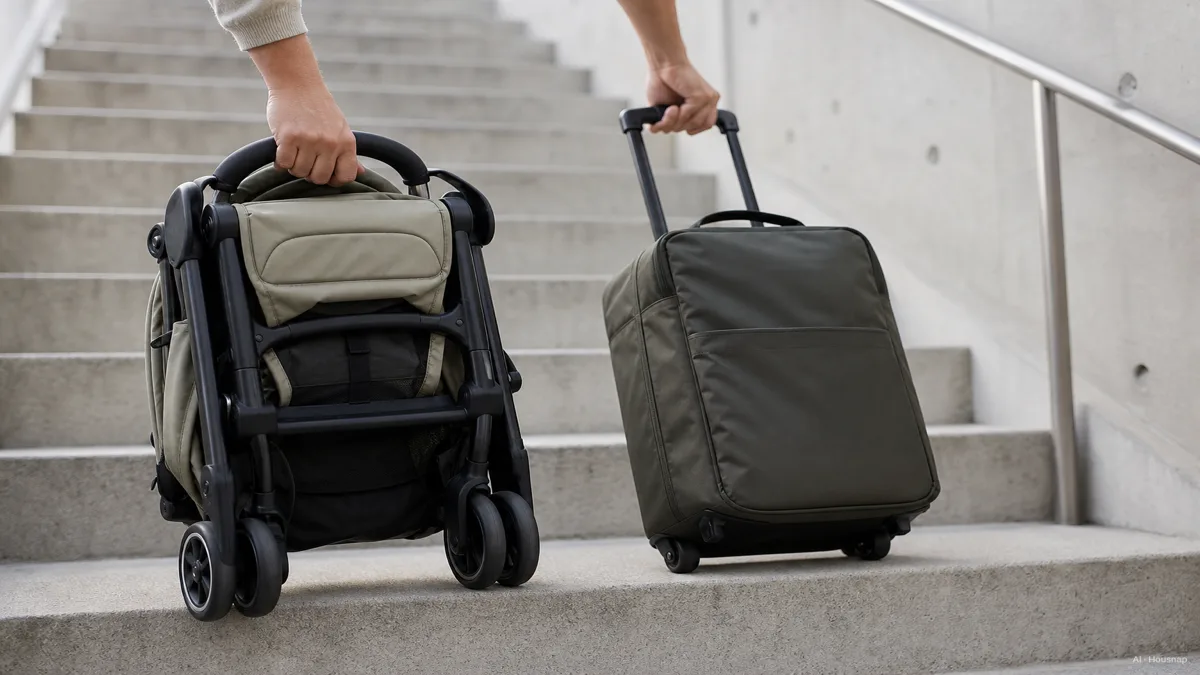
Now flip to the other fork. A lightweight stroller, sometimes called a travel stroller or umbrella stroller, is a smaller standalone frame with no car seat in the bundle. The headline number is weight. Lightweight models usually land around 10 to 18 pounds, against 20 to 35 pounds for a full-size travel system frame, a gap BabyGearLab measures in its travel stroller buying advice.
That difference is not a spec-sheet footnote. It is the moment you carry the thing down a subway staircase, fold it one-handed at a bus door, or wedge it into a small trunk. Eight to twenty fewer pounds changes whether a stroller is a tool or a daily fight.
Here is what you give up for that lightness. Most lightweight strollers do not recline to the near-flat position a newborn needs, so they are not a safe standalone choice for the first months. They tend to have smaller wheels and less suspension, so they shine on smooth city sidewalks and inside airports but get jittery on cracked pavement, gravel, or grass. The trade is real and it runs in one direction: you buy portability and lose newborn-readiness and rough-terrain composure.
And here is the quiet superpower a lot of new parents do not know to want yet. The most compact lightweight strollers fold small enough to fit in an airplane's overhead bin. Popular picks to consider in that ultra-compact tier include the Stokke YOYO3 and the roughly 16-pound Bugaboo Butterfly 2, which Fathercraft highlights among the best travel strollers for exactly that overhead-bin fit. A travel system frame never does that. If you fly, that single capability can decide the whole purchase.
The 6-Month Pivot: When to Switch, or Start With Two
Strollers are one of the few baby purchases with a built-in expiration date, and knowing the timeline keeps you from overbuying. The travel system's car seat is what ages out first. Infant car seats typically cap somewhere around 22 to 35 pounds, or roughly twelve months, and after that the baby graduates to a convertible car seat that does not click onto the stroller frame, as The Bump's guide explains. Once that happens, the travel system's signature trick is simply gone.
The other clock is the baby's own body. Most babies can move from the lie-flat travel system seat to an upright lightweight stroller around six months, once they have enough head, neck, and upper-body control to sit supported. The trigger is the milestone, not the birthday. A baby who is sitting steadily is ready earlier; one who is not waits a little longer.
Put those two clocks together and a common pattern appears. Many families run a travel system from birth, then add a lightweight stroller around the six-month mark as the everyday second stroller, the one that lives in the trunk and goes on trips. You do not have to buy both at once. You just plan for the lightweight stroller to be the logical next purchase rather than a surprise.
The other route is just as valid: skip the travel system entirely. City families who rely on transit often start day one with a lightweight stroller paired with a separate portable infant car seat, because a 30-pound frame on subway stairs is a non-starter. Mompush's lightweight-versus-full-size breakdown leans the same way for transit-heavy life. Which route is right depends almost entirely on the next section.
Decision Framework: Car-First Suburban Life vs Urban Transit
Forget which type is objectively better. Picture where this stroller will actually spend its hours, and the choice gets easy.
Go travel system if you mostly drive. The whole design is built around the car-seat handoff, and it pays off every single time you move a sleeping baby from a car seat to a stroller without a wake-up. Larger wheels and real suspension also handle uneven suburban sidewalks, gravel driveways, and longer daily walks far better than a lightweight frame. Consumer Reports, BabyGearLab, and The Bump all land in the same place: for families whose days run on car trips, the travel system is the most seamless newborn setup, full stop. You accept a heavier frame and more trunk space in exchange.
Go lightweight if you mostly take transit, climb stairs, or fly. A 10-to-18-pound frame that folds one-handed and slips into a bin or a small trunk is the difference between a stroller you use and one you dread. City dwellers relying on buses and trains are usually better served from day one by a lightweight stroller plus a portable infant car seat, the configuration those same reviewers recommend for transit-first life. You give up some newborn lie-flat capability and rough-terrain stability for a frame that actually fits your daily commute.
If you are genuinely split, ask one question. Where will this stroller spend most of its hours, in a trunk or on your shoulder? Most parents lean clearly one way the moment they picture the real setting instead of the spec sheet. From there, the useful next move is to filter real travel systems and lightweight strollers side by side, compare what each brand charges across stores, and check the details that map to your answer, recline angle for a newborn, folded size for transit, wheel size for terrain. You'll find options from the names that show up most in strollers, so the comparison is concrete rather than hypothetical.
Budget Reality Check: Bundle vs Buy Separately
The last myth worth clearing is that bundling always costs more. It usually does not. Lightweight strollers commonly run about $100 to $300, while full-size and modular strollers, including travel system frames, often range from $300 to over $1,000, with premium brands frequently landing $700 to $1,200. Those are the broad bands, and they are wide because the category is.
Here is the part the price tags hide. When you buy a stroller and an infant car seat separately, you almost always need a brand-specific adapter to connect the two, and that adapter has to be the right one for both pieces. Add the adapter cost to two separately chosen items and the total frequently equals or exceeds a matched travel system bundle, which is engineered to click together with no extra part. Bundles are often the cost-competitive option, not the splurge.
The adapter is also a safety step, not just a line item. A separately bought car seat has to be verified as compatible, installed correctly, and ideally checked, so going the mix-and-match route adds a required fitting step that a bundle skips by design. That is worth knowing before you assume separate pieces are the thrifty path.
None of this means buying separately is wrong. Sometimes you genuinely want a specific car seat and a specific frame that do not come as a set, and that is a fine reason to pay for the adapter. It just means the bundle is rarely the expensive trap it looks like, and the real budget question is not bundle-versus-separate so much as which configuration matches the life you mapped out two sections ago.
Sources
- Best Stroller and Car Seat Combinations — Consumer Reports; how the car-seat-onto-frame handoff works and why travel systems suit car-first families
- Carriages and Strollers — U.S. Consumer Product Safety Commission; the 16 CFR Part 1227 rule adopting ASTM F833 for brakes, stability, restraints, and pinch hazards
- Travel System vs Convertible Car Seat and Stroller — Chicco; newborn recline needs and how a travel system handles the first months
- Best Travel Stroller Buying Advice — BabyGearLab; lightweight versus full-size weight ranges and terrain trade-offs
- Age-by-Age Guide to Strollers — The Bump; infant car seat weight limits, the six-month sitting milestone, and when the switch happens
- Best Travel Strollers — Fathercraft; ultra-compact models that fit airline overhead bins
- Lightweight vs Full-Size Strollers — Mompush; why transit-heavy families lean lightweight from day one